The mode of assessment and realization of the revenue as the rate of payment by the cultivators was sought to be built by Sher Shah.
About the revenue administration of this period, our information or evidences, which we can use for ascertaining the nature of Sur Revenue administration, is rather limited. However we have three kinds of informations and evidences which we can use to ascertain its nature:
First we have the evidences furnished by Abul Fazl in the Ain: These consist of a number of statements and some specific information regarding the revenue system inherited by Akbar from the Surs. This is the only evidence for the mode of assessment and realization.
Secondly, there are evidences which we get from Abbas Khan Sarwani’s account of Farid Khan’s administration of his father’s jagir at Sahsaram. Some experiments made at Sahsaram by Farid were perhaps carried further by him after coming to the throne.
This impression is endorsed by the information we have of the working of revenue system of Sher Shah in Ain as well as Abbas Khan’s evidence regarding Sher Shah’s revenue administration after his establishment as the supreme ruler over Hindustan.
The third set of evidences is furnished, again by Abbas Khan Sarwani. But this evidence of Abbas Khan is that which he furnishes in the concluding chapter of his narrative and which pertains to the Sur administration in general. This is rather meagre information. It is only in the light of the other two sets of information that it becomes useful and significant.
Let us start with the first set of evidences and see what picture emerges from them.
All the three sets of evidences, that is Ain-i Akbari, and Abbas Khan Sarwani in both his sections, that is in his account of the early career at Sahsaram, and in the section dealing with the general administration, testify, that under Sher Shah and Islam Shah, the entire imperial territory was brought under a new kind of system which i referred to by Abbas Khan as base on jareeb [i.e., jareebana]; Abul Fazl calls it as zabti system. According to him:
ﺪﺮﺰﻤﺎﻧﻪﺷﻴﺮﺧﺎﻦﻮﺴﻠﻳﻢﺧﺎﻦﻜﻪﻫﻧﺪﻮﺴﺗﺎﻦﺍﺯﻏﻠﻪﺒﺨﺷﻰﻮﻤﻘﻄﻌﻰﺒﻀﺑﻄﺁﻤﺪ ﺒﻬﻤﻳﻦﮔﺰﭙﻳﻤﻭﺪند
[dar zamana-i Sher Khan wa Salim Khan ke Hindustan az ghalla bakhshi wa muqta’i ba zabt amad, ba hamin gaz paimudand]
He mentions this under the rubric “Ain-i gazi-i ilahi”. This is the new system which was other than the “gaz-i sikandari”.
This aside by Abul Fazl is made while discussing the reigns of Sher Khan and Salim Khan when Hindustan was brought from ghalla bakhshi and muqtai to zabt, the measurement was made with the same old gaz known as gaz-i sikandari.
This incidental statement is very vital to understanding the nature of the Sur administration. From the context in which the word zabt is used, it is clear that zabt is a system which is based on measurement.
Abul Fazl in other writings also makes this point clear.
This passage is a good explanation of the term jareeb used by Abbas Khan. Jareeb is the same system which Abul Fazl refers as zabt, the new system of assignment, introduced by Sher Shah, which was based on the measurement of land.
Let us first try to understand what was ghalla bakhshi. Prof. Irfan Habib has established that ghalla bakhshi system had three forms:
First, Khet batai: the division of standing crop in the field. The muhasil would come to the village, and whatever cultivated, he would take the share of the standing crop. It would be taken directly from the field – say 1/3rd of the standing crop.
Second, the Batai: is a division on the threshing ground, just after the threshing. Here one has just to take 1/3rd or whatever share of the government from the ground.
Measurement of the area was not necessary in both these systems.
Lastly is lang batai. This is when the division is made after harvest but before threshing, when the crop is stacked on the ground for threshing.
The muqtai on the other hand meant the group assessment of the whole village. The state agents would negotiate the state’s share from the village with the head man of the village by getting a visual survey – a vague assessment to be made. Officials would not go to each field to assess the produce. Agreement would be made with the village headman. Whatever assessment made, was not based on the measurement of the land.
Jareeb or Zabti System, as against these systems, was the one which was based on the measurement of the land.
Abbas Khan gives the impression that a system based on measurement of land was enforced in the whole of the Empire without giving any option to the cultivators whether they would prefer the old or the new system. This impression is created by Abbas Khan while describing Sher Shah’s revenue administration in the concluding part of his book which comes in conflict with the impression given by him in his discussion of Farid’s administrative policy at Sahsaram. For that period, Abbas Khan states that Farid had given an option to the cultivators to choose between the two – the old and the new systems:
“When he had finished his admonition to the troopers, he turned to the raiyat and said, ‘I this day give you the choice in your hands.’ Some of the raiyat stood for jarib, whereas others accepted ghalladadan. Farid accepted this and took written and signed acceptance (patta-i qubuliyat) from the raiyat. He also fixed the rate for jaribana, mahasilana, as well as the charges for the food of the revenue collectors.”
Now this is one of the most important points of difference given by Abbas Khan himself. He later says that no option was given to the cultivators.
Thus it appears that this system was introduced by Sher Shah first at Sahsaram and later in the whole of Hindustan was a binding system on the entire peasantry and cultivating class.
How did this system work?
Some answer can be found to this on the basis of information furnished by Abul Fazl in his Ain-i Akbari under the ain-i zamin (the ain of the land) and andaza (estimate) of paranji-i farman-i farman dahi (i.e., of sovereignty).
Revenue demand is actually a remuneration of the holding and safeguarding this land to the king of the Empire. Moreland calls this chapter as the ‘Ain of land and assessment of Revenue’.
In this chapter, first, the categories of lands are described – polaj, parauti, chachchar, and banjar.
Abu’l Fazl defines that polaj is land which is cultivated “every year and every season” [ ﻓﺻﻝﺑﻪﻓﺻﻝ ﺳﺎﻝﺑﻪﺳﺎﻝ ]
To regain fertility, land is occasionally left fallow. This is parauti.
Chachchar is that which has not been brought under cultivation from 3-4 years, but cultivated in the 5th year.
Banjar is that land which is not under cultivation for more than five years.
Now this information of Abul Fazl can be connected with Sher Shah’s administration indirectly by a close scrutiny of Sher Shah’s rai [ﺭﻳﻊ ] as described by Abul Fazl.
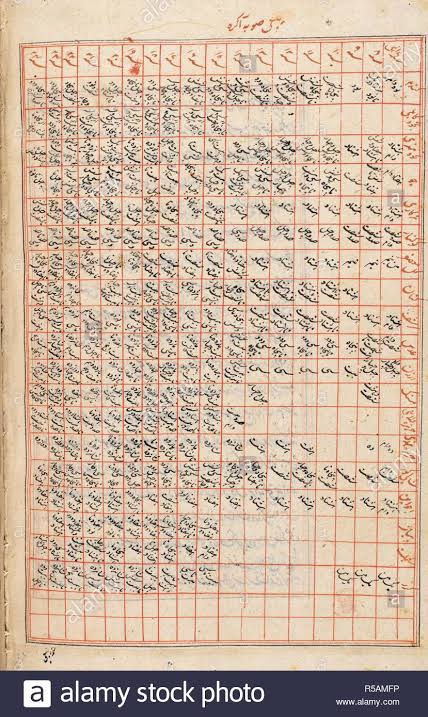
This ﺭﻳﻊ is provided by Abu’l Fazl in a tabulated form regarding the per bigha rate at which revenue was assessed on different kinds of crops during Sher Shah’s reign.
Abu’l Fazl first writes:
“Rabi’i rai polaj” [ ﭘﻭﻟﺞ ﺭﻳﻊ ﺭﺑﻳﻌﻲ ], sometimes known as “asārhi crop”.
Under this, information is provided in a peculiar form and manner. This information is provided under different crops of the season – gandum (wheat), nakhud (gram), adas (sarson) etc.
Each of this is under the following pattern:
“Gandum: dar yak bigha āla hizhdah man [ āla (good) – 18 man per bigha ] miyana duazdeh [ middle – 12 man per bigha] zubun [i.e. poor] hasht wa si wa panj ser [ 8 man, 35 ser], jumla si wa hasht man wa si wa panj ser [ total – 38 man, 35 ser] wa sulus-i u duazdeh man wa si wa hasht ser wa yak pa [one third of that being 12 man, 38 ser, 1 pao] mahsul giraft chahar man duazdeh ser wa sih pa…[ the mahsul (state demand) at this on polaj land would be one third of this 12 m, 38 ser, i.e., 4m, 12s & 3p!
This is the calculation of wheat on the best quality of the land, polaj. For other categories of land it would be different.
This is one piece of information. In fact other information are also given. For example what was the per bigha production of crop on good, middling and bad quality of land is also given. This ﺭﻳﻊ gives the average per bigha produce on particular category and the revenue demand fixed at 1/3rd of the average per bigha produce of a per bigha crop on a particular category of land. This information is available for all the crops for different harvests & crops raised on different categories of land.
But then certain questions arise: one question which is raised by Moreland is as to whether it (i.e the ﺭﻳﻊ) applied to the whole of the empire or is it one of the many rais that existed during the Sur period and which related to the different parts of the empire. What was the exact situation is difficult to say.
Productivity would vary from Punjab to Malwa to Agra. During Akbar’s period when cash rates were worked out, different rais were worked out for different sarkars. It was hoped that these rais would furnish rates of realization which would approximate the actual produce.
So if this was the only rai applied to the whole empire, then we would view efficiency of Sur administration from a different angle. This rai would not be approximate, and would not be conforming with the reality of the situation as the production varied from region to region. If it was the only rai then this fact was not kept in mind. We may also assume that the jama’ would not be faithful but inflated as is borne out by figures given for ten years of Akbar’s reign as given in ain-i nuazdeh sala, as calculated on the basis of one rai for the whole empire.
But there is a possibility that like Akbar, the Surs also prepared different rais for different regions. But we can’t give any conclusive answer as we have no evidence apart from the one quoted above.
Then another question is raised by Moreland which relates to the criteria used to determine the produce of the different parts of the same field having good, middling or poor productivity. What were the criteria of deciding which particular bigha was good, middling or poor? The answer which Moreland gives for this is that most probably, the rule of thumb was used, i.e., a vague assessment by an expert.
As was the case under the Mughals, men of practical knowledge would visit a particular field and would select, using their own understanding, three patches within a field and the damples would be taken. In many cases these samples would work out. No scientific criteria existed.
Then of course, another question which arises is regarding the weights and measures: The rate is shown as per bigha produce; and the produce is mentioned in mans and sers. Are these measures the same as they were under the Mughals, or were they different?
So far as the bigha referred to is concerned, it is clear that the bigha referred is the Sikandari bigha. Abu’l Fazl distinguishes gaz-i ilahi and gaz-i sikandari. Now what was the length of this gaz-i sikandari? If Abu’l Fazl’s testimony is followed, it probably stood at 411/2 Sikandaris in length. Sikandari was the tanka of a mixed nature (tanka-i siyah during Akbar’s reign). The length of the gaz-i sikandari thus was equal to 411/2 tankas put in a straight line. Then he also says that this sikandari gaz was also modified by Humayun and then measured 42 sikandari tankas exactly. If we accept these informations, then according to Wright, who made the calculations, it was approximately 30.336 inches in length. Thus one bigha was 60 sq yards. This bigha was 10.5 % less than the bigha introduced by Akbar which was known as ilahi bigha.
So far as the man and ser are concerned, they also were different from those of the Akbari period. The ilahi weights were introduced in the second half of Akbar’s reign. In the first half, the earlier weights and measures were being used. Abul Fazl says that befor Akbar, a ser was equal in weight to 18-22 dams. Here the measure of weight is determined with the help of the copper coin, which was prevalent in the Mughal period and even earlier. Then he also says, Akbar fixed the ilahi ser equal to 28 dams and subsequently raised it to 30 dams. So towards the end of Akbar’s period it was 30 dams. But this ser mentioned is not the same as the ilahi one.
The weights referred here are weights continuing from the Lodi period. Thus here 1 ser was equal to 18-22 dams
So far as the actual working of the system is concerned, the procedure laid down at Sasaram remained by and large un-altered, if there were any modifications introduced in this system, they are explicitly and clearly pointed out by Abbas Khan. Thus if we reconstruct the picture it would be as follows: that at the time of cultivation, the cultivator was asked to furnish qubuliyat to the state and then the patta was given to them by the state regarding the assessed revenue due on them. Then it seems that Sher Shah made it a rule that at the time of collection of revenue, no concession was to be shown to the raiyat. He would be asked to pay the entire amount that was assessed for him and for which he had furnished the qubuliyat. To quote Abbas Khan:
“At the time of sowing, the agreement for revenue with the raiyat will be executed; but at the time of collection no departure will be made from what has been agreed upon; that whatever promise has been made with the raiyat will not be breached and that the soldiers (troopers) & muhasils (tax gatherers) will be ordered to refrain from oppression”.
This is not contradicted in Sher Shah’s account. So we may gather that this was also followed by Sher Shah when he became the king.
How was this agreement reached between the state and the cultivators?
Some amils would go and measure the land of the individual cultivator and then apply the rate of the ﺭﻳﻊ quoted above. They would then give this in writing to the cultivator. In return the cultivator would give his qubuliyat that is he agreed to pay the revenue now calculated before harvest through the measurement and the schedule of rates available with the state.
This agreement would be reached before the harvest. At the time of harvest, the collector would actually know how much he had to collect. Once the patta and qubuliyat was entered into, there was no leniency to be shown at the time of harvest.
Abbas Khan informs us:
“The state dues for the kharif should be collected in the kharif and those of rabi’ in rabi’, for the arrears of dues in the diwani are the cause of the ruination of the pargana and lead to trouble between the raiyat and the ‘amils.”
Thus for each season, the collection was to be made at the time of harvest. The dues of arrears of one season were not to be carried to the next.
Abbas Khan also informs us about the staff of the revenue administration:
“There were posted in each pargana one shiqdar, one amin, one karkun to write in hindi and another to write in Persian.”
It appears that during the period of Sher Shah and his successor, the annual measurement of land was a must.
“He issued orders that they should measure the land every year and should collect the revenue in accordance with the measurement, so that the muqaddams and amils might not be able to practice tyranny and oppression even on raiyat-i reza who constituted the pivot of prosperity.”
In the Sasaram part of the account this fact was not very clear. But now Abbas Khan is very explicit on the annual assessment.
All this indicates an elaborate collection of information at village level. It also indicates that the standard rate of of demand during the Sur period was 1/3rd. But then in the wilayat of Multan as well as that of Jodhpur, the rate of revenue demand mentioned is 1/4th of the total produce. This was due to an acceptance of a local custom in Rajputana.
Another significant point to be pondered upon, but missing in our sources is as to how the revenue demand or the rate of revenue demand was realized in cash?
There can be two explanations for this lacunae. In the table of rai, the rate per bigha is given in kind. Thus, most probably in the Sur period, the introduction of the zabti system did not necessarily mean realization of revenue in cash. Or else cash rates would also have been given, as in Akbar’s period. But then, it is also possible that the realization in cash was made and it is just a chance that Abul Fazl did not copy the standard cash and price lists which converted kind into cash rates.
Whether cash or kind, the attempt it seems was to enforce the zabti or jarib system throughout the empire, without giving an option of ghalla bakhshi or dadani as was done earlier in Sasaram.
For example, referring to the establishment of the firm control of Sher Shah’s officers in the Punjab foot hills, Abbas Khan makes the following statement:
“That no man dared to breathe opposition to him, and he collected the revenue by measurement of land from these people.”
Another such statement relates to the sarkar Sambhal:
“He so humbled and overcome by sword the contumacious zamindars of those parts that they did not rebel even when ordered to cut down their jungles and they reformed and repented of their thieving and highway robberies, and they paid in at the city headquarters, their revenue according to jarib.”
Lastly Abbas Khan indicates that Sher Shah was fully conscious of the corrupt practices of the amils and therefore during this period, it was his policy to frequently transfer them from one pargana to the other.
“After an year or two, he (Sher Shah) changed his amils and sent fresh ones for he used to say: ‘I have examined very closely and have come to the finding on the basis of my experience and observation that there is not so much of room for making money in other professions as in case of amils’.”
This was another feature of the Sur administration leading to the process of centralization of the empire. The revenue administration led to the control of the Sur central authority to the resources of the empire, which was not possible during the earlier Delhi Sultanate.
• Syed Ali Nadeem Rezavi