Syed Ali Nadeem Rezavi
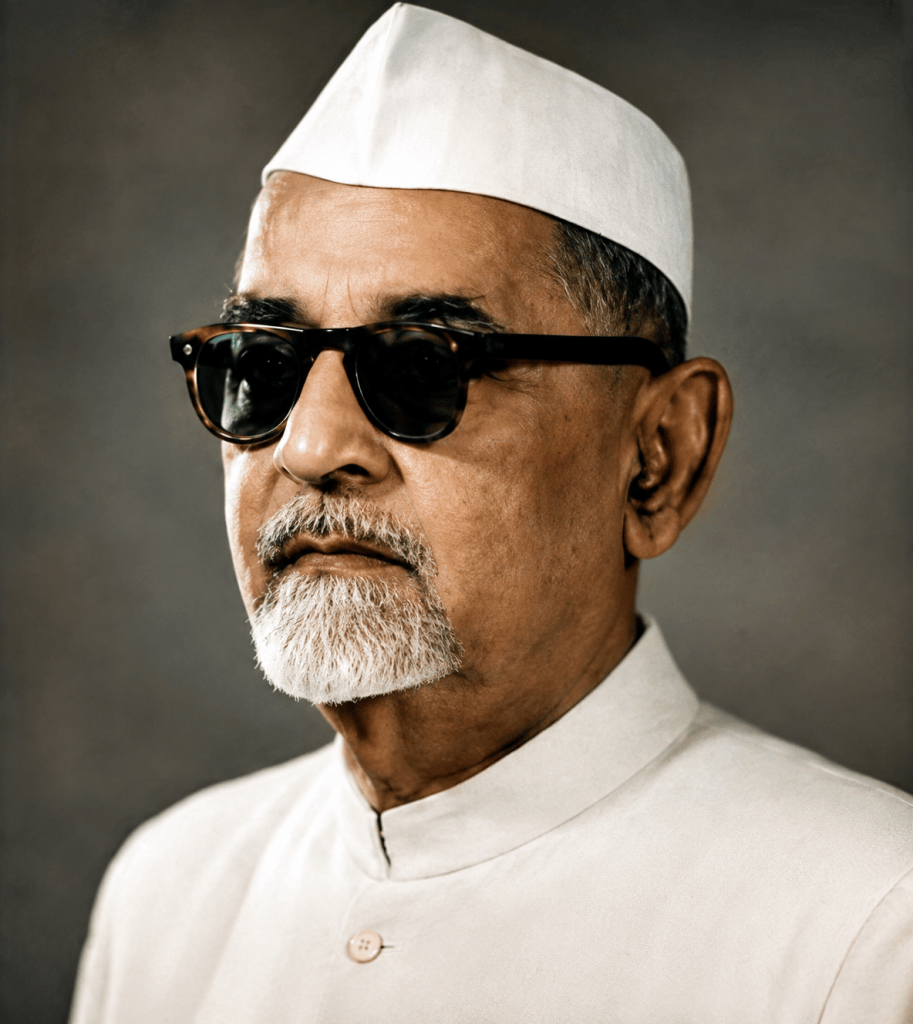
There are periods in the history of a university when the office of Vice-Chancellor demands considerably more than administrative competence, requiring instead intellectual stature, moral courage, political judgement and, above all, the ability to understand what an institution requires at a particular historical moment. For Aligarh Muslim University, no moment was more precarious than the immediate aftermath of Partition, when India had been divided amid terrible communal violence, millions had been uprooted, relations between communities had been poisoned, and Muslims who had chosen India as their country faced uncertainty about their place in the new Republic. AMU confronted an additional difficulty because important sections of its students and teachers had supported the Muslim League and the demand for Pakistan during the preceding decade, rendering the University itself politically suspect in the eyes of many. It was at this extraordinary moment, in November 1948, that Dr Zakir Husain assumed office as Vice-Chancellor of Aligarh Muslim University, remaining there until September 1956, and his task was not simply to administer a university but, in a very real sense, to secure its future in independent India.
The significance of his appointment becomes clearer when one remembers who Zakir Husain was, for he was not someone who discovered Indian nationalism after Partition made political choices unavoidable; his nationalist credentials went back to the struggle against colonial rule. He had been educated at Aligarh, but as a young man responded to the intellectual and political ferment created by the Non-Cooperation and Khilafat movements, and out of precisely this atmosphere emerged Jamia Millia Islamia at Aligarh in 1920, conceived as a nationalist educational institution independent of colonial patronage. Mahatma Gandhi strongly supported the experiment, and although Gandhi and Zakir Husain cannot simply be described as the two founders of Jamia – its establishment involved such eminent figures as Maulana Mahmud Hasan, Hakim Ajmal Khan, Muhammad Ali Jauhar, Dr Mukhtar Ahmad Ansari and Abdul Majeed Khwaja – Gandhi’s moral support was fundamental, and Zakir Husain subsequently became one of the principal architects of the institution. Jamia itself remembers this history as part of the nationalist movement and of the attempt to construct an education simultaneously Muslim in cultural inheritance and uncompromisingly Indian in political allegiance.
After pursuing higher studies in Germany and receiving his doctorate, Zakir Husain returned to India in 1926 and threw himself into the struggle to keep Jamia alive, for the institution was passing through an acute financial crisis, and he and his colleagues accepted extraordinary personal sacrifices, committing themselves to work for modest salaries so that the institution would survive. Gandhi remained one of Jamia’s strongest supporters and, when its financial condition became desperate, famously expressed his willingness to go about with a begging bowl if that was what was required to sustain it. This experience is essential to understanding Zakir Husain’s subsequent role at Aligarh, for the man who came to save AMU in 1948 had already spent much of his adult life saving another university. But there was a still deeper connection, for Jamia embodied a particular conception of Indian Muslim nationalism, and for Zakir Husain, there was no contradiction between being deeply rooted in Muslim intellectual and cultural traditions and being unequivocally committed to a plural India; his nationalism, unlike that of many of his later successors, did not require the abandonment of Muslim identity, just as his commitment to Muslim education did not require political separatism. At a time when Partition appeared to have rendered these identities mutually exclusive, Zakir Husain’s own life demonstrated that they were not, and that was precisely what Aligarh needed.
The University had suffered severely from Partition, with teachers and students migrating to Pakistan, established academic networks disrupted, enrolment declining and older sources of financial support weakening, but more damaging still was the crisis of confidence. AMU carried the burden of its recent political past, and because Aligarh had been an important arena of Muslim League mobilisation during the 1940s, critics could now ask whether a Muslim University had any legitimate place in a secular Indian Republic after the creation of Pakistan; this was not merely an administrative problem but an existential one. The survival of AMU during the immediate violence of 1947–48 was not, of course, the achievement of Zakir Husain alone, for he had not yet become Vice-Chancellor when Partition occurred, and the Government of India took important measures to protect the campus, with Jawaharlal Nehru, Vallabhbhai Patel and Maulana Abul Kalam Azad all playing roles in ensuring that the institution was not overwhelmed by the passions of the time, while local political figures also intervened and the University continued teaching despite the extraordinary disruption around it. What Zakir Husain subsequently accomplished was something different, for he gave the institution that had physically survived Partition a purpose for surviving it; he neither denied Aligarh’s past nor permitted it to remain imprisoned by that past, recognising that AMU had to redefine its relationship with independent India without surrendering its historical and cultural personality. It needed to rebuild its faculty, restore academic standards, regain public confidence, secure financial stability and convince the new Republic that Aligarh could become an asset rather than a political liability, and his answer to the crisis was therefore reconstruction rather than defensiveness.
Zakir Husain’s understanding of the task was remarkably sophisticated, and in a letter to President Rajendra Prasad in July 1950, he described the work at Aligarh as involving one of the fundamental problems confronting Indian statesmanship: the creation of integrated nationhood in a secular democratic state, believing that successful work at Aligarh could restore confidence among Indian Muslims and help establish their secure place within the Republic. The importance of this conception cannot be exaggerated, for Zakir Husain saw saving AMU and consolidating Indian secular democracy as undertakings that were not separate; if a university so closely identified with Muslim intellectual and political history could flourish within independent India while retaining its distinctive inheritance, the Republic would have demonstrated that citizenship did not require cultural homogenisation, and equally, AMU itself had to demonstrate that its future was in India. Zakir Husain articulated the same idea at the University’s Convocation in December 1951, explaining why he had left his long association with Jamia to accept responsibility at Aligarh, for there was work of national significance to be undertaken there, and the task was connected with nothing less than building integrated nationhood within a secular democratic state. Those words acquire their full meaning only when placed against the background of the time, when Partition was barely four years old, refugee camps and abandoned homes remained visible reminders of what had happened, families had been divided across the border, Kashmir had already brought India and Pakistan into conflict, and Indian Muslims were repeatedly being asked, explicitly or implicitly, to demonstrate where their loyalties lay. At precisely this moment the Vice-Chancellor of Aligarh Muslim University was asserting, through both words and actions, that their future was here.
Zakir Husain understood that noble declarations would mean little unless accompanied by institutional reconstruction, for AMU had lost teachers, students and resources, and its reputation could be restored only through academic excellence. He therefore worked to rebuild its faculty and intellectual life, and his years were associated with the recruitment or strengthening of an impressive range of scholars, where what mattered was scholarly distinction rather than communal identity; Aligarh had to become again a university to which serious scholars wished to come and where serious scholarship could flourish. This was itself an important statement about the kind of institution AMU was to become, for a university accused of political separatism would demonstrate its national character not by repudiating its inheritance but by opening itself to intellectual excellence and participating fully in the academic life of India. Zakir Husain also had to negotiate the University’s relationship with the central government, because without stable financial support, rhetoric about reconstruction would have been meaningless; the Government of India assumed increasing responsibility for the institution, while the Aligarh Muslim University Act of 1951 provided a new statutory framework, and the University that had entered independence under a cloud of political suspicion was gradually becoming securely embedded within the institutional structure of the Republic. There was nevertheless nothing narrowly utilitarian about Zakir Husain’s conception of a university, for laboratories and classrooms mattered, but so did libraries, archives, manuscripts and the preservation of inherited knowledge. One relatively small appointment made during his vice-chancellorship illustrates this dimension particularly well: in 1954, Saiyid Sibtul Hasan was appointed to the University Library and placed in charge of its Manuscripts Section, bringing with him considerable knowledge of Arabic and Persian manuscripts, having earlier been associated with important manuscript collections, and his work at Aligarh contributed to the organisation and preservation of a collection that would become one of the University’s greatest scholarly assets. Today, the Manuscripts Division of the Maulana Azad Library preserves one of India’s important collections of Arabic and Persian manuscripts, alongside works in several other languages, and the appointment of a manuscript specialist may have appeared a small administrative decision amid the immense political and financial problems confronting the University, but in retrospect it reveals something important about Zakir Husain’s understanding of institution-building: a university is saved not merely by keeping its doors open but by investing in knowledge that may bear fruit decades later. His tenure also witnessed important developments in the University’s library infrastructure, and on 6 November 1955, Prime Minister Jawaharlal Nehru laid the foundation stone of the new University Library building, subsequently named the Maulana Azad Library, so that a university whose survival had seemed uncertain only a few years earlier was once again building confidently for generations to come.
One measure of the transformation was the remarkable range of national and international personalities who came to Aligarh during Zakir Husain’s vice-chancellorship: President Rajendra Prasad delivered the Convocation Address in December 1951, Rajkumari Amrit Kaur laid the foundation stone of the Institute of Ophthalmology in 1952, Nehru came for the foundation ceremony of the Library in 1955, and King Saud bin Abdul Aziz of Saudi Arabia visited AMU in December of that year. Then, in February 1956, came one of the most memorable international visits of Zakir Husain’s tenure, when Mohammad Reza Shah Pahlavi, the Shah of Iran, accompanied by Queen Soraya, visited Aligarh Muslim University, where an honorary Doctor of Laws degree was conferred upon him; the distinction in the name is important because it was Mohammad Reza Shah Pahlavi who visited AMU, not his father, Reza Shah Pahlavi, who had abdicated in 1941 and died in 1944. The visit had particular resonance for an institution with such deep connections to the Persianate intellectual world, and Professor Hadi Hasan welcomed the Shah in Persian on behalf of the Students’ Union and reportedly impressed him greatly, while there are also recollections of Saiyid Sibtul Hasan showing manuscripts to the Iranian royal visitors in the presence of Vice-Chancellor Zakir Husain. The episode beautifully brings together several strands of his vice-chancellorship, for a scholar whom he had appointed to care for manuscripts was displaying Aligarh’s Persian intellectual inheritance to the monarch of Iran, while the University that only a few years earlier had been uncertain of its future was once again receiving international dignitaries. These visits should not be dismissed as ceremonial trivia, because universities express their standing partly through the intellectual and political networks in which they participate, and Aligarh under Zakir Husain was once again becoming a place to which presidents, prime ministers, monarchs, scholars and statesmen came; the institution had returned to the national and international stage.
The achievement becomes still more striking when we remember that Zakir Husain was performing this work not as an observer standing outside the trauma of Partition but as an Indian Muslim who had lived through it; in September 1947, at the height of the communal catastrophe in Delhi, he participated in discussions concerning refugees and communal violence and had first-hand knowledge of the desperate conditions prevailing in refugee camps, and he knew what communal hatred had done to India. His answer was not communal counter-mobilisation but citizenship, and this perhaps constitutes the deepest significance of his Aligarh years. Zakir Husain did not ask Muslims to forget what had happened in 1947, nor did he ask India simply to forget the complicated political history of Aligarh during the preceding decade; instead, he refused to allow either a community or an institution to remain permanently imprisoned by its past, for history had to be acknowledged but the future had to be built. In this sense there is an extraordinary symmetry between Jamia and Aligarh in Zakir Husain’s life: in the 1920s, he helped sustain Jamia Millia Islamia because nationalist Muslim education needed an institution, and in 1948, he came to Aligarh because Aligarh needed a nationalist Muslim educationist. The first task required sacrifice and the second required reconciliation. At Aligarh he had to persuade a wounded Muslim community that its future lay fully within India, while simultaneously demonstrating to a wounded India that an institution bearing the name Muslim University was not an alien remnant but part of the intellectual wealth of the Republic. He possessed unusual qualifications for doing so: he could speak to Nehru, Azad and Rajendra Prasad as a fellow nationalist, he could speak to Muslims as someone deeply rooted in their cultural and educational traditions, he could speak to academics as a serious educationist, and he could speak to students with the authority of a man who had himself sacrificed professional comfort for an educational ideal. His nationalism was therefore neither ceremonial nor retrospective; it had been tested before independence through Jamia and the national movement, and it was tested again after independence through Aligarh.
Zakir Husain’s conception of institutional protection was notably capacious, extending beyond shielding Aligarh from external majoritarian pressures to encompass the safeguarding of minorities within the Muslim community itself, for he understood that a university committed to pluralism could not afford to replicate hierarchies or exclusions within its own gates. The delicate fabric of India’s Muslim population was woven from diverse sectarian threads, and a genuinely national institution had to respect and accommodate that internal diversity; in a gesture that spoke volumes about his commitment to this principle, Zakir Husain sanctioned the construction of a substantial structure for the Nazim of Shia Theology, a building that came to be known as Bayt us Salat, situated just behind the modern Vice-Chancellor’s Lodge, to serve as a dedicated space for the community’s religious functions and prayers. This was not a grand public proclamation but a practical, behind-the-scenes decision that nevertheless carried profound symbolic weight, affirming that the university’s Muslim identity was not a monolithic or sectarian one but an inclusive umbrella under which different traditions of Islamic faith and practice could find a home and flourish. In an era when the very existence of a Muslim university was being questioned, Zakir Husain was quietly ensuring that within that university, no Muslim minority would feel marginalised or unseen, thereby demonstrating that his vision of citizenship and belonging was not merely theoretical but was being enacted in the very bricks and mortar of the institution he was rebuilding.
When Zakir Husain relinquished the vice-chancellorship in September 1956, AMU was a very different institution from the one whose leadership he had assumed eight years earlier: it had survived the immediate consequences of Partition, its academic life had been rebuilt, its relationship with the Government of India had acquired greater stability, its library and scholarly collections were developing, distinguished visitors once again came to its campus, and most importantly, the fundamental question had changed so that the debate was no longer primarily whether Aligarh had a place in independent India but what contribution Aligarh would make to independent India. Zakir Husain subsequently became Governor of Bihar, Vice-President of India and, in 1967, the third President of the Republic and the first Muslim to occupy that office, and his elevation to the presidency carried a symbolism difficult to miss, for the educationist who had helped demonstrate that Muslim cultural identity and Indian nationalism were compatible eventually became the constitutional head of the Indian Republic. Yet among all the distinctions that subsequently came to him, his years at Aligarh deserve a special place, for he entered the Vice-Chancellor’s office when the institution was vulnerable, politically suspect, financially insecure and uncertain of its future, and he left behind a university whose position and boundaries within independent India had been substantially secured. He had not achieved this alone, for Nehru, Azad, Patel, Rajendra Prasad, members of the University community and many others played important roles in AMU’s survival and reconstruction, but Zakir Husain supplied something that government assistance alone could never provide: leadership possessing credibility both within the University and beyond it. That is why Zakir Husain belonged to a generation for whom the Vice-Chancellorship was not merely an office to be occupied but a responsibility to be discharged, and when Aligarh most needed such a Vice-Chancellor, Zakir Husain was there.
Perhaps there is a lesson here for the present as well, for AMU may once again be passing through a moment when it needs a Zakir Husain, not because the circumstances of today can remotely be equated with the catastrophe of Partition, but because institutions periodically reach moments when ordinary administration is insufficient and they require leadership of intellectual stature, unimpeachable integrity, administrative courage and moral authority, leadership capable of placing the interests and reputation of the institution above personalities, factions and transient considerations. Today, when controversies surround the University’s administration and serious charges and counter-charges are being voiced concerning those at the helm of affairs, what Aligarh needs above everything else is credibility: leadership that commands confidence not merely by virtue of holding office but through scholarship, transparency, conduct and the ability to bring a divided university community together. Allegations, however serious, must of course be established by evidence and due process rather than treated as proven merely because they are loudly repeated, but when questions multiply around an administration, institutional confidence itself can become a casualty.
The circumstances of 1948 and those of today are profoundly different, and history should never be forced into easy parallels, yet one principle survives the comparison: great institutions emerge from crises when the people entrusted with them become larger than the crisis itself. Zakir Husain understood this, for he inherited an Aligarh weakened by Partition and helped restore its confidence, intellectual standing and place in India; he did not seek to become larger than the University but used the authority of his office to make the University larger than its immediate troubles. The manner in which he conducted himself during those eight years also left an enduring imprint on the University’s moral fabric, for he was not a Vice-Chancellor who governed from a distance, issuing memoranda and receiving reports, but one who was visibly present in the life of the campus, accessible to students and faculty alike, and attentive to the small details that together constitute the texture of institutional culture. His personal probity was beyond question, and in an environment where cynicism about leadership can easily take root, his example served as a quiet but persistent reminder that public office was ultimately a form of public trust; he did not cultivate a personality cult or surround himself with sycophants but built teams, delegated responsibility and trusted colleagues to do their work, intervening only when principle or necessity demanded it.
This style of leadership, rooted in humility and sustained by an unshakeable commitment to the ideals of education, proved remarkably effective in binding together a community that had been fractured by the traumatic events of Partition, so that students who had been divided by political allegiances found themselves united by a common purpose, and teachers who had been uncertain of their futures found renewed meaning in their scholarly pursuits; the Vice-Chancellor had not erased their memories or demanded that they abandon their pasts, but he had given them a future worth working towards.
It is also worth reflecting on the particular quality of Zakir Husain’s patriotism, which was neither defensive nor aggressive but quietly confident in the possibilities of the Indian experiment, for he did not believe that India needed to become a homogenised nation-state in the European mould where cultural differences were subsumed into a single national identity; rather, he saw the Republic’s strength precisely in its capacity to accommodate diversity within a framework of shared citizenship. His work at Aligarh was therefore not merely about saving a university but about demonstrating that a plural, secular democracy could thrive in a country as diverse as India, and the fact that he succeeded in this endeavour, against considerable odds, is a testament not only to his own extraordinary qualities but also to the resilience of the idea of India itself, for what he proved through the quiet and persistent labour of reconstruction was that the wounds of Partition, however deep, need not be permanent, and that communities which had been set against each other could find common ground in the shared project of nation-building.
Looking back from the vantage point of the present, it is difficult to overstate the magnitude of what Zakir Husain accomplished during his tenure at Aligarh; he took an institution that was on the verge of being written off, an institution that carried the burden of a complicated political legacy, and he transformed it into a thriving centre of learning that once again commanded respect and admiration, doing so not by abandoning the University’s Muslim character but by redefining it in terms that were compatible with Indian nationalism, and not by compromising on academic standards but by insisting that excellence was the only reliable foundation for lasting reputation. His achievement was all the more remarkable because it was accomplished with a minimum of fanfare, through patient and persistent effort rather than dramatic gestures, and the University that he left behind in 1956 was not the same institution he had taken over eight years earlier; it was stronger, more confident and more securely anchored in the life of the nation.
Yet the full significance of his legacy extends beyond the institutional boundaries of AMU, for Zakir Husain’s years at Aligarh constituted a living demonstration of the proposition that Indian Muslims were not aliens in their own country but full and equal citizens of the Republic, entitled to the same rights and responsibilities as any other community. At a time when this proposition was being contested, when doubts and suspicions were rife on both sides, his work at Aligarh provided a powerful counter-narrative to the forces of division; the University itself, by surviving and flourishing, became a symbol of the possibility of reconciliation, a testament to the idea that the wounds of history could be healed through the patient work of education and institution-building, and Zakir Husain, by embodying this possibility in his own person and in his leadership, helped to create the conditions in which Indian Muslims could once again feel that they had a stake in the future of their country.
It is also worth noting that his vision for Aligarh was never narrowly parochial but always informed by a broader concern for the health of Indian democracy as a whole, for he understood that the fate of a minority institution was intimately connected to the fate of the Republic itself, and that the security of Muslims in India depended not on special privileges or exemptions but on the strength and vitality of India’s secular institutions. His work at Aligarh was therefore part of a larger project of consolidating Indian democracy, of building the kind of society in which citizenship mattered more than community, and in which every individual, regardless of faith, could pursue their aspirations without fear or favour; this was a vision that was both idealistic and pragmatic, rooted in a deep faith in the Indian people and a clear-eyed understanding of the challenges that lay ahead.
The relevance of Zakir Husain’s example for the present moment cannot be easily dismissed, however much the circumstances may have changed, for contemporary India, like the India of 1948, faces profound questions about the meaning of citizenship, the place of minorities and the character of the nation itself. These questions are being debated with increasing intensity, and the answers that are given will shape the future of the Republic for generations to come; in this context, the life and work of Zakir Husain offer a powerful reminder that leadership matters, that institutions can be saved and transformed through the exercise of vision and courage, and that the idea of India, properly understood, is capacious enough to accommodate the full diversity of its people. His example also reminds us that the work of nation-building is never complete, that each generation must renew the commitment to pluralism and democracy, and that the ultimate test of leadership lies not in the accumulation of power but in the building of institutions that can outlast any individual.
When Zakir Husain left Aligarh in 1956 to take up the Governorship of Bihar, he carried with him the gratitude of a university community that had been given a second chance, but he also left behind a legacy that would continue to inspire future generations; the institution he had helped to save would go on to produce scholars, scientists, administrators and leaders who would contribute to every sphere of Indian life, and its reputation would continue to grow as a centre of learning and excellence. The foundations he had laid, in terms of academic standards, institutional governance and moral integrity, would prove enduring, and the example he had set would serve as a beacon for those who followed in his footsteps; his years at Aligarh were not merely an episode in his own distinguished career but a defining moment in the history of the University and, indeed, in the history of modern India.
Perhaps the most fitting tribute to Zakir Husain’s memory is to recognise that the work he began at Aligarh remains unfinished, as all great work must remain, awaiting the commitment of new generations to carry it forward, for the challenges that confront Indian education today are different from those of the immediate post-Partition period but they are no less urgent, and they demand no less in terms of vision, courage and integrity. The universities of India, and particularly those that serve minority communities, continue to face questions about their identity, their purpose and their relationship to the nation, and the answers to these questions will not be found in slogans or in the empty rhetoric of politics but in the patient and dedicated work of education, scholarship and institution-building. In this work, the example of Zakir Husain remains as relevant as ever, a reminder of what is possible when leadership is informed by principle and sustained by conviction. He saved AMU when it needed to be saved, not through any single act of heroism but through the accumulated weight of countless decisions, gestures and commitments, each one informed by a clear vision of what the University could become; he gave it not only a future but a purpose, not only security but a sense of its own worth, and in doing so he demonstrated that the highest form of leadership is not the exercise of power but the service of an ideal, and that the truest measure of a life is not the offices it holds but the institutions it builds and the lives it touches.
Zakir Husain’s Aligarh years stand as a testament to these enduring truths, and they will continue to inspire those who believe in the transformative power of education and the promise of a plural, democratic India; the University that he helped to save remains today a living monument to his vision, a place where the ideals he cherished are kept alive in the hearts and minds of each new generation of students and scholars, and as long as Aligarh Muslim University continues to fulfil its mission of education and service, the spirit of Zakir Husain will endure, a quiet but powerful presence in the life of an institution that owes him so much.
In him there is a great lesson for his present day successors to learn.


