Founding a College or a University? AG Noorani’s Analysis

This is an excerpt from AG Noorani, “History of Aligarh Muslim University”, Frontline, 13 May 2016


In 1863, the rationalist Sir Syed Ahmad Khan set up a Scientific Society to inculcate a scientific temper among Muslims, and in 1864 a madrasa, later called a high school in Ghazipur. In 1886-87 followed the Aligarh Institute Gazette to disseminate ideas of secular Western education amongst the Muslims of India. Demoralised after the Mutiny of 1857, in which they were in the forefront, Muslims responded to British repression by stirring up revivalism or withdrawing into their shell. Western education was denounced. Sir Syed was strongly of the opinion that only secular education on Western lines without neglecting religion could lift Muslims from the morass into which they had sunk.

Right from the outset he had set his sights on a Muslim university. Stay of a year and a half in England strengthened his commitment. He closely studied Cambridge University when he went there. Altaf Husain Hali wrote in his biography of his friend:

“Sir Syed was determined to establish a university” (Hali, Altaf Husain, Hayat-i-Javed, translated by K.H. Qadiri and D.J. Mathews, Delhi: Idarah-i-Adabiyat-i Delli, p. 147).

He mentions the deep impression which Oxford and Cambridge universities had made on Sir Syed’s mind. Gopal Subramanium, counsel for the Union of India, presented to the Allahabad High Court a set of volumes on AMU. Expanded to include the court’s judgment, the five volumes are now part of the Supreme Court’s record. The writer is greatly indebted to Gopal Subramanium for providing him with a set of all those volumes. Volume 1 has an exhaustive chronology. The entire set, now part of a record, merits publication in book form (cited here as Vol. I).

On May 5, 1872, at a meeting of the Select Committee for the Advancement of Muslim Education, Sir Syed explained his concept of a Muslim educational institution. Donations were to be invited. A Mohammedan Anglo-Oriental College Fund Committee was set up.

A member uttered a caveat. He was the founder’s son who became one of the most distinguished High Court judges of India has seen, Justice Syed Mohammed Mahmood. A document he presented as early as on February 10, 1873, bears recalling now.

“Before offering any remarks upon the scheme to be adopted at the proposed institution, I may be allowed to bring to the notice of the Committee, a word which appears to me to have been used by mistake. This Committee calls itself ‘The Mohammedan Anglo-Oriental College Fund Committee’. I think what we mean to found is not a College, but a University, and I hope the members will consent to my proposal that instead of the word College the word University must be substituted.…

“The best educational institutions in Europe are either entirely or next to entirely free from any control of the government of the country, and this, in countries where the rulers belong to the nation whose education is to be conducted. With how much greater force does this argument hold good in the case of India where the government is almost wholly composed of persons belonging to a nation, totally different from us in language, in religion, and in mode of thought.…

“The mode of life amongst the Musalmans of India requires far greater reform than even their mode of education. And unless we bring a large number of students and able teachers together in one place, and form a society of their own, whose notions and objects should be different from the present society of Indian Musalmans, no educational project can be carried out to any considerable extent” (Husain, Yusuf (ed.) (1967): Selected Documents from the Aligarh Archives, Department of History AMU and Asia Publishing House, pp. 222-237).

No detail was missing in those 15 printed pages. He lived under the same roof as his father. It is inconceivable that he did not share his views with Sir Syed. The latter, however, faced shortage of funds.

On January 8, 1877, the Viceroy Lord Lytton, laid the foundation stone of the Mohammedan Anglo-Oriental College (MAO College).

In the address which Sir Syed delivered on this occasion, he made two important points which are very relevant today—the aim was to establish a university and it was to be established by Muslims.

“From the seed which we sow today, there may spring up a mighty tree whose branches, like those of the banyan of the soil, shall in their turn strike firm roots into the earth and themselves send forth new and vigorous saplings; that this College may expand into a University whose sons shall go forth throughout the length and breadth of the land to preach the gospel of free enquiry and of large-hearted toleration and of pure morality” (Mulk, Nawab Mohsinul (ed.), Aligarh(1898):Addresses and Speeches Relating to the MAO College, p. 32, quoted in Khalik Ahmad Nizam, History of the Aligarh Muslim University, Delhi: Idarah-i-Adabiyat-i Delli, p. 17).

He pointedly added:

“There have before been schools and colleges founded and endowed by private individuals. There have been others built by Sovereigns and supported by the revenues of the State. But this is the first time in the history of the Muhammadans of India that a college owes its establishment not to the charity or love of learning of an individual, nor to the splendid patronage of a Monarch, but to the combined wishes and the united efforts of a whole community.”

Nor did he omit to thank the benefactors.

“To our Hindu friends also our thanks are largely due. Foremost among them is the name remembered by us with no less sorrow than gratitude, of His Highness Sri Maharao Raja Mahamdar Singh Mahamder Bahadur, G.C.S.I., the late Maharaja of Patiala whose munificent contributions to the College amount to no less than Rs.58,000. Their Highness the Maharaja of Vizianagaram, K.C.S.I., and the Maharaja of Benaras head the list which includes the names of many liberal-minded Hindu gentlemen whose philanthropy forbids them to recognise distinctions of race and creed” (Vol. I, pages 12378-80).

He next thanked the Nizam of Hyderabad, Sir Salar Jung, the Nawab of Rampur and other notables. The founder of AMU thus made plain in 1877 that his aim was to establish a university, for which the MAO College was but a stepping stone, and that it was to be established by the Muslims of India. These two decisive features marked the entire proceedings from 1877 until 1920.

When Lord Ripon, the Viceroy, visited Aligarh in 1884, Sir Syed said:

“Some day when our endowments are sufficient, we would request the Government to confer upon us the legal status of an independent University.”

He was thus fully aware of the legal requirement of statutory incorporation for a university. Sir Syed could not have imagined that 82 years later India’s highest court would hold that such statutory incorporation wiped out the undisputed historical fact that

(a) the Muslims did all they could to establish their university,

(b) they continuously asked the government authority to accord the requisite statutory recognition, and

(c) the university that was so established was based on terms agreed between the Muslims and the government.

The founder established another institution in 1886 which played its own role, the Muslim Education Conference (MEC). Time was fast running out. A sad Sir Syed lamented in 1897, on the visit of Lord Elgin, the Viceroy, that he could not hope to live to see a university for the Muslims of India similar to Oxford and Cambridge becoming a reality. He died on March 27, 1898.

Historic resolution

Four days later, at a meeting of the College Board of Management, on March 31, 1898, Aftab Ahmad Khan moved the following historic resolution which was seconded by Nawab Mohsinul Mulk:

“That steps to found a memorial, in honour of the Syed Ahmad Khan… and worthy of him be at once taken; and that the memorial take the following form; the collection of a sum of ten lakhs of rupees to be called the Syed Ahmad Endowment Fund, with the object of carrying out his cherished desire of raising the MAO College to the rank of a Mohamedan University.”

The movement received a shot in the arm when the 12th MEC met in Lahore on April 1, 1898. Proposals for a Muslim university were fully discussed; about 900 people attended. The conference showed a keen spirit of enterprise. Badruddin Tyabji subscribed Rs.2,000 to the university. From Calcutta, Syed Amir Ali pledged his support.

As a young man, the Aga Khan had visited Aligarh in 1896 and promised Syed Ahmad an annual grant. In 1902, he had spoken in favour of a Muslim university in his presidential address at the Muhammadan Educational Conference.

His second visit to Aligarh was in 1904, when he gave a handsome donation to Arabic studies scheme (Minault, Gail and David Lelyveld (1974):

“The Campaign for a Muslim University, 1898-1920”, Modern Asian Studies, Vol. 8, No.2, pp. 149, 153 and 162).

The idea of establishing a Muslim university was warmly greeted by all the Muslim personalities of the day.

In December 1902, at the 16th session of the MEC held in Delhi, the Aga Khan supported the proposal in his presidential address in which he visualised this university as a Muslim Oxford. He appealed to Muslims to raise funds for the project (Muslim University Press (1972): Presidential Addresses of the Muhammadan Education Conference entitled Khutabat-I-Aliyah, pp. 206-218).

In July 1906, Badruddin Tyabji said in an address to the Aligarh College Association in England:

“If, as I hope, Aligarh develops into a university it will become the centre of attraction of education for all Mohammedans, not only from the various Mohammedan schools and colleges of India, but also, it may be, from all other parts of the Mohammedan world” (Report of the Minorities Commission on AMU 1978, paragraph 13).
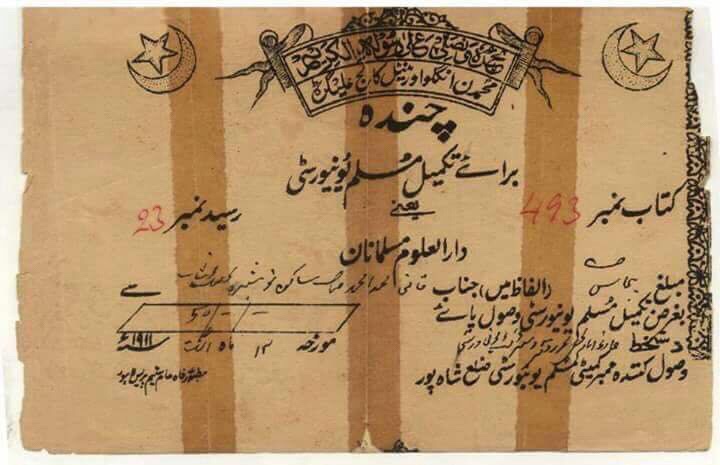
The movement picked up speed. On January 10, 1911, the Syed Memorial Fund Committee was replaced by a Muslim University Foundation Committee headed by the Aga Khan and based in Aligarh. It acquired the assets of the former. Yet another body was added in 1915, the Muslim University Association.
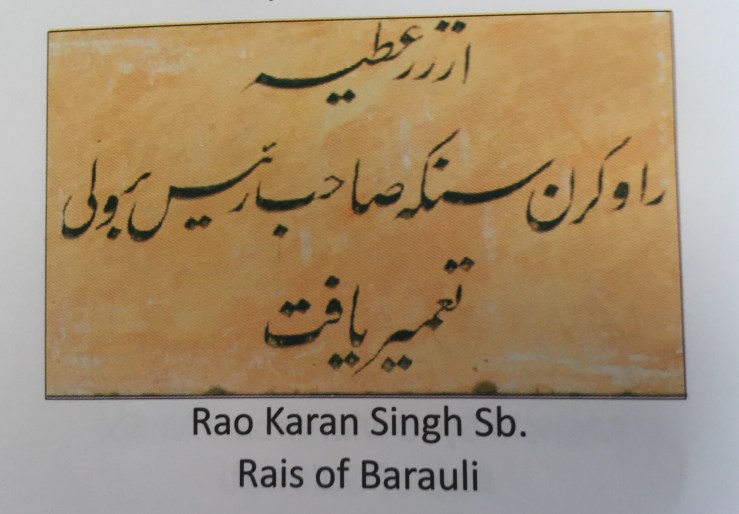
On February 16, 1911, a Constitution Committee was set up with the Raja of Mahmudabad as president. These two men pushed the project forward. A deputation waited on the Education Minister, Government of India, Harcourt Butler on May 16, 1911, to present a draft constitution followed by another on September 23, 1911. Butler demanded that the university have an endowment of Rs.3 lakh.

Two obstacles

There were two obstacles in the path. The role of the extremists led by the disruptive Ali brothers was one. The other was retired English officials of AMU in London. Viceroy Lord Hardinge forwarded to the Secretary of State for India Lord Crewe on June 10, 1911, his advice to accept a university in Aligarh provided that it was adequately funded and under effective government control.

He was given the green signal to negotiate the terms with Muslim leaders. But the Constitution Committee was in a truculent mood. In issue was the university’s right to accept affiliation of colleges all over India, its autonomy, and its name to which the British objected. London had decided that

“the university should be called ‘The University of Aligarh’, not the ‘The Muslim University, Aligarh’” (Secretary of State to Viceroy, February 23, 1912, see Minault and Lelyveld,p. 169).

Butler tried to get London to reconsider this dispatch but failed.

However, while London was firm on affiliation, it was firm on official control, unlike Calcutta which wanted both the Benaras Hindu University and the AMU to be under its control. On August 11-12, 1912, the Constitution Committee met at Lucknow and passed three resolutions: to reject London’s decisions on affiliation; the Viceroy’s role as Chancellor; and the university’s name. It had 54 members in addition to all the MAO trustees ex-officio and “had a good claim to be representative of Muslim interests” (ibid., p.171).

On October 10, 1915, the Benares Hindu University Bill was passed and strengthened the hands of the moderates. The Aga Khan gave a handsome donation to BHU.

But politics in India emboldened the radicals. On October 15 an acrimonious meeting of the Muslim University Association decided by a controversial vote to accept the government’s terms. The Foundation Committee, its superior, ratified the decision in April 1916. There was no progress until Butler, now Lt Governor of the North West Province, came to Aligarh in November 1919. His successor as the Education Minister was Sir Mohammed Shafi, an old Aligarhian. Events softened both sides. A revised draft constitution was prepared in 1920. The government proposed some changes, which were accepted.

In July 1920, the Bill received London’s approval and was published in the Gazette. It reflected a compromise agreed by both. Its Statement of Objects and Reasons correctly recorded that compromise.

“The Muslim University Association having requested the foundation of a University and certain funds and property being available to this end, it is proposed to dissolve that Association and the Muhammadan Anglo-Oriental College, Aligarh, and to transfer the property of those societies to a new body called ‘the Aligarh Muslim University’. The present Bill is designed to incorporate this University.”

The Bill was moved in the Imperial Legislative Council by the Education Member Sir Mohammed Shafi on August 20, 1920. It met at the Council Chamber, Viceregal Lodge, Shimla, with the Governor General in the chair. The proceedings are very significant. Introducing the Bill, the mover particularly recalled Sir Syed’s remarks on January 8, 1877, on a university. The first graduate of the MAO College was a Hindu student. He recalled the “negotiations with the Government” by the Muslim University Association’s president, the Raja of Mahmudabad; how a scheme it had agreed with the Government of India was sent to London in November 1911 after “considerable discussion and somewhat long negotiations”.

Surendra Nath Banerjee said:

“Speaking as a representative of the Hindu community, we desire to welcome the Bill which has been introduced and also to congratulate the Honourable Member in charge of it on the admirable speech which he has made in introducing it. That, I think, represents the attitude to the Hindu community. This university is to be a unitary and residential university, and it is to represent an advance upon the type of universities, which has been established in Dacca and in Benaras. All that is welcome, not only from the Muslim, but also from the general and the larger standpoint.”

Seth Nathmal also supported the Bill. Such was the spirit in the Council that the educationist Sir Deba Prasad Sarbhadikari’s detailed critique won him a seat on the Select Committee. Its report was presented on September 2, 1920, and was considered on September 9.

Replying to the debate, Sir Mohammed Shafi said:

“In a somewhat long experience of Legislative Councils, both provincial and Imperial, I have seldom seen a Bill of the first importance such as the Muslim University Bill pass through the various stages with such little opposition and so smoothly as the measure which we are now about to place on our Statute Book.”

As President, the Governor General said:

“Before putting the question [to vote] I should like to add my congratulation to the Muslim community on the passage of this Bill.”

It was devout Hindus who welcomed AMU. It is malevolent Hindutvaites who wish to destroy it now.

Incontestable facts

This unbroken, consistent record stretching over nearly half a century (1873-1920) yields six incontestable facts:

1. The goal always was a university;

2. The initiative was always taken by Muslims as a community towards this goal;

3. It raised the funds;

4. Its representatives negotiated the terms with the Government of India; the negotiations were tough and protracted;

5. The Act of 1920 embodied an accord between Muslims and the government. Muslims yielded on the issues of state control and local affiliation; the government yielded on the name;

6. Muslims yielded the properties of the MAO College and the Muslim University Association under the agreement embodied in the Act; namely that they would administer AMU which they had established with their funds, the state merely providing the imprimatur of statutory incorporation.

It was in the nature of a trust. In our times, the equitable doctrine of promissory estoppel applies. It would be dishonest of the state to swallow the funds by denying the minority character of AMU. At one stage when there was a breakdown in the negotiations, Muslims were prepared to put the funds to other uses rather than give them to the government on terms that they could not accept.

First Change Thyself then the World

Bayazid, a Sufi mystic, has written in his autobiography, “When I was young I thought and I said to God, and in all my prayers this was the base: ‘Give me energy so that I can change the whole world.’ Everybody looked wrong to me. I was a revolutionary and I wanted to change the face of the earth.

“When I became a little more mature I started praying: ‘This seems to be too much. Life is going out of my hands–almost half of my life is gone and I have not changed a single person, and the whole world is too much.’ So I said to God, ‘My family will be enough. Let me change my family.’

“And when I became old,” says Bayazid, “I realized that even the family is too much, and who am I to change them? Then I realized that if I can change myself that will be enough, more than enough. I prayed to God, ‘Now I have come to the right point. At least allow me to do this: I would like to change myself.’

“God replied, ‘Now there is no time left. This you should have asked in the beginning. Then there was a possibility.’”

• Syed Ali Nadeem Rezavi

Aurangzeb: Myths vs. Facts

There are facts and historical facts. Facts are actualities which occurred; Historical facts are those actualities which had an effect, good or bad.

And then there are myths and half truths, some of which through sheer repetition over a long period of time attain the status of facts, even historical facts. At times they become so deeply ingrained in our psyche that we simply assume them to be true.

The stories circulating these days about Aurangzeb are some such mythologies paraded as historical facts. Here are some of them:

A) Aurangzeb was a temple breaker – a ‘butshikan’.

A half truth: Yes he demolished temples, but only of those regions or groups who opposed or fought him.

When Rani Hadi, the widow of Raja Jaswant Singh Rathor of Marwar wrote to him to given her the successorship (tīka) and that she was ready to break all the temples of the region, Aurangzeb refused.

And this information is from a contemporary source, Waqā’i Ajmer, maintained at the Marwar court!

Further, the temple grants, and grants given to priests under Aurangzeb were larger than the grants given ever before! And this is confirmed by a large number of contemporary documents. For example land grants given by Aurangzeb to the temples and priests at Vrindavan belonging to Sri Chaitanya sect are higher than those given by even Akbar!

Incidentally, Peter Mundy, a contemporary of Shivaji tells us that under Shivaji, the jails were full of ‘Brahmins’, who had been imprisoned for not paying their taxes!

B) Aurangzeb was anti-Hindu.

Totally wrong. He opposed anyone who could oppose him!

The Rajputs had been his major supporters from the time he started his revolt in 1657. His princely communication (nishān) to Rana Raj Singh of Mewar is indicative of his views. In his war against Dara he was supported by majority of Rajputs: Mirza Raja Jai Singh, Jaswant Singh etc etc.

A letter written by his own son, Akbar, reminds him that he had emerged victorious due to the support of the Rajputs! Dara lost as they did not support him!

After becoming the king some of the highest mansabs (ranks) in the empire -7000/7000, which could be given to a noble – were awarded to a number of Rajputs.

Crucially important states, like Gujarat, Bengal, Deccan etc which had been previously been reserved for princes, were given to Rajputs.

(C) Who worsted Shivaji at Purandhar and got him packed to Agra? Aurangzeb?

No. It was Mirza Raja Jai Singh. Shivaji was kept a prisoner in Agra in the house of Raja Ram Singh…

Yes Aurangzeb also imposed jizya, stressed Shari’at, preferred mullas and followed policies of discrimination. Many practices like jharokha were banned. None can deny that. But above facts are to be remembered too! He was not living in the modern age. There were no binaries.

D) Aurangzeb banned music.

Half Truth.

The same Manucci who informs us of the ban, also inform us about the lavish musical ensembles!

Most important musical texts were composed / translated under him. His own son was not only an accomplished musician but a dancer as well!

There is a letter which survives, written by Aurangzeb to one of his sons. In this he asks his son to follow the cultured practices of his grandfather: dance, music and poetry.

Aurangzeb himself was a good veena player!

The Naib-i Imam, the Ayatollah & Ayatollah al-Uzma

Who is an Ayatollah? Any person with some religious education and a turban? Or is it essential for that person to have some requisite qualification?

In recent years there has been a dilution in the meaning and sense of many such terms. A case in point may be the concept of ‘Shaheed’: a term which once stood for someone who sacrificed his/her life in the way of God. In recent years the term came to apply on any one who “sacrificed” his/her life for a cause.

Same ‘vulgarisation’ appears to have been done in recent years in the Shi’i world for other terms as ‘Ayatollah’ which literally means “sign of God”, and ‘Naib-i Imam‘, a term traditionally but sparsely used for select marja‘ who were attributed to have attained the status of ‘deputy’ of the living 12th Imam of the Ithna ‘asharis.

Some time back a Shi’i pesh imam (one who leads prayers) and imam-i juma’ (one who leads Friday prayers) declared that all who don a turban (‘ammāmah) are the Naib-i Imam. He declared this in a way as if the only demarcator and qualification to be the Naib of the Living Imam was this sartorial marker: the ubiquitous turban! This was a declaration which made a mockery of the hesitation of many previous spiritual and scholarly marja‘ who had literally trembled to be placed anywhere near this position! To them it was only the Divinely Inspired and appointed Imam, who could elevate any of his servant to that exalted position!

Similar obfuscation has been committed to the title and position of Ayatollah and Ayatollah al-Uzma!

Those who carry the title Ayatollah are experts in Islamic studies such as jurisprudence, ethics, and philosophy and usually teach in Islamic seminaries (hauza).

The title gained worldwide popularity only after the Islamic Revolution of Iran.

The title is granted to top Shia mujtahid ( those who can do ijtihad), after completing sat’h and kharij studies in the hauza (seminary). By then the mujtahid would be able to issue his own edicts from the sources of Islamic religious laws: the Qur’an, the Sunnah, ijmāʻ, and ‘aql (“intellect”, rather than the Sunnī principle of qiyas). Most of the time this is attested by an issued certificate from his teachers. The ayatollah can then teach in hawzas (shia seminaries) according to his speciality, can act as a reference for their religious questions, and act as a judge. There is an important difference from Shi’a ayatollahs and “saints” in other religions: ayatollahs are not regarded as enlightened by God Himself, but by the Word of God.

Only a few of the most important ayatollah are accorded the rank of Grand Ayatollah (Ayatollah Uzma, “Great Sign of God”). This usually happens when the followers of one of the ayatollahs refer to him in many situations and ask him to publish his Juristic book in which he answers the vast majority of daily Muslim affairs. The book is called Resalah, which is usually a reinvention of the book Al-Urwatu l-Wuthqah, according to their knowledge of the most authentic Islamic sources and their application to current life.

There are 66 living worldwide as of 2013, mainly based in Najaf and Qom. The most prominent of these include Ali Sistani, Mohammad Yaqoobi, Hossein Vahid Khorasani, Makarem Shirazi, Yousef Sane’i, Malakouti, Haeri, and Sadiq Shirazi. There are currently five grand ayatollahs in Najaf, Iraq, center of the Iraqi Shi’i seminaries or Hawzas; the most senior of which is Ali al-Sistani. Other grand ayatollahs based in Najaf include Mohammad Yaqoobi, Basir Najafi, Mohammad Saeed Al-Hakim and Mohammad Ishaq Al-Fayyad.

Unfortunately today in the Shi’i world every second mulla is seen usurping this title. Some who during their whole lifetime had no ‘amaliya‘ (book of rulings or ijtihad, to be followed by others) are even being labelled as Ayatollah al-Uzma!

A Fable of Prostitutes & Wines

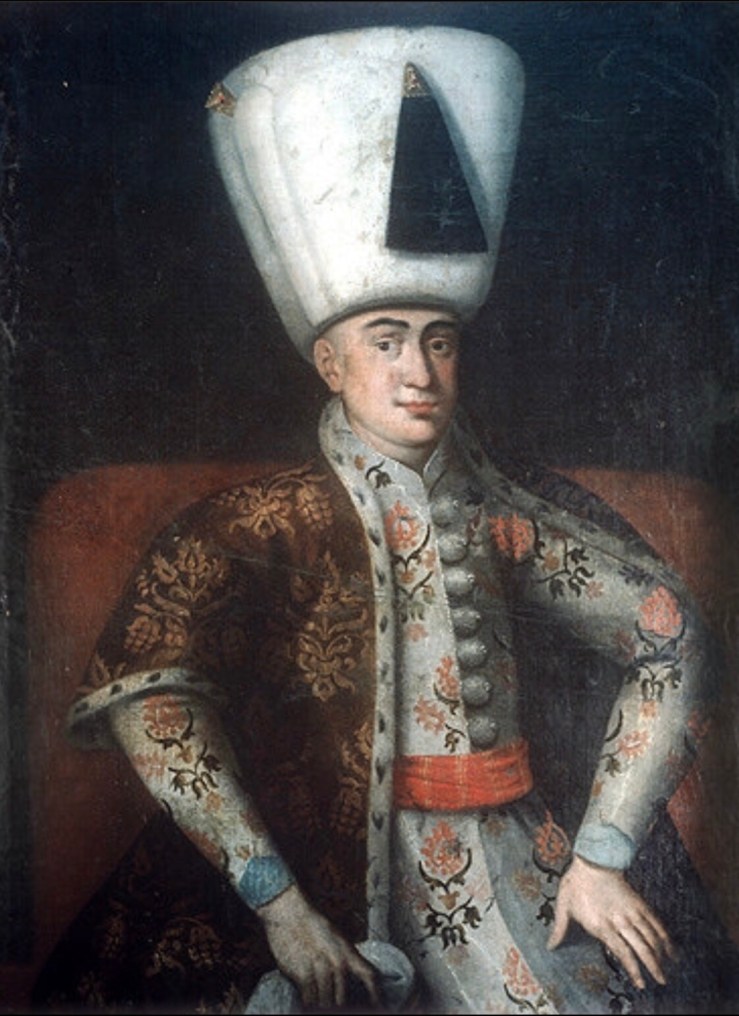
Sultan Murad IV, 1623-1640, portrait in the Topkapi Palace Museum, Istanbul, Turkey

Sultan Murad IV, the Sultan of the Ottoman Empire from 1623-1640, would often anonymously go into the midst of the people and see their state. One evening, he felt an uneasiness in himself and the urge to go out. He called for his head of security and out they went. They came to a busy vicinity, and found a man lying on the ground. The Sultan prodded him but he was dead and the people were going about their own business. Nobody seemed to care about the dead man lying on the ground.

The Sultan called upon the people. They didn’t recognize him and asked him what he wanted. He said, “Why is this man lying dead on the ground and why does no one seem to care?

Where is his family? “They replied, “He is so and so, the drunkard and fornicator!”

The Sultan said, “Is he not from the Ummah of Muhammad SAW? Now help me carry him to his house” The people carried the dead man with the Sultan to his house and once they reached, they all left. The Sultan and his assistant remained.

When the man’s wife saw his dead body, she began weeping. She said to his dead body, “Allah have mercy on you! O friend of Allah! I bear witness that you are from the pious ones.

“The Sultan was bewildered. He said, “How is he from the pious ones when the people say such and such things about him. So much so that no one even cared he was dead?”

She replied, “I was expecting that. My husband would go to the tavern every night and buy as much wine as he could. He would then bring it home and pour it all down the drain. He would then say, “I saved the Muslims a little today.” He would then go to a prostitute, give her some money and tell her to close her door till the morning. He would then return home for a second time and say, “Today I saved a young woman and the youth of the believers from vice.”

The people would see him buy wine and they would see him go to the prostitutes and they would consequently talk about him. One day I said to him, “When you die, there will be no one to bathe you, there will be no one to pray over you and there will be no one to bury you!”He laughed and replied, “Don’t fear, the Sultan of the believers, along with the pious ones shall pray over my body.”

The Sultan began crying. He said, “By Allah! He has said the truth, for I am Sultan Murad. Tomorrow we shall bathe him, pray over him and bury him.” And it so happened that the Sultan, the scholars, the pious people and the masses prayed over him.

We judge people by what we see and what we hear from others. Only if we were to see what was concealed in their hearts, a secret between them and their Lord.

“O you who believe, abstain from many of the suspicions. Some suspicions are sins. And do not be curious (to find out faults of others), and do not backbite one another. Does one of you like that he eats the flesh of his dead brother? You would abhor it. And fear Allah. Surely Allah is Most-Relenting, Very-Merciful.”

(Quran 49:12)

Chāh ba Chāh: The Technique of Water-lifting at Fathpur Sikri

The real feat of hydraulic engineering at Fathpur Sikri is revealed in the elaborate system of lifting the water from the ground level to the top of the ridge where the palace

complex, the nobles’ quarters and houses of the main civic population were located.

A survey of Fathpur Sikri reveals that the imperial system of water-supply was divided into two sections – the Northern water works, situated near the Hāthipol and the

Southern Water works, near the Hakim’s Baths. These water works, were apparently designed to meet the entire need for water in the Palace Complex as well as the town of Fathpur Sikri.

Northern Waterworks

The Northern Water Works appear to be more elaborate and technically sophisticated. We are fortunate that Peter Mundy gives a very precise description:

The kings’ howse or Moholl stands on the highest hill, within which are aboundance of Courts, Conveyances, galleries, chowtrees (chabūtara) , Arches, pillars, Tancks, Chaboochaees (Chāhbacha), private roomes, all yery rich, curious, and full of invention of painteinge, carvinage, etts; also a little garden. The water to water it is also to fill the Tancks alofte, and for their use is drawne from the valley, first into one Tanck and then from that into another higher, and soe into 4 or 5 untill it came alofte, by that which wee in Spaine call Noraies.

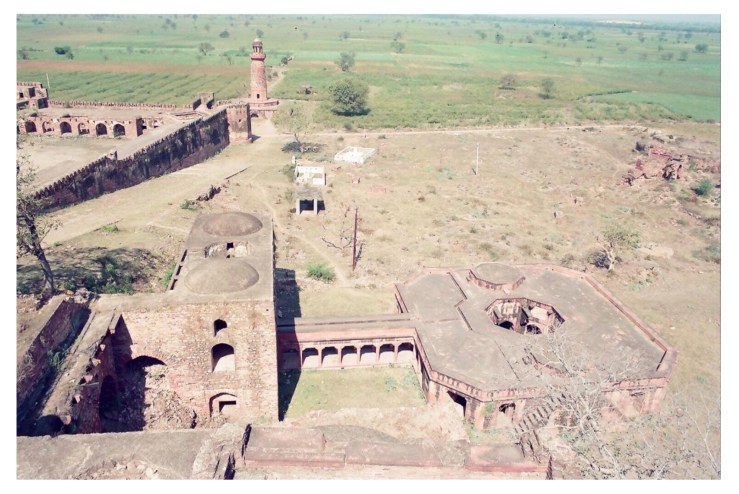
At the first stage, the subterraneous water was raised through the construction of an octagonal bāoli below the Hathipol. This bāoli is shaped in the form of an irregular

octagon, a chamfered square, with each of the principal sides measuring 15.45 metres.

The chamfered sides of the octagon have lengths of 4.60 m. In the middle of this structure is an octagonal well with each side 2.90 m in length. To the north and south of the well are placed two octagonal chambers, the raised vaulted ceilings of which are visible as octagonal platforms from above. A 0.23 m – wide water channel carried the water from this bāoli to an artificial well situated to its west. This water channel runs on top of a 12.15m long and 2.55 m broad aqueduct.

The artificial well (chāh ba chāh, more popularly, chāh-bachcha, receiving water from another well) which acted as the second stage for lifting water is a rectangular structure with two vaulted chambers flanking the circular well on two sides. The well itself is 10.6 m deep and 3.96 m in diameter. From here a water channel (0.23m in width) took the water to a second storage well, which again is flanked by two vaulted chambers. Between the two storage wells, the water was carried to an approximate distance of 10.50 m.

The water brought to this second storage tank was then lifted to a large rectangular tank situated towards the south.

A water channel then emptied the water into another rectangular trough constructed at the level of the floor of the Hathipol. Until this stage the water was raised to an approximate height of 30 meters from the ground level.

Just above the water trough are constructed projecting spaces to further raise the water to the fourth stage atop the roof of the quadrangle to the east of the Hathipol. A set of aqueducts diverted the water from this roof to the two storage tanks constructed on the first floor of the structure flanking the second Gateway after the Hathipol.

From here the water was again raised to a fifth stage, and, through a channel running atop the gateway entered the haramsara complex through the north-western corner of the so-called “Birbals’ House” quadrangle (the first Imperial Palace) .

Another branch of the water channel took the water through the northern walls of the Hathipol daftarkhana to the bureaucratic establishments constructed below the hauz-i Shirin.

Water-lifting Devices

A question which arises at this stage is, how the water was raised to the succession of the chāhbachāhs. We have already quoted Peter Mundy wherein he mentions the use of ‘Noraies’. Bishop Heber visited Fathpur Sikri In 1825 AD.

Describing the water works, although confusing its location and attributing it to be adjoining the Jami Masjid, he writes:

… and the whole hill on which the palace stands bears marks of terraces and gardens, to irrigate which an elaborate succession of wells, cisterns, and wheels appears to have been contrived adjoining the great mosque, and forcing up the water nearly to the height of its roof. The cisterns are still useful as receptacles for rain-water, but the machinery is long since gone to decay.

Evidence from Miniatures

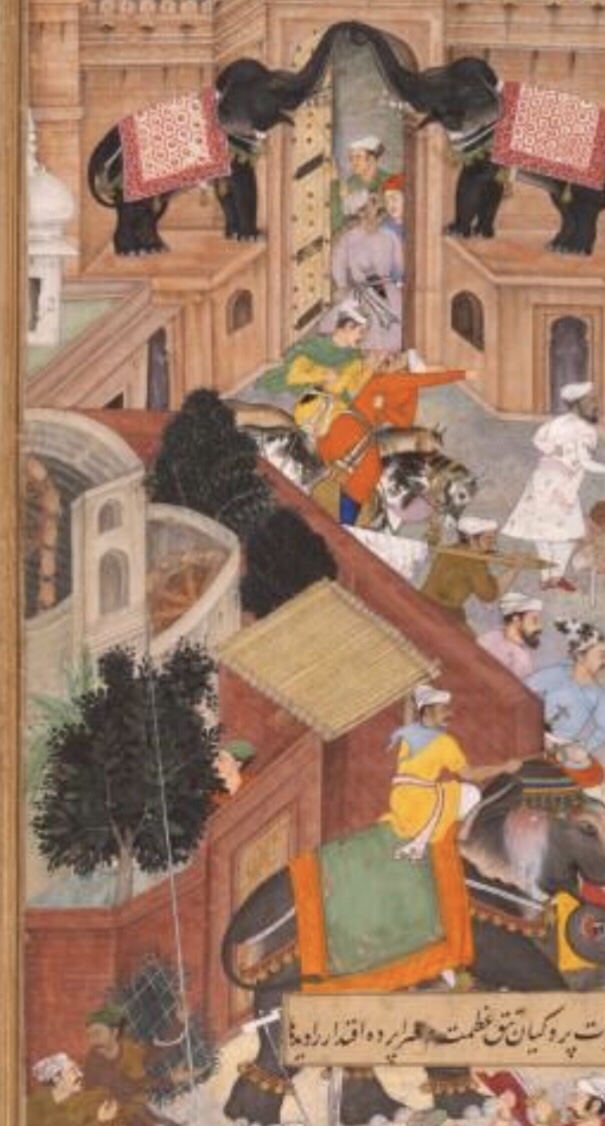
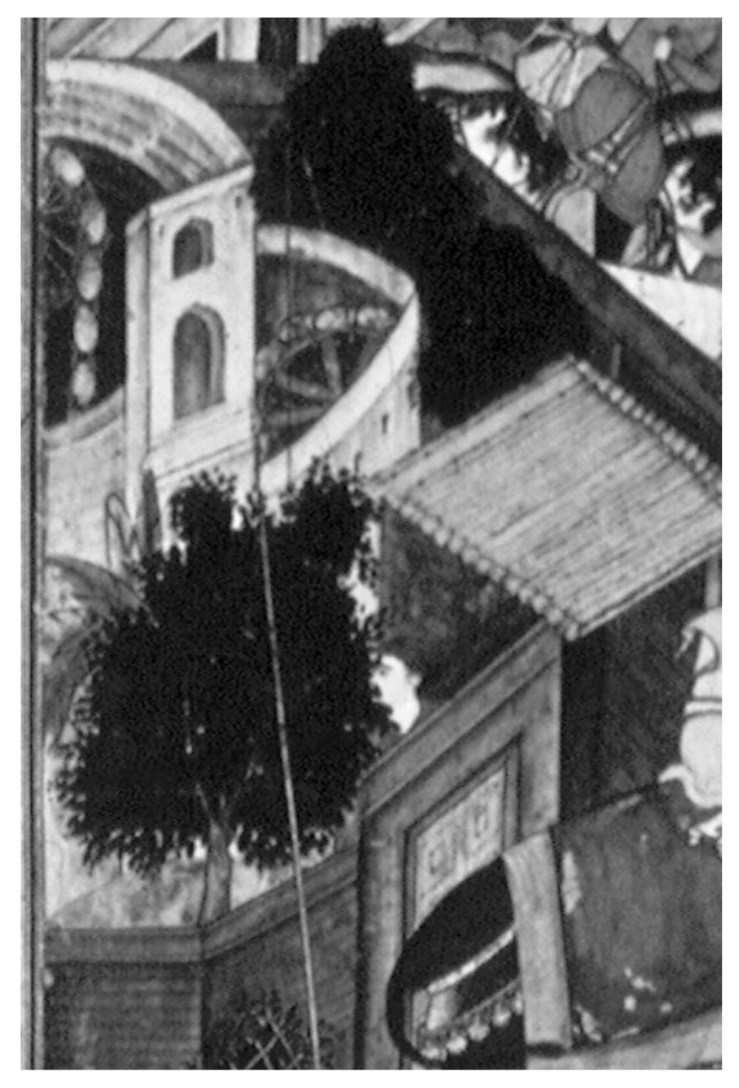
Two Akbarnama paintings depict this water lifting device which was used to raise the water in the northern water works. (See plates 1&2) The first miniature, which was

designed (or outlined; tarah) by Tulsi and painted ( amal ) by Bhawani, depicts a Persian wheel drawing water from a well near the Hathipol, which is under construction.

The second depicts Persian wheels at two stages near the Hathipol.

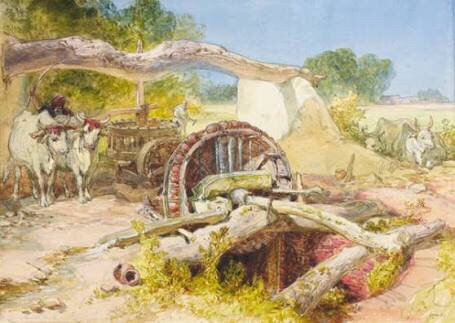
The Persian wheel, as we know, was a device which was based on the technique of pin-drum gearing. It comprised of a wheel, fixed on the mouth of the well, which contained a string of pots (māla). This wheel atop the well was connected with a second wheel through a shaft. The second wheel fitted with wooden pegs (pins) was rotated

vertically by horizontally rotating a pin drum (i.e. a double-drum, whose two layers are joined at the rim by pegs placed at the same distance as on the rim of the other wheel.

The horizontal motion to the drum was provided through draught animals harnessed to it through a shaft. According to Abul Fazl Akbar had invented a way of raising water to a

great height from a low level through the water wheel. To quote:

His majesty made such water wheels (daulāb-ha), and such (gear) wheel (gardūn-ha) were fixed thereon, that water may be carried to a height from distant low-lying places.

This was due to his placing the pin-drum at much higher level than the draw bar of the oxen turning round the axle. This meant that the water would be drawn up through

the chain of pots to a height considerably above the oxen, where the mouth of the receiving aqueduct could now be placed. It happens that two paintings in Nizami’s Khamsa prepared in Akbars atelier illustrate such a device.

A closer took at the octagonal bāoli of the Northern water works and its storage wells reveals the provision of stone shafts which once held the vertically rotating wheel of pots. The draw-bars which rotated this wheel were placed in the two vaulted chambers, which we have noted flanked the well in the bāoli and the two storage wells. Similarly, protruding stone beams fixed atop the rectangular cavities near the Hathipol lifted the water atop the roof of the eastern quadrangle. Thus we see that the Northern waterworks was a complex of storage tanks, storage wells and Persian wheels which helped the water to be raised at five stages to reach the level of the Imperial complex atop the ridge.

The Southern Waterworks

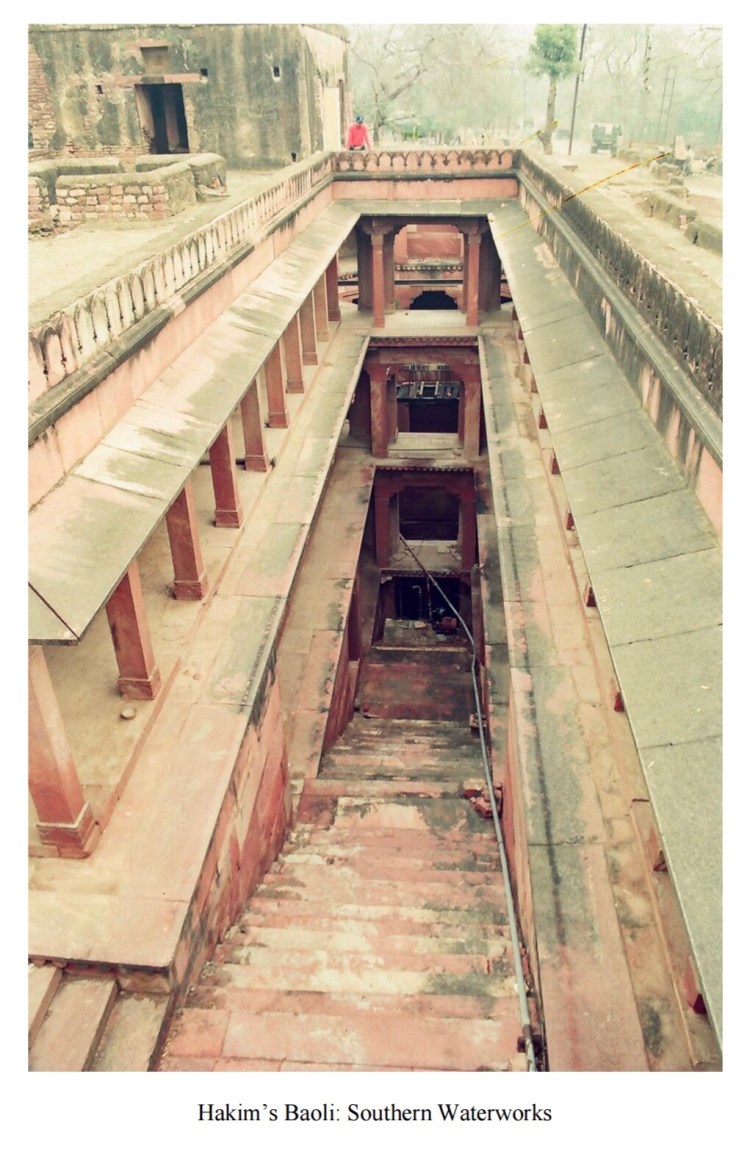
The Southern water-works which centred around the bāoli attributed to Shah Quli, near the Hakim’s Baths, survives in a much more dilapidated condition. From here the water was supplied not only to the daulatkhāna but also to the civic population living in the areas south of the ridge.

Shah Quli’s bāoli appears to be the largest step well at Fathpur Sikri and comprises three storeys surrounding the octagonal well. Water drawn from this step well with the cutlasses fixed in the two chambers adjoining the well was carried through ducts to a raised storage tank situated in front of the Hakim’s Baths. From here the Persian wheels lifted the water, which was then distributed through aqueducts into three directions, the north, east and west. In the north, the water emptied into a tank situated near the massive ‘Sukh tāl’ adjacent to the Imperial Baths, from where it was taken to the Baths and garden of the daulatkhana.

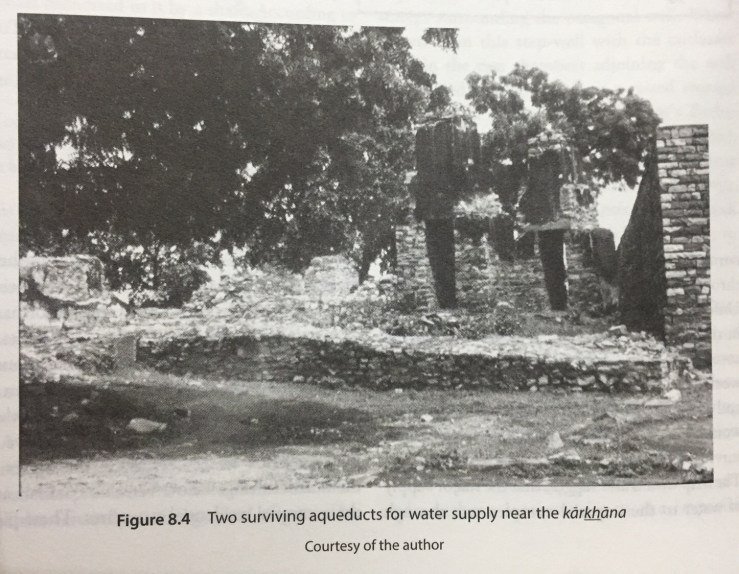
In the area between the southern wall of the daftarkhana and Shah Quli’s bāoli a number of piers which once carried water ducts still survive. Similar aqua ducts appear to have been constructed to the east of the storage well. During the course of the survey, bases of two such piers were encountered.

The water thus supplied from the northern and southern water works to the Imperial complex was distributed to various sections through the conducts running between the wells. Unfortunately, we encounter a number of gaps in these channels running through~ the Imperial complex. This probably is due to the renovation work which was undertaken under Lords Mayo and Curzon.

A physical survey of Fathpur Sikri reveals that still enough evidence survives to connect the various palace complexes. The major supply to the Imperial complex was through the Northern water works, whereas the Southern water works catered mostly to the needs of the civic population a function which it still performs.

Apart from the bāolis, wells and tanks, a number of piers of the aqua ducts survive around the city of Fathpur which give us same idea of how water was carried from one area to another. For example a series of such piers survive in the area below hauz-i shirin, on the slopes of the northern ridge, below the so-called Tansens’ Bāradari and the excavated residential structures. These piers carried the aqueducts which connected the Northern works with the large water tank situated near the nobles, houses, mentioned earlier. This massive tank is 28.10 m. wide and 67.40 m long. Probably the entire needs of the Eastern area were met through the water stored in this tank.

It is also important to note that the individual residential structures, which have been excavated at Fathpur Sikri in most cases, seem to have had their own water storage tanks.

There are still areas in Fathpur Sikri, for example the areas in the South-west about which not much is known. A number of wells survive in that region, but they appear to be insufficient to cater to the entire needs of the population who must have settled there, The water must have been carried from here to individual houses through water carriers.

• Syed Ali Nadeem Rezavi