Sculptural Art in North India (13th -16th C)

I am no expert of Sculptural Art. However here is my take on the development of this art during the period of the Delhi Sultanate (13th to early 16th Centuries). Please do forgive and correct If I make any faults.

• S. Ali Nadeem Rezavi

After the 12th century Indian art fell in the grip of the medieval trend which asserted itself in practically all regions of North India save Orissa. This trend expressed itself in mass production of images fashioned under rigorous canonical prescriptions of proportions, stances and attributes, and iconographic formulae, uniformed by any vision or inner experience of the artist. The plasticity of the fully rounded and modelled form, which was the distinguishing hallmark of early Indian Sculptural art, was now replaced by flat surface, and linear angularity with stress on over-ornamentation, attention to meticulous details and strained, often highly exaggerated flexions in the place of innate dynamism. The outline which had so far remained supple and almost convex now gave way to concavity with emphasis on horizontals, verticals and diagonals and natural expression was substituted by mechanical grace and manneristic elegance, turning sculptural art into a mere craft. The only region which escaped this development was Orissa. According to N.R. Ray, these medieval elements were the accumulated result of a continuous ethnic fusion of northern racial elements that poured into the plains of North India from Central Asia in the centuries preceding and following the fall of the Gupta empire.

Orissa

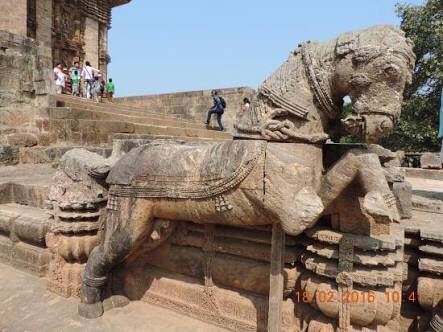
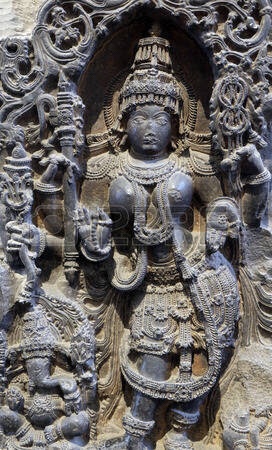
Orissa developed a regional school of art and architecture originating in the 7th century with the early group of temples at Bhubaneswar, which is a city of prolific temples, and culminating in the 13th century with the majestic Sun temple at Konark. The course of evolution in Orissa is towards a greater elaboration of the plan and elevation and increasing sophistication and proliferation of the ornaments, figurative as well as decorative. Till the 10th century the Orissan temple consists of only the sanctum and a hall attached thereto, both embellished with a single row of sculptures on the exterior face but from the 11th century onwards, other halls are added to the complex and all components are adorned with two rows of figures, besides numerous decorative friezes. Through all the centuries the plastic and decorative ornaments in Orissa form integral part of the temple fabric and blossom forth from it. As Stella Kramrisch says:

‘architecture in Orissa is but sculpture on a gigantic scale’.

Such an impression grows emphatically as one faces the sprawling grand mass of the temple ruins at Konarak laden with a bewildering array of rows upon rows of sculptures, mostly executed in bold relief along with some carved fully in the round, like the colossal figures of free-standing elephants and horses and standing females, singing or playing on musical instruments, depicted on the roof tiers of the mandapa.

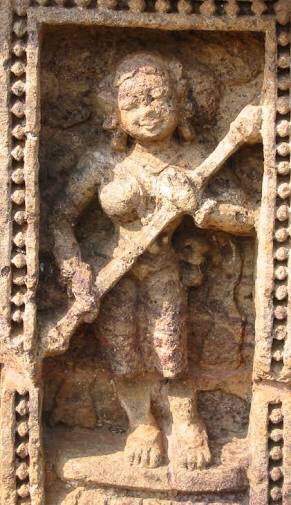
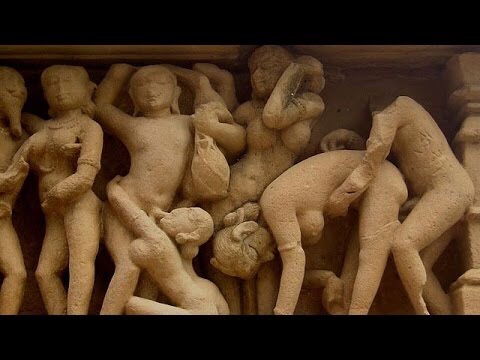
The sculptures comprise besides gods and goddesses, a profusion of nymphs, loving and erotic couples and animals, realistic as well as legendary.

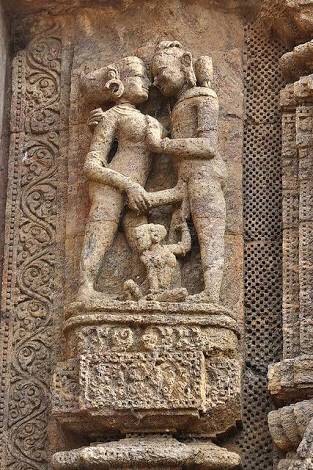
Even the cult images in Orissa are informed by a dynamic vitality, dignified bearing, sinuous modeling and monumentality of composition. The non-iconic figures have all these qualities besides others. They are distinguished by an ecstatic joy of living, a luxurious appearance and bearing, and a delightful abandon of feeling and emotion.

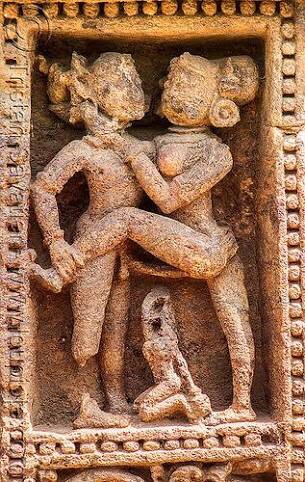
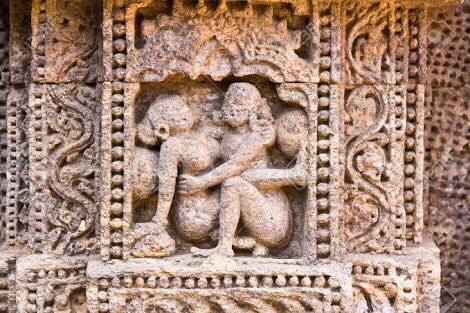
The erotic sculptures of Konarak, which by their vividness and character attract the visitor’s notice, have lent themselves to various interpretations and have even evoked criticism from some quarters. Whatever be the interpretation of these scenes, these have undoubtedly provided some of the finest sculptural compositions which vibrate with a rare sensitiveness and warmth of human emotion and are remarkable for their sculptural quality. It may be pointed out that a strong sensual element runs through the art, literature and folk tradition of India and some other countries and this expresses itself in various forms. It is present in the Indian art of all periods and our literature, more than that of other countries, is full of love adventures and sparkles with sexual motifs, often of the uninhibited variety.

The erotic depictions might therefore have grown from the charming mithuna motif of our early art and tradition. It is quite likely that these artistic representations, which are exuberant manifestations of the creative urge, have sprung from a deep rooted tradition with a social and possibly also religious sanction.

Besides gods and goddesses and idealized representations of Surasundaris (nymphs) and Salabhanjikas (woman and tree motif), and heavenly musicians and imps, realistic contemporary life was also depicted on the temple reliefs and friezes, figuring kings and courtiers, armed processions and hunts, teachers expounding or imparting lessons, dancers and musicians, acrobats and jugglers, and common people engaged in miscellaneous domestic chores at Konarak as also on the many coeval temples built in various art centers of Orissa, dominated by Bhubaneswar.

Central India

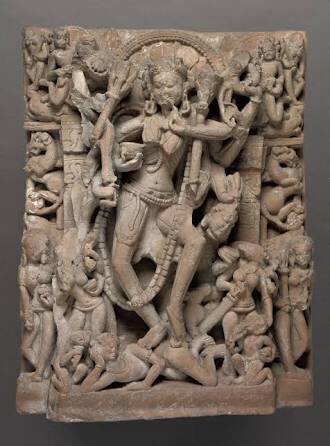
No temples of the period under review have survived in the North India plains which were overrun by the invading armies. Some temples situated in the hilly or forest regions or in obscure places which were away from the beaten tracks of the invading armies, however, did escape destruction. The better known of such temples in Central India are briefly noticed below.

Two Siva temples at Ganai and Deor Bija in District Durg, both dating from c.A.D. 1300, are saptaratha (square with seven offsets on each side) on plan with Nagara sikhara (curvilinear spire) and bear two rows of figures in folkish style on the jangha (wall) and the usual iconic representations on the sanctum doorway. The Gandai temple has besides, a labeled frieze of the Pandava heroes accompanied by their wife Draupadi and mother Kunti depicted on the architrave of the doorway.

Chhapari in Distt. Rajnandgaon has a Siva temple known as Bhoramdeo of saptaratha plan with a seven-storeyed Bhumija sikhara and a jangha embellished with three rows of sculptures. The temple, dating from early 13th century, abounds in religious as well as secular figures including erotic couples and groups, but these are all crude and lack sophistication. Some of its architectural motifs and figures show unmistakable influence of the contemporary Kakatiya art flowing from the adjoining region of Andhra Pradesh.

Malwa under the Paramaras of Dhar is known for Bhumija style of architecture which is usually but not invariably stellate on plan. Its most distinctive feature is its sikhara (spire) which shows four spines decorated with the usual mesh of caitya-arches on the central offsets, but the quadrants between the spines are filled with miniature shrine-models on pilasters, arranged in five to seven storeys of three to five horizontal rows. A maximum of nine storeys is permissible though seven storeyes produces the optimum aesthetic result. Bhumija style had a wide diffusion east and west of Malwa and particularly to the southwest in Maharashtra.

The Siva temple at Alirajpur (Distt. Jhabua) is one of the latest Bhumija style temples, assignable to c.14th century in Malwa. It has a stellate saptaratha plan adorned with only three figures on the jangha of which just one, representing Nataraja of indifferent aesthetic merit, has survived.

The old Chandela hill-fort at Ajaygadh (Distt. Panna) in Bundelhand has three temples assignable to the 13th century, of which two are of the stellate Bhumija class. The temples are composed of a saptaratha sanctum, an octagonal mandapa and a porch. Every inch of their exterior as well as interior is carved with floral and geometrical patterns and animal friezes revealing a promiscuity of three coeval styles, viz. Kalachuri, Chandela and Paramara of Central India.

Rajasthan and Gujarat

From 12th century onwards Rajasthan loses its architectural individuality. A substantial part of Rajasthan now passed under the hegemony of the Solankis of Gujarat whose cultural sway was even more effective with the result that henceforth Rajasthan became a province of the Solanki style, as evidenced by the later temples at sites like Chittor and Ranakpur.

The climax of the medieval architecture of the Rajasthan and Solanki styles was reached in the Dilwara group of Jaina temples at Mount Abu, of which the most important are the Vimala Vasahi and Luna Vasahi, built, respectively in A.D. 1031 and 1230, by Vimala and by the brothers Vastupala and Tejapala, the two ministers of the Vaghela rulers of Gujarat. Each consists of a sanctum, a closed hall with lateral transepts, a pillared portico and an assembly hall in front, the whole placed in a quadrangular court, surrounded by an enclosure of shrine-cells facing two bays of colonnaded corridors. The external appearance of the temple with low roofs and a plain enclosure wall is unimpressive in sharp contrast to the exuberant decoration of the interior.

The assembly hall has lavishly ornamented pillars, surmounted by attic sections, with multicusped torana-arches in between. The architraves are heavily ornamented and support a circular ceiling of 10 diminishing rings loaded with a bewildering wealth of carvings of which the most impressive are the 16 figures of the Vidya-devis and the magnificently designed central pendant. These rings are further decorated with friezes of elephants, goddesses, dancers and musicians, horse-riders and female dancers, alternating with cusped and coffered courses. The ceilings and architraves of the lateral bays of the assembly hall are lavishly embellished with carvings including narrative and mythological reliefs.

These narrative reliefs displayed in squares within squares or in parallel rectangular panels depict such scenes as the battle between Bharata and Bahubali, renunciation of Neminatha, birth-rites of Krishna and his childhood exploits like Kaliyadamana, Samavasarana of Adinatha, etc. The central pendant of the mandapa ceiling “hangs from the centre of the dome more like a luster of crystal drops than solid mass of marble or of stone”. As Henry Cousens says

“The amount of beautiful ornamental detail spread over these temples in the minutely carved decoration of ceilings, pillars, doorways, panels and niches, is simply marvelous; the crisp, thin, translucent, shell-like treatment of the marble surpasses anything seen elsewhere, and some of the designs are veritable dreams of beauty. The work is so delicate that ordinary chiseling would have been disastrous. It is said that much of it was produced by scraping the marble away, and that the masons were paid by the amount of marble dust so removed.”

Lavish ornamentation, however, was carried here to an extreme, without regard being paid to structural propriety or proportion with the result that the walls of the assembly hall look stunted and the visitor is lost in a labyrinth of fretted and traceried ornaments with a fatigued mind which looks in vain for respite and pose, two essential qualities of good architecture.

Building activity in the Solanki style continued in Rajasthan till the 16th century. Noteworthy examples of the later phase of the style are the nine-storeyed Kirttistambha (Tower of Fame) and Sringara-Chauri built by Rana Kumbha between A.D. 1440 and 1448, and the Satbis Deodhi of cognate style at Chittorgarh and the Sun temple and the Jaina Chaumukha temple at Ranakpur.
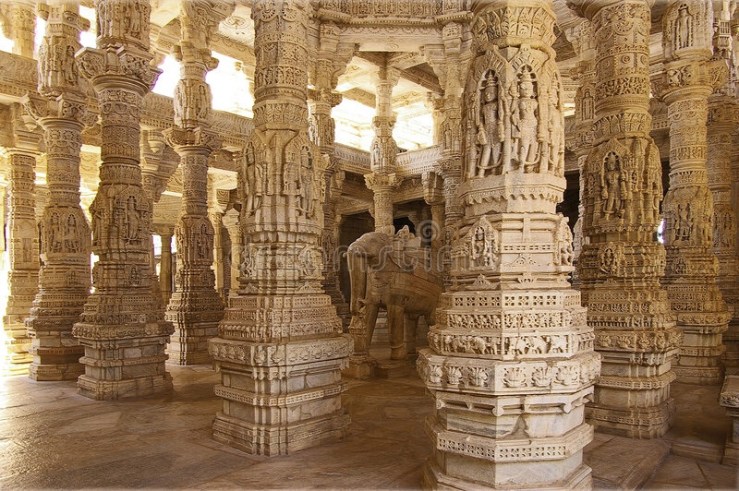
The last temple, also constructed during Rana Kumbha’s reign, is one of the most magnificent temples of North India, covering an area of over 3716 sq. metres and consisting of 86 sub-shrines besides the grand central one, and 29 halls containing 420 pillars, each different from the other.
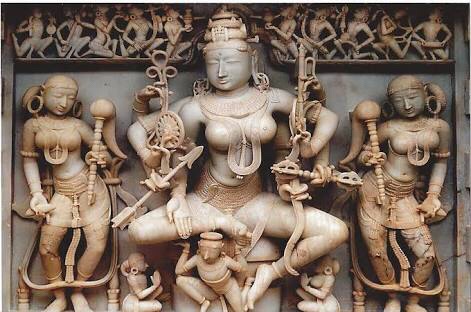
Temples continued to be built in the late Solanki style in its home-land of Gujarat till the 17th century. Like Mount Abu in Rajasthan, the mountain sites of Girnar and Shatrunjay in Gujarat were each lavished with many Jaina temples, the largest pertaining to the 14th and 15th centuries.

All these temples in Western India were necessarily adorned with icons of gods and goddesses, and sculptures of demigods and godlings, nymphs and humans, besides decorative designs derived from geometry, symbolism and plant and animal kingdoms. The art now has ceased to be creative and the figures are generally elongated and depicted in rigid, manneristic stances. The figures suffer from over-ornamentation and pointed angularity with deeply cut sharp outlines. They often lack coordination of parts and the larger iconic compositions are disposed in compartmental registers. Whatever grace or elegance the sculptures now exude is all artificial, lacking naturalness or inner vitality.

After the 12th century art in all regional schools of North India save Orissa got bound in the rigid shackles of iconographic prescriptions and became desiccated of classical impact.
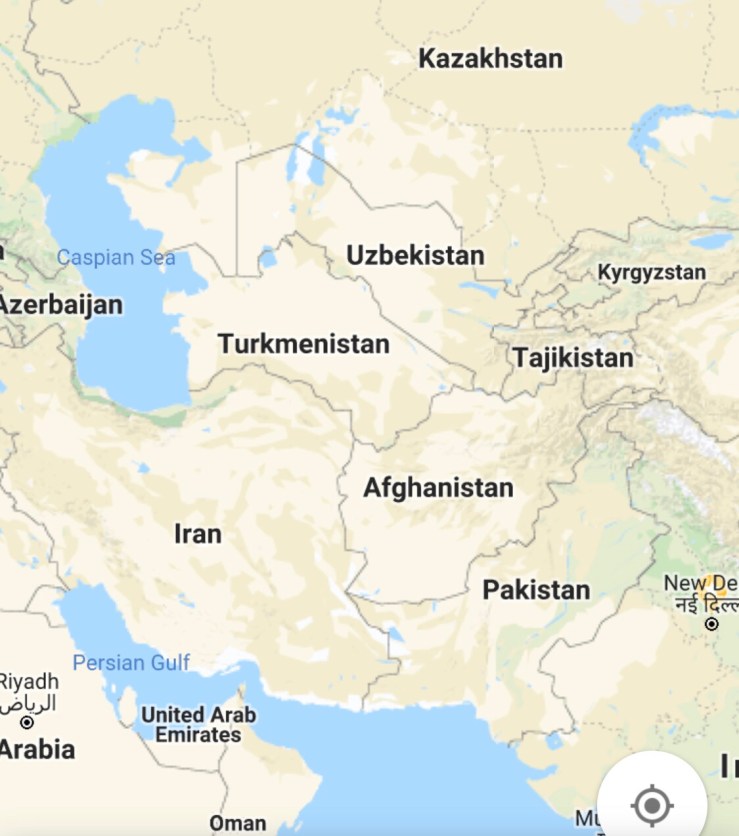
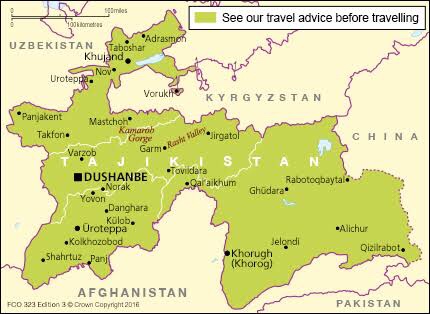
A Trip To Tajikistan On The First Anniversary of 9/11

It was on 11 September 2002, the first anniversary of the 9/11 that I travelled for the first time to Central Asia.

It was a conference in Tajikistan which had become independent in September 1991 from Soviet Russia.

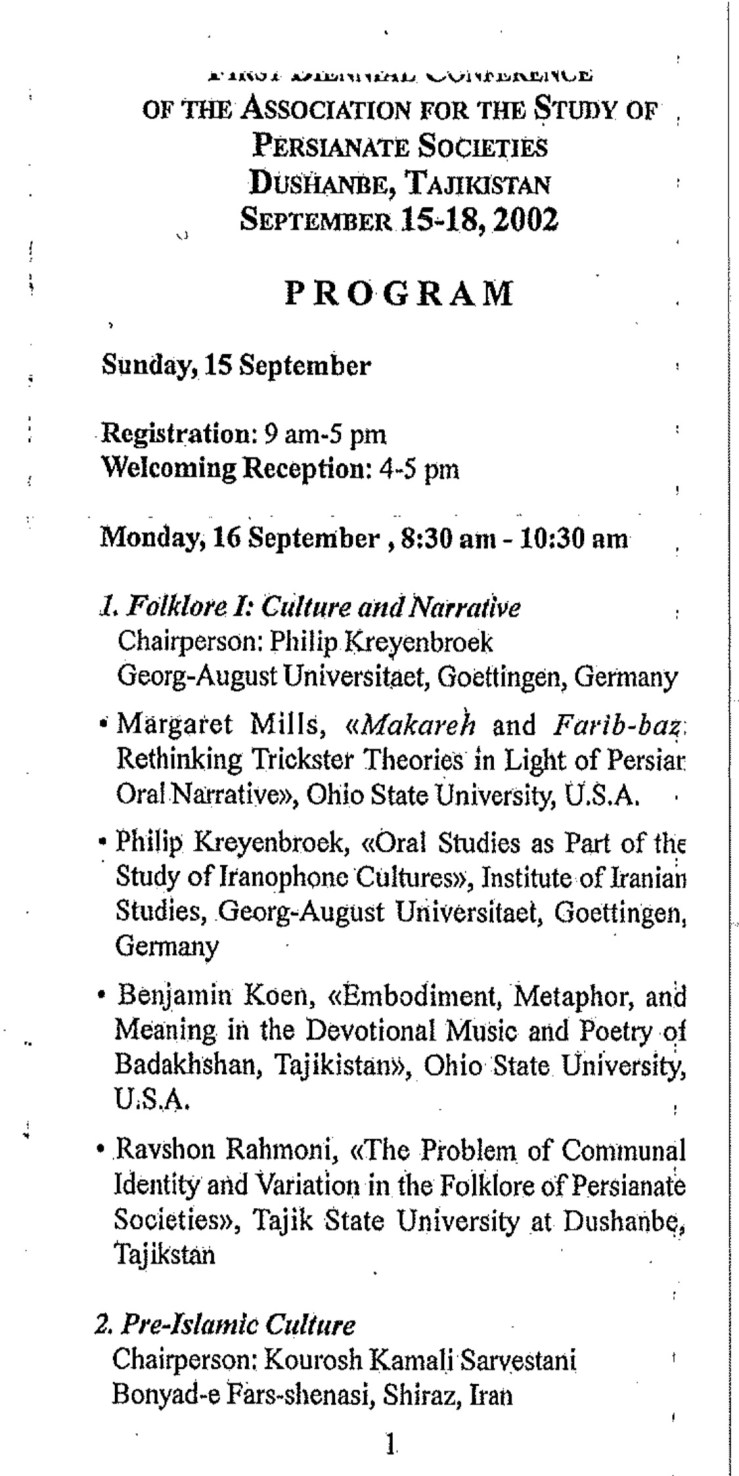
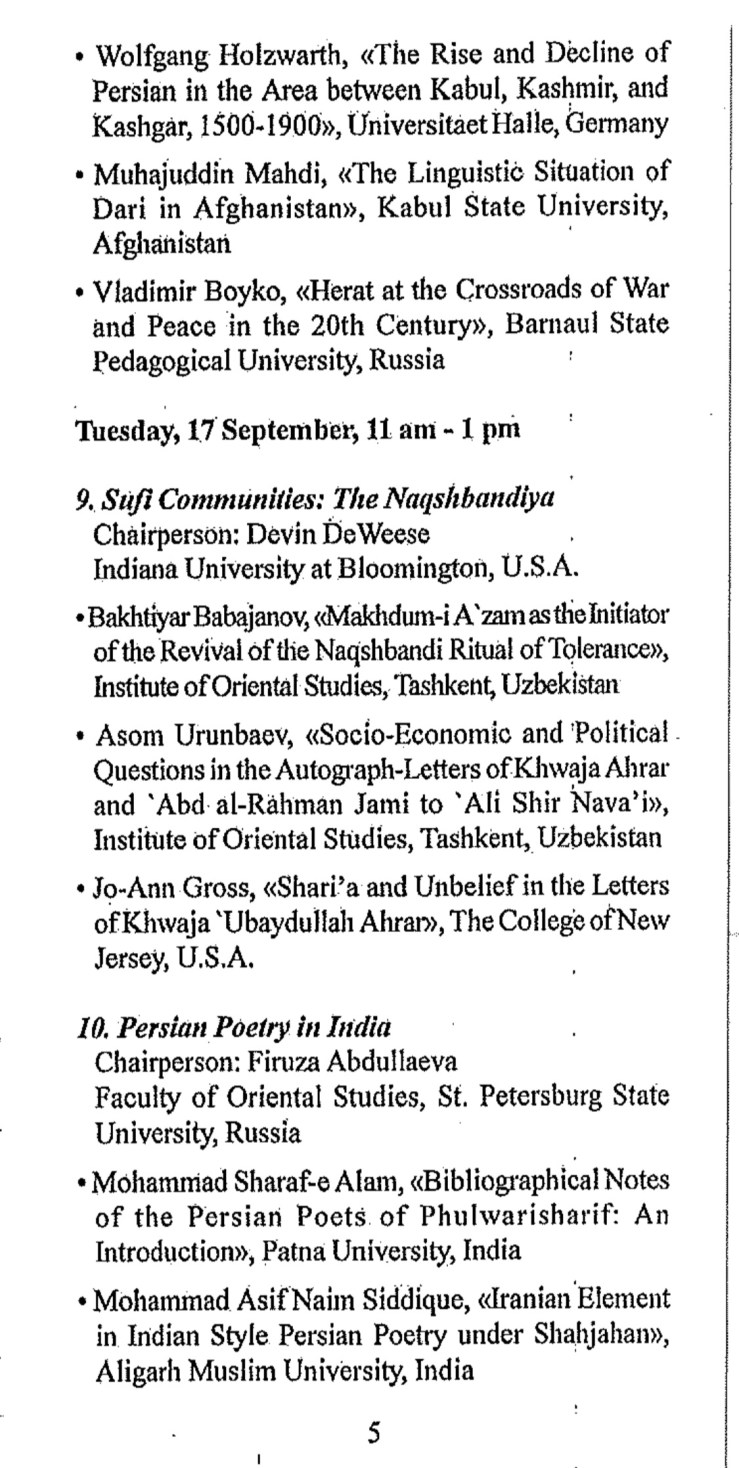
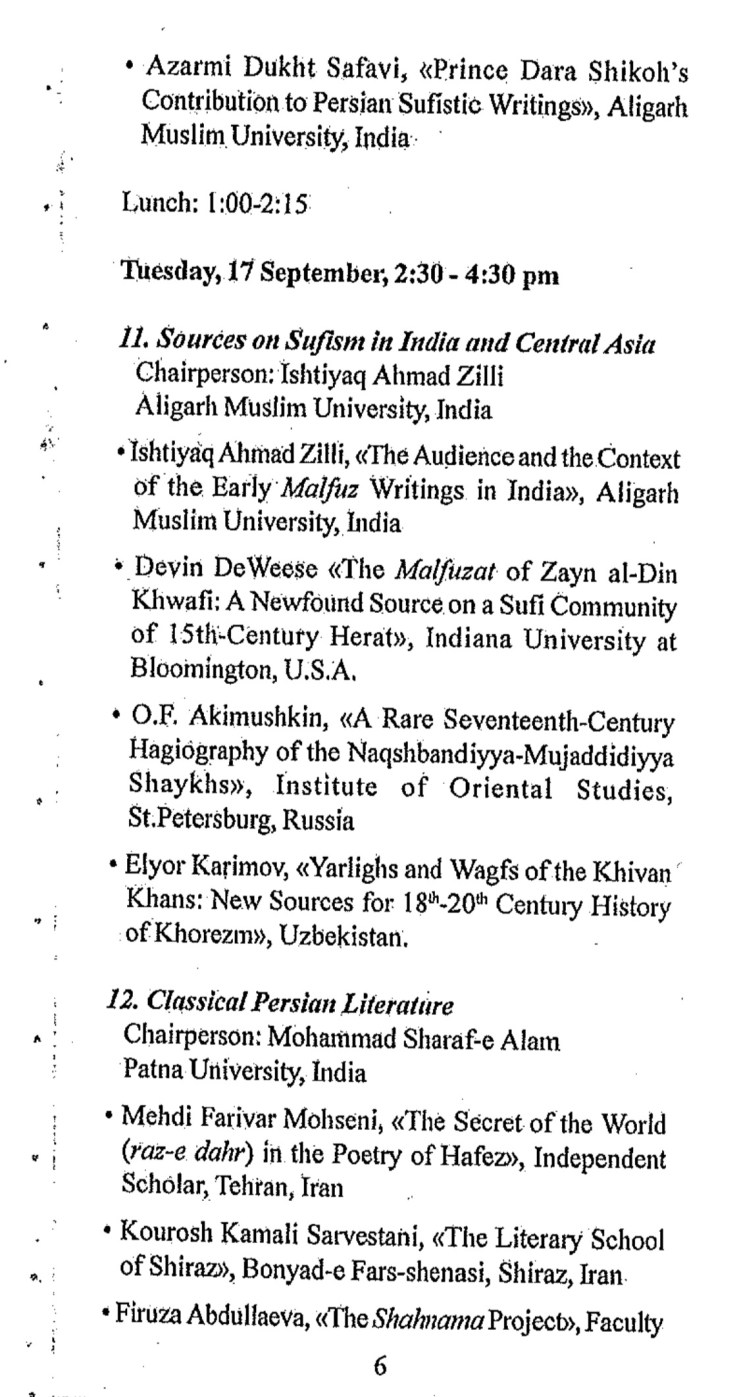
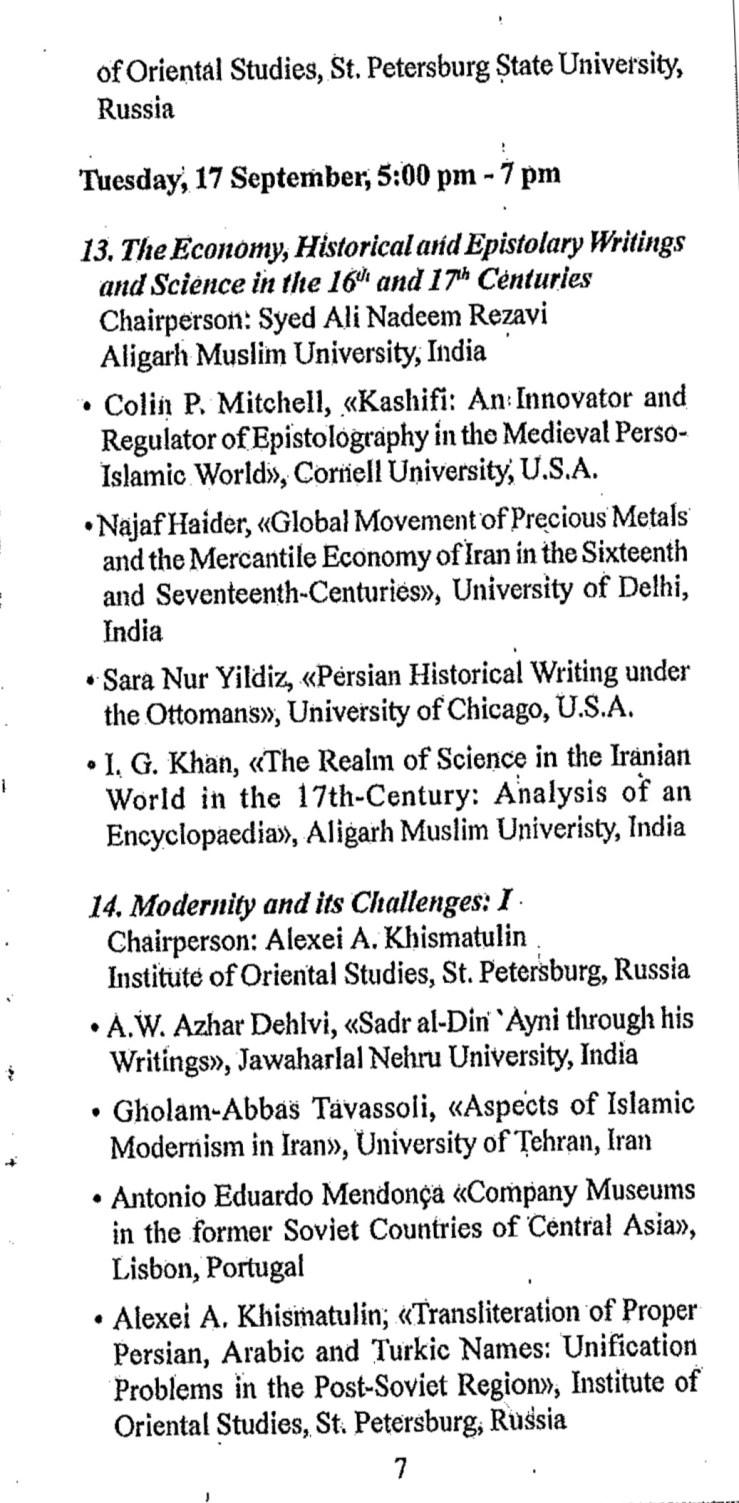
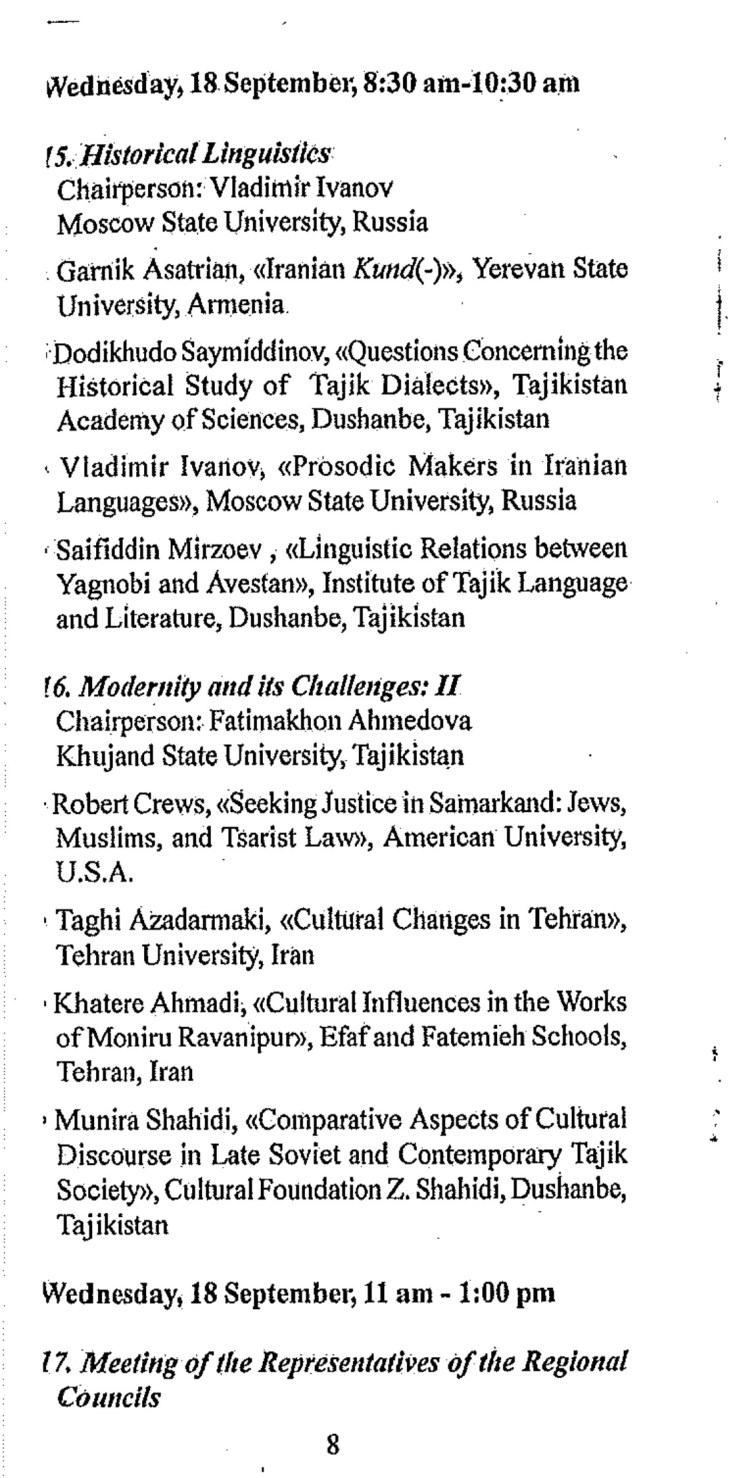
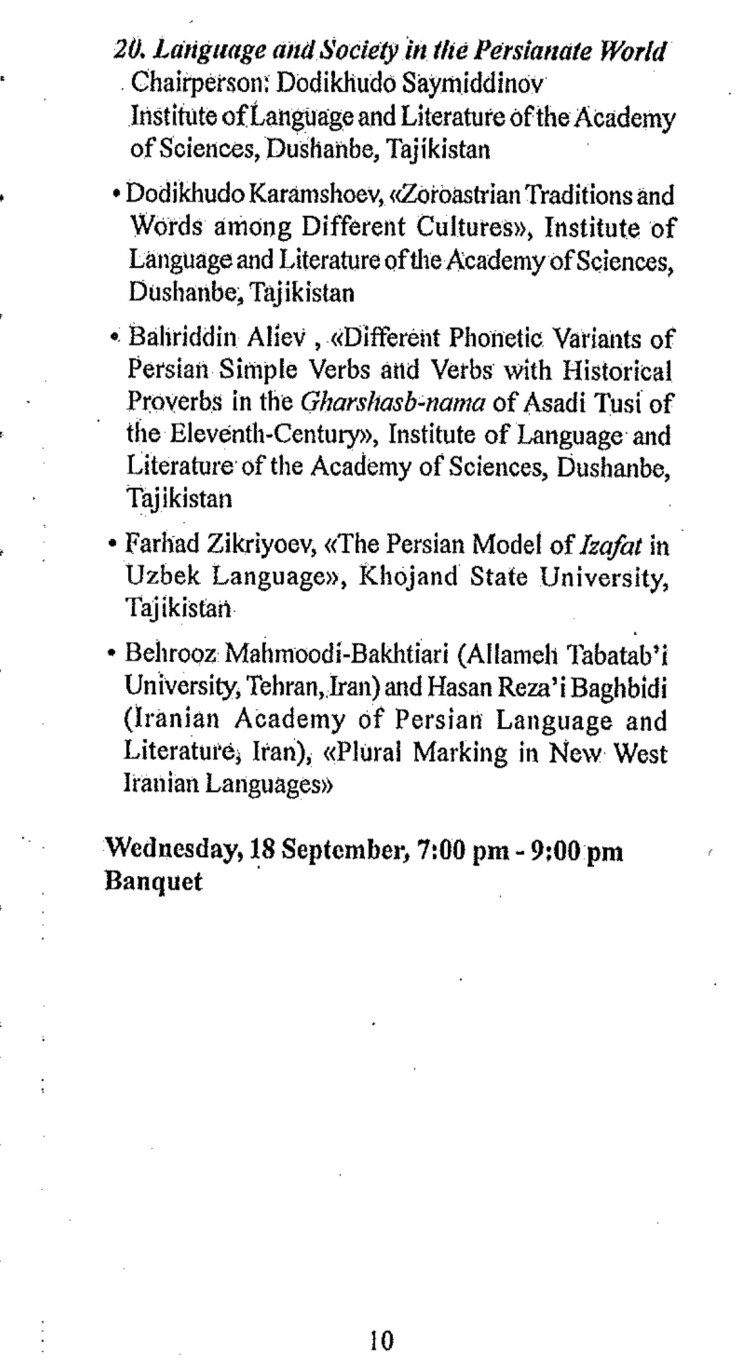
Entitled as ‘The First Biennial Convention of Association for the Study of Pcrsianate Societies (ASPS)’ it was scheduled to take place in Dushanbe, the capital city of Tajikistan between 15—18 September, 2002.

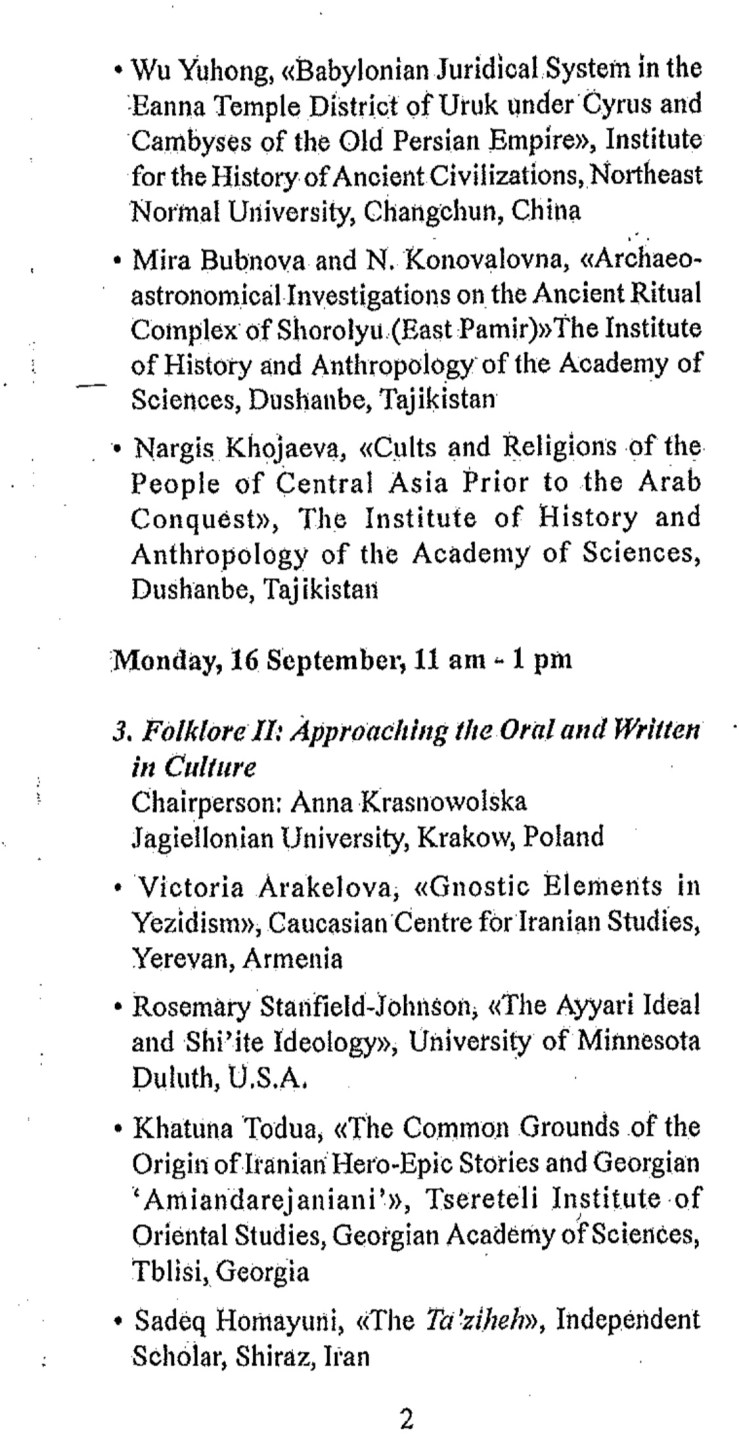
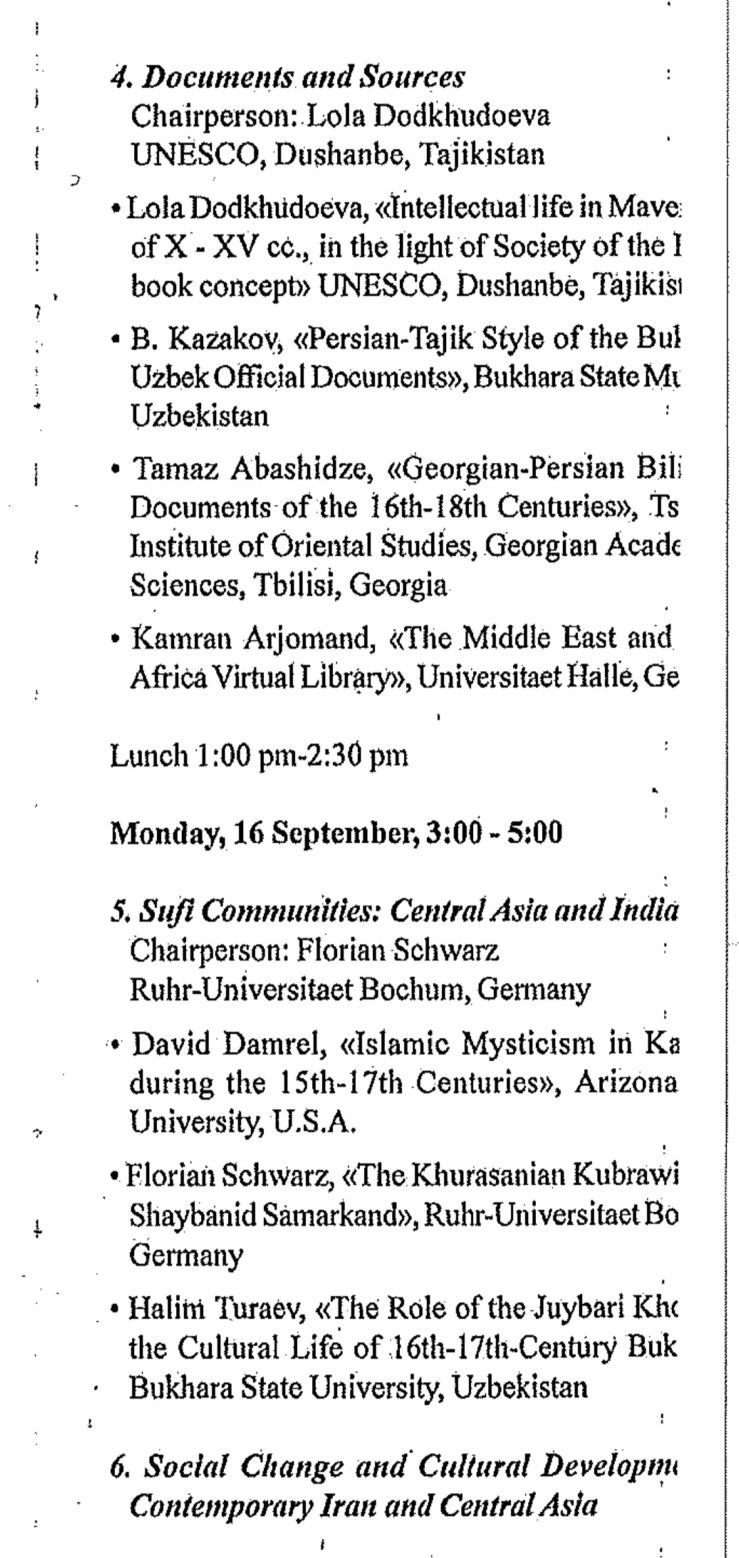
This conference was to be held with the cooperation of the Academy of Science of the Republic of Tajikistan, the Rudaki Institute of Language and Literature, and the National Commission ofUNESCO, Tajikistan. Over 60 participants from Armenia, China, India, Iran, Poland, Portugal, Russia, Tajikistan, and Uzbekistan ultimately presented papers covering a broad range of topics that included folklore and oral studies, pro-Islamic culture, literature, Sufism, social change and cultural development, economic history, historiography, modernity and its challenges, historical linguistics, and art and architecture.

There was a team of around half a dozen scholars who were supposed to attend from India: Professor Azhar Dehlavi, Professor Azarmi Dukht, Professor Ishtiyaq A Zilli, Dr Najaf Haider, Dr I G Khan, Dr Muhammad Sharfe Alam and Dr Asif Naeem Siddiqui. Then there were scholars from US, UK, Iran, Armenia, Azerbaijan etc

Programme Brochure for the Conference

The Journey

During that period there was no direct flight to Dushanbe. We had two options: either go via Moscow or via Tehran. In fact from Tehran too there was only one flight per week! The flight we chose was an Emirates flight to Dubai and then to Tehran. At Tehran we had a stay of two days before heading to Dushanbe.

I remember two or three things about our journey to Tehran via Dubai. We were flying on the exact anniversary of 9/11. We expected much security checks, and our expectations were not belied! I remember that after I had checked in and handed over my suitcase, I committed the mistake of calling out Professor Zilli who was wearing a Sherwani and sported a beard. Soon after, both of us were summoned, taken to a cordoned off area, asked to identify our respective suitcases which then we were asked to open for a check! Later poor Zilli Sahib had to remark that when we would reach Iran, no one would pester him! He was to regret his words on landing! At Mehrabad Airport the poor man had to face intense checking once again while I, along with others were spared the ordeal! However what we found unique was that most of the airport counters were occupied by Iranian girls!

At Tehran we were taken good care of. We were lodged in the Guest House of Danishgāh-i Noor, an Open University in Tehran. I can never forget the Iranian breakfast comprising of many types of breads, specially nān-i sangīn, the jams and spreads and the roasted meats! And the constant flow of black-golden tea accompanied by snacks. I still remember that almost all tv channels had a Mulla or two giving religious sermons!

On the night of the second day we boarded the flight to Dushanbe! Oh what a craft it was! It’s seats would fold in the front and as dirty as any rickety Indian Roadways Bus! As we boarded, a woman who appeared bulky, all wrapped up in chador came and sat beside me. She to me appeared a middle aged but hey presto! As soon as it was announced that we had left behind Iran and were flying over Trans Oxiana, the Māwrā un Nahr, the region of river Oxus, she started shedding her layers of coverings, and soon I discovered a very modern young Iranian girl sitting next to me!

Being a day flight, we encountered some enchanting views from the windows: the multi coloured rugged hills, and the river which played a great role in shaping the history of this region! The river Oxus, known as Amu Daryā, demarcates the Iranian lands from Central Asia! And it was a marvel to see the meandering river from my window seat!

Reception at Dushanbe

Our arrival at Dushanbe Airport was quite dramatic. The plane was still taxiing when an announcement was made that we were supposed to cooperate with the Tajik security. When the door was opened, in came a stern looking officer with a Russian military cap. He barked at us to come in a cue with our passports in hand. As each of us passed by him out of the aircraft and ascended to the tarmac, our passports were whipped off our hands. On getting down we saw just an airfield with a high security wall pierced by a locked iron gate. No building no structure, just a tree besides the gate. All around on three sides we could see nothing but the mountain ranges, on the fourth was this menacing wall.

We were made to stand for almost an hour near the tree. And then with a clang the gate opened. Out marched a number of sombre looking officers. We are asked to fall in a line and await our name to be called. As each name was called, the person called had to approach the officers who would look at his face, then the photo on the passport before handing it back. With passports in hand one had to pass on beyond the iron gate.

Once outside the gate, we encountered two shed which probably were the airport buildings: the new airport building which now stands there was yet to be built.

Actually we had no clue where to head. From where would we get our luggage? We enquired from a solitary old man who appeared before us and he pointed to the shed at some distance. We all trudged there, and were met by another set of security who after checking our tags handed our luggage to us. As we came out, by now our hosts had arrived with a spectacular Red Volvo Bus which took us to our hotel.
Hotel Tajikistan

The Hotel Tajikistan where we were lodged was a 4-star hotel and built in 1975 and reconstructed in 2002. The renovations were on when we reached there. Half of it was at that moment occupied by the US marines and allied forces which had be to sent in the region to fight against Bin Laden and his Talibans in the War against Terror. One of my distinct memories of this hotel is bumping into American marines whenever we would come out to the lounge or the dinning areas of the hotel.

The floor on which we from India were given accommodation was quite luxurious but some peculiarities were observable: As we entered to occupy our respective rooms, the hotel girl who accompanied, switched on the tv, tuned in to a porn channel and smilingly announced, if we needed live room service, she and others were available, of course on charges! And yes she would accept Indian currency! Of course she knew we came from the land of Amitabh Bachchan! Some of the people who had accompanied us on this trip were quite mortified!

The Central Asian food on offer was spectacular. It was on the breakfast table the first day itself I realised the cravings of Babar for the water melons and musk melons of Central Asia! Never in my life had I tasted such sweet and tasty melons before! Not even in Iran!

The City and its Sites

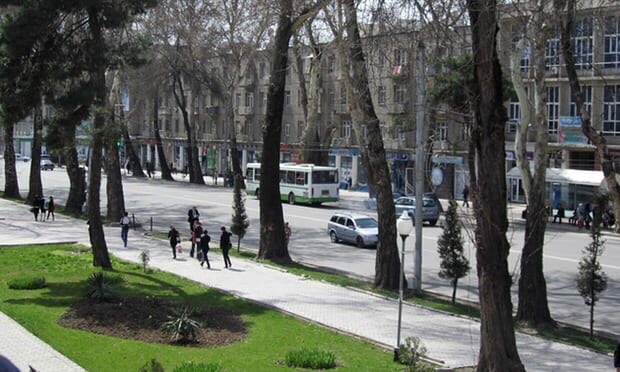
Two or three other things worth mentioning about Tajikistan of those days were that though reeling in economic problems and political unrest, you could never find a beggar on the streets; every citizen had a roof over his / her head; and all schools, whether in the capital or in the suburb, had the same kind of uniform! The roads were wide and lined with beautiful trees. One of the most beautiful roads I remember was the Rudaki Street.
Covered markets with their dry fruit sellers and vegetable merchants with their merchandise spread on the floors, the spic n span meat sellers shops selling all type of meats, from pork to chicken, fresh and frozen, and clean roads are all still fresh in my memories: they were such a contrast from my own town markets those days!

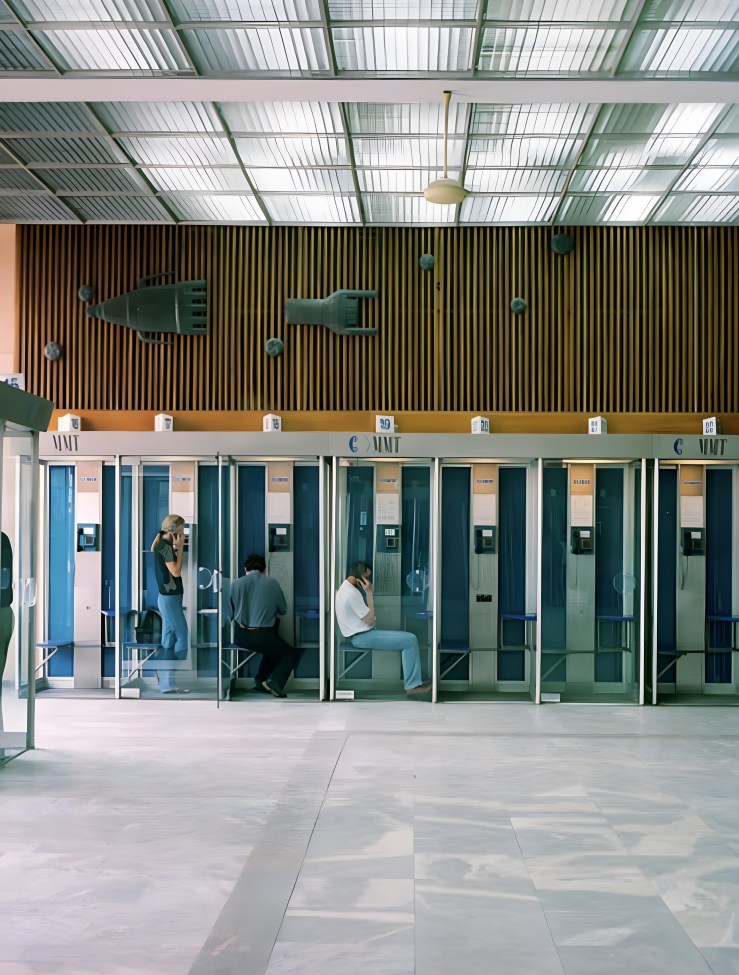
But one thing which gave out that we were in a dictatorship with severe controls over personal liberties was the fact that telecommunications was under strict control. There were no unmanned phone booths, and if you had to make a call, all sorts of details were to be given to the officers manning the booth, and tolerate there listening to your conversation through the call! To make an international call, you had to register and then wait for ages to get through.
But then these suffocations were lessened by the sights this small country offered!

Of special notice for me was the fact that their schools had a similar uniform, whether they were situated in a city or a village, and each citizen had a proper house to be sheltered in. I found not a single person sleeping on the roadside with out a roof on his / her head. Probably this was reminiscent of their Soviet past!

And how can one forget the massive and grand monument raised to commemorate Ismail Somoni!

The Mini India at the Museum

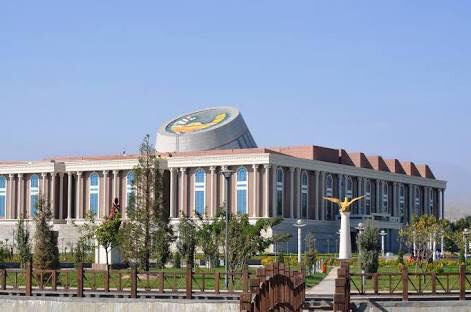
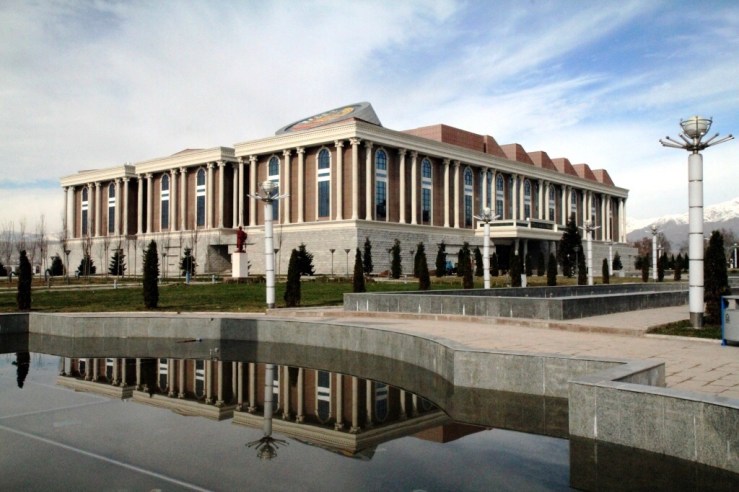
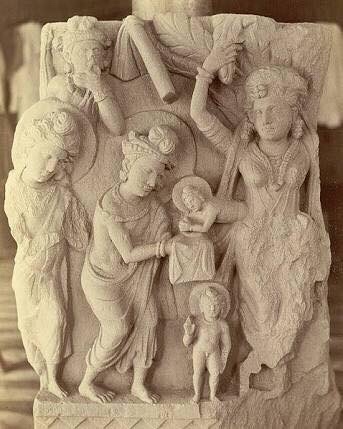
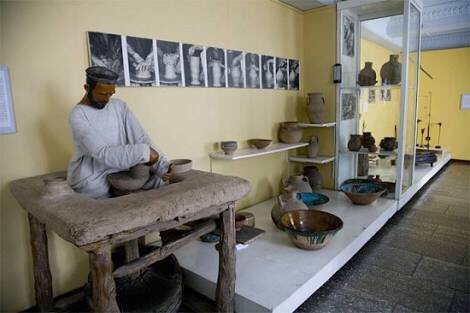
Another place which I remember visiting was the State Museum of Archaeology! As one enters it, one forgets that you are in Central Asia! Buddha images, idols of gods and goddesses, bodhisatvas and the remains of chaityas and viharas abound! After all it was this place where Buddhism had spread and it were these images of Buddha, which provided the name but (from Budh) for all idols!

The Plight of Islam

On the final day we had a grand banquet in which wine flowed like water! One of my senior colleagues from Aligarh, after observing, adviced that we should sit next to the Imām-i Juma of Dushanbe, for that way we would be safe from wine! How was he to know that the most wine which flowed was on that table! The Tajik grand Mulla turned to my colleague to enquire: “Agha shuma musalmān nīst? Chera sharāb na khurī“, Sir are you not a Muslim? Why are you not drinking? You can imagine the look on our man’s face! How he survived that I don’t know!

Yet another episode I remember was going into a glass paned shop selling varieties of meat. One of my accompanying colleague was fascinated by a beautifully laid out tray of pork: as he was trying to read what it was, the meat seller said: “Agha īn halāl ast!”

Trip to Hisor

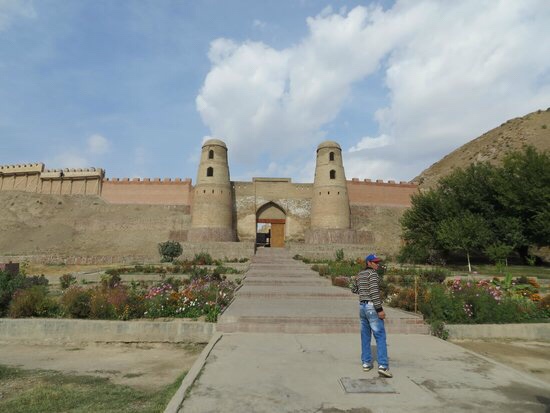
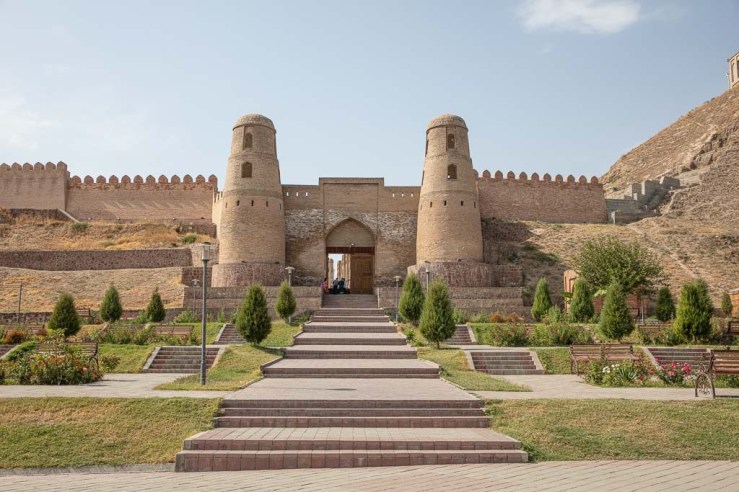
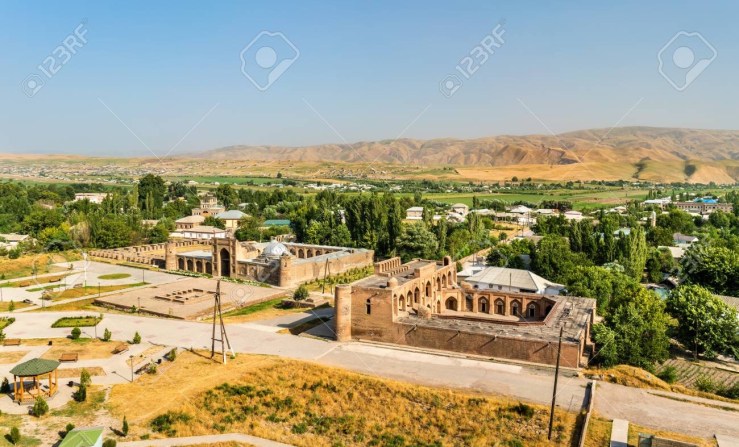
During our stay in Dushanbe we were also taken for a day trip to a site of an old city Hisor. It has the ruins of a fort, a madrasah and a few tombs. This ancient city was once an independent Khanate, and then the winter residence of the governor of East Bukhara. The large fort situated on a hill above the city is said to date back to Cyrus the Great and to have been captured twenty one times.

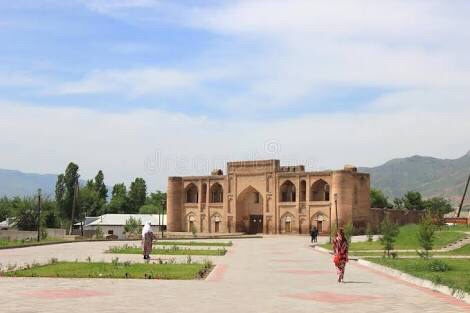
Just in front of the gate of the fort, below the hill is the madrasah which has since been converted into a museum. What hit me straight was that the architecture and the ground plan of this madrasa is such that it instantly reminded me of a carbon copy of it at Thanesar in India, the Madrasa of Shaikh Chilli!

Behind the madrasah are two tombs which are said to belong to some Naqshbandi saints, whose names I now forget.

The Site of Miracle of Imam Ali

Just in front of the gate of the fort, is a square platform with a tree and a spring. We were told that they were Shajar-i AliSher and Chashma-i Ali Sher. Today a hujra (chamber) has been constructed there.

Initially I thought that this place has something to do with the great poet, Ali Sher Navoi. But later realised, Ali Sher was none else than Imam Ali! A local Tajik told us that Imam Ali once appeared here, rested at the spot where the platform is, and kicked the ground when he was in need of water. Where he struck a spring came forth. He is also said to have plucked fruits from the tree growing nearby!

Thus what I saw in 2002 was that people come to this spot, take off their shoes, go to the spring, drink it’s water, apply it on their face, munch a leaf or two of this plant and pray for their wishes to be fulfilled!

It was a real surprise to find a miraculous spot of Ali in the land of Naqshbandis! Naqshbandis are the only silsila (chain of sufis) who do not claim their origin from Imam Ali.

What I found interesting was that people go to the tomb of Naqshbandi saints situated nearby wearing shoes, but take them off before climbing on the platform popularly known as “Shajar Ali Sher” where as per the myth Imam Ali appeared!

Remember that the Iranians who were with us on the trip sat there and one or two of them recited manqabat of Imām Ali in quite sonorous and beautiful intonations…

Caliphate, Imamate and People’s Will

Someone asked me today as to how far would it be correct to say that Sunnis are more democratic than Shias who are dynasts: the Sunni Caliph having come through people’s choice while the Shi’a Imam was a dynast who became so by his own will and choice?

Well let us look at it this way.

Defining the two terms

First let us define both:

Caliph was the political and temporal successor of the Prophet. He had only executive powers, legislative powers having been ceased with the Prophet and completion of the Quran. Anything he would legislate on his own would be “biddat”, an innovation and thus illegal.

An Imam was on the other hand a Spiritual successor who would regulate and interpret what had been legislated by Quran and the Prophet. Political power was not a necessity, though as a Religious Leader he wielded all requisite authority.

Caliphate

At the first stage both were ‘democratically’ chosen (if you may call it so!): Abu Bakr was elected by an assembly of tribal Muhājir and Ansār chiefs as Caliph, he being a Quraish, of the same tribe as the Prophet! And when he was on his deathbed he nominated Umar, who in turn left behind a ‘council’ to choose his successor with a veto power resting in the hands of one member of this council. And when Ali was massacred and Hasan was chosen as the fifth Caliph, Muawiya, the son of an uncle of the Prophet, (thus a Quraish), rebelled against him, defeated him and made Hasan hand over Caliphate to him. Amīr Muāwiya was followed for 150 years by successors of his own dynastic family (Ummayyids) when a king of another dynasty, again claiming to be relatives of the Prophet (Abbas was an uncle of the Prophet), overthrew them and established another dynastic rule (the Abbasids).

The latest in line of such dynasts were the Ottoman Caliphs who were overthrown by Kamal Ataturk with the help of British. The Holy Cities like Mecca and Medina are today in the grip of another autocratic family, the al-Saud dynasty.

Imamate

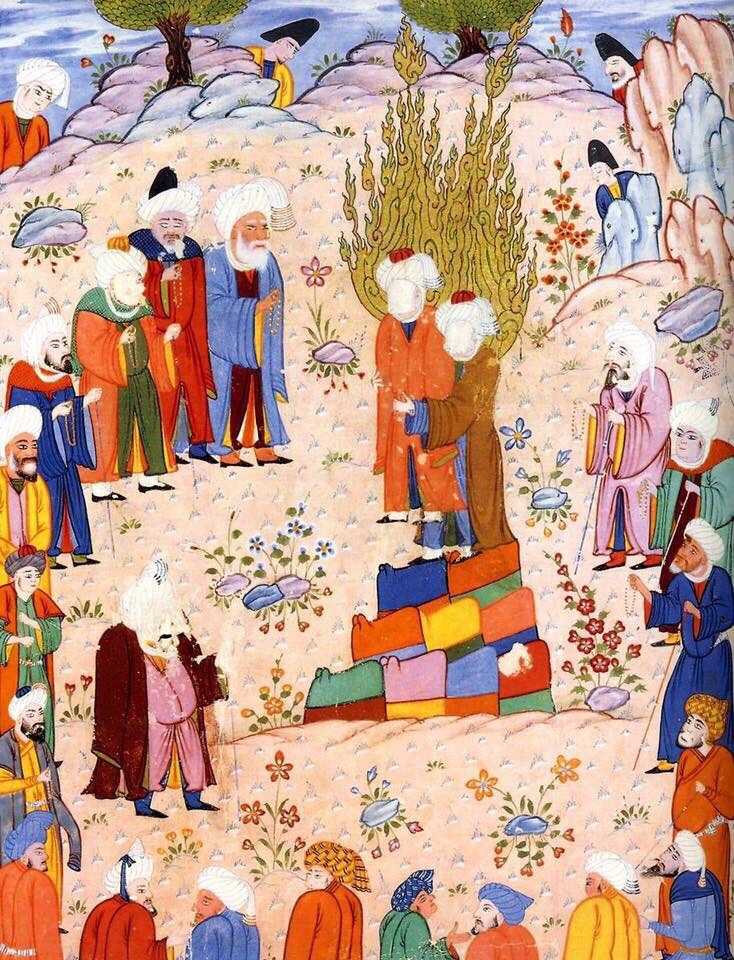
Now let us look at the Imams. The Prophet when he started preaching held a feast of the Meccans and asked who would support him? For whoever agreed, he would be his deputy and successor. Ali stood up in support. Then after the last Hajj Prophet again gathered all the followers at Ghadeer and raised Ali on his arms standing on a wooden pedastal constructed hurriedly and declared Ali as his successor. And declared that was the will of God.

When Ali died, he declared the will of God now was Hasan, and when Hasan died of poison he declared the will of God was with Husain! And this has been the case with all the other Imam too, whether of the Twelvers who stopped at the 12th successor, claiming that he will live till the end of the world, or with the numerous Ismaili Imams or the Dawoodi Bohra ‘Dais’. All were chosen ‘on the will of God’ and not the will of people.

Conclusion

Thus in the whole history of Islam there is no evidence of anyone taking power due to popular “will of people” or ever been elected by the will of the people! Affinity to the family of Prophet has throughout been a criteria amongst both.

Caliph was initially elected by a few chieftains and then handpicked by the outgoing until dynastic kingship arose. Where was the will of the people? Amongst the Shias, theoretically and practically Imamate has ever been God-given position with no consideration of the people’s will.

All claimed to be from the Prophet’s tribe and family and the genealogical affinity was each one’s primary pretence!

Prophet with Abu Bakr, Umar, Usman and Ali: Sixteenth century illumination in MS H1223, Life of the Prophet, Topkapi Palace Museum, Istanbul, Turkey

A Trip to The Carpet Museum of Tehran

When I visited Tehran in January 2018, one of the first places we were taken to visit was a unique museum: the Carpet Museum!

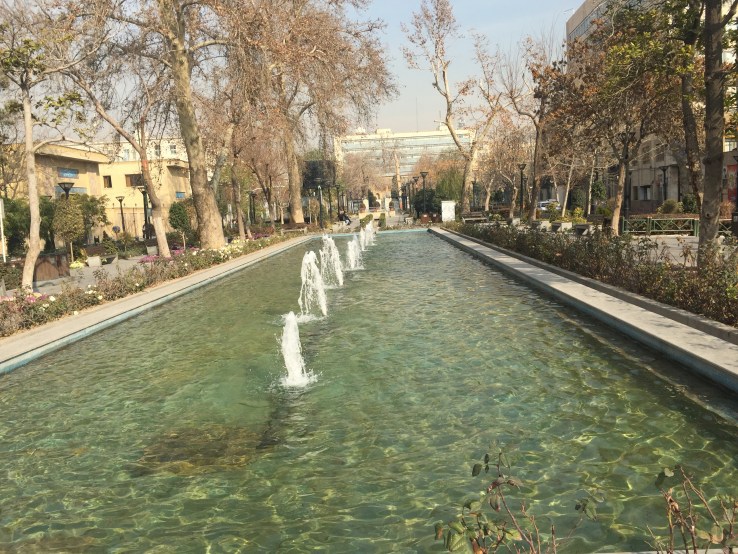
We reached Tehran by an early morning flight and taken to Hotel Laleh International for our stay. By afternoon we were all assembled in the hotel lobby to be escorted to a unique museum located nearby, the Carpet Museum of Tehran, which was at a short walk from where we were staying.

Located in Tehran on Dr Fatemi St., beside Laleh Park, and founded in 1976, the Carpet Museum of Iran exhibits a variety of Persian carpets from all over Iran, dating from the 16th century to the present.

The museum’s exhibition hall occupies (as per Wikipedia: I did not measure!) 3,400 square meters (10,200 ft²) and its library contains 7,000 books. Unfortunately when we went, the book section was not open thus books or the catalogue was not available for us to see.

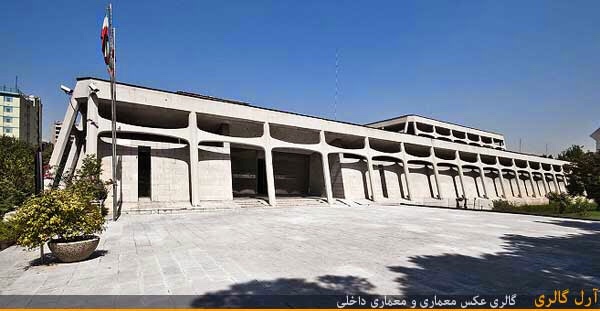
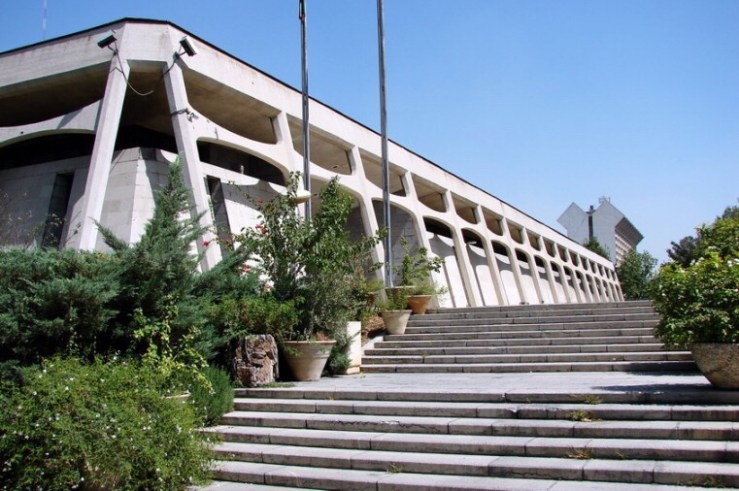
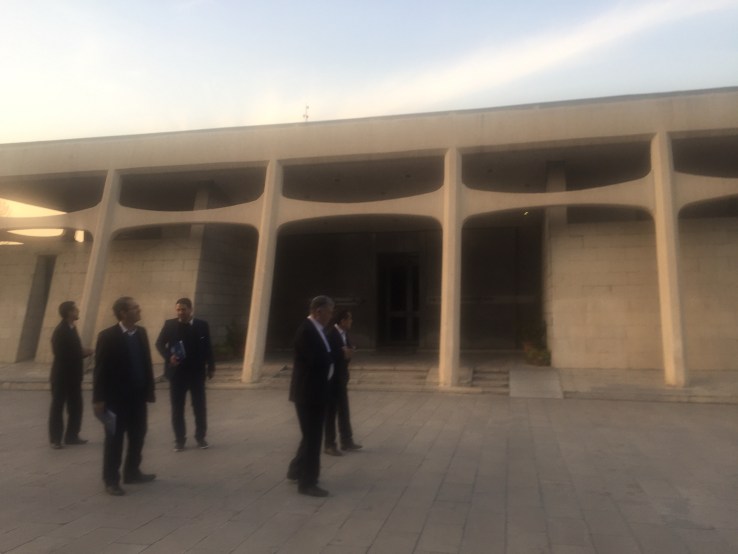
The museum, as per the brochure given to us, was designed by architect Abdol-Aziz Mirza Farmanfarmaian. The perforated structure around the museum’s exterior is designed both to resemble a carpet loom, and to cast shade on the exterior walls, reducing the impact of the hot summer sun on the interior temperature.

Accompanying me were Professor Zaheer Husain Jafri of DU and Dr GN Khaki, presently DSW at Kashmir University, Srinagar.

Being official guests we were ushered in without buying the entry tickets.

This museum has been open to visitors since 1979. The facade of the museum resembles the carpet-weaving loom. It also comprises of two floors to display different kinds of carpets, kilims and handmade rugs.

There are two floors of Carpet Museum in Tehran, of which I visited just the ground floor.

The lower floor hall is devoted to a permanent display of carpets, besides a few exhibits explaining how the weaving is done. The galleries on the second one are meant for temporary exhibitions of carpets or carpet-related subjects.

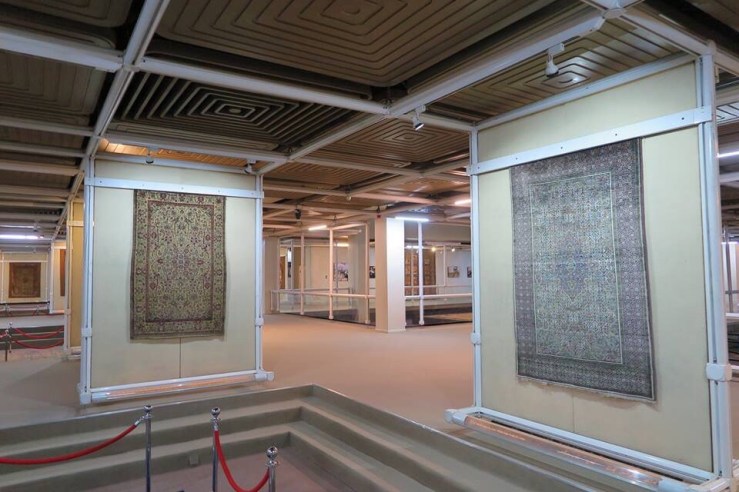
Although they claim that the carpets of many centuries are displayed but actually and mostly, the oldest pieces belong to Safavid period. The largest number of carpets can be dated to mostly 19th Century and Qājār period. There are also more recent ones from early 20th century.

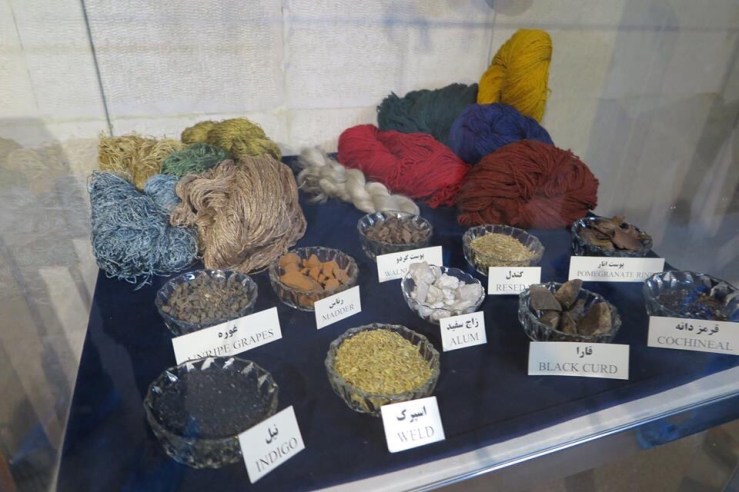
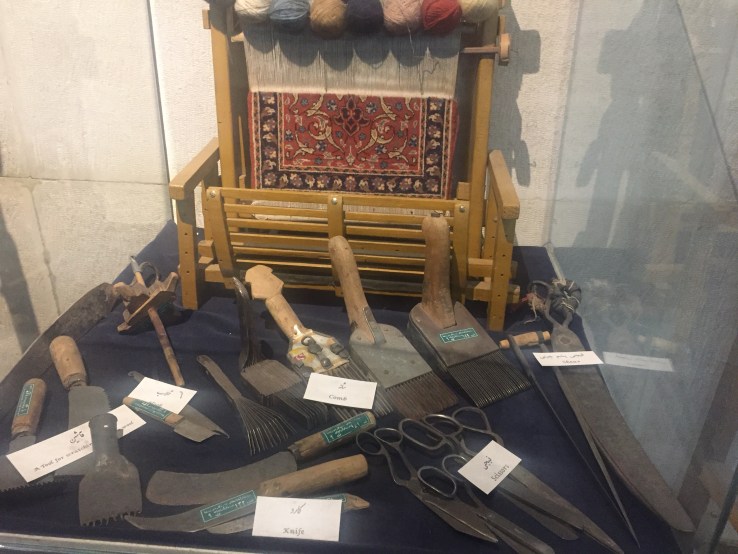
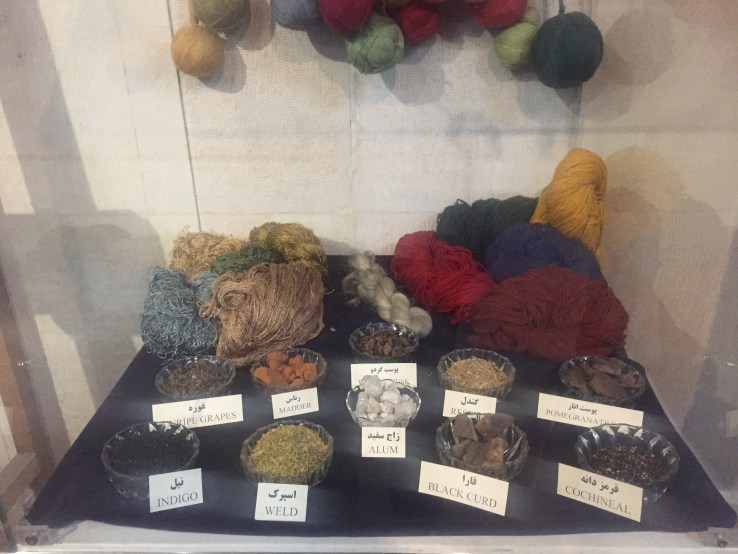
At the entrance to the main hall of the first floor, there is a comprehensive map of the most well-known carpet making centres of Iran, a showcase of various weaving tools, a showcase of some dying natural material as well as dyed threads and a vertical carpet-weaving loom. From time to time, someone sits at the loom and visitors can see how a carpet is woven.

There are some other facilities in the museum including a library with around 7000 books, which are available to researchers and enthusiast and a movie-house in which specialized films in the field of knotting carpet and designing kilim motifs can be watched. To preserve the carpet-related arts and techniques, the museum has different classes for teaching carpet making, designing, repairing and darning.

Carpets on Display

Most of the exhibits are of Iranian make and generally have have been made at the main centers of carpet making like Kashan, Kerman, Esfehan, Tabriz, Khorasan, Kurdistan.

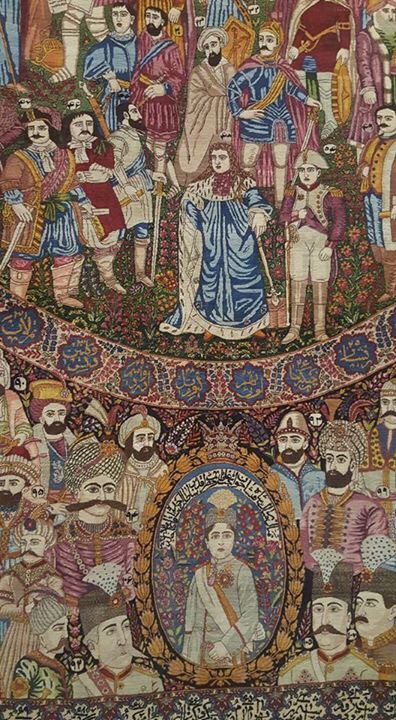
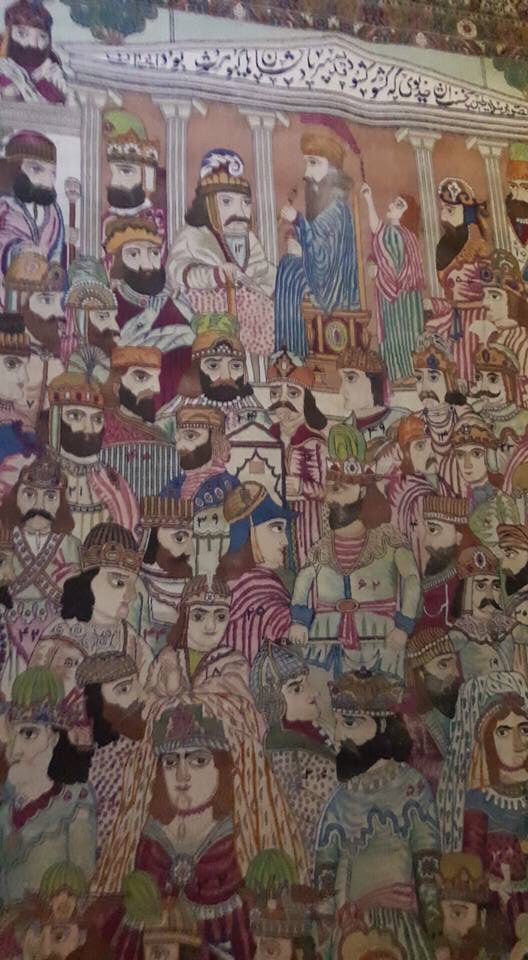
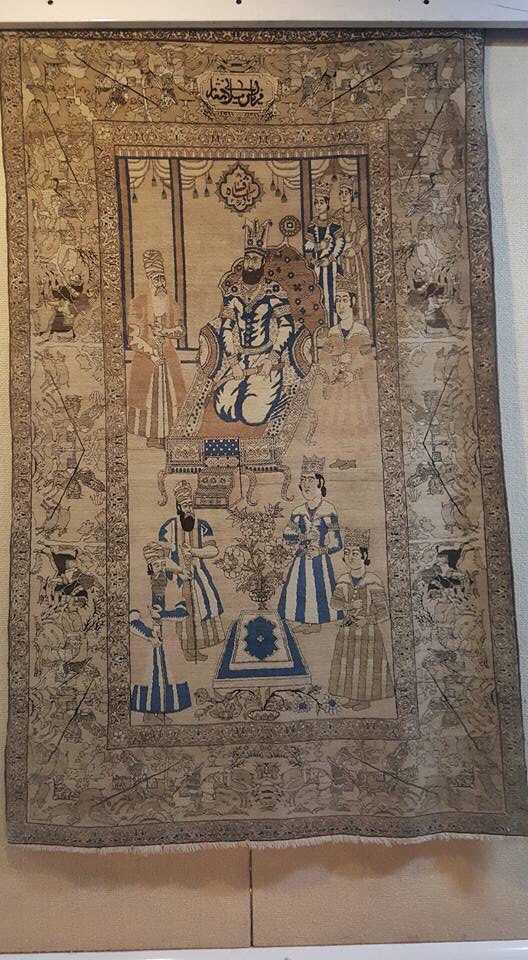
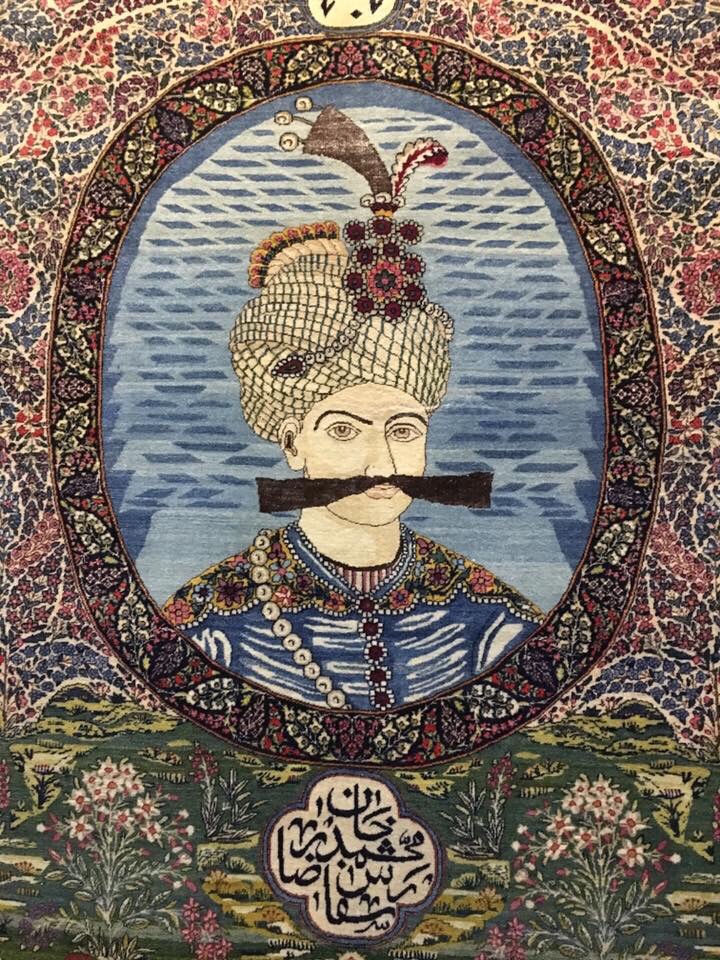
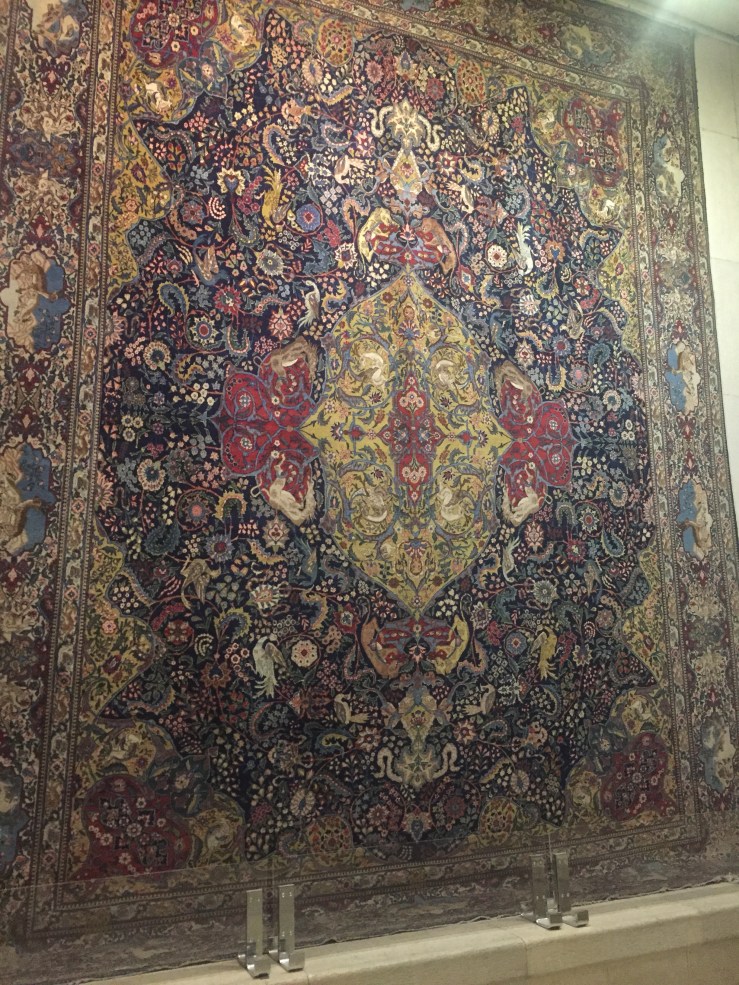
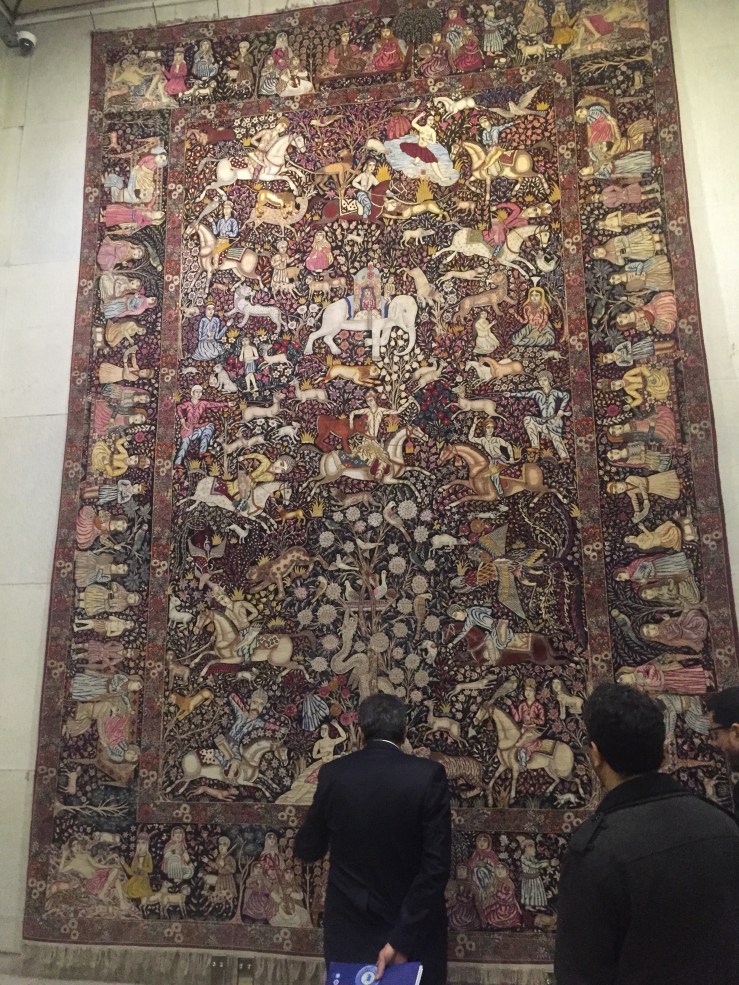
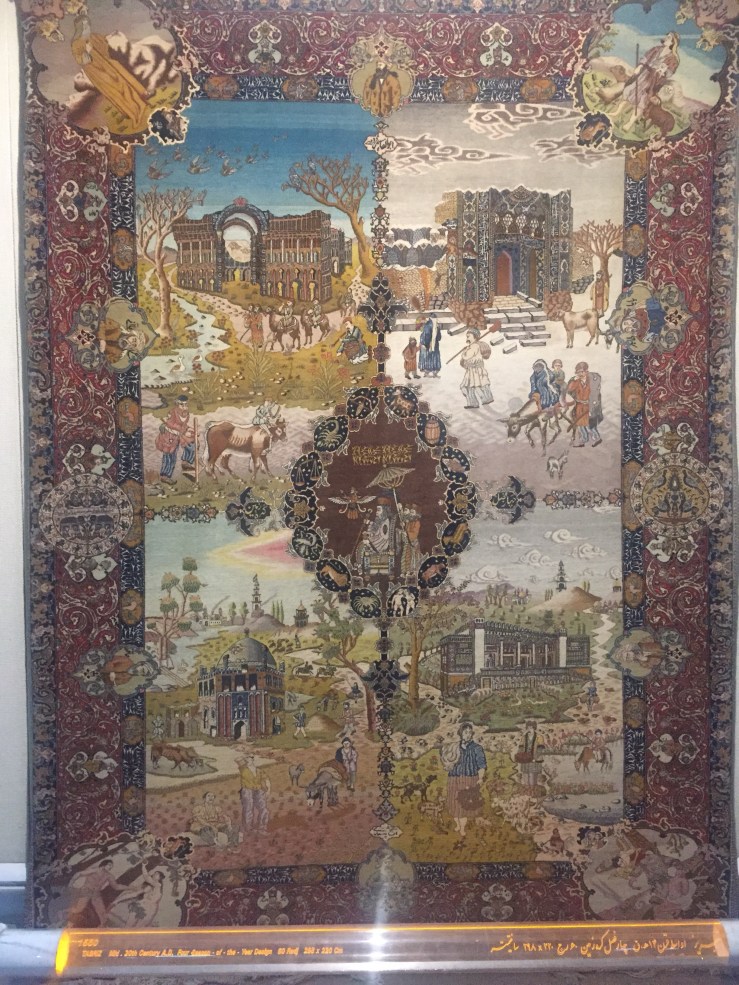
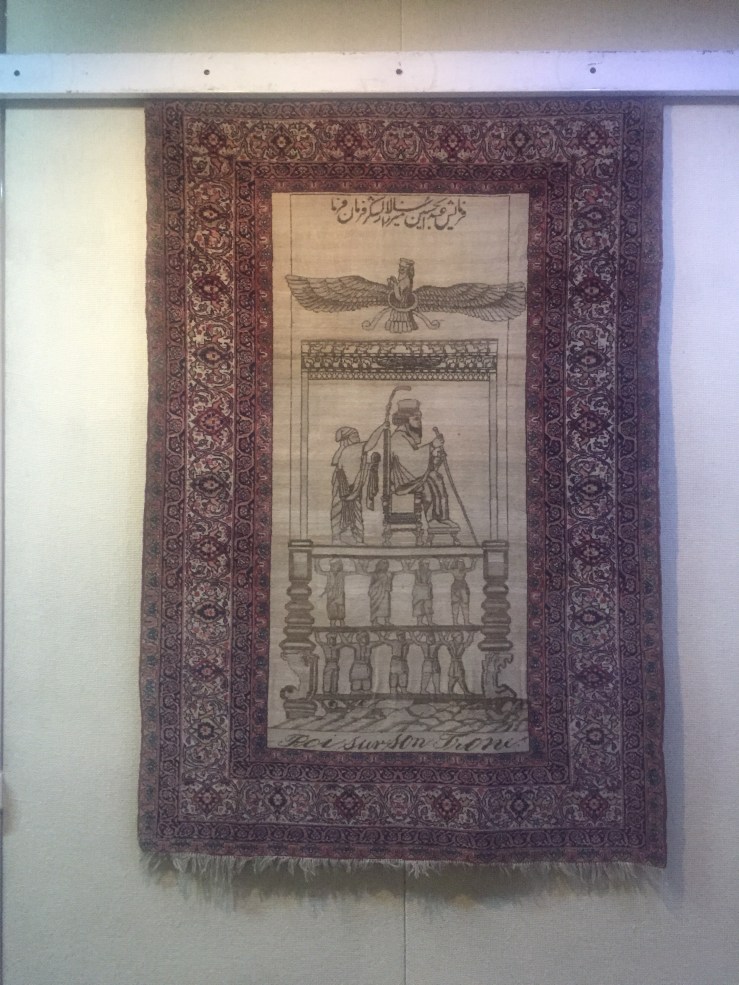
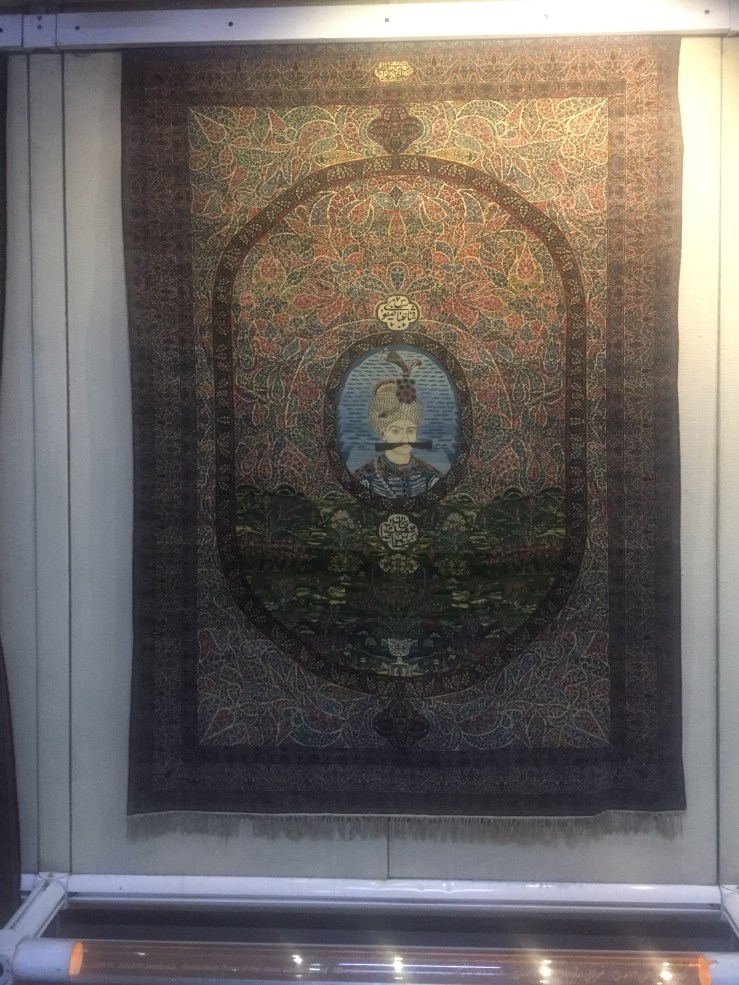
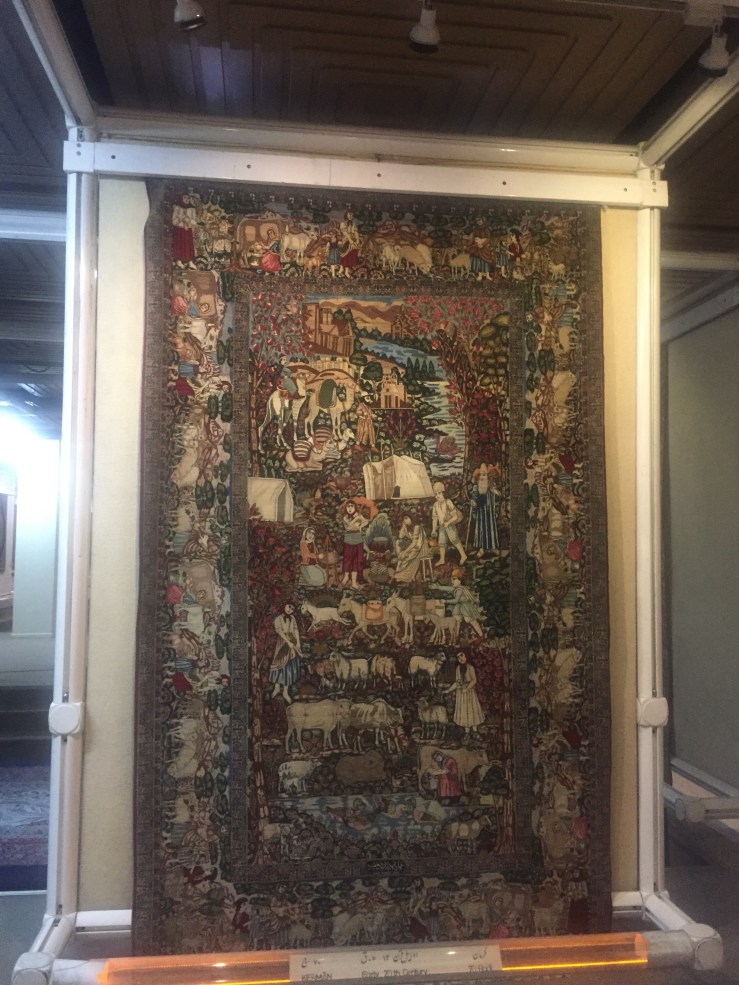
Some traditional and very rare designs and patterns are found among the carpets. Portrait, multi-panel, botteh, triangular citron and animal design carpets are among various designs found in the collection. Also, sometimes the so-called Polish carpets are on display. They are the carpets made in Iran, but known as made in Poland.

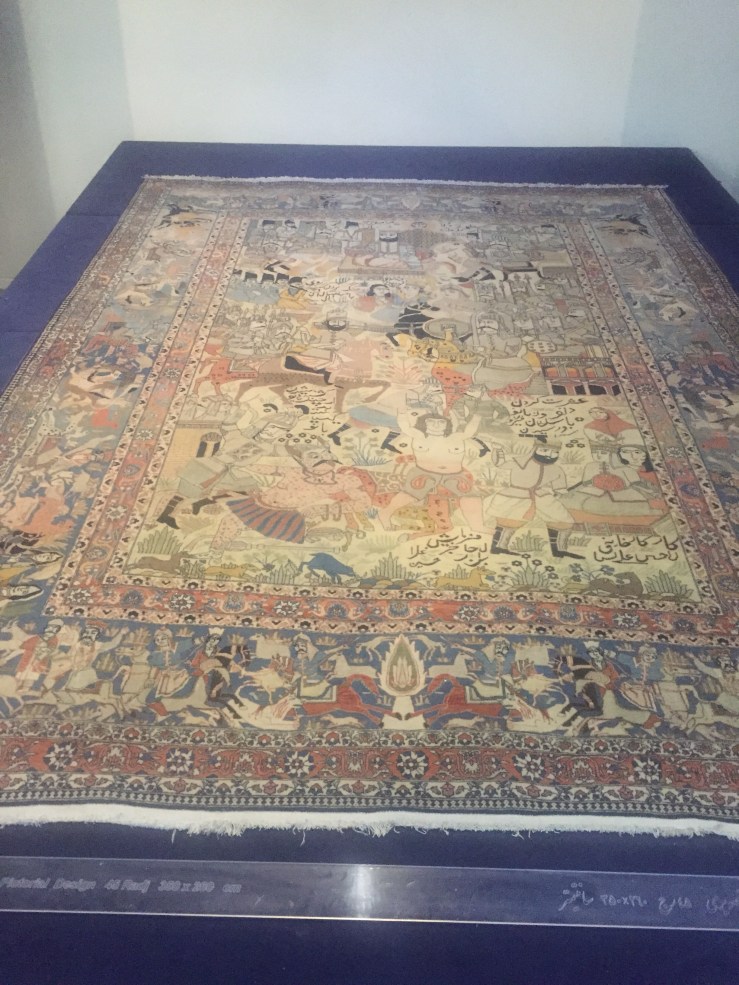
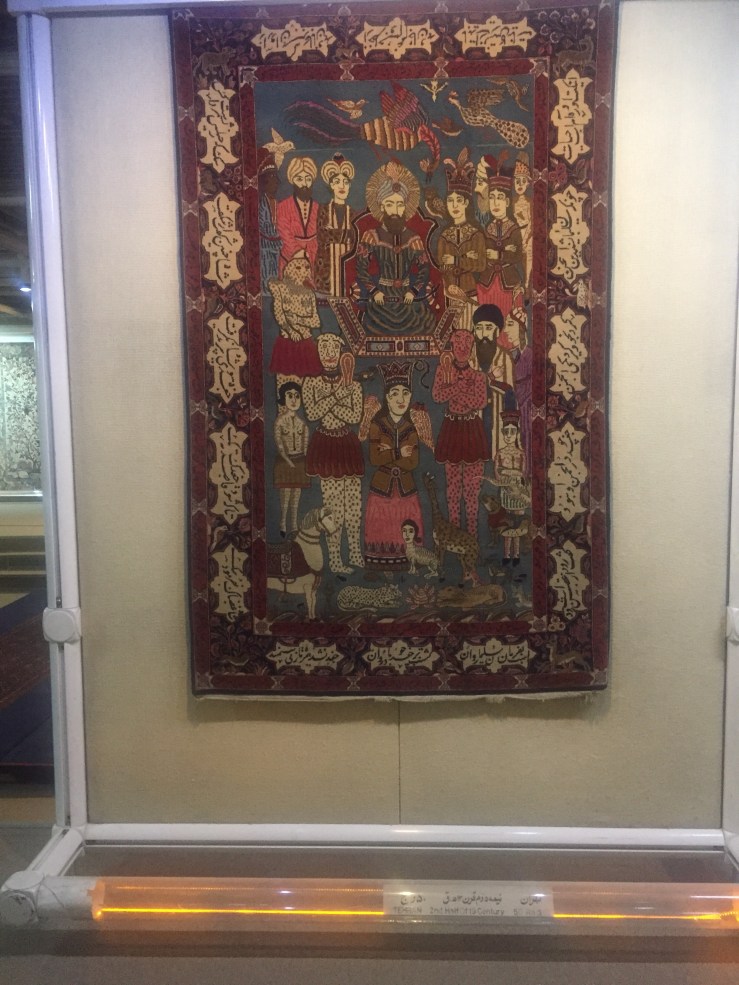
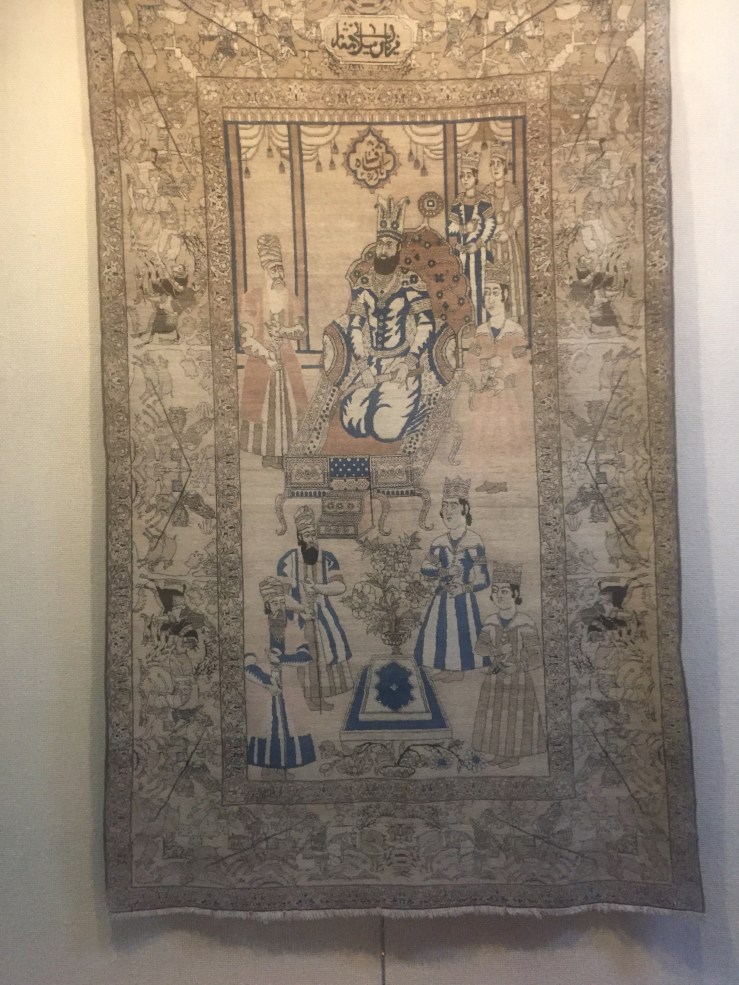
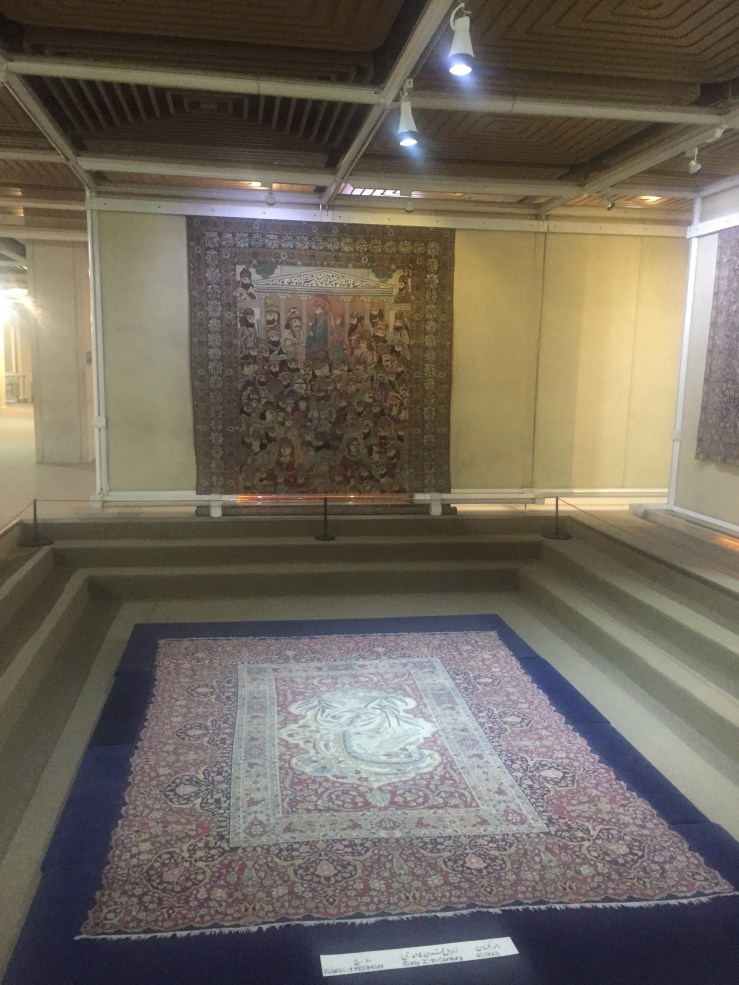
Here are some of the specimen carpets on display:

Without doubt it is one of its kind Museum! Wish they had also included specimens from other countries and empires as well. It would, for example, would have been great to make a comparative study of carpets from Ottoman Turkey, Mughal Empire and, say the Uzbek regions. Surely the Afghan carpets would also be important to compare with!

The City Palace Museum in Jaipur and Salar Jung Museum in Hyderabad do display carpets of various origins along with those of the Mughals!

[The trip was courtesy Dr Ali Dehgahi, Cultural Councellor, Islamic Republic of Iran, New Delhi. The author wants to thank him for a very fruitful trip.]

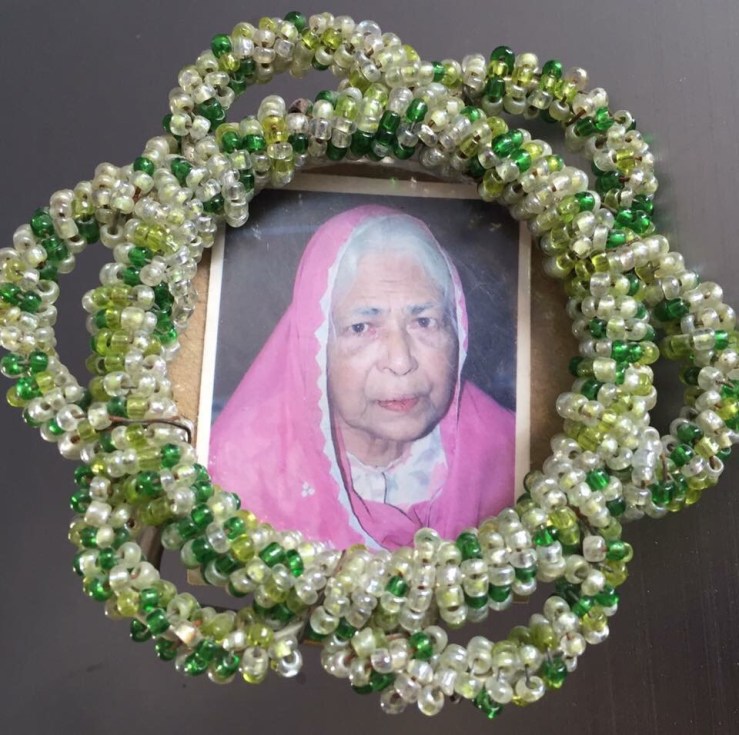
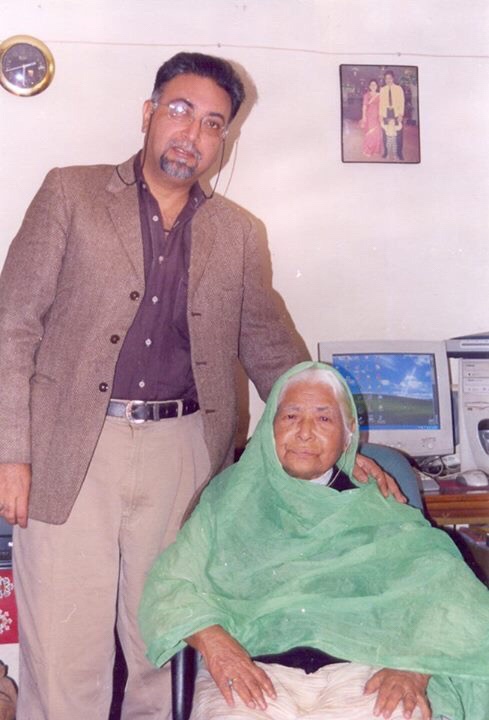
Remembering a Mother: Raziya tuz Zahra

23rd May 2021 marks the completion of the 14 years of physical absence of Ammi from my life.

My father expired on Friday 7th April 1978 and from then on to the evening of Friday 23rd May 2008, a period of 30 years 1 month 16 days she was both a mother and a father to me. Not for a single day did she let me feel an orphan or in need of some unfulfilled desire!

Born to Mir Ashfaq Husain in a year nobody cared to remember, Raziya tuz Zahra lost her mother at the same hour as she was born.

Mir Ashfaq Husain

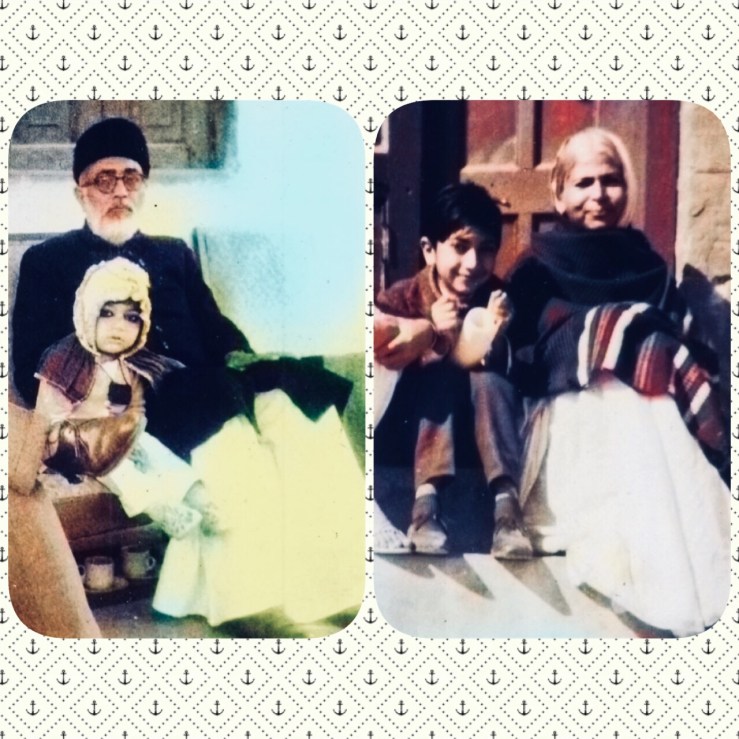
Early in her childhood she was taken care of by her maternal uncle, her Māmujān. She was the first child of her father who sired 6 other children through his second wife, Nanna Ammi. Nanna Ammi was actually no stranger but a younger cousin of Ammi’s late mother.

Ammi was, as she used to proudly tell us, matriculate who had actually “solved the whole of Chakravarti”: ‘Chakravarti’ being a heavy tome on Arithmetic penned by a famous Aligarh professor of mathematics of that name!

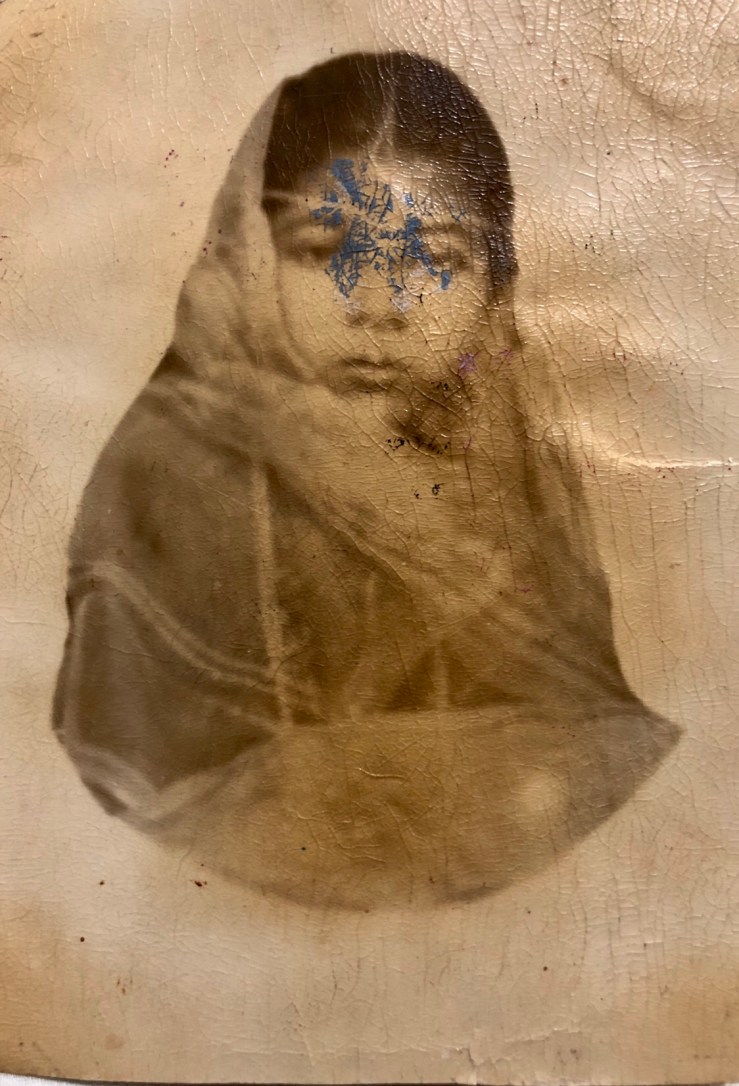
Raziya tuz Zahra as a child

She used to tell us that she was married early in her teens to my father who was at least twice her age. It was his second marriage, his first wife having died of some illness, leaving him to look after two of their children, a boy, Najmul Hasan, and a girl, Amatuz Zahra nicknamed Najma.

Their marriage was solemnised at Fatehpur amidst much melodrama: I am told by those who attended the wedding that my father who had recently lost his first wife was in Lucknow and in no way was he ready for this marriage which was suggested to him by his father, Faizul Hasan. My grandfather approached the prospective groom’s best friend Maulana Saeedul Millat who along with his father whom my father greatly respected convinced him to agree. And thus after a delay of one day (for which the ceremony was scheduled) the groom reached the bride’s home at Fatehpur and the marriage was solemnised. Soon after that, they started living in Lucknow. They would however frequently visit the ancestral village of my father, specially during the Muharrams.

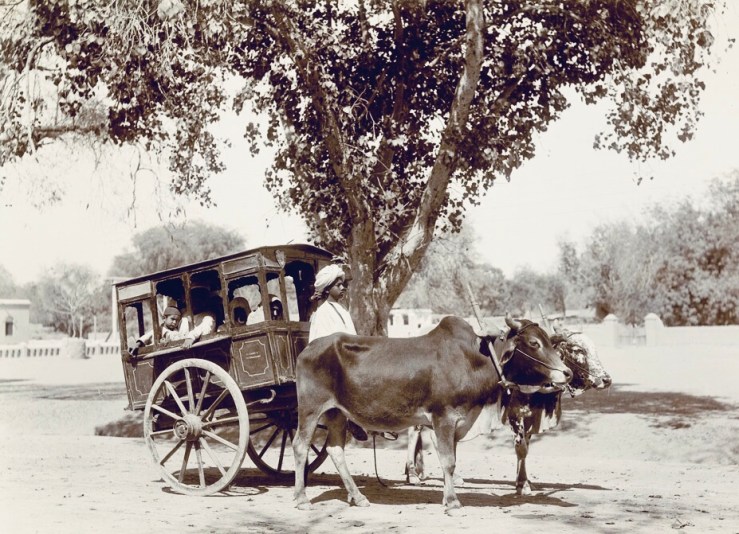
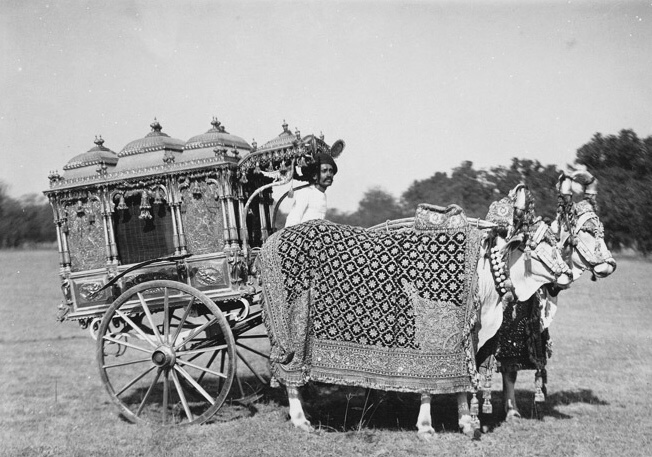
At Haswa, Ammi used to lovingly recall that they would always receive a grand reception. She would frequently tell us how when the train would reach Faizullahpur Railway Station, Dāda Abba would be waiting for her along with his retainers. One retainer’s duty used to be to stand with the guard with the express instructions that the train would not move until “bahu” and her luggage had all been offloaded! With a Chhadi (stick) in hand Chaudhuri Mir Faizul Hasan would then escort his daughter in law to a waiting decorated bullock or horse cart which would be covered with embroidered cloth coverings.

When she had been escorted into the waiting cart, he would walk alongside with my father all the way to his house in Muhalla Chaudhrāna. Bhaiyya (Najmul) would walk along with them, while Bajjo (Najma) would sit in the covered cart.

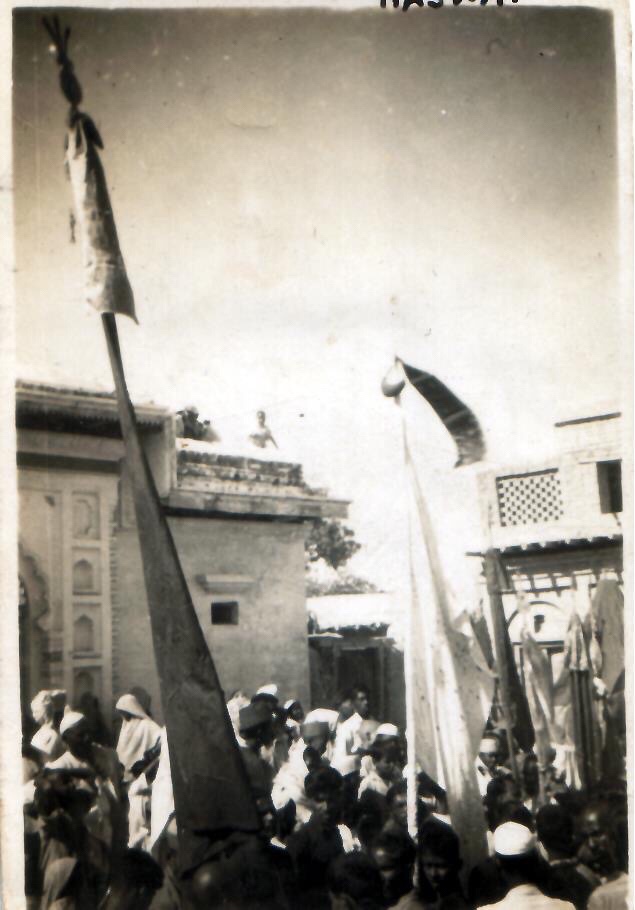
While at home, Ammi would be engaged along with Daddā (my paternal grandmother) in preparations for the Muharram. Their major duty being filling dry fruits, coconut fillets and misri (Indian sugar candy) into cloth bags tied with strings which were to be distributed during majālis. On the ten days of Muharram my father would recite the majālis and on the 10th an alam procession would be taken out.

Alam Procession beyond Hātha in Haswa in 1947 (Incidentally this gate survives till date)

Ammi with Fatima at Haswa during

Muharram 2007

Some other life incidents which Ammi used to narrate were set in the princely estate of Mahmoodabad. Just a few years before Independence Abba had taken up the job of the librarian at the Mahmoodabad State Library. Ammi too had shifted there with him, while Bhaiyya mostly stayed in Lucknow. One of her daughters, Marziya tuz Zahra, nicknamed Azra was born in Lucknow while another, Zakiyatuz Zahra nicknamed Kaukab had born during her stay at Mahmoodabad.

Soon after Independence and just before the assassination of Mahatma Gandhi, the whole family was once again back in Lucknow. It was there that her step children, Bhaiyya and Bajjo were respectively married in simple ceremonies.

In 1954 when Abba was offered a job at AMU, Ammi now moved with him to Aligarh. Here she gave birth to three children, one of whom survived to write this blog. The other two, a boy and a girl, Muhsin and Sabiha died in infancy.

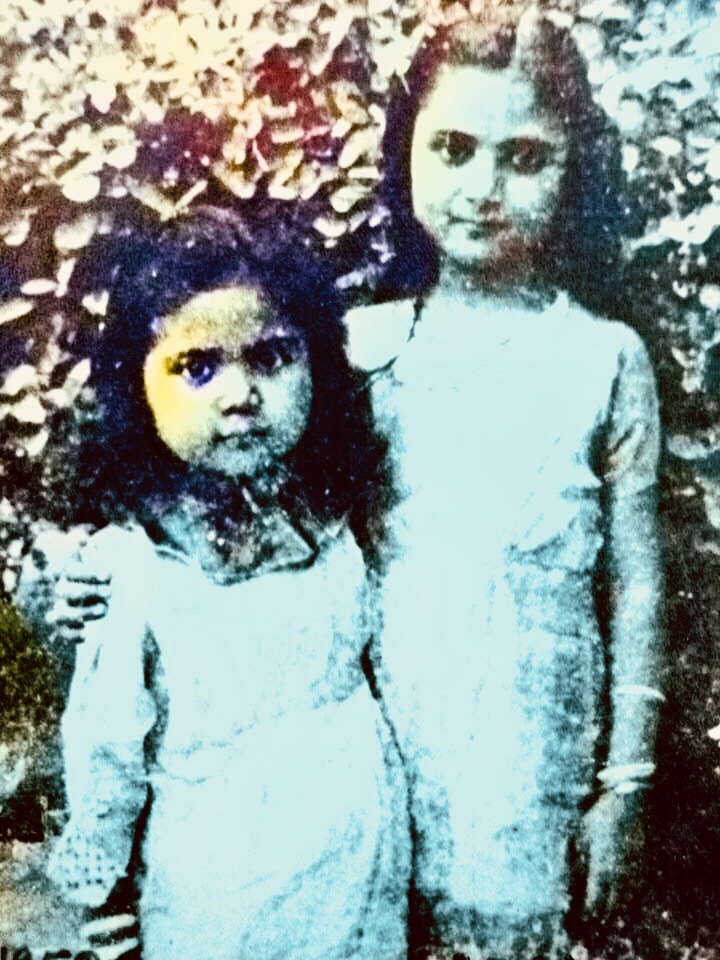
Marziya and Zakiya in Mahmoodabad

Me with Ammi

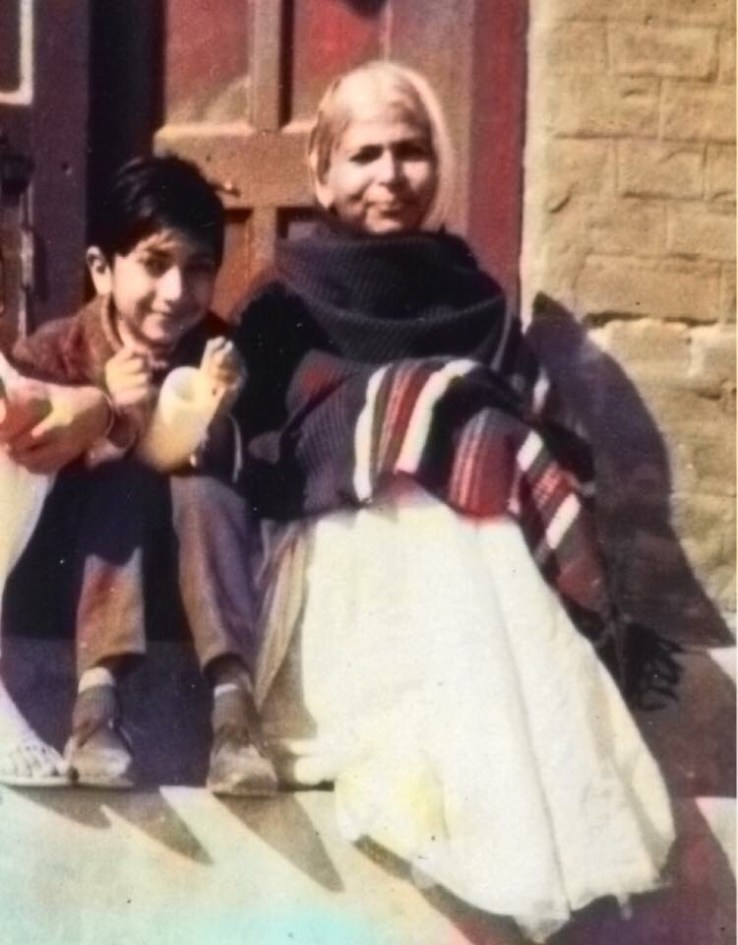
At Aligarh, shorn of all relatives, Ammi devoted her whole life to her husband and the three surviving children, Marziya, Zakiya and myself. She reserved most of her love and affection on her youngest child, that is me. Since the age of a toddler I never ever remember any of my wish remaining unfulfilled due to her. I would just have to look towards something and Ammi would understand that I wanted it and would have it acquired: there was not a moment that she would waste to grant my unexpressed desire!

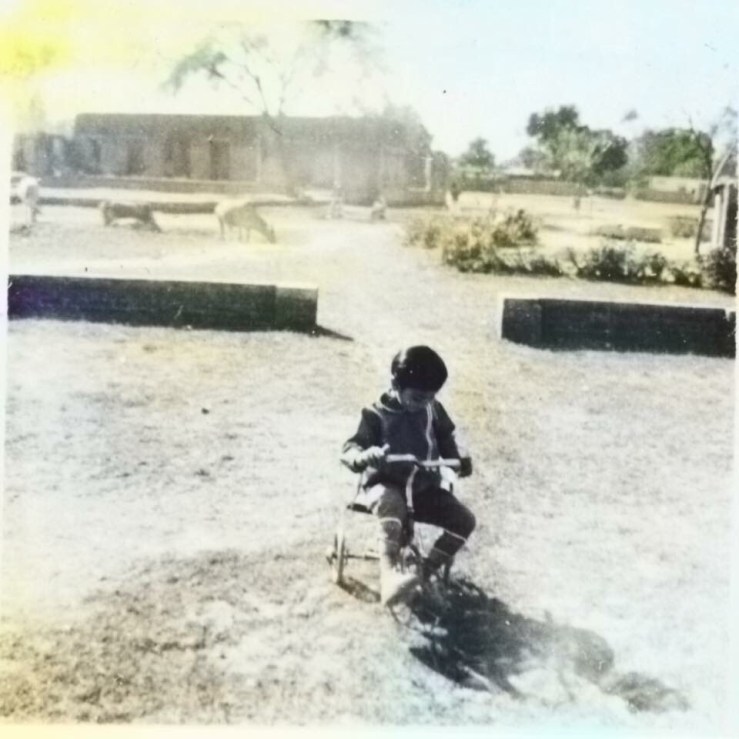
I remember that when I was riding this tricycle in the grounds in front of our house (see photo below), or even when I would casually step out of the house, she would station herself on the door, hidden behind the chik and constantly keeping a watch! Her vigil would end only once I re-entered the safe environs of the house!

Me at Azhar Manzil under her watchful eye from behind the chik

I also fondly remember how she gave her all when my bismillah and sunnat ceremonies were organised by my father! For my bismillah, the great scholar and author of al-Ghadeer, Ayatullah Shaikh Abdul Husain Amīnī had come. He initiated me to the alphabet and education. A great feast was organised on that occasion.

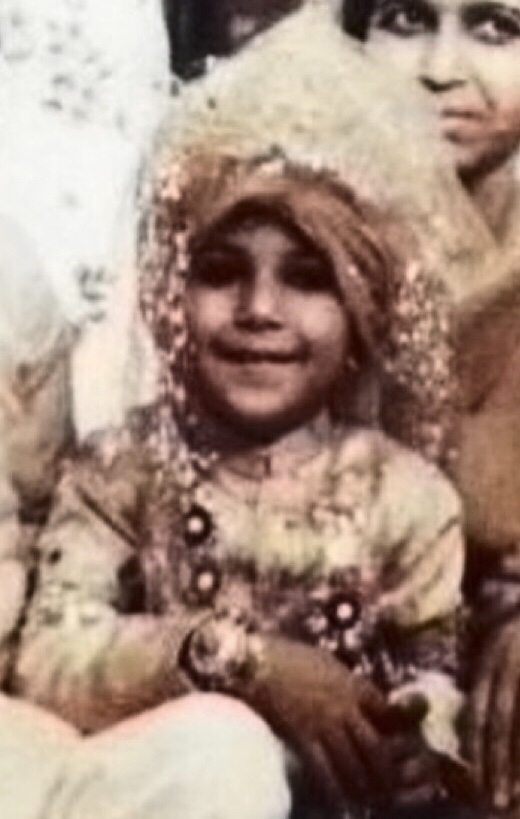
Similar celebrations were held for my sunnat. Ammi saw to it that I was dressed as a groom!

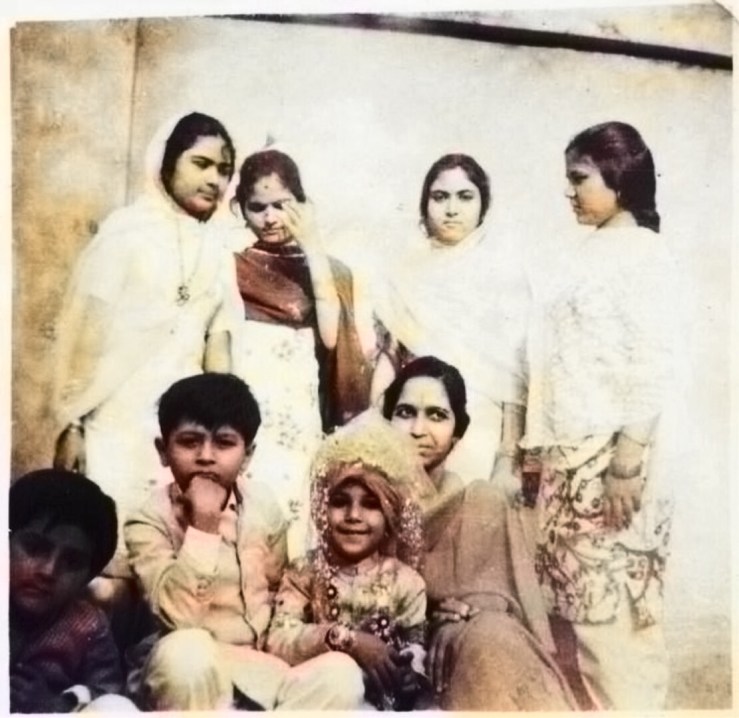
Me with my aunts and sisters. Also seen in the photo is Razmi, my eldest sister’s eldest son. Ammi is conspicuous by her absence in these photographs

Even when we were passing through a bad economic patch after the retirement of my father, she sheltered us like anything! Her love and affection for me grew by leaps and bounds after the demise of my father! Not a day passed when she would not suppress her own needs to fulfil ours!

Ammi single-handedly took care of us for 30 long years after the death of our father.

When my father died on 7th April 1978, one of my very close relative ‘advised’ her: “it is not necessary for everyone to go for higher studies. He has completed his Higher Secondary, there is no necessity for him to complete graduation when there is no earning member. What father has left behind can well be supplemented if he takes up a job!”

Without loosing her cool, she thanked him for the kind advice, and the next few years saw to it that I not only graduated but also registered for PhD. She patiently waited for me to land a job. Time and again she would just keep on feeding me stories of my father’s academic accomplishments. She saw to it that even when there was a great paucity, I would get what I needed. She would remain awake waiting till she heard the tinkling of my cycle-bell. Whenever I was in self doubt or in trouble, she would be by my side, asking me to have faith in myself and in the Almighty. If I would fail in something, she goaded me to work harder, and when success kissed my feet, she would coolly remark: you deserve it!

This is how she passed most of her time

It were her prayers and persuasions which saw me through! When she died, she had only one wish: that I climb the academic stairs as high as possible!

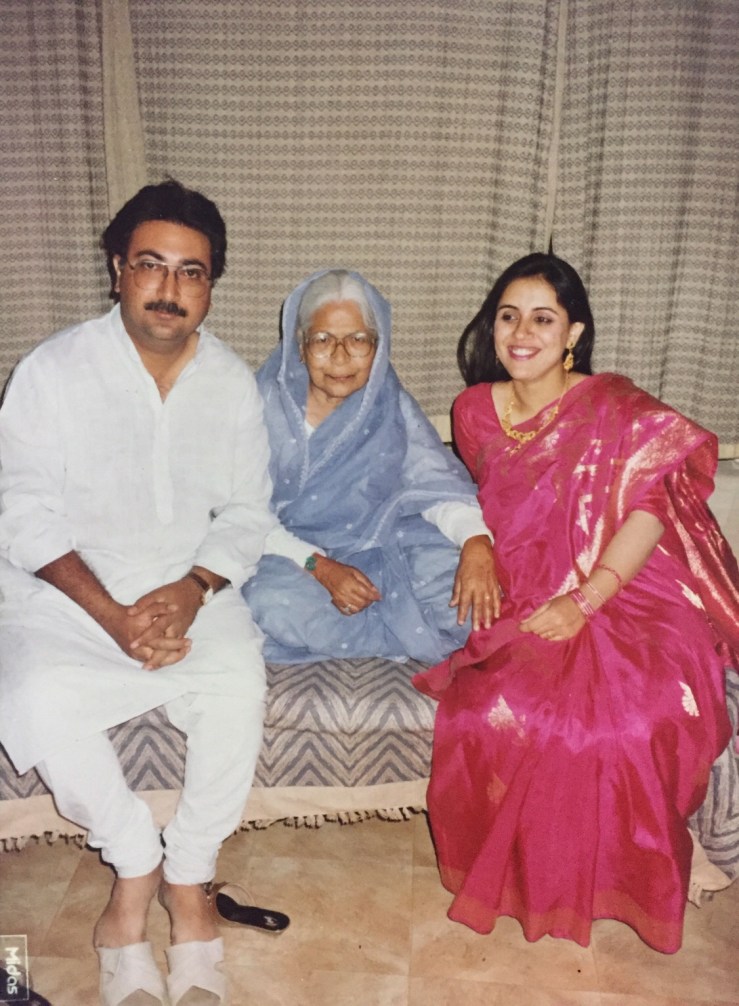
Ammi with her beloved ones who now miss her badly!

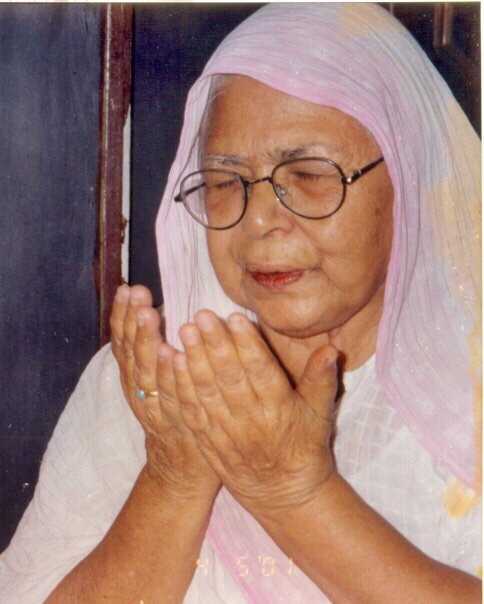
When age overtook her, she was in the end reduced to a person who was physically frail, hard of hearing and hard of seeing. She became almost a recluse and gave up eating altogether: to feed her was a feat! However she remained steadfast in two things: her prayers and her pān. When in the last few minutes of life, when I asked her Ammi āp kaisi haiñ? She replied she was fine and ready to go. And when I said: Ammi chaliye hum aap ko Medical ley jā rahē haiñ. She got up, covered her head, asked for a pān. As we carried her down the stairs, she left us. She was no more.

For the last fourteen years I am still waiting for my Ammi to bestow her duās on me….I love her from the deep of my heart, and pray that Ammi may forgive my faults which are many….

Golestan Palace Complex and Museum, Tehran: A Photo Journey

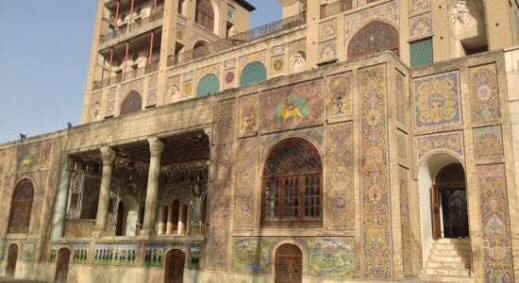
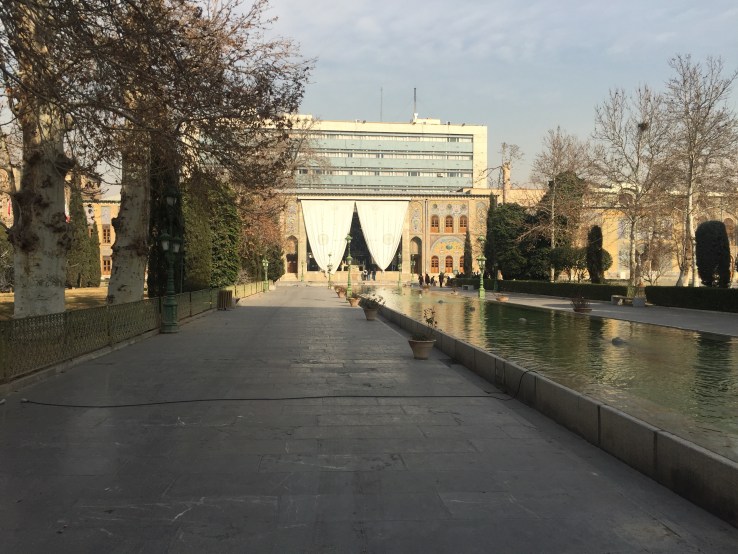
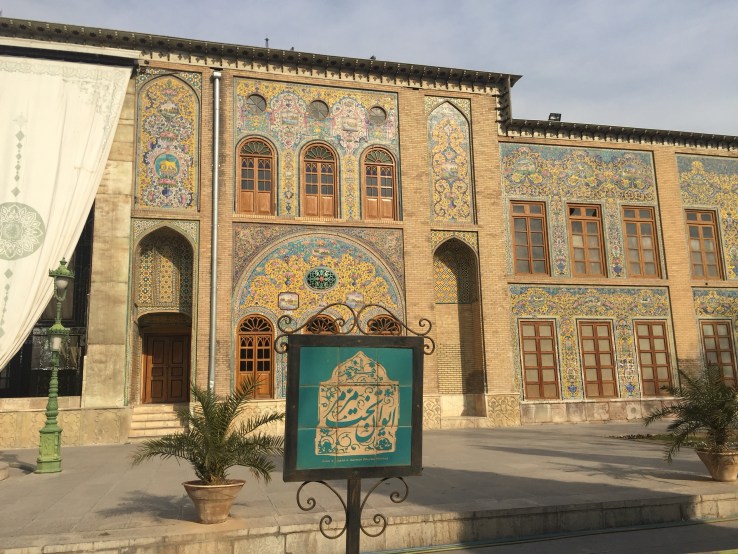
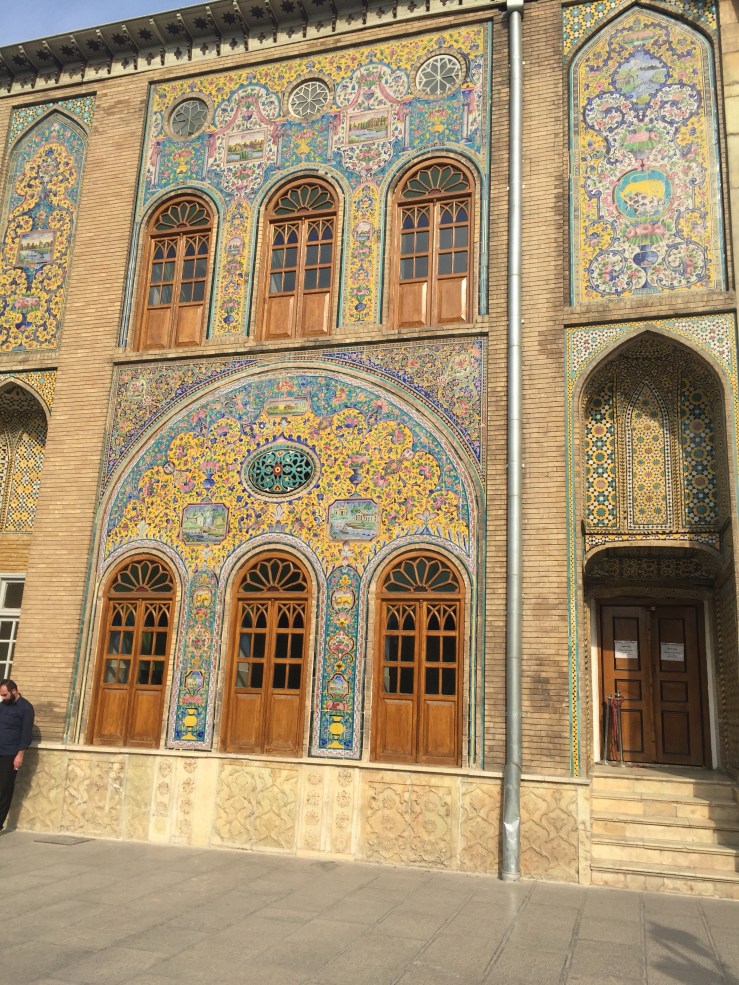
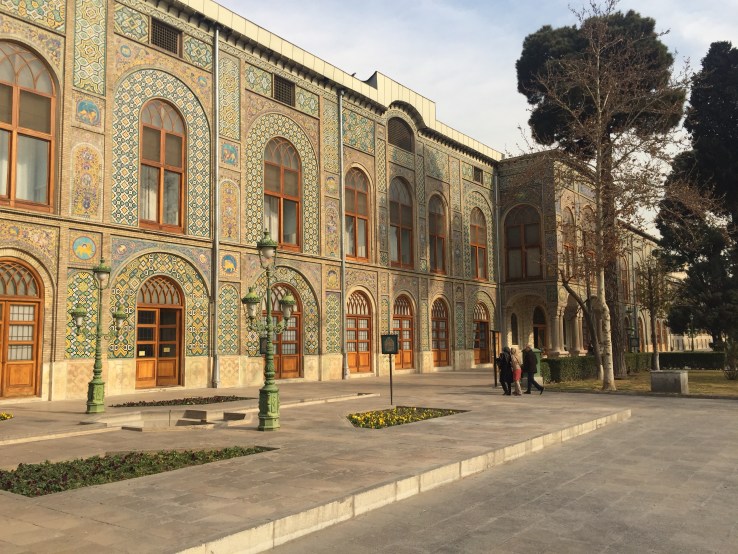
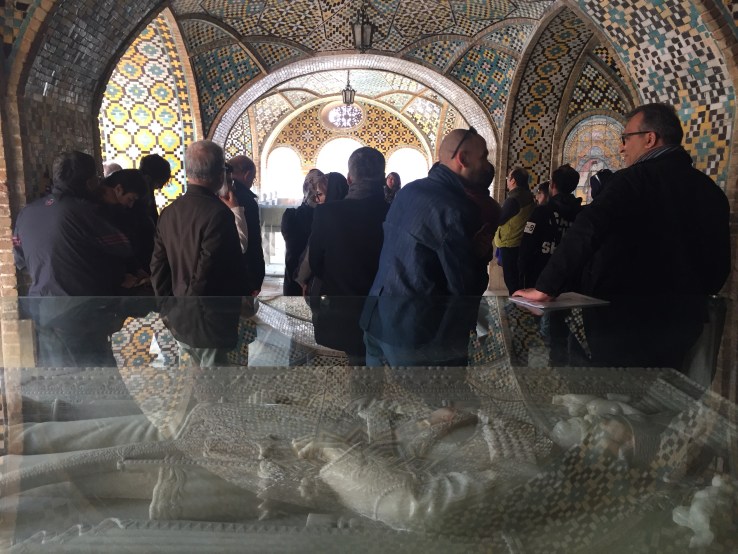
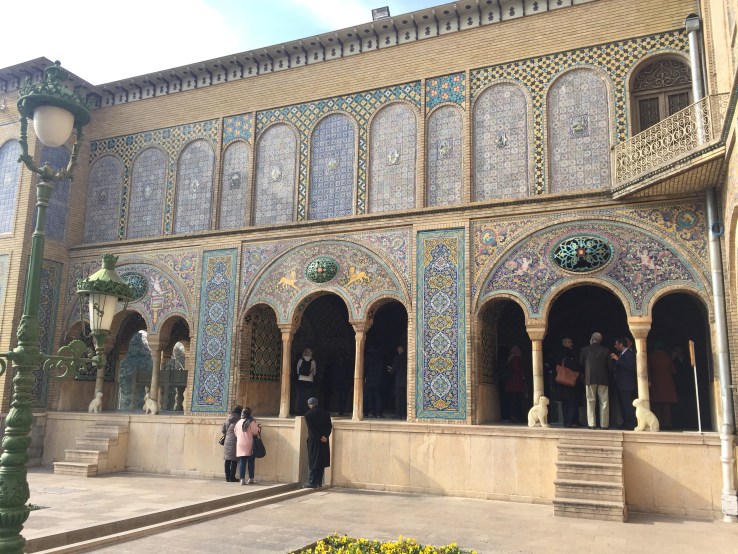
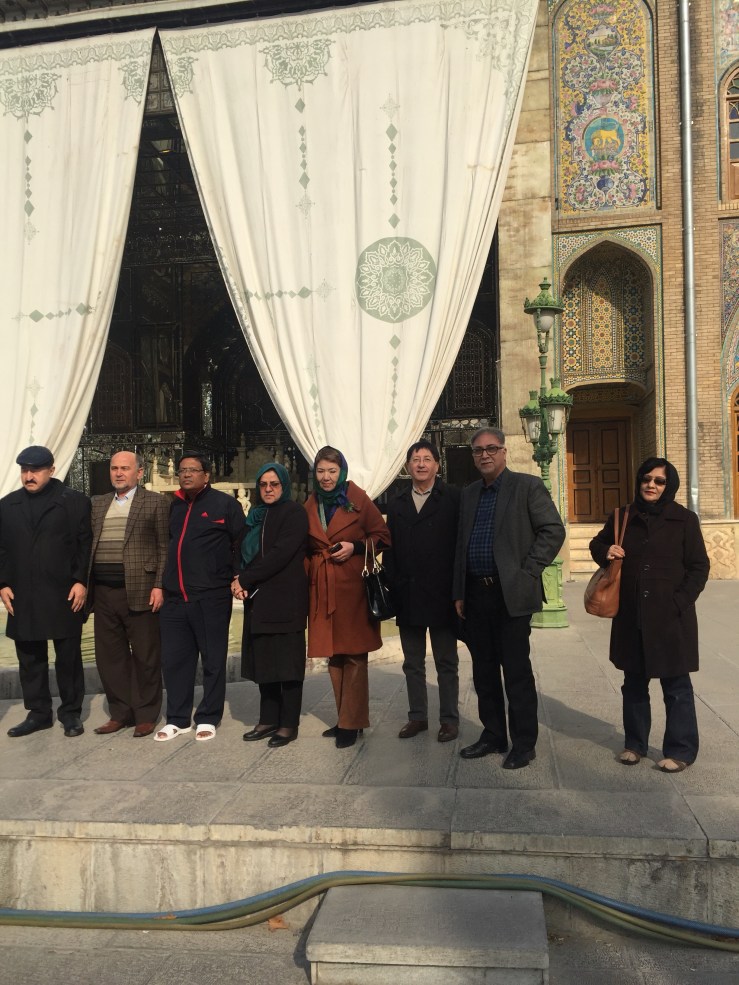
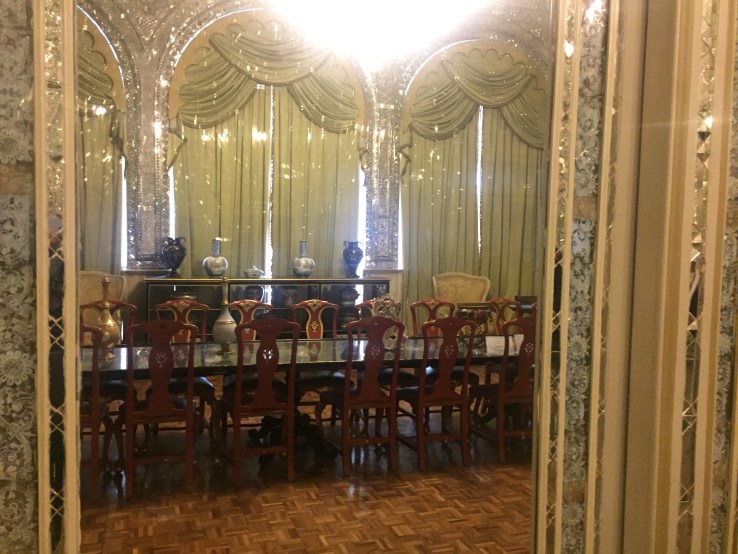
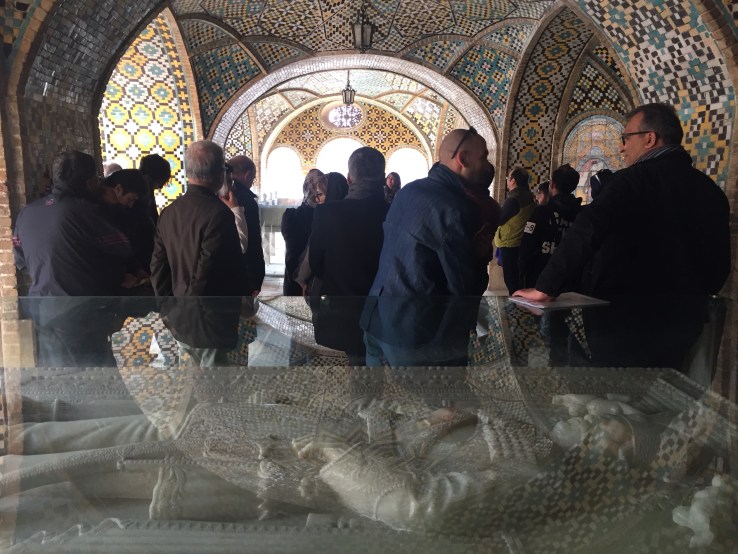
It was on Friday 12th January 2018 that I had the opportunity to visit the World Heritage Site Golestan Palace Complex in Tehran. It is one of the oldest historic monuments in the city of Tehran, and belongs to a group of royal buildings that were once enclosed within the mud-thatched walls of Tehran’s arg (citadel). It consists of gardens, royal buildings, and collections of Iranian crafts and European presents from the 18th and 19th centuries.

The arg (citadel) was built during the reign of Shāh Tahmāsp I (r. 1524–1576) of the Safavid dynasty (1502–1736), and was later renovated by Shāh Karīm Khan of the Zand dynasty (r. 1750-1779). When Shah Agha Mohammad Khan of the Qājār (or Qāchār) dynasty (1742–1797) made Tehran his capital, it emerged as the seat of this dynasty (1794–1925). The court and palace of Golestān (Kākh-i Golestān) became the official residence of the Qājār dynasty.

The palace was rebuilt to its current form in 1865 by Hāji Abul Hasan Mi’mār Navāi.

During the period of the Pahlavis (1925–1979), the Golestan Palace was the hub for formal royal receptions.

The Marble Throne

The most important ceremonies held in the palace during the Pahlavi era were the coronation of Reza Shah (r. 1925-1941) on the Marble Throne and the coronation of Mohammad Reza Pahlavi (r. 1941-deposed 1979) in the Museum Hall.

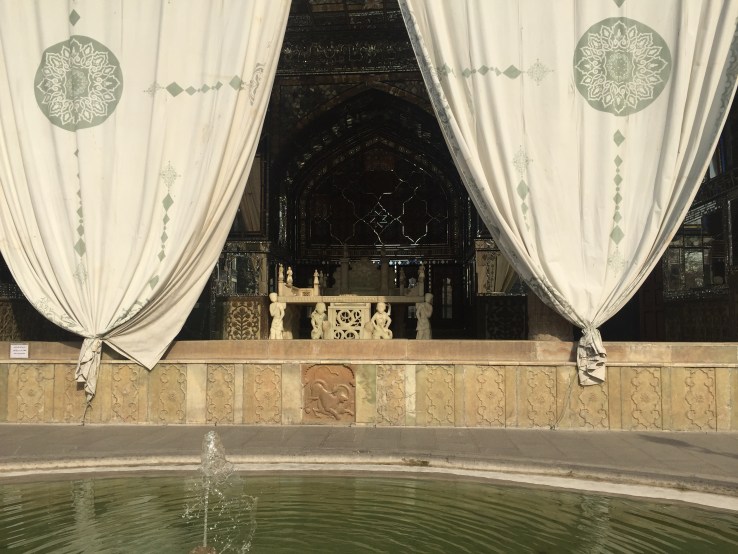
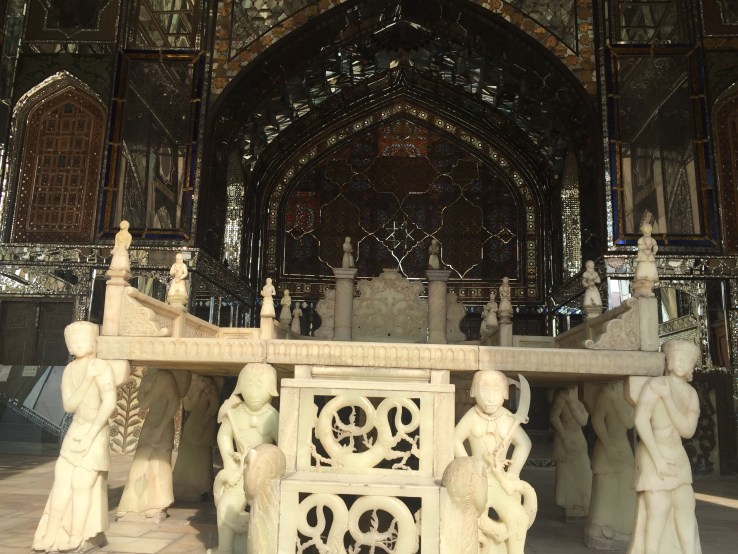
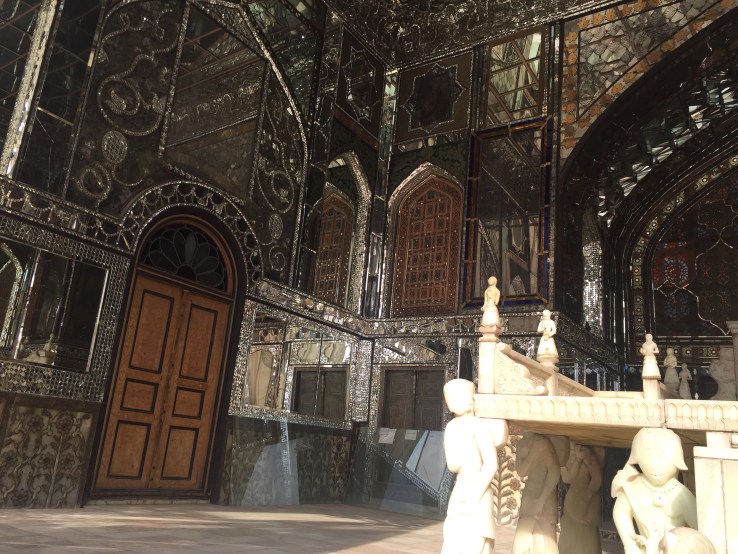
This Marble Throne, was built in 1806 by the order of Fath Ali Shāh of the Qājār dynasty (r. 1797–1834). Adorned by paintings, marble-carvings, tile-work, stucco, mirrors, enamel, woodcarvings, and lattice windows, the throne embodies the finest of Iranian architecture. The Marble Throne is one of the oldest buildings of the historic arg. It is situated in the middle of the terrace (aiwān), and is made of the famous yellow marble of Yazd.

It is built of sixty-five pieces of marble, and was designed by Mirza Baba Naqash Bashi (“head painter”) of the Qājār court. Muhammad Ibrahim, the Royal Mason, oversaw the construction and several celebrated masters of the time worked on the execution of this masterpiece. The architectural details, and other ornaments of the terrace, were completed during the reigns of Fath Ali Shah and Nāsiruddin Shah (r. 1848–1896).

The Bāzār

In between 1925 and 1945, a large portion of the buildings of the complex were destroyed on the orders of Reza Shah. He believed that the centuries-old Qajar palace should not hinder the growth of a modern city.

In the place of the old buildings, commercial buildings with the modern style of 1950s and 1960s were erected.


The Kitābkhāna or the Library

One of the most famous component of the Golestān Complex are its archival library. The museum’s archival holdings comprise a manuscript library (kitābkhanih-yi nuskha-i khaṭṭī), a photograph archive (markaz-i asnād-i taṣvīrī), a documents archive (markaz-i asnād-i khaṭṭī), as well as a small library.

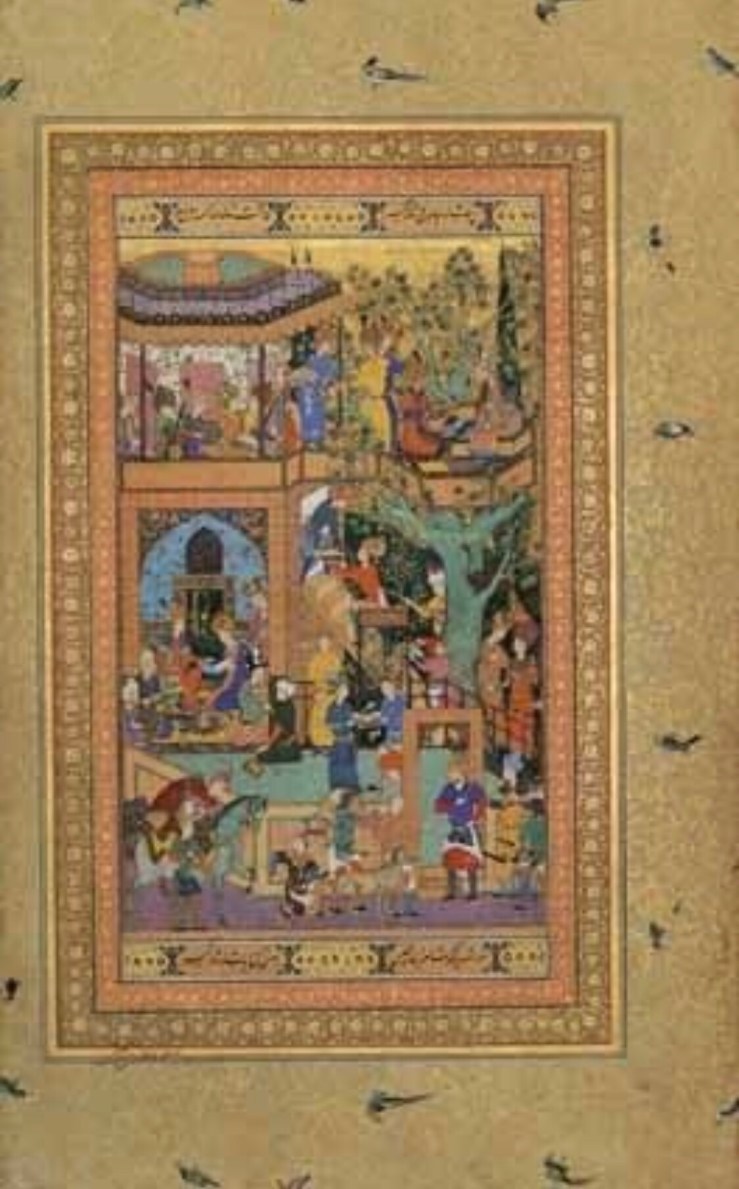
In the Manuscript library, Golestān contains a large number of Safavid and Mughal manuscripts as well as folios decorated with beautiful miniatures – both Mughal and Safavid. Unfortunately during my visit the librarian simply refused to show us any of them or even acknowledge their existence. These miniatures and folios are listed in the catalogues made during the pre-Islamic Revolution Period. Have they been shifted from here now? Or are still there? We failed to get an answer to this question. Here are some of the examples of the miniatures purported to be housed there:

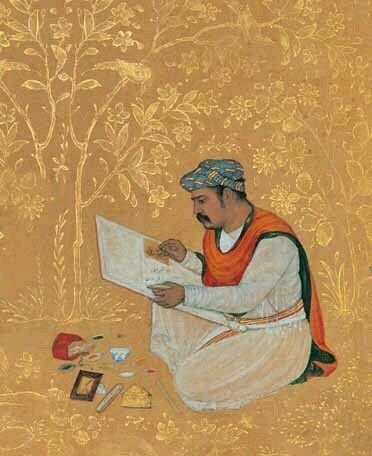
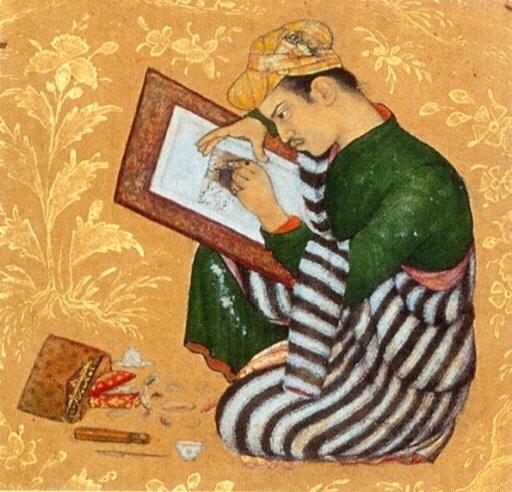
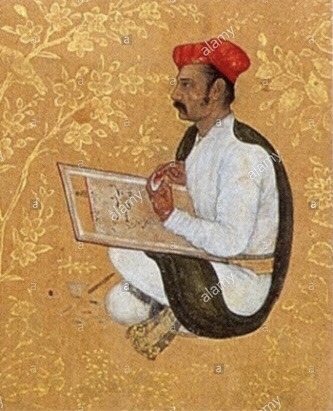
Self-Portrait and Portraits of Artists By Daulat, Mughal, c. 1610 © Golestan Palace Library, Tehran

A self-Portrait of Daulat From the Gulshan Album, ca. 1610, Golestan Palace Library

Daulat. Portrait of Abu’l Hasan. From the Gulshan Album, ca. 1610, Golestan Palace Library

Daulat. Portrait of Bishandas. ca. 1610 Detail of the border illumination of the list from Golestan Palace Library

Akbar Presents a Painting to His Father Humayun. By ‘Abd al-Samad. Mughal, probably Kabul, c. 1550–1556. © Golestan Palace Library

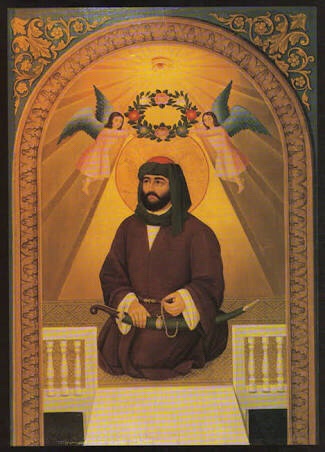
The Ghadīr Khutba of the Prophet and Declaration of Ali as his Successor, A Safavid miniature: 16th Century, Golestan Palace

Imam Ali Conquers Jinn Unknown artist Ahsan-ol-Kobār 1568 Golestan Palace


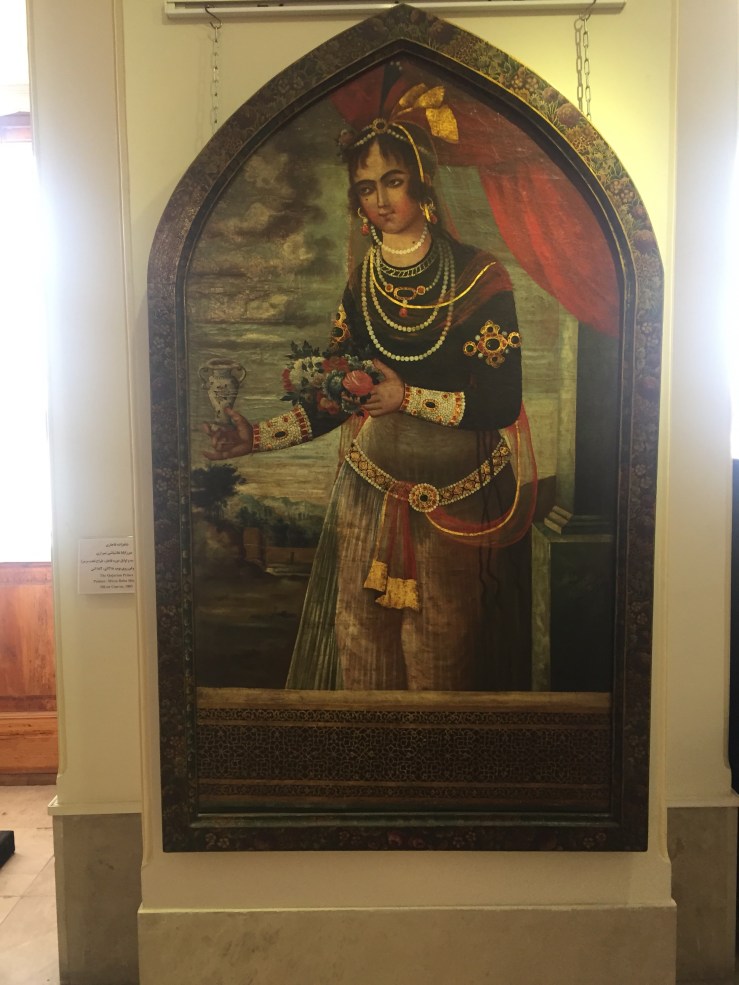
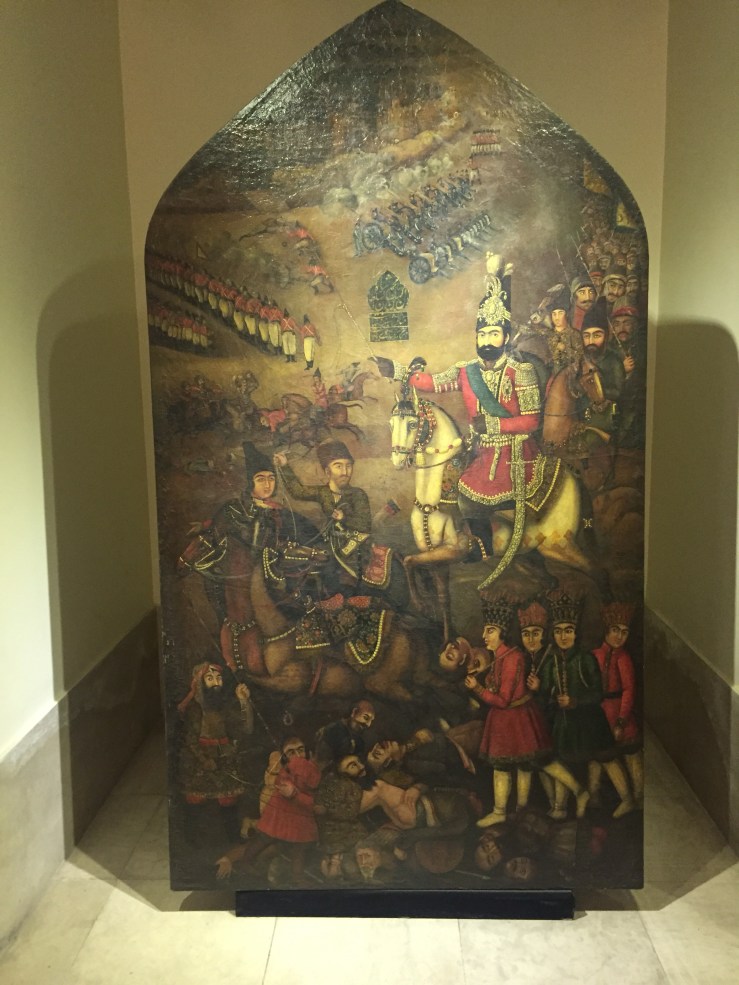
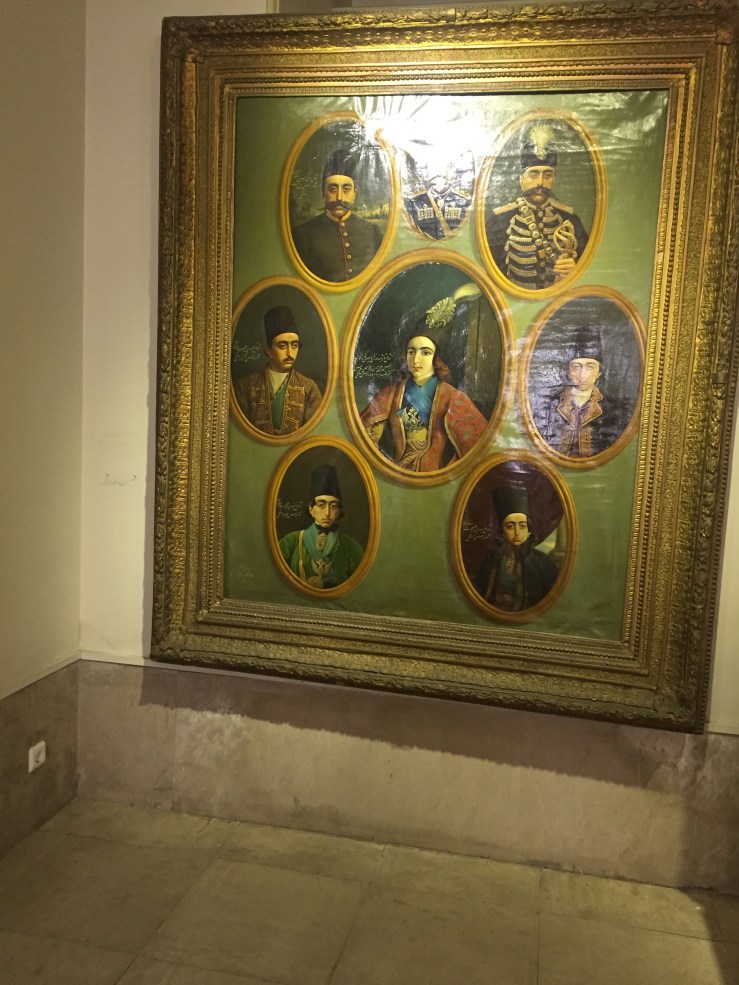
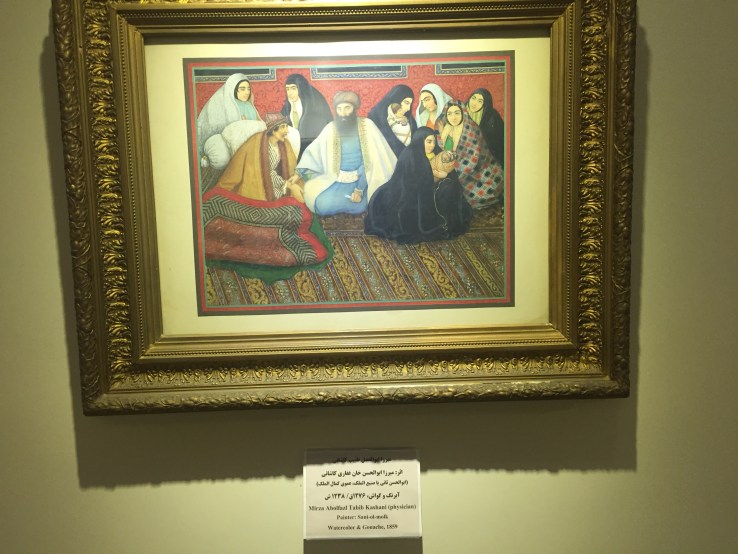
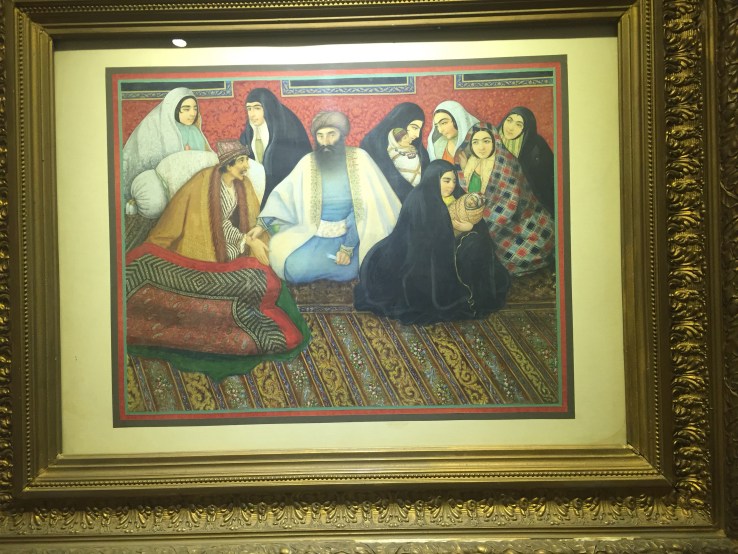
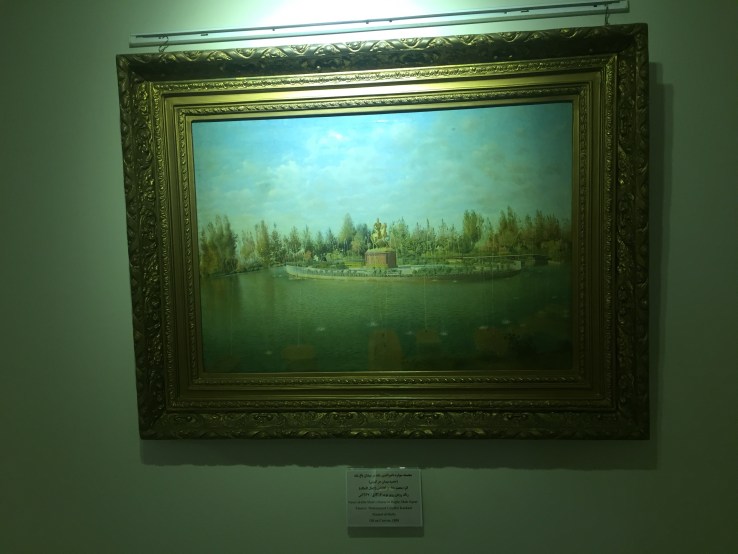
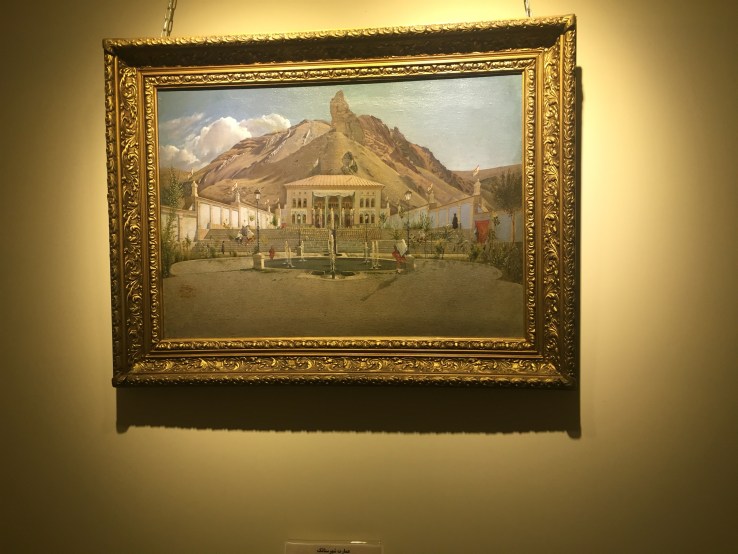
The museum also has a gallery which holds several paintings from the original Qājār collection (in particular paintings of the royal court), and a selection of European paintings which were mostly accumulated during Nāsiruddīn’s reign:

Photo Archives

The most user-friendly section of the Golestān holdings is the photo archives. There are approximately 9,000 photographs in these holdings, although only a fraction of these are readily available to researchers.

It is an impressive collection which is organized according to albums which were made by the Qājār court, and often, by Nāsiruddin Shah himself.

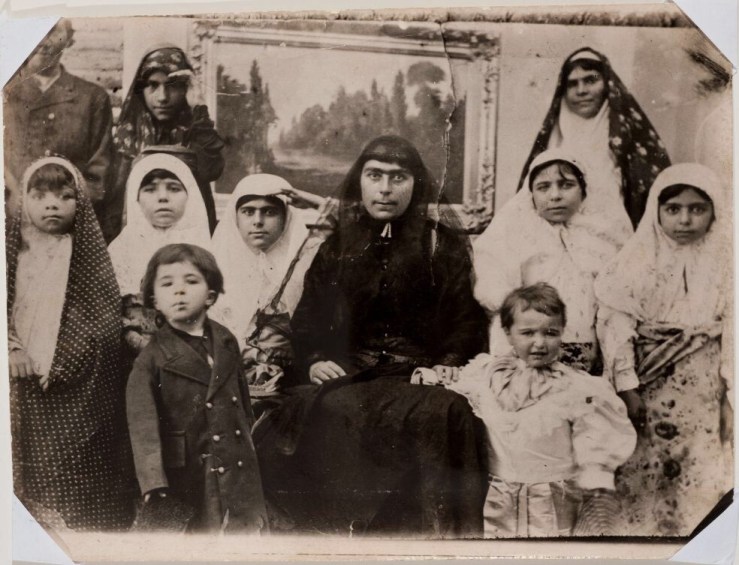
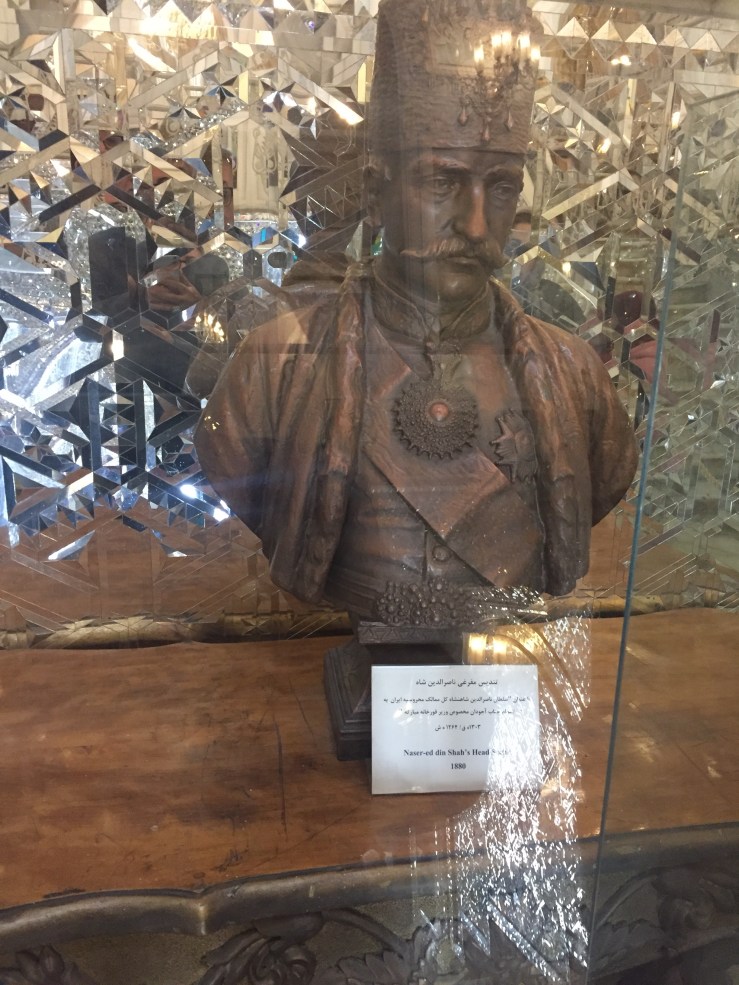
Many of the photographs give insight into the daily life of the residents of the court, including an incredible survey of haram photographs that depict the women who resided in the court, the many trips that the royal family took—most notably, Nāsiruddin’s infamous hunting trips—as well as portraits that depict the court hierarchy and the various characters within it. Quite a few of these photographs were taken by Nāsiruddin himself and have his hand-written notes permanently marked on them. The first page of each album also has information pertaining to its content including date, name of photographer, and basic description.

A few specimen examples are:

Some of the king’s wives with a cleric.

Mirza Reza Kermān who assassinated a king in 1899

Women of a Qājār family

Anis al-Dawla, a wife of the shah, and her retinue, circa 1870-1880


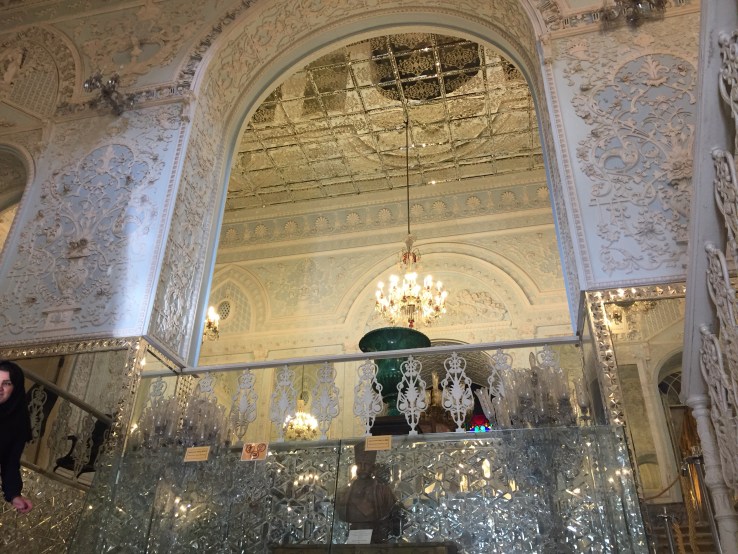
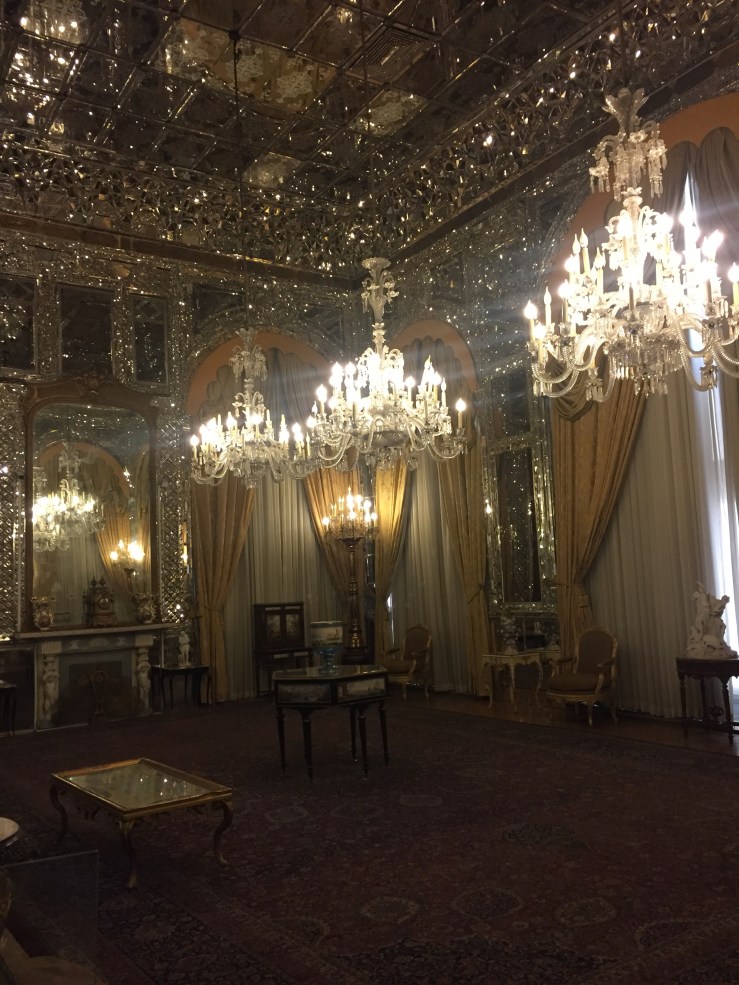
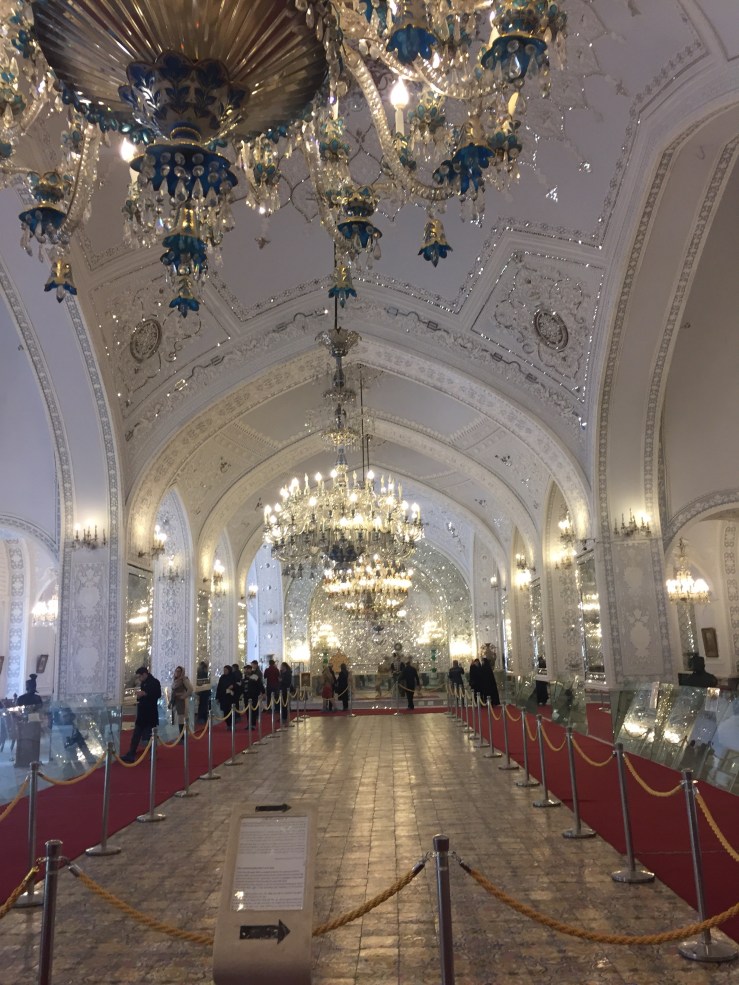
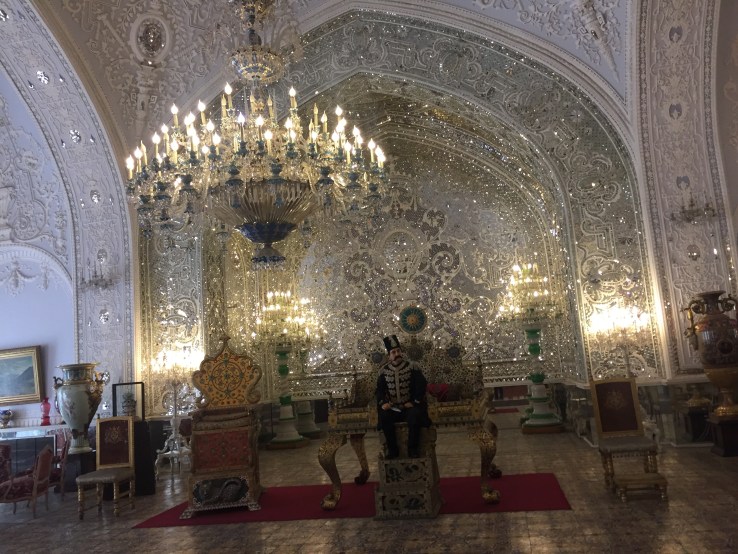
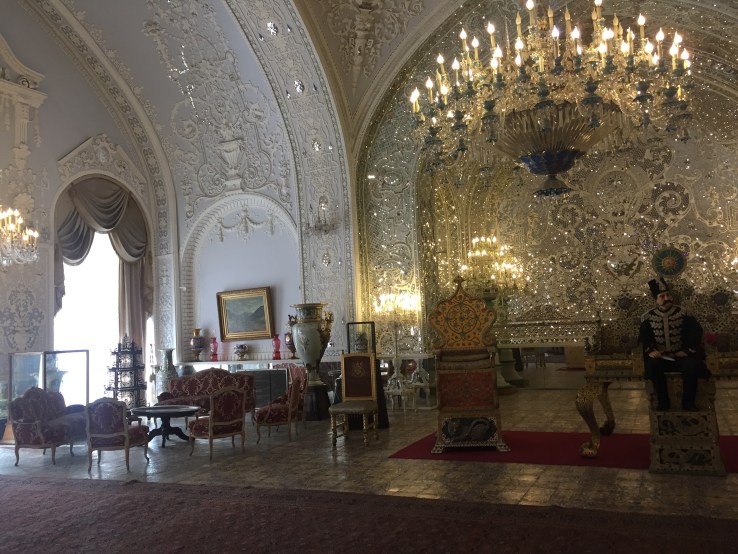
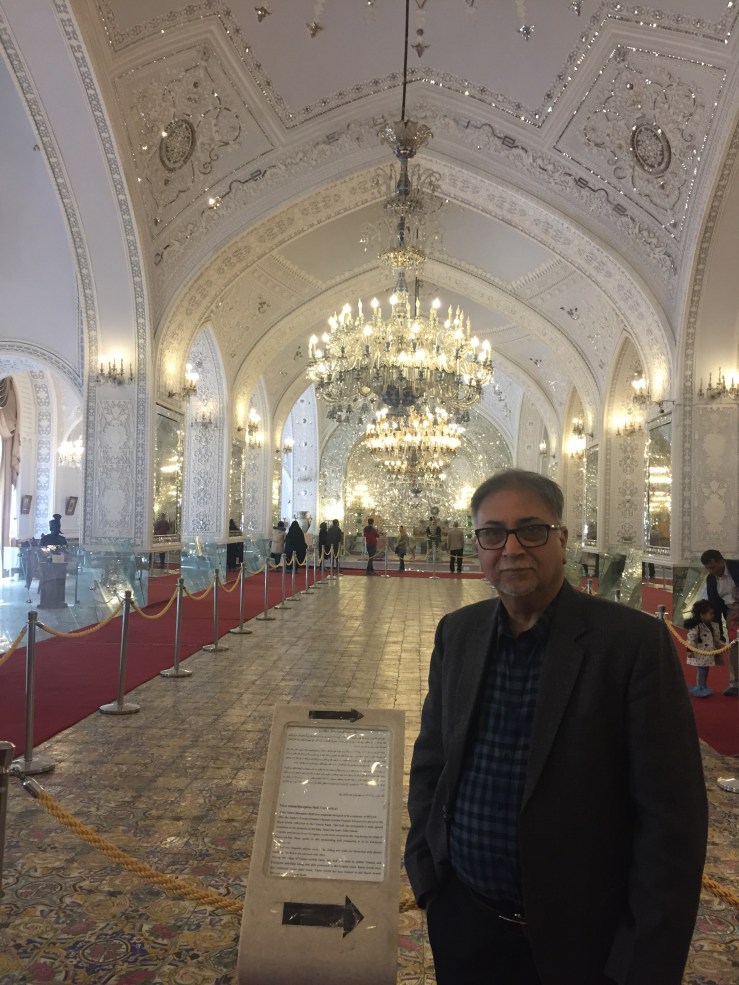
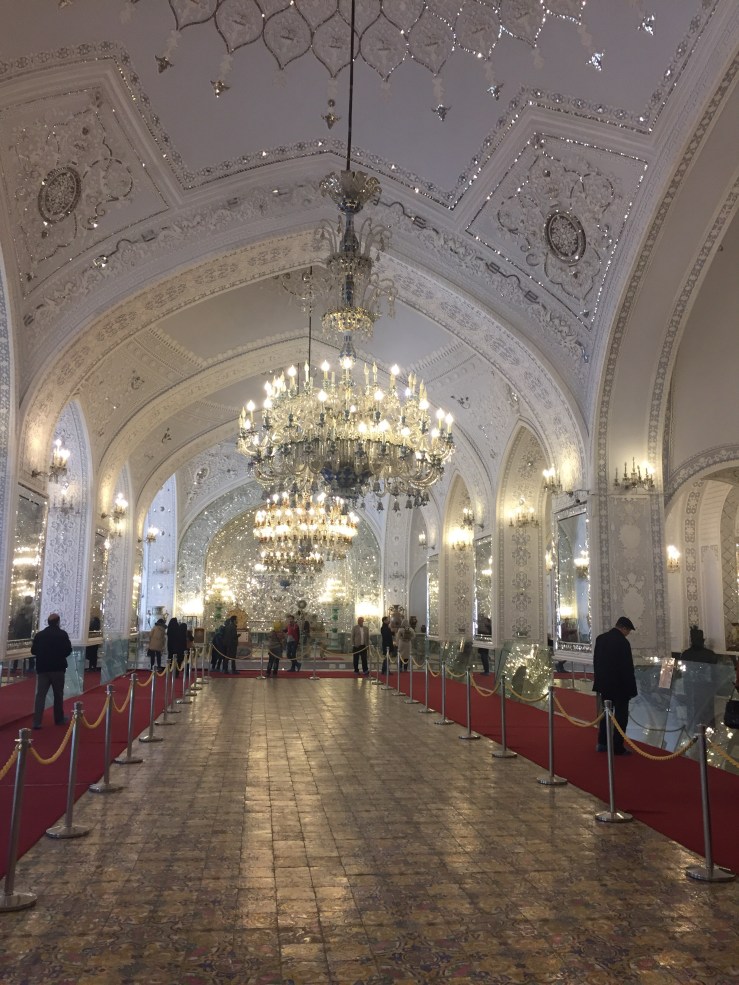
Mirror Hall (Tālār-i Āīneh)

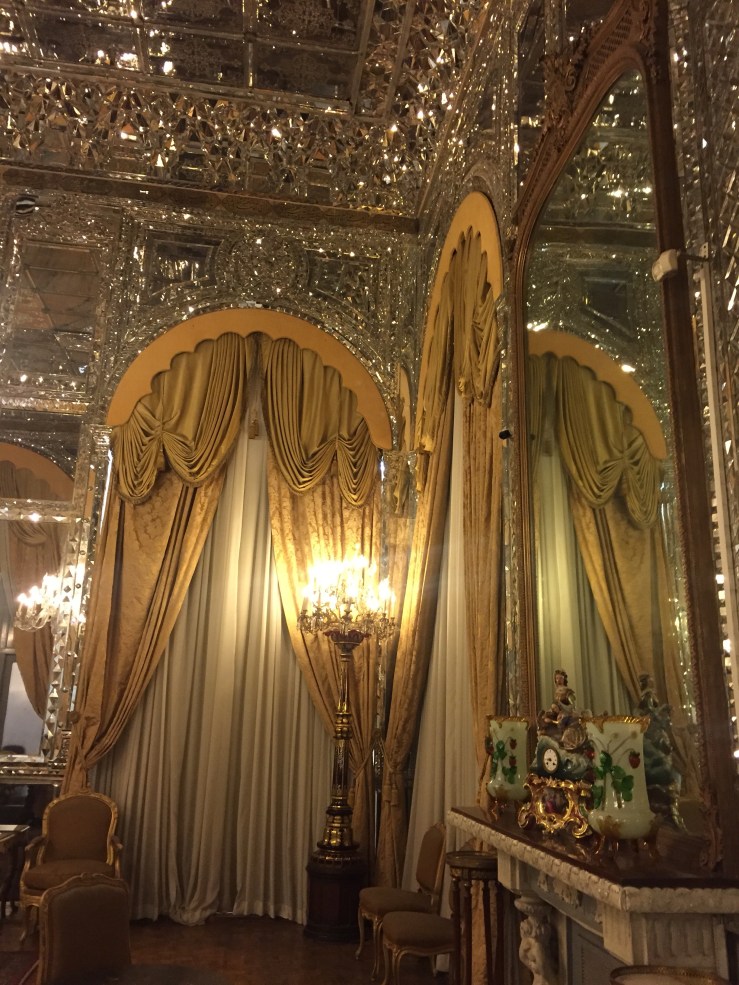
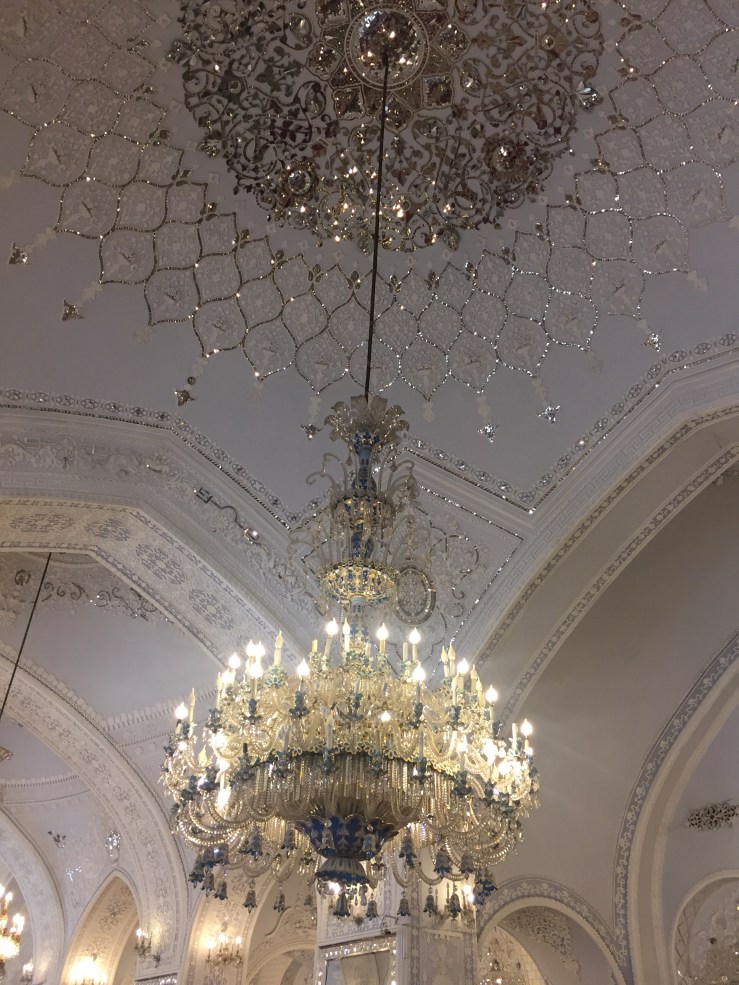
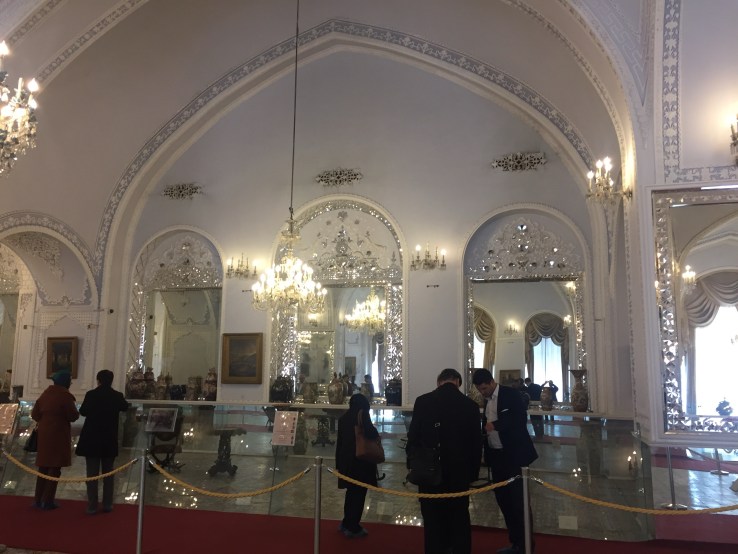
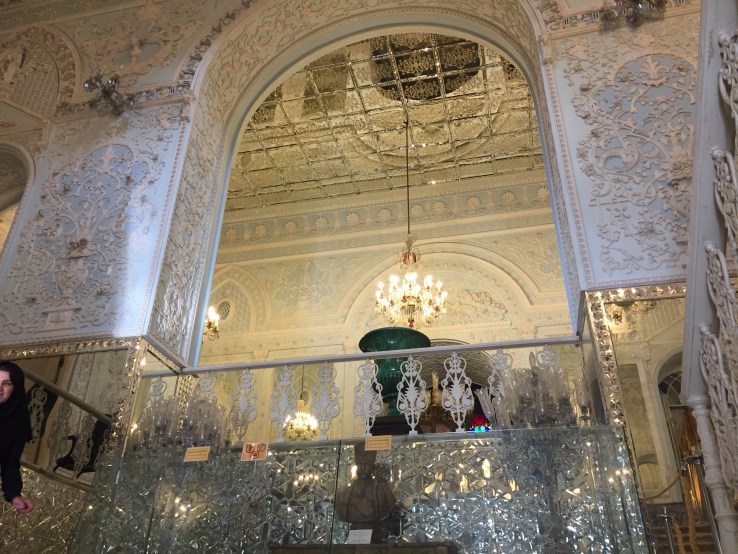
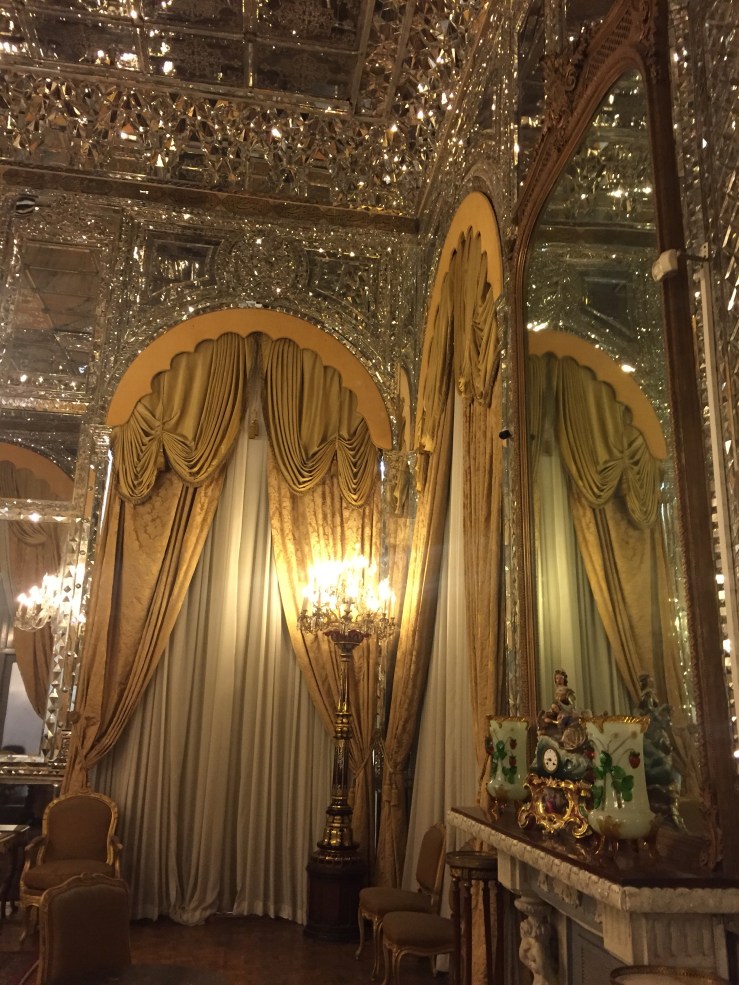
This is the most famous of the halls of the Golestan Palace. This relatively small hall is famous for its extraordinary mirror work. The hall was designed by Haj Abd ol Hossein Memar Bashi (Sanie ol Molk). Yahya Khan (Mowtamed ol Molk), who was the Minister of Architecture, was a consultant for the designer.


Tālār-i Salām and Khalvat-i Karīmkhāni apart from the bādgīr are some of the other important structures in the palace complex.

Without doubt it was a wonderful experience for me to have visited this palace of the erstwhile kings of Iran! It was a day which I can not easily forget! There was much more than what I have recorded here. Hopefully I will revisit this site and see what I had missed this time!

I just want to mention one more fact: as you go in, or come out, you are greeted by a large portrait of Ayatollah Khomeini adorning a mosque constructed on the other side of the road just besides the entrance gate. He seems to look directly in your eye to remind you of the transient nature of this world: Today the world is free of Shahs and their opulence! What remains behind are the result of their deeds…

Sab thātt padā rah jāegā jab lād chalēgā banjārā!

[This blog is dedicated to Dr Ali Dehgahi, Cultural Councellor to India, Islamic Republic of Iran who facilitated my visit to Iran in January 2018]