ہم آج مغلوں کو کیوں یاد کریں؟

سید علی ندیم رِضَوی

ہم شدید سیاسی بے چینی کے لمحے میں لکھ رہے ہیں۔ ایک ایسی ریاست میں جو کل تک آئینی طور پر سیکولر تھی، جو تمام مذاہب کے ساتھ یکساں احترام اور عقیدے کے معاملات میں ریاست کی غیر جانبداری کے لیے پرعزم تھی، ایک نو منتخب رہنما نے اعلان کیا ہے کہ اگر وہ وزیر اعلیٰ بنتا ہے تو اس کی حکومت صرف اس ایک مذہبی برادری کی بھلائی سے تعلق رکھے گی جس سے وہ تعلق رکھتا ہے۔ یہ بیان، خواہ مبالغہ آرائی پر مبنی ہو یا حکمت عملی کا حصہ، ایک بنیادی تبدیلی کی نمائندگی کرتا ہے: یہ مشترکہ شہری جگہ کے تصور کو ترک کر کے اکثریتی امتیازیت کے حق میں ہے۔ اسی پس منظر میں یہ سوال کہ ہم مغلوں کو کیوں یاد رکھیں، تعلیمی دائرے سے بہت آگے تک اہمیت اختیار کر جاتا ہے۔ کیونکہ مغلوں نے، اپنے بہترین دور میں، بالکل اس کے برعکس تصور کو حقیقت میں بدلا: ایک ایسی ریاست جس نے نہ صرف مختلف مذہبی برادریوں کو برداشت کیا بلکہ ان سے فعال طور پر جڑا، ان سے سیکھا، اور انہیں مقدس کا درجہ دیا۔ مغلوں کو یاد رکھنا یہ یاد رکھنا ہے کہ ایک کثیرالمذہب، جامع اور ملا جلا سیاسی نظام کوئی مغربی استعماری نعمت نہیں بلکہ ایک دیسی کامیابی ہے، جو جنوبی ایشیا میں اس وقت حاصل ہوئی جب یورپ میں جدید سیکولر ازم کا تصور بھی پیش نہیں کیا گیا تھا۔ اور مغلوں کو بھول جانا، جیسا کہ نئی اکثریتی امتیازی بیان بازی چاہتی ہے، اس تہذیبی حافظے کو جان بوجھ کر کاٹ دینا ہے جس نے ایک سیکولر، ملے جلے ہندوستان کے تصور کو ممکن بنایا تھا۔

اشوک کے ادھورے منصوبے کے وارث

اشوک کی موریہ سلطنت پہلی عظیم براعظمی اتحاد تھی، جس نے مختلف ثقافتوں کو دھمہ نامی ایک غیر فرقہ وارانہ شاہی نظریے کے تحت جوڑ دیا تھا۔ پھر بھی اشوک کی موت کے نصف صدی کے اندر ہی یہ اتحاد علاقائی بکھراؤ میں بدل گیا جو تقریباً دو ہزار سال تک قائم رہا۔ مغلوں نے وہ کامیابی حاصل کی جو اشوک کے بعد کسی طاقت کو نہیں ہوئی تھی۔ 1556 میں اکبر کے تخت نشین ہونے سے لے کر 1707 میں اورنگزیب کی موت تک، 150 سال کے عرصے میں، سلطنت نے برصغیر کے تقریباً ہر کونے کو کنٹرول کیا یا اس پر غلبہ حاصل کیا۔ یہ اتحاد محض فوجی فتح سے مختلف تھا۔ مغلوں نے فتح شدہ علاقوں کو ایک معیاری منصب داری نظام، ٹوڈرمل کے زیر اہتمام یکساں محصولاتی نظام (زبت)، ایک مشترکہ درباری زبان (فارسی زدہ ہندوی)، اور ایک ہی سکے کے ذریعے مربوط کیا۔ سورت کا ایک تاجر اور بنگال کا ایک کسان ایک ہی قانونی اور مالیاتی نظام کے تحت کام کرتا تھا، یہ کامیابی اشوک کے احکام کے بعد نظر نہیں آئی تھی، اور یہ وہی نظام تھا جس نے بعد میں برطانوی راج اور جدید ہندوستان، پاکستان اور بنگلہ دیش کے علاقائی تصورات کو انتظامی ڈھانچہ فراہم کیا۔

جامع معاشرہ: صلح کل اور بقائے باہم کا ڈھانچہ

محض سیاسی اتحاد دیرپا یادداشت کی ضمانت نہیں دیتا؛ ظالم سلطنتیں اکثر صرف لعنت بھیجنے کے لیے یاد کی جاتی ہیں۔ مغلوں کو جو چیز ممتاز کرتی ہے، خاص طور پر اکبر اور ان کے فوری جانشینوں کے دور میں، وہ ہے بین المذاہب تفہیم کا ان کا دانستہ، ادارہ جاتی منصوبہ۔ اکبر کا صلح کل (مطلق امن یا آفاقی رواداری) ایک بامعنی، فعالانہ اقدام تھا جو مذہبی کثرتیت کو گلے لگاتا تھا۔ اس نے 1564 میں جزیہ (غیر مسلموں پر ٹیکس) ختم کر دیا، زیارات کے ٹیکس ہٹا دیے، اور ہندوؤں کو اعلیٰ ترین فوجی اور شہری عہدوں پر فائز کیا۔ مان سنگھ اول، ٹوڈرمل، اور بیربل سلطنت کے ستون بن گئے۔ فتح پور سیکری کا عبادت خانہ نہ صرف مسلم علما بلکہ ہندوؤں، جینوں، بدھوں، زرتشیوں، عیسائیوں اور حتیٰ کہ ملحدوں کے لیے بھی کھلا تھا۔ جین مت کے پیروکاروں نے اکبر کو بعض مقدس ایام میں جانوروں کے ذبح پر پابندی لگانے پر متاثر کیا؛ یسوعی مصوروں کے پورٹریٹ نے مغل مصوری کو متاثر کیا؛ اور ہندو مہاکاوی، مہابھارت اور رامائن، کا فارسی میں ترجمہ (رزم نامہ) ہوا، جس سے وہ فارسی پڑھنے والے اشرافیہ کے لیے قابل رسائی بن گئے۔ اس کا نتیجہ ایک ملا جلا معاشرہ تھا، گنگا جمنی تہذیب، جہاں ہندوستانی کلاسیکی موسیقی نے مشترکہ سرپرستی میں ترقی کی، جہاں اردو فارسی اور کھڑی بولی کے امتزاج سے ابھری، اور جہاں ہولی جیسے تہوار مغل درباروں میں منائے جاتے تھے جبکہ محرم کے جلوسوں میں ہندو شرکت کرتے تھے۔

ہندو دانائی کے سامنے اکبر کا انکسار

ہندو فکر کے ساتھ اکبر کی وابستگی کی گہرائی کو بڑے درباری مباحثوں سے نہیں بلکہ قریبی، علامتی اعزاز کے اعمال سے بہتر طور پر سمجھا جا سکتا ہے۔ اکبر باقاعدگی سے ہندو علما، یوگیوں اور فقیروں کو اپنے دربار میں مدعو کرتا تھا، انہیں محکوم رعایا کے طور پر نہیں بلکہ روحانی حکمت کے سرچشمے کے طور پر دیکھتا تھا۔ ایک قابل ذکر واقعہ دیبی نامی ایک فقیر سے متعلق ہے۔ اکبر نے دیبی کو ایک طلب گار کی طرح نہیں بلایا بلکہ اسے جھروکے (شاہی بالکونی جہاں سے بادشاہ اپنی رعایا کو دکھائی دیتا تھا) کی سطح تک ایک چارپائی اٹھانے کا حکم دیا، جو شاہی بلندی کی اعلیٰ ترین علامت تھی۔ دیبی کو وہیں، بادشاہ کے برابر کی سطح پر، بیٹھایا گیا تاکہ رات گئے گفتگو کی جا سکے۔ یہ کوئی تماشا نہیں تھا؛ یہ ایک عوامی اعلان تھا کہ ایک گھومتا پھرتا ہندو فقیر ایسی سچائی کا مالک ہے جو بادشاہ کے برابر کی حقدار ہے۔ ان علامتی مساوات کے اعمال نے مغل بادشاہت کی گرامر کو ہی بدل دیا، شاہی اخلاقیات میں یہ بات ڈال دی کہ حکمت مذہبی حدود سے ماورا ہے۔

جہانگیر کا غار کا سفر: ویدانتی مشغولیت

اگر اکبر فقیروں کو اپنے دربار لاتا تھا تو اس کے بیٹے جہانگیر نے اس سے بھی زیادہ قابل ستائش کام کیا: وہ خود ان کے پاس گیا۔ جہانگیر کی تزک جہانگیری (یادداشتیں) اس کی ویدانتی فلسفے کے بارے میں گہرے تجسس اور ہندو سنیاسیوں سے اس کی ذاتی ملاقاتوں کو ریکارڈ کرتی ہیں۔ ان میں سب سے مشہور اس کی ملاقات جدروپ گوسائیں (جسے چتروپ گوسائیں بھی کہا جاتا ہے) سے ہے، جو اُجین کے قریب ایک غار میں رہنے والا ایک اپنیشدک بابا تھا۔ جہانگیر نے جدروپ کو شاہی کیمپ میں طلب نہیں کیا؛ اس کے بجائے، بادشاہ نے صرف چند خادموں کے ساتھ غار کا سفر کیا، گھوڑے سے اترا، اور اس فقیر کی معمولی سی رہائش گاہ میں داخل ہوا۔ وہاں، ہندوستان کا حکمران ایک ننگے فقیر کے پاؤں میں بیٹھ گیا اور روح کی نوعیت، مادی دنیا کا دھوکہ، اور تمام وجود کی وحدت پر بحث کی، یہ سب ادویت ویدانت کے بنیادی عقائد تھے۔ جہانگیر نے اپنی یادداشتوں میں درج کیا ہے کہ وہ جدروپ کی حکمت سے گہرا متاثر ہوا اور اس کے بعد اس کے ساتھ احترام بھری خط و کتابت جاری رکھی۔ یہ محض سیاسی مصلحت نہیں تھی؛ یہ ایک حقیقی فلسفیانہ لگن تھی۔ ایسے دور میں جب یورپی بادشاہ بدعتیوں کو جلا رہے تھے، ایک مسلم بادشاہ اپنشیدوں کے بارے میں سیکھنے کے لیے ایک ہندو سنیاسی کے غار میں گھس رہا تھا۔ یہ ایک عمل، بادشاہ کا بابا کے پاس جانا، ایک ایسا ہندوستان بنانے میں مددگار ہوا جہاں روحانی اتھارٹی کو مذہبی لیبل سے قطع نظر پہچانا جا سکے، یہ ورثہ آج بھی کمیونٹیز کے درمیان بزرگوں کی عقیدت میں دکھائی دیتا ہے۔

شاہ جہاں کا مندر کی پوجا کا کلامی اعلیٰ مقام

جامع احترام کی روایت شاہ جہاں کے تحت بھی جاری رہی، جسے عام طور پر صرف تاج محل کے لیے یاد کیا جاتا ہے۔ پھر بھی اس کے فرمان ایک ایسے حکمران کو ظاہر کرتے ہیں جو مندروں کو محض عطیات دینے سے آگے بڑھ گیا، یہ عطیات اکبر، جہانگیر اور شاہ جہاں کے تحت بہت زیادہ تھے، اور ہندو عبادت کی خود ایک کلامی ازسرنو تعریف کی۔ ایک قابل ذکر فرمان میں، شاہ جہاں نے اعلان کیا کہ مندر کی گھنٹی کی آواز اور دیوتا کے سامنے کی جانے والی دعائیں پرستش الٰہی ہیں، یعنی “خدا کی عبادت”، اور ایسے اعمال کو مسجد میں کی جانے والی نماز کے مساوی قرار دیا۔ یہ رواداری نہیں تھی؛ یہ کلامی (تھیولوجیکل) تسلیم تھا۔ مغل بادشاہ، بطور ہندوستان میں اسلام کے محافظ، یہ اعلان کر رہا تھا کہ ہندو دیوتا، جس کی گھنٹیوں اور نذروں سے پوجا کی جاتی ہے، وہی خدا ہے جس کی مسلمانوں کی مساجد میں عبادت ہوتی ہے۔ یہ بیان، شاہی دفتر سے نکلتا ہوا، مندر کو اسلامی خودمختاری کے تحت الٰہی عبادت کی ایک جائز جگہ قرار دے رہا تھا۔ ایسا اعلان کسی بھی معاصر یورپی یا مغربی ایشیائی عدالت میں ناقابل تصور ہوتا۔ اس نے ایک تہذیبی اخلاقیات بنانے میں مدد کی جس میں الٰہی تک پہنچنے کے متعدد راستوں کو قانونی اور کلامی طور پر تسلیم کیا جا سکے، یہ اخلاقیات، خواہ جتنی بھی ٹوٹ پھوٹ کا شکار ہو، اب بھی تمام مذاہب کے لیے یکساں احترام کے ہندوستانی آئینی وعدے کے مرکز میں ہے۔

دارا شکوہ اور اپنشید: ایک فلسفیانہ پل

باہمی تفہیم کے لیے مغل عزم اپنے فلسفیانہ عروج پر دارا شکوہ کے تحت پہنچا، جو شاہ جہاں کا صوفی رجحان رکھنے والا ولی عہد تھا۔ 1656 اور 1657 کے درمیان، دارا نے سرِ اکبر (عظیم راز) مکمل کیا، جو پچاس اپنشیدوں کا ایک فارسی ترجمہ تھا۔ اپنے دیباچے میں، اس نے ایک حیران کن دعویٰ کیا: اپنشید وہ کتاب مخنون (پوشیدہ کتاب) تھی جس کا ذکر قرآن میں ہے، اور قرآن اور اپنشید اسی ایک خدا کے تصور کی دوہری تشریحات ہیں۔ یہ محض تعلیمی تجسس نہیں تھا؛ یہ کلامی ترکیب کا ایک بنیاد پرست عمل تھا۔ اگر دارا اورنگزیب کے بجائے کامیاب ہو جاتا، تو جنوبی ایشیائی فکری تاریخ بالکل مختلف موڑ لے سکتی تھی۔ لیکن ناکامی کے باوجود، اس کا ترجمہ تاریخی طور پر بہت اہم ثابت ہوا۔ سرِ اکبر کو فرانسیسی اسکالر انکٹیل ڈوپیرون نے 1760 کی دہائی میں حاصل کیا، جس نے اس کا لاطینی میں ترجمہ کیا (1801-1802)۔ یہ لاطینی ورژن جرمن فلسفی آرتھر شوپنہاور تک پہنچا، جس نے اپنشیدوں کو “دنیا میں ممکنہ طور پر سب سے زیادہ فائدہ مند اور بلند کرنے والا مطالعہ” قرار دیا۔ اس طرح، ایک مغل شہزادے کی بدعتیانہ تجسس نے ویدانتی فلسفے کو جرمن آئیڈیالزم اور اس کے ذریعے عالمی فکر سے متعارف کرایا۔ اگر دارا نے ہندومت اور اسلام کے درمیان مماثلتیں نکالنے اور اپنشیدوں کو آسمانی کتابوں کے طور پر پیش کرنے کی جرات نہ کی ہوتی تو دنیا ان بنیادی متون سے صدیوں تک ناواقف رہ سکتی تھی۔

اکبر کا عقلیت پسندی اور تعلیم کا سیکولرائزیشن

اکبر کی مذہبی تجسس ایک گہرے عزم سے مضبوط تھی: تقلید پر عقل کی برتری۔ عبادت خانہ کے مباحثوں میں، اکبر نے مشہور طور پر اعلان کیا تھا کہ “عقل کا حصول اور تقلید کا رد کرنا… میرے ایمان کی بنیاد ہیں۔” اس عقلیت پسندی کے براہ راست تعلیمی نتائج تھے۔ اکبر نے شاہی مدرسے کے نصاب میں اصلاح کی تاکہ روایتی مذہبی علوم کے ساتھ ساتھ ریاضی، فلکیات، طب، جغرافیہ، زراعت، منطق اور لسانیات کو شامل کیا جائے۔ اس نے سائنسی مخطوطات کی تصویری کاپیوں کی سرپرستی کی، جن میں یوکلڈ کے علمیات اور سدھانت شِیرومنی (سنسکرت فلکیات کا متن) کے تراجم شامل تھے۔ یہ کوئی “مسلم” یا “ہندو” تعلیم نہیں تھی؛ یہ ایک سیکولر، تجرباتی تعلیم تھی جو قابل منتظمین تیار کرنے کے لیے ڈیزائن کی گئی تھی، نہ کہ کٹر پیروکار۔ یہ روایت، جسے اورنگزیب کے تحت آرتھوڈوکس ردعمل نے توڑا اور پھر برطانوی نوآبادیاتی تعلیم نے منظم طریقے سے مٹا دیا، جس نے انڈک علوم پر انگریزی حروف کو فوقیت دی، جنوبی ایشیائی عقلیت پسندی کی پوشیدہ پیش گوئی ہے۔ جدید ہندوستانی سائنسدان، شکوک و شبہات رکھنے والا دانشور، صحیفے پر شواہد کو ترجیح دینے والا شخص: سب کا ایک غیر تسلیم شدہ قرض اکبر کے اس اصرار پر ہے کہ دلیل کو وحی پر فیصلہ کرنے کا حق حاصل ہے۔

مغل مصوری کا مکتب اور ہیومنزم کی پیدائش

مغل مصوری کا مکتب، جو اکبر کے کارخانوں میں فارسی، ہندو اور جین فنکاروں نے تشکیل دیا، نے جنوبی ایشیائی بصری ثقافت میں ایک بنیاد پرست ہیومنزم متعارف کرایا۔ اس سے پہلے کی انڈک مصوری زیادہ تر مذہبی یا بیانیہ تھی، جو دیوتاؤں، نبیوں، یا چپٹی علامتی روایات پر مرکوز تھی۔ اس کے برعکس، مغل مصوری عام چیزوں میں خوش ہوتی تھی: ایک چٹائی صاف کرتا تیتکڑا، اپنی پگڑی باندھتا ایک مالی، چوہے کے ساتھ کھیلتی بلی، دربار میں چھینکتا ایک درباری۔ حقیقت نگاری بے مثال تھی، پرندوں کی نسل تک پہچان، زندگی سے کی گئی پودوں کی مطالعہ، اور چہروں کے انفرادی نقش (مسے، جھریاں، سب کچھ)۔ یہ مشاہدے کا فن تھا، نہ کہ حکم دینے کا۔ یہ وہی عقلی، سیکولر نظر تھی جو اکبر نے مذہب پر لگائی تھی: دنیا کو الٰہی وساطت کے بغیر، محتاط نظر سے دیکھ کر جانا جا سکتا ہے۔ شاہکار، بابرنامہ کی تصویریں، اکبرنامہ کے جنگی مناظر، طوطی نامہ کے جانوروں کی کہانیاں، روزمرہ کی زندگی کی ایک بصری دستاویز ہیں، انسانی سرگرمیوں کا جشن جو کسی بھی دیوتا یا نبی کی طرح فنی توجہ کے لائق ہے۔ اس ہیومنسٹ موڑ نے براہ راست بعد کی کمپنی پینٹنگ، راجا روی ورما کی حقیقت پسندی، اور ابتدائی بالی ووڈ جمالیات کو متاثر کیا۔ مغل مصوری کو بھولنا یہ بھولنا ہے کہ جنوبی ایشیائی آرٹ نے کبھی مندر اور مزار کو چھوڑ کر، صاف نظروں سے انسانوں اور عورتوں کی دنیا کی طرف دیکھا تھا۔

تعمیرات کے فن کو سیکولر بنانا

مغلوں کا تعمیرات میں تعاون اکثر تاج محل تک محدود کر دیا جاتا ہے، جو ایک مقبرہ ہے، اور اس لیے ایک مذہبی ڈھانچہ۔ لیکن یہ ایک گہرے انقلاب کو نظر انداز کرتا ہے: مغلوں نے یادگاری تعمیرات کو ہی سیکولر بنا دیا۔ مغلوں سے پہلے، ہندوستان میں بڑے پیمانے پر پتھر کی تعمیرات زیادہ تر مذہبی تھیں: مندر، اسٹوپ، مساجد، خانقاہیں۔ شاہی محل عارضی ہوتے تھے یا مندر کے احاطے میں ضم ہوتے تھے۔ مغلوں نے باغیچے میں مقبرے کی طرز کی شروعات کی جو بیک وقت یادگاری، نباتاتی، آبی اور تفریحی تھی، نہ مکمل طور پر مقدس اور نہ مکمل طور پر عام۔ انہوں نے پیٹرا ڈورا (سخت پتھر کی جڑائی) کی تکنیک کو جیومیٹرک اور پھولوں کے نقشوں کے لیے مکمل کیا جس میں کوئی موروثی مذہبی علامت نہیں تھی۔ انہوں نے سیرائے (سڑک کنارے سرائے)، باؤلی (سیڑھی والے کنوئیں)، کارخانے، پل، اور پورے منصوبہ بند شہر (فتح پور سیکری، شاہجہان آباد) تعمیر کیے جن میں یادگاری دروازے، چاندنی چوک (بازار)، اور حمام (عوامی غسل خانے) تھے۔ سرخ پتھر اور سفید سنگ مرمر کی زبان جو انہوں نے تیار کی، جس میں محرابی راستے، چھتریاں، اور جھروکے شامل تھے، ایک سیکولر تعمیراتی زبان بن گئی، جسے راجپوت درباریوں، سکھ گوردواروں، برطانوی نوآبادیاتی بنگلوں، اور حتیٰ کہ جدید ہندوستانی پارلیمنٹ کی عمارتوں نے اپنایا۔ جب ایک آج کا ہندوستانی ایک بڑی محراب والی کھڑکی والی میونسپل عمارت یا پانی کی نہروں والا باغیچہ والا شہر دیکھتا ہے، تو وہ مغل سیکولر تعمیرات کی روح دیکھ رہا ہوتا ہے۔ جنوبی ایشیا میں فن تعمیر کا مغلوں پر یہ احسان ہے کہ عمارت الٰہی ہوئے بغیر بھی شاندار ہو سکتی ہے۔

حال کے خلاف ضروری ورثہ

ہمیں مغلوں کو بالکل اسی لیے یاد رکھنا چاہیے کیونکہ وہ ایک زندہ، دیسی متبادل پیش کرتے ہیں اس اکثریتی امتیازیت کے خلاف جسے ایک نو منتخب رہنما، ایک ریاست میں جو کل تک سیکولر تھی، اب ادارہ جاتی شکل دینے کی دھمکی دے رہا ہے۔ جب کوئی وزیر اعلیٰ اعلان کرتا ہے کہ اس کی حکومت کا تعلق صرف اس کی اپنی مذہبی برادری کی بھلائی سے ہوگا، تو وہ اس منطق کو ہی رد کر دیتا ہے جس نے مغلوں کو تین صدیوں تک انتہائی متنوع برصغیر پر حکومت کرنے دیا۔ مغلوں نے نہ صرف ہندوؤں، جینیوں، سکھوں، عیسائیوں اور زرتشیوں کو برداشت کیا؛ بلکہ انہوں نے فقیروں کو جھروکے تک اٹھایا، ویدانت سیکھنے کے لیے غاروں کا سفر کیا، مندر کی گھنٹیوں کو خدا کی عبادت قرار دیا، اپنشیدوں کا فارسی میں ترجمہ کیا، نصاب کو عقل اور سائنس شامل کرنے کے لیے اصلاح کیا، مصوری کو انسانی شکل دی، اور تعمیرات کو سیکولر بنایا۔ انہوں نے ایک ایسا ہندوستان بنانے میں مدد کی جہاں صدیوں تک، ایک مسلم بادشاہ ہندو سنیاسی کے پاؤں میں بیٹھ سکتا تھا، اور جہاں ایک شاہی فرمان یہ اعلان کر سکتا تھا کہ مندر کی گھنٹی کی آواز وہی الٰہی کان چھوتی ہے جو مسجد کی اذان۔

مغلوں کو یاد رکھنا یہ یاد رکھنا ہے کہ سیکولرزم اور کثرتیت مغربی مسلط کردہ چیزیں نہیں بلکہ دیسی کامیابیاں ہیں۔ انہیں بھول جانا، یا انہیں غیر ملکی ظالموں کی کاریکچر بنا دینا، اس تہذیبی حافظے کو جان بوجھ کر اندھا کرنا ہے جس نے ایک ملے جلے، جامع ہندوستان کے تصور کو ممکن بنایا۔ وہ حافظہ پرانی یادوں کا نام نہیں؛ وہ ایک ہتھیار ہے۔ یہ تاریخی ثبوت ہے کہ اکثریتی امتیازیت ایک انتخاب ہے، کوئی ناگزیر نہیں، اور وہ بھی ایک تباہ کن انتخاب، جو صدیوں سے ان بادشاہوں کے بنائے ہوئے ملا جلی تانے بانے کو کھول دیتا ہے جو سمجھتے تھے کہ عاجزی کے بغیر طاقت، جامعیت کے بغیر حکمرانی، اور تجسس کے بغیر خودمختاری بالآخر کمزور اور خود تباہ کن ہوتی ہے۔ مغلوں نے، اپنے بہترین گھنٹوں میں، وہ شکل دی جو ہم آج ہیں۔ اس دور میں جب یہ ورثہ براہ راست حملے کی زد میں ہے، انہیں یاد رکھنا فکری مزاحمت اور سیاسی امید کا ایک عمل ہے۔ یہ اصرار کرنا ہے کہ ایک اور ہندوستان نہ صرف ممکن ہے بلکہ وہ پہلے سے موجود بھی رہا ہے، اور دوبارہ وجود میں آ سکتا ہے۔

Why Remember the Mughals Today?

Syed Ali Nadeem Rezavi
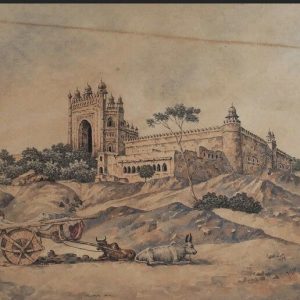
Temples in Mughal Miniatures

I write at a moment of profound political anxiety. In a state that was, until a week ago, constitutionally secular, committed to equal respect for all religions and the impartiality of the state in matters of faith, a newly appointed leader has declared that if he becomes Chief Minister, his government will be concerned only with the welfare of the single religious community to which he belongs. This statement, however hyperbolic or tactical, represents a fundamental rupture: it abandons the very idea of a common civic space in favour of majoritarian exclusivism. It is against this backdrop that the question of why one should remember the Mughals acquires an urgency far beyond the academic. For the Mughals, at their best, built precisely the opposite vision: a state that not only tolerated but actively engaged with, learned from, and sacralized the multiple religious communities under its dominion. To remember the Mughals is to recall that a plural, inclusive, and syncretic polity is not a Western colonial import but a homegrown achievement, one that was realised in South Asia centuries before modern secularism was theorised in Europe. And to forget the Mughals, as the new rhetoric of exclusive majoritarianism demands, is to willfully amputate the very civilisational memory that made the idea of a secular, composite India possible in the first place.

The Heirs to Ashoka’s Unfinished Project

Ashoka’s Mauryan Empire represented the first great continental unification, binding disparate cultures under a non-sectarian imperial ideology articulated through the Dhamma. Yet within half a century of Ashoka’s death, this unity dissolved into regional fragmentation that would last for nearly two millennia. The Mughals achieved what no post-Ashokan power had managed. From Akbar’s accession in 1556 to Aurangzeb’s death in 1707, a span of 150 years, the empire controlled or dominated nearly every corner of the subcontinent. This consolidation was qualitatively different from mere military conquest. The Mughals integrated conquered territories through a standardized mansabdari bureaucracy, a uniform revenue system (Todar Mal’s zabt), a common court language (Persianized Hindavi), and a single currency. A merchant in Surat and a peasant in Bengal operated under the same legal and fiscal framework, an achievement not seen since Ashoka’s edicts, and one that would later provide the administrative skeleton for the British Raj and the territorial imagination of modern India, Pakistan, and Bangladesh.

The Inclusive Society: Sulh-i-Kul and the Architecture of Coexistence

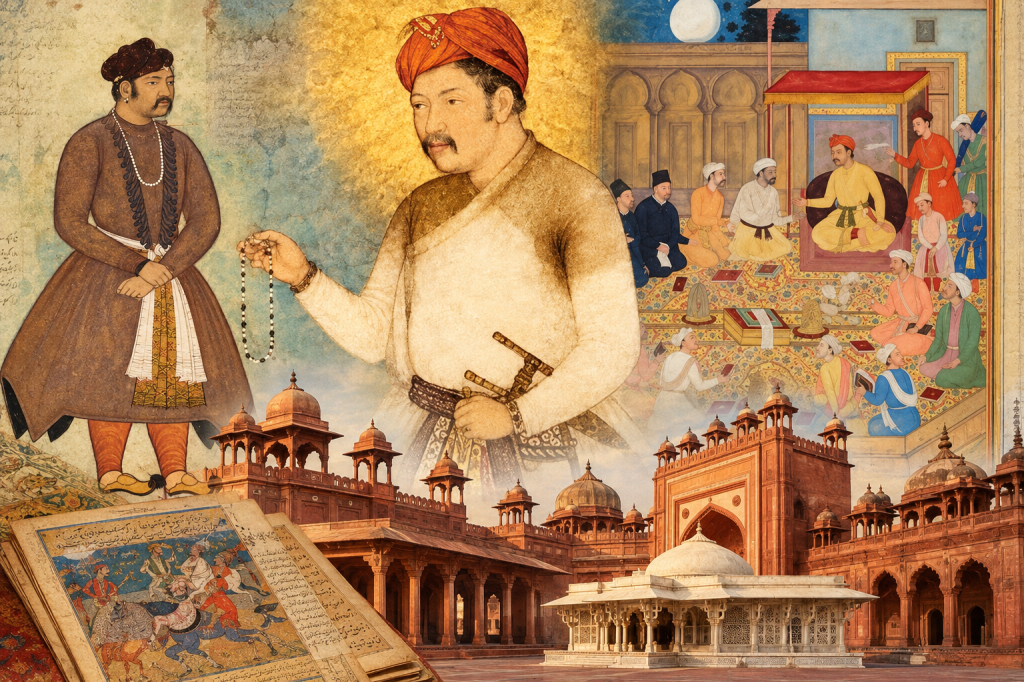
Political consolidation alone does not guarantee lasting memory; brutal empires are often remembered only to be cursed. What distinguishes the Mughals, particularly under Akbar and his immediate successors, is their deliberate, institutionalized project of inter-religious understanding. Akbar’s Sulh-i-kul (absolute peace or universal tolerance) was an ambitious, proactive engagement with religious pluralism. He dismantled the jizya (poll tax on non-Muslims) in 1564, removed pilgrimage taxes, and appointed Hindus to the highest military and civilian ranks. Man Singh I, Todar Mal, and Birbal became pillars of the empire. The Ibadat Khana (House of Worship) at Fathpur Sikri hosted not only Muslim theologians but Hindus, Jains, Buddhists, Zoroastrians, Christians, and even atheists. Jains influenced Akbar to ban animal slaughter during certain holy days; Jesuit portraits influenced Mughal miniature painting; and Hindu epics like the Mahabharata and Ramayana were translated into Persian (Razmnama), making them accessible to Persian-reading elites. The result was a composite culture, Ganga-Jamuni tehzeeb, where Hindustani classical music evolved under mixed patronage, where Urdu emerged from the fusion of Persian and Khari Boli, and where festivals like Holi were celebrated in Mughal courts while Muharram processions received Hindu participation.

Akbar’s Humility Before Hindu Wisdom

The depth of Akbar’s engagement with Hindu thought is best illustrated not through grand court debates alone but through intimate, symbolic acts of respect. Akbar regularly invited Hindu scholars, yogis, and mendicants to his court, treating them not as conquered subjects but as sources of spiritual wisdom. One striking episode involves a mendicant named Debi. Rather than summoning Debi as a supplicant, Akbar had a cot raised to the level of the jharokha (the imperial balcony from which the emperor appeared to his subjects), the highest symbol of royal elevation. Debi was made to sit on that raised cot, at the same level as the emperor, for a nightly discussion. This was not theater; it was a public declaration that a wandering Hindu holy man possessed a truth worthy of the emperor’s equal. Such acts of symbolic equality, raising a mendicant to the jharokha, transformed the very grammar of Mughal kingship, embedding into the imperial ethos the idea that wisdom transcends religious boundaries.

Jahangir’s Journey to the Cave: Vedantic Engagement

If Akbar brought saints to his court, his son Jahangir did something even more remarkable: he went to them. Jahangir’s Tuzuk-i-Jahangiri (Memoirs) records his deep curiosity about Vedantic philosophy and his personal encounters with Hindu ascetics. The most famous of these is his meeting with Jadrup Gosain (also known as Chitrup Gosain), an Upanishadic sage who lived in a cave near Ujjain. Jahangir did not summon Jadrup to the imperial camp; instead, the emperor, accompanied only by a few attendants, traveled to the cave, dismounted from his horse, and entered the humble dwelling of the ascetic. There, the ruler of Hindustan sat at the feet of a naked mendicant and discussed the nature of the soul, the illusion of the material world, and the unity of all existence, the core tenets of Advaita Vedanta. Jahangir records in his memoirs that he was profoundly moved by Jadrup’s wisdom and thereafter maintained a respectful correspondence with him. This was not mere political expediency; it was a genuine philosophical courtship. In an age when European monarchs were burning heretics, a Muslim emperor was crawling into a Hindu ascetic’s cave to learn about the Upanishads. This act alone, the emperor going to the saint, helped create an India where spiritual authority could be recognized regardless of religious label, a legacy that remains visible in the syncretic veneration of saints across communities today.

Shah Jahan’s Theological Elevation of Temple Worship

The tradition of inclusive respect continued under Shah Jahan, often remembered primarily for the Taj Mahal. Yet his farmāns (imperial decrees) reveal a ruler who went beyond mere grants to temples, which were plentiful under Akbar, Jahangir, and Shah Jahan, to a theological redefinition of Hindu worship itself. In one remarkable farmān, Shah Jahan declared that the ringing of the temple bell and the prayers offered before the deity in a Hindu temple constituted parastish-e-ilahi, literally “worship of God,” and declared such acts to be equivalent to prayers offered in a mosque. This was not tolerance; it was theological recognition. The Mughal emperor, as the defender of Islam in India, was asserting that the Hindu deity, worshipped with bells and offerings, was the same God worshipped by Muslims in their mosques. This statement, emerging from the imperial chancery, effectively sacralized the Hindu temple as a legitimate space of divine worship under Islamic sovereignty. Such a declaration would have been unthinkable in any contemporary European or West Asian court. It helped create a civilizational ethos in which multiple paths to the divine could be legally and theologically recognized, an ethos that, however frayed, remains central to the Indian constitutional promise of equal respect for all religions.

Dara Shukoh and the Upanishads: A Philosophical Bridge

The Mughal commitment to mutual understanding reached its philosophical zenith under Dara Shukoh, the Sufi-leaning crown prince of Shah Jahan. Between 1656 and 1657, Dara completed the Sirr-i-Akbar (The Great Secret), a Persian translation of fifty Upanishads. In his introduction, he made a stunning claim: the Upanishads were the Kitab al-maknun (the hidden book) referred to in the Qur’an, and the Qur’an and the Upanishads were twin explications of the same monotheistic truth. This was not mere academic curiosity; it was a radical act of theological synthesis. Had Dara succeeded Aurangzeb instead of being executed, South Asian intellectual history might have taken a dramatically different turn. But even in failure, his translation proved monumentally consequential. The Sirr-i-Akbar was acquired by French scholar Anquetil Duperron in the 1760s, who translated it into Latin (1801-1802). That Latin version reached the German philosopher Arthur Schopenhauer, who called the Upanishads “the most profitable and elevating reading… possible in the world.” Thus, a Mughal prince’s heretical curiosity introduced Vedantic philosophy to German idealism and, through it, to global thought. But for Dara’s attempt to draw parallels between Hinduism and Islam and his daring elevation of the Upanishads as heavenly books, the world might have remained ignorant of these foundational texts for centuries longer.

Akbar’s Rationalism and the Secularisation of Education

Akbar’s religious curiosity was undergirded by a deeper commitment: the primacy of reason (aql) over blind imitation (taqlid). In the Ibadat Khana debates, Akbar famously declared, “The pursuit of reason and the rejection of taqlid… are the foundation of my faith.” This rationalism had direct pedagogical consequences. Akbar reformed the imperial madrasa curriculum to include, alongside traditional religious sciences, mathematics, astronomy, medicine, geography, agriculture, logic, and philology. He patronized illustrated scientific manuscripts, including translations of Euclid’s Elements and the (a Sanskrit astronomy text). This was not a “Muslim” or “Hindu” education; it was a secular, empirical education designed to produce competent administrators, not dogmatists. This tradition, shattered by the orthodox reaction under Aurangzeb and then systematically erased by British colonial education, which privileged English letters over Indic sciences, is the hidden prehistory of South Asian rationalism. The modern Indian scientist, the skeptical intellectual, the believer in evidence over scripture: all owe an unacknowledged debt to Akbar’s insistence that reason must sit in judgment over revelation.

The Mughal School of Painting and the Birth of Humanism

The Mughal School of painting, forged in Akbar’s karkhanas (workshops) by Persian, Hindu, and Jain artists, introduced a radical humanism into South Asian visual culture. Prior Indic painting was largely hieratic or narrative, focused on deities, prophets, or flat iconographic conventions. Mughal painting, by contrast, delighted in the ordinary: a partridge preening, a gardener tying his turban, a cat toying with a mouse, a courtier sneezing during an audience. The naturalism was unprecedented, with birds identifiable to species, foliage studied from life, and portraits capturing individual physiognomy (warts, wrinkles, and all). This was an art of observation, not prescription. It reflected the same rational, secular gaze that Akbar brought to religion: the world could be known through careful looking, without divine mediation. The masterpieces, the Baburnama illustrations, the Akbarnama battle scenes, the Tuti-nama animal fables, constitute a visual archive of the everyday, a celebration of human activity as worthy of artistic attention as any god or prophet. This humanist turn directly influenced later Company painting, Raja Ravi Varma’s realism, and even early Bollywood aesthetics. To forget Mughal painting is to forget that South Asian art once escaped the temple and the shrine to look, with clear eyes, at the world of men and women.

Secularising the Art of Building Construction

The Mughal contribution to architecture is often reduced to the Taj Mahal, a tomb, and therefore a religious structure. But this misses a deeper revolution: the Mughals secularized monumental construction itself. Prior to the Mughals, large-scale stone building in India was overwhelmingly religious: temples, stupas, mosques, monasteries. Royal palaces were often perishable or integrated into temple complexes. The Mughals pioneered the garden-tomb as a typology that was simultaneously memorial, botanic, hydraulic, and recreational, neither exclusively sacred nor profane. They perfected the pietra dura (hard stone inlay) technique for geometric and floral motifs that carried no inherent religious symbolism. They built serais (roadside inns), baolis (stepwells), karkhanas (manufactories), bridges, and entire planned cities (Fatehpur Sikri, Shahjahanabad) with monumental gateways, markets (chandni chowks), and public baths (hammams). The red sandstone and white marble vocabulary they developed, including archways, chhatris (pavilions), and jharokhas (overhanging balconies), became a secular architectural language, adopted by Rajput courts, Sikh gurudwaras, British colonial bungalows, and even modern Indian parliament buildings. When a contemporary Indian sees a municipal building with a large arched window or a garden city with water channels, he or she is seeing the ghost of Mughal secular construction. The art of building, in South Asia, owes to the Mughals the idea that architecture can be magnificent without being divine.

The Necessary Inheritance Against the Present

One should remember the Mughals precisely because they offer a living, homegrown counter-model to the exclusivist majoritarianism that a newly appointed leader, in a state secular until a week ago, now threatens to institutionalize. When a Chief Minister declares that his government will concern itself only with the welfare of his own religious community, he repudiates the very logic that allowed the Mughals to rule for three centuries over a subcontinent of immense diversity. The Mughals did not merely tolerate Hindus, Jains, Sikhs, Christians, and Zoroastrians; they raised mendicants to the jharokha, traveled to caves to learn Vedanta, declared temple bells to be the worship of God, translated Upanishads into Persian, reformed education to include reason and science, humanized painting, and secularized architecture. They helped create an India where, for centuries, a Muslim emperor could sit at the feet of a Hindu ascetic, and where a royal decree could declare that the ringing of a temple bell reaches the same divine ear as the call to prayer from a mosque.

To remember the Mughals is to remember that secularism and pluralism are not Western impositions but indigenous achievements. To forget them, or to reduce them to caricatures of foreign despots, is to willfully blind ourselves to the very civilisatory memory that made the idea of a composite, inclusive India possible. That memory is not nostalgia; it is a weapon. It is the historical evidence that exclusive majoritarianism is a choice, not an inevitability, and a disastrous choice at that, one that unravels the syncretic fabric woven over centuries by emperors who understood that power without humility, governance without inclusivity, and sovereignty without curiosity are ultimately brittle and self-defeating. The Mughals, in their finest hours, shaped what we are today. In an era when that inheritance is under direct assault, to remember them is an act of intellectual resistance and political hope. It is to insist that another India is not only possible but has already existed, and can exist again.

जीवित मंदिर: वृंदावन में मुगल सत्ता, धर्मनिरपेक्षता और समाज

गोविंद देवजी मंदिर वृंदावन

दो ध्रुवों के बीच का सच

भारत के इतिहास में मुगल काल और हिंदू मंदिरों के बीच के रिश्ते को अक्सर दो चरम सीमाओं में देखा जाता रहा है, या तो पूरी तरह से सहिष्णुता (यानी मुगल बहुत अच्छे थे) या फिर व्यवस्थित तोड़फोड़ (यानी मुगल सिर्फ मंदिर तोड़ते थे)। ये दोनों ही बातें अधूरी और एकतरफा हैं। यह निबंध असली ऐतिहासिक दस्तावेजों और मंदिरों की दीवारों पर लिखे शिलालेखों के आधार पर यह साबित करेगा कि मुगल राज्य असल में धर्मनिरपेक्ष (सेक्युलर) और बहु-धार्मिक था।

इस पूरी कहानी को समझने के लिए वृंदावन सबसे अच्छी जगह है। कृष्ण भक्ति का यह प्रमुख केंद्र किसी बहुत पुराने ज़माने में नहीं बल्कि मुगल काल के दौरान ही विकसित हुआ। वृंदावन के श्री श्रीवत्स गोस्वामी जैसे विद्वानों ने यहाँ प्रेम (दिव्य प्रेम) की एक ऐसी विचारधारा विकसित की जिसमें ईश्वर और इस दुनिया के बीच कोई फर्क नहीं है। मजेदार बात यह है कि इन मंदिरों को बनवाने के लिए मुस्लिम बादशाहों के सहयोग की जरूरत पड़ी।

यह निबंध चार भागों में बंटा है। पहले, हम मुगल धर्मनिरपेक्षता की विचारधारा सुल्ह-ए-कुल को समझेंगे। दूसरे, अकबर, जहांगीर और शाहजहाँ के ज़माने में मंदिरों को मिले अनुदानों के दस्तावेज देखेंगे। तीसरे, औरंगज़ेब के पेचीदा लेकिन पुख्ता इतिहास को समझेंगे। चौथे, देखेंगे कि ये मंदिर अनुदान आम लोगों के जीवन से कैसे जुड़े थे।

वृंदावन के दस्तावेज़ों की खोज और श्री श्रीवत्स गोस्वामी की भूमिका

वृंदावन के जो दस्तावेज़ आज हमारे पास हैं, उन्हें सदियों तक चैतन्य गोस्वामियों ने संभालकर रखा था। इनमें मुगल बादशाहों के फरमान, जमीन के दान-पत्र, और जमीन की बिक्री के रिकॉर्ड शामिल हैं। ये दस्तावेज़ हमें मुगल काल के आम लोगों की ज़िंदगी की एक अनोखी झलक देते हैं।

सन् 1970 के दशक में लंदन के स्कूल ऑफ ओरिएंटल एंड अफ्रीकन स्टडीज़ के प्रोफेसर तारापद मुखर्जी (1928-1990) ने वृंदावन-मथुरा क्षेत्र में चैतन्य गोस्वामियों और उनके मंदिरों के पास जो पुराने दस्तावेज़ थे, उन्हें इकट्ठा करना शुरू किया। इस काम में वृंदावन के प्रसिद्ध विद्वान और संत श्री श्रीवत्स गोस्वामी ने बहुत महत्वपूर्ण मदद की। इरफान हबीब ने खुद बार-बार स्वीकार किया है कि श्रीवत्स गोस्वामी के बहुमूल्य सहयोग के बिना यह संग्रह इतना बड़ा नहीं हो पाता।

20 अक्टूबर 1986 को तारापद मुखर्जी ने हबीब को पत्र लिखकर प्रस्ताव रखा कि वे दोनों मिलकर फारसी भाषा के इन दस्तावेज़ों पर काम करें। श्रीवत्स गोस्वामी के सहयोग से यह संग्रह और बढ़ता गया। 1987 और 1989-90 में हबीब और मुखर्जी ने तीन बहुत महत्वपूर्ण शोध-पत्र प्रकाशित किए, जिनमें अकबर, जहांगीर और शाहजहाँ के ज़माने में गोस्वामियों से मुगलों के संबंधों की पड़ताल की गई।

दुर्भाग्य से, 7 जुलाई 1990 को तारापद मुखर्जी का निधन हो गया। लेकिन हबीब ने काम जारी रखा। उन्होंने दस्तावेज़ों को पढ़ा, उनकी नकल उतारी, उन्हें क्रमांक दिया, उनका विश्लेषण किया और उन पर किताबें लिखीं। ये दस्तावेज़ ज्यादातर फारसी भाषा की शिकस्ता लिपि में लिखे हैं , जो बहुत मुश्किल और टेढ़ी-मेढ़ी लिखावट होती है। हबीब को इस लिपि को पढ़ने में महारत हासिल थी, इसलिए वे असली दस्तावेज़ों को नकली से अलग कर सके।

आज ये मूल दस्तावेज़ वृंदावन में श्री श्रीवत्स गोस्वामी द्वारा संचालित संस्थान, श्री चैतन्य प्रेम संस्थान, में रखे हुए हैं। इसके अलावा, अलीगढ़ मुस्लिम विश्वविद्यालय के सेंटर ऑफ एडवांस स्टडी के पुस्तकालय में भी इन दस्तावेज़ों की प्रतियाँ मौजूद हैं।

श्री श्रीवत्स गोस्वामी (जन्म 27 अक्टूबर 1950) सिर्फ एक धार्मिक नेता ही नहीं हैं, बल्कि एक प्रसिद्ध इंडोलॉजिस्ट (भारत-विद्या के विशेषज्ञ) भी हैं। उन्होंने बनारस हिंदू विश्वविद्यालय से दर्शनशास्त्र में पढ़ाई की है और हार्वर्ड विश्वविद्यालय में विजिटिंग स्कॉलर रहे हैं। वे ‘रिलीजन्स फॉर पीस’ (धर्म शांति के लिए) संस्था के मानद अध्यक्ष हैं। उनकी बदौलत ही ये कीमती दस्तावेज़ इतिहासकारों तक पहुँच पाए।

मुगल धर्मनिरपेक्षता की नींव: सुल्ह-ए-कुल

मुगल बादशाहों का सभी धर्मों के प्रति तटस्थ रवैया कोई दिखावा नहीं था, बल्कि यह एक पक्की विचारधारा थी। अकबर (1556-1605) के ज़माने में सुल्ह-ए-कुल यानी “सबसे शांति” या “पूर्ण शांति” की नीति को राज्य का आधार बनाया गया।

अकबर के दरबारी इतिहासकार अबुल फजल ने अकबरनामा में लिखा है कि मुगल बादशाह सभी धार्मिक और जातीय समूहों से ऊपर होता है। वह उन सबके बीच न्याय करता है और हर किसी की इज्जत और आस्था की रक्षा करता है। सुल्ह-ए-कुल का यह सिद्धांत सभी धर्मों को अपनी बात कहने की आज़ादी देता था, बशर्ते वे राज्य के खिलाफ न जाएं या आपस में न लड़ें।

यह सिर्फ बातें नहीं थीं, बल्कि ठोस कदम भी उठाए गए:

· अकबर ने 1563 में तीर्थ-कर और 1564 में जज़िया (गैर-मुसलमानों पर लगने वाला टैक्स) खत्म कर दिया।
· उसने अपने अफसरों को आदेश दिए कि वे सुल्ह-ए-कुल के सिद्धांत पर चलते हुए सबके साथ एक जैसा व्यवहार करें।
· प्रोफेसर शिरीन मूसवी के अनुसार, “अकबर ने मथुरा से आगरा तक अज्ञात वेश में यात्रा की और यह देखा कि किसी व्यक्ति पर तीर्थयात्रा करने पर टैक्स लगाना उचित नहीं है। लौटकर उसने यह कर खत्म कर दिया।”
· अकबर ने सिंहासन बत्तीसी, अथर्ववेद, महाभारत, हरिवंश और अन्य धर्मग्रंथों का फारसी में अनुवाद करवाया। यह सिर्फ राजनीति नहीं थी, बल्कि दूसरे धर्मों को समझने की एक ईमानदार कोशिश थी।

इस नीति का नतीजा यह हुआ कि मुगल दरबार में ईरानी, तुरानी, अफगान, राजपूत और दक्कनी, सभी को सिर्फ उनकी काबिलियत के आधार पर नौकरी और इनाम मिलते थे, उनके धर्म को देखकर नहीं।

अकबर, जहांगीर और शाहजहाँ के मंदिर अनुदान

वृंदावन के दस्तावेज़ साफ तौर पर बताते हैं कि मुगल बादशाहों ने मंदिरों को अनुदान देने की व्यवस्था बना रखी थी। अकबर ने मथुरा क्षेत्र के 35 मंदिरों और उनके सेवकों के लिए अनुदानों को बढ़ाया और उन्हें पक्का किया।

लेकिन सबसे अहम बात यह है कि यह सिलसिला अकबर के बाद भी जारी रहा। दस्तावेज़ बताते हैं:

“जहांगीर ने न सिर्फ इन अनुदानों को जारी रखा, बल्कि उनमें खूब इजाफा भी किया। उसने अकबर के 35 मंदिरों की सूची में कम से कम दो नए मंदिर जोड़े। इसके अलावा, उसने मंदिर सेवकों के पांच परिवारों के लिए 121 बीघा ज़मीन दी। जहांगीर ने 1620 में वृंदावन के मंदिर का दौरा भी किया।”

इस बात की एक और पुष्टि एक शाही फरमान से होती है जो जहांगीर के 16वें राज्य वर्ष (1621 ईस्वी) में जारी हुआ था। यह फरमान आज राष्ट्रीय संग्रहालय, नई दिल्ली में मौजूद है। इस फरमान में आदेश दिया गया है कि अंकपाड़ नामक स्थान पर एक मंदिर के पुजारियों को 50 बीघा ज़मीन मिलती रहेगी। फरमान में साफ लिखा है कि यह ज़मीन पहले उनके दिवंगत पिता (अकबर) ने दी थी, और अब यह जारी रहेगी। फरमान में स्थानीय अफसरों (चौधरी, कानूनगो, मुकद्दम) को आदेश दिया गया है कि वे पुजारियों को परेशान न करें और उन्हें हमेशा के लिए शांति से रहने दें।

इस तरह के फरमान दिखाते हैं कि मुगल राज्य नियमित रूप से सब धर्मों के धार्मिक संस्थानों को संरक्षण देता था। यह कोई अपवाद नहीं, बल्कि रोज का काम था।

शाहजहाँ के ज़माने में भी यह परंपरा जारी रही। उसे अक्सर ज्यादा रूढ़िवादी माना जाता है, फिर भी दस्तावेज़ बताते हैं कि “शाहजहाँ और औरंगज़ेब के शासनकाल में युद्ध में नष्ट हुए कई मंदिरों की मरम्मत के लिए अनुदान जारी किए गए।”

औरंगज़ेब: पेचीदा मगर पुख्ता इतिहास

औरंगज़ेब (1658-1707) का शासनकाल अक्सर मुगल धर्मनिरपेक्षता में एक बड़े बदलाव के रूप में देखा जाता है। उसने 1679 में फिर से जज़िया कर लगाया। उसने विद्रोही इलाकों में कई मंदिर भी तोड़े। ये बातें सच हैं। लेकिन क्या सिर्फ यही पूरी कहानी है? नहीं। दस्तावेज़ और शिलालेख कुछ और भी बताते हैं।

युद्ध में नष्ट हुए मंदिरों की मरम्मत के लिए अनुदान देने की नीति औरंगज़ेब के ज़माने में भी जारी रही। इससे भी बढ़कर, कई मंदिरों की दीवारों पर लगे शिलालेख खुद औरंगज़ेब के अनुदानों की गवाही देते हैं।

प्रयागराज के इतिहासकार प्रदीप केशरवानी ने सोमेश्वर महादेव मंदिर (अरैल, इलाहाबाद) का अध्ययन किया है। इस मंदिर के एक स्तंभ पर संस्कृत में 15 वाक्य लिखे हैं। इनमें कहा गया है:

“देश के शासक ने 1674 में मंदिर का दौरा किया और मंदिर को ज़मीन और धन का भारी अनुदान दिया।” (यह शिलालेख आज भी मंदिर परिसर में मौजूद है, हालाँकि भक्तों द्वारा बार-बार सिंदूर लगाने से यह थोड़ा मिट गया है।)

एक और बहुत बड़ी गवाही भारत की संसद (राज्यसभा) में दर्ज है। 27 जुलाई 1977 को तत्कालीन इलाहाबाद मेयर विशंभर नाथ पांडे (जो बाद में उड़ीसा के राज्यपाल बने) ने सदन को बताया कि उनके सामने एक मंदिर का विवाद आया था। एक पक्ष ने औरंगज़ेब के अनुदानों के दस्तावेज़ पेश किए। यह मामला जस्टिस टी.बी. सप्रू की अध्यक्षता वाली एक समिति को भेजा गया। इस समिति ने उन सभी मंदिरों से दस्तावेज़ माँगे जिन्होंने औरंगज़ेब से ज़मीन या पैसे के अनुदान लिए थे। पांडे ने बताया:

“कई मंदिरों, उज्जैन का महाकालेश्वर मंदिर, चित्रकूट का बालाजी मंदिर, गुवाहाटी का उमानंद मंदिर, संरजय के जैन मंदिर और दक्षिण भारत के कुछ मंदिरों, ने समिति के सामने ऐसे दस्तावेज़ पेश किए।”

प्रोफेसर योगेश्वर तिवारी (इलाहाबाद विश्वविद्यालय) ने इस बारे में एक संतुलित राय दी है। उनके अनुसार, “अकबर ने भी मंदिर को अनुदान दिया था ताकि लोग देखें कि वह सबका शासक है। सोमेश्वर महादेव मंदिर के मामले में, औरंगज़ेब ने शायद अनुदान बढ़ा भी दिया था।”

इसका मतलब यह नहीं है कि औरंगज़ेब बिल्कुल अच्छा था या बुरा था। इसका मतलब यह है कि वह एक सम्राट था, और उसका मुख्य लक्ष्य राज्य चलाना था। उसने कभी मंदिर तोड़े, यह आमतौर पर उन इलाकों में हुआ जहाँ विद्रोह हुआ था या सत्ता के खिलाफ कोई चुनौती थी। और कभी उसने मंदिरों को अनुदान दिए, यह उन इलाकों में हुआ जहाँ शांति थी और मुगल सत्ता को समर्थन की जरूरत थी। दोनों ही उसके राज्य चलाने के एक ही उपकरण थे।

मंदिर अनुदान के पीछे का समाज

ये दस्तावेज़ सिर्फ बादशाहों की नीतियाँ नहीं बताते, बल्कि उस ज़माने के आम लोगों की ज़िंदगी का भी बड़ा खुलासा करते हैं। दस्तावेज़ों से पता चलता है कि हिंदू-मुस्लिम धार्मिक तनाव मुगलकालीन ब्रजभूम की कोई बड़ी विशेषता नहीं थी।

औरंगज़ेब के ज़माने में भी, 1704 में आगरा के गवर्नर मुख्तार खान ने 18 परगनों के हर गाँव से एक रुपया इकट्ठा करके वृंदावन के गोविंद देव मंदिर के मुख्य पुजारी को देने का आदेश दिया, यह राशि करीब 2,000 रुपये सालाना बनती थी।

दस्तावेज़ों में रोज़मर्रा की सह-अस्तित्व की तस्वीर बड़ी साफ दिखती है:

· वृंदावन-मथुरा क्षेत्र में मुस्लिम फकीर भी रहते थे।
· गोस्वामी हिंदू और मुस्लिम, दोनों भिखारियों को खाना खिलाते थे।
· गैर-मुसलमान अपने जमीनी दस्तावेज़ दर्ज कराने के लिए काज़ी (मुस्लिम जज) की अदालतों पर निर्भर थे।
· हिंदू पत्र लेखक अपने पत्रों में “अल्लाहु अकबर” और “जज़ाकल्लाह” जैसे इस्लामी शब्दों का इस्तेमाल करते थे।
· मुस्लिम लोग गाँव की पंचायतों (पंच) में शामिल थे।
· मुस्लिम लोग गैर-मुसलमानों के लिए जमीन बेचने वाले और गवाह बनने का काम भी करते थे।

जब भी कोई झगड़ा होता था, तो वह आमतौर पर हिंदू-मुस्लिम के बीच नहीं होता था। बल्कि झगड़े दो गोस्वामी परिवारों के बीच होते थे, या फिर गोस्वामियों और दूसरे वैष्णव संप्रदायों (जैसे राधा-वल्लभी, हरिदासी, रामानंदी) के बीच होते थे। और इन झगड़ों को सुलझाने के लिए दोनों पक्ष मुगल अधिकारियों के पास जाते थे। यह बता देता है कि वे मुगल राज्य को एक निष्पक्ष और सही मध्यस्थ मानते थे।

दस्तावेज़ यह भी दिखाते हैं कि गोस्वामी अपने छोटे-मोटे लेन-देन को भी फारसी भाषा में लिखवाने की जल्दी करते थे। उन्हें पता था कि मुगल राज्य उनकी जमीन के हक की रक्षा करेगा। यही सबसे बड़ा सबूत है कि वे मुगल राज्य पर भरोसा करते थे।

मुगल राज्य का धर्मनिरपेक्ष चरित्र

वृंदावन के ये दस्तावेज़, जिन्हें श्री श्रीवत्स गोस्वामी ने सदियों तक संरक्षित रखा, और जिनका गहन अध्ययन हबीब और मुखर्जी ने किया, साफ साबित करते हैं कि मुगल राज्य धर्मनिरपेक्ष था। यहाँ धर्मनिरपेक्षता का मतलब यह नहीं है कि वे धर्म के खिलाफ थे। बल्कि मतलब यह है कि राज्य सभी धर्मों के प्रति तटस्थ और निष्पक्ष था।

अकबर से लेकर औरंगज़ेब तक, यह नीति लगातार जारी रही। सुल्ह-ए-कुल की यह विचारधारा किसी एक बादशाह की निजी सोच नहीं थी, बल्कि मुगल राज्य का एक स्थायी और पक्का सिद्धांत था। यहाँ तक कि औरंगज़ेब, जो अपने निजी जीवन में ज्यादा रूढ़िवादी था, ने भी कई मंदिरों को ज़मीन और पैसे दिए। और उन मंदिरों के पुजारियों ने इन अनुदानों को सदियों तक संभालकर रखा।

आज भी, ये मूल दस्तावेज़ वृंदावन में श्री श्रीवत्स गोस्वामी जी के संस्थान (श्री चैतन्य प्रेम संस्थान) में सुरक्षित हैं। वे दस्तावेज़ हमें याद दिलाते हैं कि एक समय ऐसा था जब हिंदू मंदिर मुगल बादशाहों के सहयोग से बने थे, और उन बादशाहों की नीति सब धर्मों के प्रति समान आदर की थी।

यह इतिहास हमारे आज के उन दिनों के लिए एक बहुत बड़ा सबक है, जब हर चीज़ को धर्म के रंग में देखा जाता है। मुगलों का धर्मनिरपेक्ष मॉडल, जो किसी एक धर्म के झंडे के नीचे नहीं चलता था, बल्कि सबको साथ लेकर चलता था, यह दिखाता है कि धार्मिक बहुलता (pluralism) को राज्य का आधार बनाया जा सकता है। वृंदावन के मंदिर आज भी इसी संभावना के प्रतीक के रूप में खड़े हैं।

संदर्भ (स्रोत)

प्राथमिक स्रोत:

· अबुल फजल। अकबरनामा। एच. बेवरिज द्वारा अंग्रेजी अनुवाद। कलकत्ता: एशियाटिक सोसाइटी ऑफ बंगाल, 1907-1910।
· जहांगीर। अंकपाड़ के मंदिर के पुजारियों को 50 बीघा जमीन जारी रखने का फरमान, 16वां राज्य वर्ष (1621 ई.)। राष्ट्रीय संग्रहालय, नई दिल्ली। एक्सेस नंबर 92.16/9049।

द्वितीय स्रोत:

· हबीब, इरफान और तारापद मुखर्जी। ब्रजभूम इन मुगल टाइम्स: द स्टेट, पीजेंट्स एंड गोस्वामी। नई दिल्ली: प्राइमस बुक्स, 2020।
· फारूकी, मुनिस डी. ब्रजभूम इन मुगल टाइम्स की समीक्षा। जर्नल ऑफ द रॉयल एशियाटिक सोसाइटी, 21 फरवरी 2024।
· नसरीन, फरहत। “लेयर्स ऑफ हिस्ट्री डॉक्युमेंटेड।” द बुक रिव्यू, खंड 45, अंक 1, जनवरी 2021।
· मूसवी, शिरीन। एपिसोड्स इन द लाइफ ऑफ अकबर। नई दिल्ली: नेशनल बुक ट्रस्ट, 2005।

समाचार रिपोर्ट:

· “ऑफ अकबर्स रिलीजियस टॉलरेंस, एडमिनिस्ट्रेशन एंड रिलेवेंस,” एनडीटीवी, 15 अक्टूबर 2019।
· “औरंगज़ेब डोनेटेड ग्रांट्स टू टेंपल्स, क्लेम्स इलाहाबाद हिस्टोरियन,” द इकोनॉमिक टाइम्स, 13 सितंबर 2015।

सरकारी रिकॉर्ड:

· विशंभर नाथ पांडे। राज्यसभा में वक्तव्य। राज्यसभा वाद-विवाद, खंड 92, अंक 7, 27 जुलाई 1977।

सैयद अली नदीम रेज़ावी

The Living Temple: Mughal Sovereignty, Theology, and Society in Vrindavan

Gobind Dev Temple: interior

The relationship between the Mughal state and Hindu temples remains trapped within binary narratives of either unqualified tolerance or systematic destruction. This essay argues for a fundamental reconsideration based on verified documentary and epigraphical evidence. Drawing upon the theological framework of the Chaitanya Vaishnava tradition, the documentary archive of the Vrindavan region, preserved and made accessible through the efforts of Shri Shrivatsa Goswami, and epigraphical evidence from temple inscriptions, this essay demonstrates that the Mughal state maintained a secular and multi-religious character that found concrete expression in the sustained patronage of temples across successive reigns. Far from being an aberration, the patronage of temples by Akbar, Jahangir, Shah Jahan, and even Aurangzeb reflects the institutionalisation of sulḥ-i kul (universal peace) as a coherent ideology of statecraft.

Beyond Binary Narratives

The history of Hindu–Muslim relations in pre-modern India has long been held hostage by a false dichotomy: either the Mughal empire was a paradise of secular tolerance, or it was a destructive iconoclastic machine. Both narratives fail to capture the lived reality of the early modern period. The secular character of Mughal rule, understood not as the absence of religion but as the principled impartiality of the state toward diverse religious communities, is among the best-documented features of the empire, yet it remains systematically obscured by contemporary polemics.

The sacred geography of Vrindavan offers an especially revealing case study. The revival of this landscape as a centre of Krishna devotion occurred not in an ancient pre-Islamic past but specifically within the early modern Mughal ecumene. The Chaitanya Vaishnava tradition, as articulated by scholars such as Shri Shrivatsa Goswami of Vrindavan, developed a theology of divine love (prema) that refused to separate the sacred from the material. As Goswami has elaborated, the soil, trees, and rivers of Vrindavan are not metaphors for the divine but manifestations of bhakti itself, a living theology that paradoxically required the patronage of Muslim emperors to build its most magnificent temples.

This essay proceeds in five parts. First, it discusses what the Vrindavan documents are and how we got them, and then goes on to examine the ideological foundations of Mughal secularism in the doctrine of Sulḥ-i Kul. Third, it presents the documentary evidence for temple patronage across the reigns of Akbar, Jahangir, and Shah Jahan. Fourth, it reconsiders the complex legacy of Aurangzeb, drawing on epigraphical evidence often overlooked. Fifth, it situates temple patronage within the broader social history of Braj as recovered by Habib and Mukherjee, demonstrating that the secular framework operated from the imperial court down to the village level.

The Preservation of the Vrindavan Documents: The Role of Shri Shrivatsa Goswami

Before examining the content of the Vrindavan Documents, it is essential to understand the remarkable circumstances of their preservation and the crucial role played by Shri Shrivatsa Goswami in making this archive available to historians.

The Vrindavan Documents, a treasure trove of Mughal-era Persian and Braj records, were preserved for centuries by the Chaitanya Goswamis of Vrindavan. These documents include Mughal imperial decrees (farmans), land grant records, and sales deeds that provide an unparalleled window into the social, economic, and political life of the Braj region during the Mughal period.¹

The modern scholarly engagement with these documents began in the 1970s, when Tarapada Mukherjee (1928-1990), a faculty member at the School of Oriental and African Studies, University of London, began collecting Mughal-era documents that were in the possession of the Chaitanya Goswamis and their temples in the Vrindavan–Mathura region.² It was Shri Shrivatsa Goswami, a renowned mystic and scholar of Vrindavan, who played an indispensable role in facilitating this effort. As Irfan Habib has repeatedly acknowledged, it was owing to the “valuable support from Shri Shrivats Goswami” that the collection grew and became accessible to academic research.³

In a letter to Habib dated 20 October 1986, Mukherjee proposed that they work in collaboration on the Persian portion of the documents he was collecting. With the support of Shrivatsa Goswami, the collection expanded significantly. In 1987 and 1989-90, Habib and Mukherjee published several ground-breaking papers based on these documents, evaluating Mughal relations with the Goswamis during the reigns of Akbar, Jahangir, and Shah Jahan, as well as the nature of land rights in the latter half of the sixteenth century.⁴

Tragically, Mukherjee passed away on 7 July 1990. However, Habib continued working on the project, honouring a promise made to his late colleague. He sought the approval of Dr. Emma Mukherjee, his friend’s widow, and carried the work forward. Over the decades that followed, Habib worked intermittently on what became known as the “Vrindavan Documents,” deciphering, transcribing, arranging, numbering, analysing, and publishing articles and book chapters based on them.⁵

The documents analysed by Habib and Mukherjee fall into two principal categories: (1) Mughal orders concerning grants to temples and their custodians; and (2) sales deeds of rights to land bought or sold by temple servants or their devotees. The Persian documents are written in shikaste, a difficult-to-read cursive script, which required considerable expertise to decipher. Habib’s deep historical and geographical knowledge of the period, combined with his ability to work with Persian sources, enabled him to discern forgeries from authentic documents, correct faulty dates, and identify defective seals.⁶

Thanks to the preservation efforts initiated by the Goswamis and facilitated by Shrivatsa Goswami, and the subsequent scholarly labour of Habib and Mukherjee, the Vrindavan Documents are now available for research. The original documents are housed in the institute run by Shri Shrivatsa Goswami at Vrindavan, the Sri Caitanya Prema Samsthana, as well as in the library of the Centre of Advanced Study at Aligarh Muslim University.⁷

Shri Shrivatsa Goswami (born 27 October 1950) is himself an eminent Indologist and Gaudiya Vaishnava religious leader. A graduate in philosophy from Banaras Hindu University, he has taught philosophy and religion at his alma mater and was a visiting scholar at Harvard Divinity School’s Center for the Study of World Religions in the mid-1970s. He has been associated with the Indian Council of Philosophical Research (serving on the board of editors of the Encyclopedia of Indian Philosophers) and the Indira Gandhi National Centre for the Arts (which sponsors his Vraja Research Project).⁸ His scholarly publications focus on Vaishnava philosophy and theology, as well as the religious culture of the Braj region. In recognition of his contributions to interfaith cooperation, he serves as the honorary president of Religions for Peace.⁹

The preservation of the Vrindavan Documents stands as a testament to the trust between the Goswami tradition and modern scholarship, a trust embodied in the person of Shrivatsa Goswami, who made possible the historical reconstruction that follows.

The Ideological Foundations of Mughal Secularism: Sulḥ-i Kul

The Mughal commitment to religious pluralism was not merely pragmatic but explicitly ideological. Under Emperor Akbar (r. 1556–1605), the state formally adopted the policy of sulḥ-i kul, variously translated as “universal peace,” “peace with all,” or “absolute peace”, as the cornerstone of enlightened rule.¹⁰

As Abu’l Fazl, Akbar’s court historian and principal ideologue, articulated in the Akbarnama, the Mughal emperor stood above all religious and ethnic groups, mediating among them and ensuring that justice and peace prevailed for all subjects regardless of their faith. The concept of sulḥ-i kul guaranteed that all religions and schools of thought had freedom of expression, with the sole condition that they did not undermine the authority of the state or fight among themselves.¹¹

This was not merely theoretical. The policy was implemented through concrete state measures:

“The nobility under the Mughals comprised a composite body and the Muslims, the Hindus, the Iranis, the Turanis, the Afghans, the Rajputs, the Deccanis all were given positions and awards purely on the basis of their service and loyalty to the king, and not on the basis of their religion.”¹²

Most significantly, Akbar abolished the tax on pilgrimage in 1563 and the jizya (poll tax on non-Muslim subjects) in 1564, explicitly recognising that these levies were based on religious discrimination. Instructions were sent to officers throughout the empire to follow the precept of sulḥ-i kul in administration. As Professor Shireen Moosvi has noted, drawing on contemporary chronicles: “Akbar travelled incognito from Mathura to Agra to realise that it is not justified to tax a person on pilgrimage. On his return, Akbar abolished the Pilgrim tax.”¹³

The translation projects of Akbar’s court further demonstrate the intellectual commitment to pluralism. Moosvi has documented that “Akbar supervised translations of Singhasan Battisi, Atharva Veda, Mahabharata, Harivamsa and other scriptures into Persian.”¹⁴ These were not merely political gestures but reflected a genuine intellectual engagement with India’s diverse religious traditions, an engagement that Abu’l Fazl himself theorised as proto-nationalism, identifying Akbar with India and with a vision of religious conciliation.¹⁵

Documentary Evidence: Temple Grants under Akbar, Jahangir, and Shah Jahan

The Vrindavan Documents provide concrete evidence of systematic Mughal temple patronage. Contrary to claims that only Akbar patronised temples, the documents demonstrate continuity across multiple reigns. According to Habib and Mukherjee’s analysis of Mughal farmans:

“Akbar enlarged and consolidated all grants to temples and temple-servants in the Mathura region by his farmans [imperial edicts].”¹⁶

These grants supported thirty-five temples in Vrindavan, Mathura, and their environs, providing systematic state support for Vaishnava and Brahminical institutions.

The evidence for continuity under Jahangir is particularly striking:

“Jehangir not only continued these grants, but substantially added to them. He added at least two temples to the list of the 35 already supported by Akbar’s grant of 1598. In addition, he provided land for families of temple sevaks [servants]. Jehangir also visited Vrindavan temple in 1620.”¹⁷

This pattern is further corroborated by a royal farman issued by Jahangir in his 16th regnal year (1621 CE), which is preserved in the National Museum collection, New Delhi.¹⁸ This document orders the continuation of 50 bighas of land to the pujaris (priests) of a temple situated at Ankpad, explicitly mentioning that the jagir (land grant) had been originally granted by his late father, Emperor Akbar. The farman further directs local officers, including Chaudhris, Qanungos, and Muqaddams, not to disturb the priests and to let them live peacefully forever.¹⁹

The secular principle underlying such grants is unmistakable: the state recognised and protected religious institutions of all communities as a matter of routine administration, not as an exceptional act of royal generosity.

Shah Jahan’s reign, despite his reputation for greater orthodoxy, also continued this tradition. In one of his farmans issued by him, it is specifically mentioned that worship in the temple was “parastish i Ilāhi (prayer to God), as was namaz. Historical records indicate that “grants were issued for the repair of a number of temples in the reigns of Shah Jahan and Aurangzeb, after they had been destroyed during war.”²⁰

Aurangzeb: Complexity, Not Contradiction

The reign of Aurangzeb (r. 1658–1707) has often been seen as a decisive break from the secular policies of his predecessors. The reimposition of jizya in 1679 and documented instances of temple destruction have led many to characterise his rule as one of religious intolerance. However, a careful examination of the full evidentiary record, including epigraphical sources, reveals a more complex picture consistent with the secular framework of the state, albeit with a different emphasis.

The policy of providing grants for the repair of temples destroyed during war continued under Aurangzeb as it had under Shah Jahan.²¹ More significantly, epigraphical evidence from temple inscriptions themselves documents Aurangzeb’s patronage of Hindu religious institutions.

An Allahabad-based historian, Pradeep Kesherwani, has documented the case of the ancient Someshwar Mahadev temple on the banks of the Sangam in Arail. According to Kesherwani’s research:

“The pillar has 15 sentences in Sanskrit inscribed on it mentioning, ‘The ruler of the country visited the temple in 1674 and gave heavy grants to the temple, both in form of land and money.'”²²

While the inscription has become partially illegible due to the regular application of vermilion, its existence and content have been documented by multiple sources.²³

The historical record of Aurangzeb’s temple grants was also attested to in a formal proceeding before the Rajya Sabha, the upper house of the Indian Parliament. On July 27, 1977, former Allahabad mayor Vishamber Nath Pandey (who later became Governor of Odisha) informed the House that during his tenure as chairman of the Allahabad Nagar Palika, a dispute over a temple came before him. One of the parties presented documents regarding grants by Aurangzeb. The matter was referred to a committee headed by Justice T. B. Sapru, which sought documents from all temples that had received jagir (land) or money as donation from Aurangzeb. Pandey stated:

“Several temples, including the Mahakaleshwar temple of Ujjain, the Balaji temple of Chitrakoot, the Umanand temple of Guwahati, Jain temples of Saranjay, and some temples of South India, produced such testimonials before the committee.”²⁴

This duality, temple destruction in some contexts, temple patronage in others, is not evidence of incoherence. Rather, it reflects the pragmatic logic of pre-modern statecraft operating within a secular framework. Temple destruction typically occurred in politically sensitive regions, often following rebellions or as part of military campaigns against recalcitrant elites. Temple patronage, by contrast, occurred in stable regions where imperial authority was secure and where supporting local religious institutions served to legitimise Mughal sovereignty. Both policies were instruments of the same imperial project: the maintenance of Mughal political control over a diverse subcontinent.²⁵

The Social World of Temple Patronage: Evidence from the Vrindavan Documents

The significance of these grants extends beyond the merely political. The integration of temples into the Mughal administrative order reflects a deeper social reality in which the secular character of the state was actively maintained at every level of society.

Significantly, as the documents reveal, Hindu–Muslim religious tensions were not a significant feature of Mughal-era Braj Bhum. Even in the reign of Aurangzeb (Alamgir), who is often accused of religious intolerance, the dynasty’s longstanding patronage of the Goswamis continued apace. In 1704, for example, Mukhtar Khan, then governor of Agra, ordered an annual payment of one rupee from every village across 18 parganas totalling roughly Rs. 2,000 (a tidy sum for those days) to Brajanand, the presumed head of the Govind Dev temple in Vrindavan.²⁶

The evidence for amiable everyday relations is extensive:

“The presence of Muslim mendicants in the Vrindavan–Mathura region, the willingness of the Goswamis to feed Hindu and Muslim beggars alike, the reality of conversion to as well as from Islam (the latter with no official comment by Muslim religious authorities), the dependence by non-Muslims on the qazi courts to register and authenticate documents, the use of Islamic expressions such as ‘Allahu Akbar‘ (‘God is great’) and ‘Jazak Allah‘ (‘May God reward you’) by non-Muslim correspondents, the existence of Muslims among panch notables, and evidence that Muslims acted as sellers to non-Muslims and witnesses for non-Muslims all point to relatively amiable everyday religious relations.”²⁷

Tensions, when they do appear in the documents, generally pitted different Goswami lineages against each other or Goswamis against other Vaishnavite sects such as the Radha-vallabhis, Haridasis, and Ramanandis, not Hindus against Muslims. And each side sought to deploy alliances with local Mughal officials to strengthen their hand vis-à-vis their co-religionist competitors.²⁸

The Mughal state emerges from these documents as a remarkably effective protector of property rights. The Goswamis were anxious to record even their pettiest transactions in Persian, recognising that the Mughal state had become an effective guarantor of their rights in both town and country.²⁹ This trust in the state’s legal framework is itself powerful evidence of the secular character of Mughal governance.

The Mughal State as a Secular Formation

The evidence presented above, preserved through the efforts of Shri Shrivatsa Goswami, analysed by Habib and Mukherjee, and corroborated by epigraphical sources, necessitates a fundamental reconsideration of how we understand the Mughal state’s relationship with religion. The Mughal state was secular not in the sense of being irreligious or anti-religious, but in the sense of maintaining an impartial stance toward the diverse religious communities under its rule.

The continuity of these policies across multiple reigns, from Akbar through Aurangzeb, demonstrates that sulḥ-i kul was not merely the idiosyncratic policy of a single enlightened ruler but a coherent state ideology that transcended individual emperors. The fact that even Aurangzeb, despite his personal orthodoxy, continued to issue land grants to temples in various parts of the empire, and that temple priests themselves preserved these grants as the basis for their continued claims for generations, speaks to the institutionalisation of this secular framework.

As this essay has shown, the temples of Vrindavan were built with Mughal support and preserved through Mughal grants. The original documents that attest to this history remain housed in the institute run by Shri Shrivatsa Goswami at Vrindavan, a living testament to the trust between a Hindu religious tradition and the Mughal state, and to the possibility of religious pluralism as a coherent and durable basis for state power.

This history offers a profound lesson for our own polarised times. The Mughal model of secular governance, rooted not in atheism or religious indifference but in the principled impartiality of a sovereign who serves as the guarantor of peace among diverse communities, represents an important alternative to both European-style secularism and contemporary religious nationalism.

Footnotes

¹ Irfan Habib and Tarapada Mukherjee, Braj Bhūm in Mughal Times: The State, Peasants and Gosā’ins (New Delhi: Primus Books, 2020), 1-5.

² Munis D. Faruqui, Review of Braj Bhūm in Mughal Times, Journal of the Royal Asiatic Society, published online 21 February 2024.

³ Farhat Nasreen, “Layers of History Documented,” The Book Review 45, no. 1 (January 2021). As Nasreen notes: “With valuable support from Shri Shrivats Goswami, a renowned mystic of Vrindavan, the collection grew. In fact Habib repeatedly thanks the past and present gosā’ins who facilitated the preservation and the eventual use of these documents.”

⁴ Faruqui, Review of Braj Bhūm in Mughal Times.

⁵ Nasreen, “Layers of History Documented.” Habib writes: “It was largely owing to the vision and effort of co-author Tarapada Mukherjee (1928-90), that an exceptionally large amount of very valuable documentary material became available to the historians of Mughal India.” See also Shafey Kidwai, “Two intellectuals across disciplines collaborate to bring out a book on the region of Braj under the Mughals,” Siasat.com, 6 December 2021.

⁶ Faruqui, Review of Braj Bhūm in Mughal Times.

⁷ Ibid. For the Vrindaban Research Institute’s manuscript collection, see V.B. Gosvami, comp., A Catalogue of Sanskrit Manuscripts in the Vrindaban Research Institute, ed. R.D. Gupta and R. Shastri (Vrindaban: Vrindaban Research Institute, 1991). For Shrivatsa Goswami’s institute, see “Shrivatsa Goswami,” Wikipedia.

⁸ “Shrivatsa Goswami,” Wikipedia.

⁹ Ibid.

¹⁰ On sulḥ-i kul, see Abu’l Fazl, Akbarnama, trans. H. Beveridge (Calcutta: Asiatic Society of Bengal, 1907–1910), vol. III, 366–367; and a number of papers contributed by M Athar Ali, Irfan Habib and Shireen Moosvi.

¹¹ Abu’l Fazl, Akbarnama, vol. II, 203–204.

¹² NCERT, Themes in Indian History, Part II, Chapter 5, section on “Composite Nobility.”

¹³ Professor Shireen Moosvi, remarks at the symposium on Akbar’s 477th birth anniversary, Aligarh Muslim University, October 2019, reported in “Of Akbar’s Religious Tolerance, Administration and Relevance,” NDTV, 15 October 2019. See also Shireen Moosvi, Episodes in the Life of Akbar (New Delhi: National Book Trust, 2005), 67–69.

¹⁴ Moosvi, remarks at AMU symposium, NDTV report, 2019.

¹⁵ See Abu’l Fazl’s introduction to the Ain-i Akbari, translated in H. Blochmann, The Ain i Akbari (Calcutta: Asiatic Society of Bengal, 1873), vol. I, 17–20.

¹⁶ Habib and Mukherjee, Braj Bhūm, 42.

¹⁷ Ibid., 45.

¹⁸ Jahangir, Farman regarding continuation of 50 bighas land to the pujaris of the temple at Ankpad, 16th regnal year (1621 CE), National Museum, New Delhi, Accession No. 92.16/9049. Available at: https://museumsofindia.gov.in/repository/record/nat_del-92-16-9049

¹⁹ Ibid. The farman explicitly states: “The aforesaid 50 bighas of land granted by His late Majesty [Akbar] are continued to the said pujaris.”

²⁰ Habib and Mukherjee, Braj Bhūm, 48. For the specific case of temple repairs under Shah Jahan, see also the discussion in Satish Chandra, Medieval India: From Sultanat to the Mughals, Part II (New Delhi: Har-Anand, 2005), 312–313.

²¹ Habib and Mukherjee, Braj Bhūm, 48.

²² Pradeep Kesherwani, research on Someshwar Mahadev temple inscriptions, cited in “Aurangzeb donated grants to temples, claims Allahabad historian,” The Economic Times, 13 September 2015.

²³ Ibid. The report notes that “the inscription has turned partially illegible after devotees applied vermilion regularly.”

²⁴ Vishamber Nath Pandey, statement before the Rajya Sabha, Rajya Sabha Debates, Vol. 92, No. 7, 27 July 1977, cited in “Aurangzeb donated grants to temples,” The Economic Times, 13 September 2015.

²⁵ For a balanced assessment of Aurangzeb’s policies, see Satish Chandra, Medieval India, 340–345; and John F. Richards, The Mughal Empire (Cambridge: Cambridge University Press, 1993), 170–176.

²⁶ Faruqui, Review of Braj Bhūm in Mughal Times.

²⁷ Ibid.

²⁸ Ibid. See also Habib and Mukherjee, Braj Bhūm, 73, for a document recording a dispute between Damodardas Radhaballabh and Kishan Chaitan resolved through Mughal intervention.

²⁹ Habib and Mukherjee, Braj Bhūm, 67–70. See also Kidwai, “Two intellectuals across disciplines.”

Syed Ali Nadeem Rezavi

Note: Attempt has been consciously made to cite only basic works which are available in public domain.

The Sovereign as Jurist-Compiler: Aurangzeb and the Creation of the Fatāwá-i ʿĀlamgīrī


Sir William Jones’ manuscript copy of al-Fatawa al-‘Alamgiriyyah

The reign of the Mughal emperor Aurangzeb ‘Ālamgīr (r. 1658-1707) occupies a singular place in the legal and intellectual history of South Asian Islam. If Akbar came to be remembered for experiments in sovereignty that seemed to place the emperor above the competing claims of jurists, theologians, and Sufi divines, Aurangzeb’s memory became closely tied to an opposite movement: the restoration of a more visibly sharīʿah-minded idiom of kingship, the strengthening of the place of the ‘ulamā’ in the imperial order, and the sponsorship of the monumental Ḥanafī compendium known as the Fatāwá-i ʿĀlamgīrī, or al-Fatāwá al-Hindiyyah.¹ Yet the significance of this text lies not merely in imperial patronage. It lies more fundamentally in the way it crystallized a long Indian engagement with Ḥanafī fiqh, gathered together authoritative rulings dispersed over centuries, and placed juristic discourse in a new relationship with Mughal governance. Properly understood, the Fatāwá-i ʿĀlamgīrī was neither simply an abstract manual of law nor a modern code; it was a vast juristic digest that simultaneously preserved the cumulative structure of Ḥanafī legal reasoning and enhanced the capacity of the Mughal state to govern through a more uniform and authoritative legal language.²

Central to this achievement was the figure of Aurangzeb himself. While Alan M. Guenther rightly cautions against reducing the emperor’s motivations to pure piety or pure expediency, the historical record demonstrates that Aurangzeb was not merely a patron but an active, engaged, and decisive force in the compilation’s creation.³ His role transcended the traditional model of royal sponsorship; he functioned as a sovereign deeply involved in the juristic enterprise, shaping the text’s content, monitoring its progress, and ultimately using it to redefine the relationship between imperial authority and Islamic law.

The Historical and Juristic Precedent

The relationship between temporal power and religious authority has been a persistent tension in Islamic history. From the earliest caliphs, Muslim sovereigns required legal legitimation and practical guidance, while the jurists (fuqahā) sought to preserve the autonomy of the sharīʿah from direct absorption into political power.⁴ This structural tension persisted in South Asia. Some ‘ulamā’ accepted offices as qāżīs or muftīs under royal patronage; others preferred a critical or semi-detached stance toward the state. The evolution of the madhāhib (legal schools), and especially the Ḥanafī school, provided a durable framework for transmitting legal authority across regions and generations. Originating in the teachings of Abū Ḥanīfah (d. 767) and his disciples Abū Yūsuf (d. 798) and Muḥammad al-Shaybānī (d. 805), the Ḥanafī school developed a method giving prominence to reasoned argument and the cumulative authority of prior jurists.⁵ Over time, its rulings were elaborated in commentaries, abridgements, responsa collections, and compendia that became normative for later scholars.

In India, Ḥanafī fiqh arrived already furnished with a mature textual tradition from Transoxiana and the wider Persianate world. Works such as al-Marghīnānī’s Hidāyah (d. 1196) became foundational teaching and reference texts.⁶ However, Indian Muslim scholars did not remain mere consumers of Central Asian and Middle Eastern jurisprudence. They began to produce their own compendia and fatwā collections, selecting from prior authorities in ways that responded to Indian conditions. The Fatāwá-i Ghiyāthiyyah (13th century), the Fatāwá-i Tātār Khānī (14th century), and later Indian juristic works demonstrate that by the Delhi Sultanate and Mughal periods, India had become a productive centre of Ḥanafī legal scholarship in its own right.⁷ The Fatāwá-i ʿĀlamgīrī emerged from this long trajectory. It was not an isolated eruption of Aurangzebian zeal but the culmination of centuries of juristic accumulation, adaptation, and regionalization within the Ḥanafī school.

Legitimacy, Piety, and the Imperative for Codification

The political context of Aurangzeb’s accession is essential to understanding why this compilation assumed such importance. Aurangzeb’s seizure of power in 1658 was shadowed by a crisis of legitimacy. He had deposed his father Shāh Jahān (r. 1628-1658) and defeated his brothers, most notably Dārā Shukoh (d. 1695). The chief qāżī initially refused to recite the khuṭbah (sermon) in his name.⁸ Contemporary scholarship notes that Aurangzeb had to secure the support of scholars such as Shaykh ‘Abd al-Wahhāb (d. 1675) to persuade the chief qāżī of the legality of his accession, demonstrating that his rule depended fundamentally upon religious sanction.⁹ However, Aurangzeb was not content with merely securing a one-time endorsement. He sought to permanently embed his sovereignty within a framework of Islamic law, thereby making his legitimacy self-sustaining. A visibly Islamic mode of rulership carried immense political value, and his appeal to sharīʿah-based governance, including prohibitions of intoxicants, music, dancing, and extravagant pilgrimages to Hindu places of worship, helped present him as a ruler whose authority was aligned with Sunnī orthodoxy rather than the eclectic theological claims associated with his predecessors.¹⁰

Yet, it would be reductive to treat Aurangzeb’s patronage as mere political theater. As Guenther argues, one must not force a simple opposition between piety and expediency.¹¹ What matters historically is that Aurangzeb believed, or consistently acted as though, the strengthening of Ḥanafī jurisprudence was integral to just government. The Mughal historian Khāfi Khān records: “the Emperor gave such extensive powers to the Qāḍis in the civil administration and general and detailed affairs of the state that it become a cause of jealousy and envy of the leading nobles of the Empire.”¹² The commissioning of the Fatāwá-i ʿĀlamgīrī therefore signaled both an ideological preference for orthodox Sunnism and a practical administrative need. Existing Ḥanafī doctrines were dispersed across a large number of texts, often with contradictory opinions and variant levels of authority. For qāżīs and muftīs charged with issuing rulings, this body of literature had become unwieldy. According to tradition, the project was begun relatively early in his reign and completed roughly between 1667 and 1675, absorbing enormous imperial resources.¹³

The Emperor as Editor-in-Chief: Personal Supervision and Scholarly Selection

What distinguishes Aurangzeb’s role from that of typical royal patrons is the depth of his personal involvement. According to the accounts preserved by Shāh Walī Ullāh (d. 1762) through his father, Shāh ‘Abdurraḥīm Ṣāḥib Dehlvi (d. 1719), one of the compilers, Aurangzeb did not merely authorize the compilation and then withdraw. Shaikh Niẓām (d. 1679), the project’s overseer from Burhānpūr, read finished pages to the emperor daily.¹⁴ On one occasion, when Shaikh Niẓām accidentally read a marginal note along with a confusing text, the emperor immediately noted the inconsistency and demanded an explanation, leading to an investigation and ultimately the dismissal of Shāh ‘Abdurraḥīm.¹⁵ This anecdote implies not only a “keen interest” but also a “knowledgeable evaluation of the contents” by Aurangzeb. As Guenther concludes, “One can estimate that such regular scrutiny of the sharīʿah would have had a considerable impact on his own law-making, and motivated an on-going reform rooted in Islamic principles.”¹⁶ The emperor was, in effect, acting as the final editor-in-chief of the entire enterprise.

Aurangzeb’s personal authority extended to the selection and dismissal of the scholars themselves. Historical accounts describe him conducting periodic examinations of the list of all those employed in compiling the fatwās, personally issuing orders for appointments and removals.¹⁷ The composition of the scholarly board reveals a calculated balance between expertise and loyalty. Guenther notes that the collaborators included ‘ulamā’ from diverse regions of Mughal India, Jaunpūr, Awadh, Bihār, Agra, Delhi, Lahore, and even Sindh, under the oversight of Shaykh Niẓām.¹⁸ Some estimates suggest that as many as 500 experts in Islamic jurisprudence were involved, drawn not only from South Asia but also from Iraq and the Hejaz, demonstrating that Aurangzeb sought not merely a regional legal text but a work of pan-Islamic authority.¹⁹ This breadth ensured that the final work could claim to represent the considered judgment of a wide Indo-Ḥanafī scholarly network rather than a local clique.

Crucially, Aurangzeb demonstrated a capacity to prioritize scholarly competence over political enmity. Several of the chief editors, including Shaykh Wajīhud Dīn and Qāz̤ī Muḥammad Ḥusayn, had served under Shāh Jahān and been linked to his rival Dārā Shukoh. Rather than purging them, Aurangzeb recognized that “their scholarship and organizational abilities were more important than their rival political affiliations.”²⁰ This strategic inclusivity suggests a ruler who understood that the authority of the final text depended on the credibility of its authors, not merely their political compliance.

The Magnitude of Patronage and the Imperial Message

The scale of the project testified to Aurangzeb’s commitment in unmistakable terms. The Mughal historian Khāfi Khān recorded that Rs. 200,000 of the imperial coffers were spent on the project.²¹ Such expenditure was not merely administrative necessity; it was a public declaration of priorities. In a culture where rulers competed to be remembered as patrons of learning, Aurangzeb was sending a clear signal regarding his commitment to a sharīʿah-centered governance.

The Fatāwá-i ʿĀlamgīrī, rather than being a collection of primary fatwās (answers to specific questions) as the name might imply, is a comprehensive legal text of Ḥanafī fiqh.²² It cited at least 124 sources, including not only classic transregional authorities but also Indian works such as the Fatāwá-i Ghiyāthiyyah, Fatāwá-i Qarā Khānī, Fatāwá-i Tātār Khānī, and Fatāwá-i Barhāniyyah.²³ In size, it is four times that of the Hidāyah, containing a greater number of cases in each of its sections. The work was organized deliberately to follow the Hidāyah while adding new sections on judicial procedure (muḥāḍir wa al-sijillāt), legal forms (shurūṭ), legal devices (ḥiyal), and inheritance (farāʾiḍ).²⁴ These additions are significant because, unlike the fifty-seven other sections dealing with details of laws regarding religious rites, economic transactions, and land, they appear to deal more with principles of determining and applying the laws.

The project’s completion resulted in a text that, while originally composed in Arabic for scholarly prestige, was soon translated into Persian for practical use across the empire. The Mirāt al-ʿĀlam records that ‘Abd Ullāh Chalpi Rūmī, a scholar from Asia Minor, was appointed along with his pupils to translate the work into Persian.²⁵ The fact that it later circulated in Ottoman and Central Asian domains under the title al-Fatāwá al-Hindiyyah confirms that Aurangzeb’s patronage had successfully inscribed Indian scholarship into the mainstream of Sunnī legal tradition across the Arabic-writing world.²⁶

The Text, Its Juristic Function, and the Question of Codification

In form and content, the Fatāwá-i ʿĀlamgīrī remained thoroughly rooted in the Ḥanafī tradition. Its discussion of the qāżī’s role (in the section Ādāb al-Qāḍī) explicitly acknowledges the limitations of contemporary scholarship, noting that “in our days” no one possesses the qualifications for full ijtihād (independent legal reasoning).²⁷ As Guenther observes, the repeated use of the phrase “in our days” indicates the compilers’ conscious adaptation of legal theory to their context, a pragmatic dynamism within a tradition that outwardly revered the past.²⁸ The text also addresses the order of authorities to be observed in the practice of law: the Qur’ān, then the Ḥadīth, then the consensus (ijmāʿ) of the Prophet’s Companions and the Successors, and finally, where there is disagreement or no ruling, the qāżī (if qualified as a mujtahid) is to give a ruling consistent with established principles of jurisprudence (uṣūl al-fiqh).²⁹

Crucially, the text was not a collection of primary fatwās issued by Aurangzeb, nor a promulgated state code. Rather, it was a systematic work of substantive law (furūʿ), a collection of “secondary fatwās” (in Wael Hallaq’s typology) that had been edited and abstracted to delineate principles of Ḥanafī law.³⁰ Hallaq describes the function of such furūʿ works as providing “jurisconsults with a comprehensive coverage of substantive law … expected to offer solutions for all conceivable cases so that the jurisconsult might draw on the established doctrine of his school, and to include the most recent as well as the oldest cases of law that arose in the school.”³¹ This description aptly applies to the Fatāwá-i ʿĀlamgīrī.

However, as Muhammad Khalid Masud and other scholars have argued, the question of whether the Fatāwá-i ʿĀlamgīrī represented an “official” codification requires careful qualification. Schacht characterized the Hanafi school as having “enjoyed exclusive official recognition in the whole of the Ottoman Empire,” while describing its position in India more cautiously as “well represented.”³² Masud has argued that for a madhhab to be officially recognized, it must become “the exclusive source of legislation in the state, and the judges are required to adhere to it exclusively”, a threshold not met in Mughal India.³³ Yet this distinction is not a diminishment of Aurangzeb’s achievement. The Fatāwá-i ʿĀlamgīrī was neither a modern state code nor a purely private scholarly digest. It was, as some recent scholarship terms it, a “proto-codification”, an intermediate form that engaged the Islamic juristic devices of siyāsa (public policy) and taqnīn (codification) in new ways.³⁴ This intermediate character is precisely what made it so effective: it provided standardization without rigid codification, enhanced the state’s legal capacity without completely displacing juristic mediation.

The Emperor’s Independence from His Own Creation

Paradoxically, Aurangzeb’s active role in the compilation also gave him the authority to depart from it when political necessity demanded. The emperor was not a prisoner of the text he had helped create; rather, the text was an instrument at his disposal. A revealing anecdote illustrates both his legalism and his independence. When captured rebels received a relatively lenient Ḥanafī ruling, Aurangzeb rejected it, remarking that “This decision [is] according to the Hanafi school; decide the case in some other way, that control over the kingdom may not be lost.”³⁵ He explicitly invoked the plurality of legal madhhabs as justification for seeking a different outcome. The qāżī and muftīs returned with a new ruling, still based on the Fatāwá-i ʿĀlamgīrī and therefore still within Ḥanafī fiqh, which decreed execution.³⁶ This incident reveals that Aurangzeb understood Islamic law not as a monolithic, inflexible code but as a tradition containing internal plurality that could be mobilized for reasons of state. The Mughal sovereign governed not by surrendering to the text but by drawing upon it as an authoritative reservoir while retaining ultimate political discretion.

This is further demonstrated by Aurangzeb’s use of other legal sources alongside the Fatāwá-i ʿĀlamgīrī. Guenther shows that the emperor also relied on Ẓawābiṭ-i ʿĀlamgīrī and other qānūn-i ʿurfī or customary law.³⁷ A farmān (directive) issued to Gujarat in 1669/1670 reflects sections of the Fatāwá-i ʿĀlamgīrī on land revenue administration but stipulates rates of taxation in excess of those given in the text and omits clauses bearing no relation to Indian realities.³⁸ Mughal governance under Aurangzeb did not collapse the distinction between fiqh and siyāsa; it managed their relationship. The Fatāwá-i ʿĀlamgīrī strengthened the reach of fiqh within administration without abolishing the ruler’s practical discretion.

The Afterlife of the Text and Its Scholarly Legacy

The enduring importance of the Fatāwá-i ʿĀlamgīrī is confirmed by its reception in subsequent centuries. English translations of portions were made in the mid-nineteenth century by Niel B. E. Baillie (d. 1883), who considered it a pity that the Hidāyah had been adopted instead of the Fatāwá-i ʿĀlamgīrī as the standard authority for the East India Company’s courts of civil justice.³⁹ Baillie argued that the Fatāwá-i ʿĀlamgīrī had the advantage of being compiled in India by the authority of an Indian Muslim ruler.⁴⁰ The work was first translated and published in Urdu in the late nineteenth century by Maulānā Sayyid Amīr ʿAlī of Lucknow (d. 1919).⁴¹ Under British colonial rule, it became a foundation of Anglo-Muhammadan law, particularly in matters such as waqf (religious endowments).⁴²

Modern scholarship has continued to engage with the text. Aziz Ahmad describes the compilation as “the theoretic crystallization of Awrangzīb’s theocratic principles.”⁴³ S. A. A. Rizvi sees in the choice of the ‘ulamā’ a shift from a reformist message to a co-option of their efforts by the state and a focus on fiqh.⁴⁴ More recently, scholars such as Mouez Khalfaoui have examined the text’s methodology and its treatment of non-Muslims, while others have explored its role in the development of Ḥanafī jurisprudence in South Asia.⁴⁵

Conclusion

In the final analysis, the Fatāwá-i ʿĀlamgīrī stands as a monument to Aurangzeb’s distinctive vision of sovereignty, one in which the emperor’s authority was both grounded in and legitimated by active engagement with Islamic jurisprudence. Aurangzeb was not merely a patron who funded scholars and then withdrew; he was personally involved in the daily review of the text, the selection and dismissal of its compilers, and the strategic deployment of its rulings in governance. The text simultaneously preserved the cumulative structure of Ḥanafī legal reasoning, incorporated Indian scholarship into the global Ḥanafī tradition, and enhanced the Mughal state’s capacity to govern through a more uniform legal language.

Seen in the broader sweep of Muslim history, the compilation of the Fatāwá-i ʿĀlamgīrī and what it demonstrates of the relationship between the ‘ulamā’ and the ruler is consistent with the pattern established in the formative period of Islamic law. Yet with the fuller involvement of the ‘ulamā’ both in the scholarly activity of researching the texts of fiqh and in influencing state laws, it is perhaps closer to the ideal relationship desired by the ‘ulamā’ than under the previous Mughal rulers in India.⁴⁶ Under British colonial rule, it became the foundation of Anglo-Muhammadan law, demonstrating that Aurangzeb had not merely commissioned a court manual for immediate administrative use but had helped produce one of the great enduring monuments of Indo-Islamic jurisprudence. The emperor’s role in its creation, as legitimator, supervisor, editor, and ultimate arbiter, remains central to understanding both the text’s content and its lasting historical significance.

Footnotes

¹ On the contrast between Akbar and Aurangzeb, see M. Athar Ali, Mughal India: Studies in Polity, Ideas, Society and Culture (Delhi: Oxford University Press, 2006), 163-195; and S. A. A. Rizvi, Religious and Intellectual History of the Muslims in Akbar’s Reign (New Delhi: Munshiram Manoharlal, 1975). The Fatāwá-i ʿĀlamgīrī is also known as al-Fatāwá al-Hindiyyah in the Arab world, reflecting its reception beyond South Asia.

² Alan M. Guenther, “Hanafī Fiqh in Mughal India: The Fatāwá-i ʿĀlamgīrī,” in India’s Islamic Traditions, 711-1750, ed. Richard M. Eaton (New Delhi: Oxford University Press, 2003), 209-230. For the distinction between juristic digests and modern codes, see Wael B. Hallaq, An Introduction to Islamic Law (Cambridge: Cambridge University Press, 2009), 42-58.

³ Guenther, “Hanafī Fiqh in Mughal India,” 215-218.

⁴ For the classic treatment of this relationship, see Ira M. Lapidus, “The Separation of State and Religion in the Development of Early Islamic Society,” International Journal of Middle East Studies 6, no. 4 (1975): 363-385. Also relevant is Patricia Crone, God’s Rule: Government and Islam (New York: Columbia University Press, 2004), 235-260.

⁵ On the formative period of the Ḥanafī school, see Christopher Melchert, The Formation of the Sunni Schools of Law, 9th-10th Centuries C.E. (Leiden: Brill, 1997), 31-46; and Nurit Tsafrir, The History of an Islamic School of Law: The Early Spread of Hanafism (Cambridge, MA: Harvard University Press, 2004).

⁶ On the Hidāyah and its importance, see J. Duncan M. Derrett, “The Hedaya: A Study of the Reception of Islamic Law in British India,” in Law and Tradition in England and India, ed. J. D. M. Derrett (Bombay: Tripathi, 1967), 126-145.

⁷ Guenther, “Hanafī Fiqh in Mughal India,” 210-212. On the Fatāwá-i Tātār Khānī, see Khaliq Ahmad Nizami, “The Fatāwā-i Tātārkhānī and its Importance,” Islamic Culture 34, no. 4 (1960): 231-242.

⁸ Guenther, “Hanafī Fiqh in Mughal India,” 215.

⁹ Ibid. See also Rizvi, Religious and Intellectual History, 312-318.

¹⁰ On Aurangzeb’s decrees, see J. N. Sarkar, History of Aurangzib, 5 vols. (Calcutta: M. C. Sarkar & Sons, 1912-1924), 3: 125-148.

¹¹ Guenther, “Hanafī Fiqh in Mughal India,” 215-216.

¹² Khāfi Khān, Muntakhab al-Lubāb, cited in Guenther, “Hanafī Fiqh in Mughal India,” 216.

¹³ Guenther, “Hanafī Fiqh in Mughal India,” 217. The dating varies slightly across sources; some place the beginning in 1664 and completion in 1672.

¹⁴ The account is preserved in Shāh Walī Ullāh’s writings. See Guenther, “Hanafī Fiqh in Mughal India,” 218-219.

¹⁵ Ibid., 219.

¹⁶ Ibid.

¹⁷ Guenther, “Hanafī Fiqh in Mughal India,” 219-220.

¹⁸ Ibid., 222-224.

¹⁹ On the composition of the scholarly team, see Saiyid Athar Abbas Rizvi, A Socio-Intellectual History of the Isna ‘Ashari Shi’is in India, 2 vols. (Canberra: Ma’rifat Publishing House, 1986), 2: 145-147.

²⁰ Guenther, “Hanafī Fiqh in Mughal India,” 224.

²¹ Khāfi Khān, cited in Guenther, “Hanafī Fiqh in Mughal India,” 218.

²² Guenther, “Hanafī Fiqh in Mughal India,” 219-221.

²³ Ibid., 220.

²⁴ Ibid.

²⁵ Ibid., 221.

²⁶ On the reception of the Fatāwá al-Hindiyyah in the Ottoman Empire, see Guy Burak, The Second Formation of Islamic Law: The Hanafi School in the Early Modern Ottoman Empire (Cambridge: Cambridge University Press, 2015), 142-148.

²⁷ Guenther, “Hanafī Fiqh in Mughal India,” 225-226.

²⁸ Ibid., 226.

²⁹ Ibid., 226-227.

³⁰ Wael B. Hallaq, “From Fatwās to Furūʿ: Growth and Change in Islamic Substantive Law,” Islamic Law and Society 1, no. 1 (1994): 29-65.

³¹ Hallaq, “From Fatwās to Furūʿ,” 48.

³² Joseph Schacht, An Introduction to Islamic Law (Oxford: Clarendon Press, 1964), 87.

³³ Muhammad Khalid Masud, “The Official Madhhab and the Judicial System in India,” paper presented at the conference “The Madhhab in Islamic History,” Harvard University, 1999, cited in Guenther, “Hanafī Fiqh in Mughal India,” 215n.

³⁴ On the concept of “proto-codification,” see Mouez Khalfaoui, “Al-Fatāwā al-Hindiyya: A Hanafī Legal Compendium from Mughal India,” Journal of Islamic Studies 25, no. 3 (2014): 291-312.

³⁵ Guenther, “Hanafī Fiqh in Mughal India,” 229, citing Khāfi Khān.

³⁶ Ibid.

³⁷ Guenther, “Hanafī Fiqh in Mughal India,” 227-229.

³⁸ Ibid., 228.

³⁹ Niel B. E. Baillie, A Digest of Moohummudan Law, 2 vols. (London: Smith, Elder & Co., 1865-1869), 1: viii-ix.

⁴⁰ Ibid.

⁴¹ Guenther, “Hanafī Fiqh in Mughal India,” 221.

⁴² On the colonial reception of the Fatāwá-i ʿĀlamgīrī, see Scott Alan Kugle, “Framed, Blamed and Renamed: The Recasting of Islamic Jurisprudence in Colonial South Asia,” Modern Asian Studies 35, no. 2 (2001): 257-313.

⁴³ Aziz Ahmad, Studies in Islamic Culture in the Indian Environment (Oxford: Clarendon Press, 1964), 205.

⁴⁴ S. A. A. Rizvi, Shah Wali-Allah and His Times (Canberra: Ma’rifat Publishing House, 1980), 148-152.

⁴⁵ Khalfaoui, “Al-Fatāwā al-Hindiyya,” 291-312; also Ebrahim Moosa, “The Indian Appropriation of Hanafi Fiqh: The Case of the Fatāwā ʿĀlamgīriyya,” Islamic Law and Society 22, no. 3 (2015): 215-245.

⁴⁶ Guenther, “Hanafī Fiqh in Mughal India,” 230.

Syed Ali Nadeem Rezavi

Sources for the Reign of Aurangzeb: Official, Semi-Official, and Contemporary Records

The reign of Mughal Emperor Aurangzeb Alamgir presents a unique paradox for historians. While the emperor himself discontinued the tradition of official court historiography after his tenth regnal year, his period is paradoxically one of the richest in terms of historical source material, both quantitatively and qualitatively. Collectively, the archives in India and abroad contain more records for Aurangzeb’s reign than for all preceding Mughal emperors combined. To understand this crucial epoch, however, one must look beyond the Persian court chronicles to a diverse body of evidence including official histories, private memoirs, epistolary collections, European travel accounts, Maratha bakhars, legal compendia, numismatic and epigraphic remains, and vernacular chronicles from regional courts. Each source carries its own biases, and a balanced reconstruction requires their careful triangulation.

Aurangzeb halted the practice of commissioning a formal imperial history after 1668, and the reasons cited in contemporary speculation are multiple: a desire to suppress his political failures, most notably the execution of his brothers Dara Shukoh and Murad Bakhsh as well as the imprisonment of his father Shahjahan, financial strain resulting from the protracted Deccan campaigns, or his orthodox religious inclinations which viewed the chronicling of royal glory as un-Islamic. Regardless of the motive, this decision means that the only official history of his reign is the Alamgirnama of Muhammad Kazim Shirazi, which covers only the first ten years from 1658 to 1668. As an official work, the Alamgirnama is invaluable for its chronological precision, detailed records of mansab appointments and promotions, and its access to state archives. However, its subjectivity is pronounced. It suppresses embarrassing events such as Shivaji’s sack of Surat in 1664 and avoids any direct reference to famines or food grain scarcity. It also provides a partisan justification for the War of Succession, placing the entire blame on Shahjahan and Dara Shukoh while invoking shariat to legitimise Aurangzeb’s actions. Muhammad Kazim Shirazi, despite being an eyewitness to most events he describes, consistently presents the official version of controversial developments. For instance, the treatment meted out to Dara, Murad, and other supporters is justified on religious grounds, even though other sources reveal that this religious slogan was raised primarily to justify political acts. Nevertheless, the Alamgirnama remains irreplaceable for the period it covers, and later historians have tended to follow its framework for the first decade.

For the War of Succession itself, the Alamgirnama is corroborated by another important source, the Waqi’at-i ‘Alamgiri of Aqil Khan Razi. Aqil Khan was not merely a contemporary but an active participant in the struggle on behalf of Aurangzeb, and his account is extremely rich in detail and accurate in dates. Remarkably, despite being a partisan, he exhibits a degree of objectivity by omitting the religious preamble of the agreement entered into between Aurangzeb and Murad Bakhsh, which had labelled Dara as the rais-i mulahida or chief of heretics. Aqil Khan gives the impression that the war was fought on political and personal considerations, not on religious grounds, thus offering a valuable counterpoint to the later official narrative.

After the Alamgirnama ends, the historian must rely heavily on semi-official and private chronicles. The Ma’asir-i Alamgiri of Saqi Musta’id Khan, compiled soon after Aurangzeb’s death, functions as a gazetteer of the entire reign. It is a vital source for the last forty years, listing promotions, transfers, and the workings of the administrative system. The author’s candid remarks on the character and functioning of officers and nobles are of great value, and his work is based on contemporary state archives and documents. However, Saqi Musta’id Khan was not a great scholar of history; he wrote as a loyal servant of the emperor, presenting Aurangzeb as a devout Muslim ruler who set himself upon establishing the rule of Sharia and humiliating the infidels, namely the Rajputs and Marathas. Unlike other writers, he found no fault in Aurangzeb’s policies and offers little information about society or the economic condition of the people. His approach is that of a court official recording dry facts in strict chronological order without analysis. Yet, despite these shortcomings, the Ma’asir-i Alamgiri is invaluable because no other contemporary or semi-contemporary account exists for the last forty years in such comprehensive form.

In contrast, the Muntakhab ul Lubab of Muhammad Hashim, better known as Khafi Khan, is arguably the most comprehensive and analytical source for the entire reign. Khafi Khan was born in 1664 and served down to the reign of Muhammad Shah, dying around 1731-32. His work is a history of India from its Muslim conquest down to his own time, but the portion dealing with Aurangzeb is of particular importance. He claims, and appears to have been, an eyewitness to most events, and he also consulted other eyewitnesses, checked imperial office records, and drew upon contemporary chronicles including the Alamgirnama and the Ma’asir-i Alamgiri, spending sixteen to seventeen years on its compilation. Khafi Khan was conscious of the duties of a historian, stating that a historian should be faithful, without hope or fear, showing no partiality or enmity. He follows this principle to a great extent: he praises Aurangzeb for his religious zeal and concern for public good, yet he does not conceal his disapproval of the emperor’s attitude towards Shahjahan, Dara, Murad, and others. His account is balanced and reliable. Unlike the Ma’asir-i Alamgiri or the Nuskha-i Dilkusha, which merely mention grants of mansabs and military expeditions, Khafi Khan provides a total picture of the entire reign, showing the interaction of political and economic developments. He gives valuable details about the imperial policy towards the Marathas and Deccani rulers, the condition of the fighting parties during prolonged campaigns, and the influx of Deccani nobles into the Mughal nobility. He also offers comments on the agrarian and economic crisis of the period, the mutual jealousies among princes and nobles, and the effects of these jealousies on the administration. Although Khafi Khan is said to have been a Shi’i and thus possibly prejudiced in favour of Iranis, he does not refrain from criticising them, and he remains a great admirer of Aurangzeb. The Muntakhab ul Lubab is therefore extremely valuable, and no other source contemporary or semi-contemporary approaches it in terms of content, narrative scheme, and analysis.

Another important indigenous source is the Nuskha-i Dilkusha of Bhimsen, a Hindu officer born at Burhanpur in 1648-49 who served under Rao Dalpat Bundela in the Deccan and took part in many wars. After the death of Prince Kambakhsh in 1709, he left imperial service and settled at Burhanpur, where he compiled his work based on personal observations and recollections. His account covers Aurangzeb’s reign from the march from the Deccan in 1658 to the defeat of Prince Kambakhsh in 1709, with a special focus on military transactions in the Deccan. Bhimsen had close contacts with numerous officers and nobles, had travelled widely, and was an actual witness to the state of affairs. His information on appointments, promotions, postings, and transfers is accurate and dated, and his work functions as a kind of gazetteer. After the Alamgirnama, details of this kind are not found in any other source, making the Nuskha-i Dilkusha indispensable for the military and administrative history of the Deccan.

The non-Persian Sources

Beyond these Persian chronicles, a crucial set of sources that is often underutilized consists of the Maratha bakhars. These are chronicles written in Marathi that provide the perspective of the Maratha polities against whom Aurangzeb campaigned for decades. The Sabhasad Bakhar and the Chitnis Bakhar are particularly important, offering an opposing view of Shivaji’s guerrilla warfare, the siege of Jinji, and the execution of Sambhaji. Where the Persian sources portray Maratha leaders as rebels and infidels, the bakhars present them as defenders of Hindavi swarajya (self-rule). Reading these alongside the imperial chronicles allows the historian to escape the one-sided narrative of the Mughal court and to understand the conflict as a clash of competing state-building projects rather than simply a religious war.

The Fatāwa

Another major omission from the standard list of sources is the Fatawa al-Alamgiriyya, also known as the Fatawa-i Hindiyya. This massive compendium of Hanafi law was compiled under Aurangzeb’s patronage by a board of jurists and completed in the 1670s. While it is a legal text rather than a historical chronicle, it is an essential source for understanding the ideological framework of Aurangzeb’s reign. The emperor’s frequent invocation of shariat to justify political actions, from the execution of Dara to the reimposition of jizya in 1679, is given concrete form in this legal digest. The Fatawa reveals what the official interpretation of Islamic law was on matters of state, taxation, treatment of non-Muslims, and the conduct of war. Without consulting this text, any assessment of Aurangzeb’s religiosity or his policies towards the Rajputs and Marathas remains incomplete.

Epistolary and archival sources add another dimension. The letters of Aurangzeb himself, collected in the Kalimat-i Taiyebat and the Raqaim al Karaim, reveal the crisis with which the empire was faced towards the close of his reign, as well as the emperor’s determination to face that crisis. These letters also throw light on his relations with his sons and nobles. In addition, the Factory Records, reports sent by the factors of European trading companies to their home governments, are a mine of raw material for the study of the economic condition of the empire. They provide detailed information on trade and commerce, corrupt practices of Mughal officials, the functioning of mint-houses, rates of interest, the role of banias, and the system of hundis or indigenous bills of exchange. For the study of seventeenth-century trade and commercial activity within the Mughal Empire, these factory records are extremely useful and full of information.

European travellers’ accounts also provide unique perspectives. Niccolao Manucci, an Italian traveller, wrote the Storia do Mogor, which has been translated by William Irvine into four volumes. Although Sir Jadunath Sarkar dismissively called him “gossipy Manucci,” a careful study reveals that this judgement cannot be sustained. Manucci gives the salaries of different mansabdars which tally with the dastur-ul-amals (official rate-books), provides lists of titles given to Hindu and Muslim nobles, and mentions titles given to persons of various professions including scribes, musicians, dancing girls, and elephant-drivers. He also provides important clues for understanding the functioning of the administrative apparatus. While he does include certain scandals regarding the imperial household, these can be easily discarded, and the remainder is highly useful for the study of the second half of the seventeenth century. Another important European traveller is Francois Bernier, a Frenchman who came to India at the close of Shahjahan’s reign in 1656 and joined the service of Dara Shukoh. His account, written in the form of letters to his overlords back home, provides one of the most detailed contemporary analyses of the Mughal Empire. In his letter to Lord Colbert, he elaborates on the causes of Mughal decline, pointing to the agrarian crisis and the transfer system inherent in the mansabdari and jagirdari system. Bernier looked at India through European glasses and dedicated his account to the French emperor, but his observations on the economy and administration remain valuable. He famously called the War of Succession “The Tragedy,” and his letters provide a vivid, if biased, outsider’s view.

Beyond written texts, the historian must also consider non-literary sources. Numismatic evidence, the coins minted during Aurangzeb’s reign, provides important information about the chronology of his rule, the extent of his imperial control, and his ideological declarations. Coins bearing the Kalima or the names of the first four Caliphs reflect his religious orthodoxy, while the mint names indicate which provinces remained under loyal control during the revolts of his later years. Epigraphic evidence, including inscriptions on mosques, wells, bridges, and forts, similarly provides dated records of imperial patronage, military campaigns, and public works. For example, inscriptions recording the construction of mosques in newly conquered territories or the repair of roads in the Deccan offer material confirmation of events described in the chronicles. Likewise, the architectural remains of the period, including Aurangzeb’s own modest tomb at Khuldabad and the Bibi ka Maqbara in Aurangabad (a poor imitation of the Taj Mahal), offer visual sources for understanding the changing aesthetic and ideological priorities of the empire. Finally, regional vernacular chronicles from Rajput courts such as Mewar and Marwar, written in Rajasthani and Braj Bhasha, provide non-Mughal perspectives on state policy, particularly on the reimposition of jizya and the Rajput wars of the 1680s. These chronicles often preserve details of local resistance, diplomatic negotiations, and the lived experience of Mughal rule that are absent from the Persian court narratives.

In conclusion, the sources for Aurangzeb’s reign, despite the lack of a continuous official history, are remarkably abundant and varied. The core Persian corpus of the Alamgirnama, Ma’asir-i Alamgiri, Muntakhab ul Lubab, and Nuskha-i Dilkusha provides the backbone of political and administrative history, but each must be read critically for its particular biases, from official suppression to private analysis. The War of Succession is illuminated by Aqil Khan Razi’s participant account, while the economic and commercial history is richly documented in the Factory Records. European travellers like Manucci and Bernier offer external perspectives, flawed but invaluable. To these traditional sources must be added the Maratha bakhars for the opposing viewpoint, the Fatawa al-Alamgiriyya for the legal-ideological framework, numismatic and epigraphic evidence for material confirmation, vernacular Rajput chronicles for regional perspectives, and architectural remains for visual and aesthetic history. Critically employed and triangulated, this diverse body of evidence allows the historian to reconstruct not just the political and military events of Aurangzeb’s half-century of rule, but the deeper administrative, economic, social, and ideological crises that defined the twilight of the Mughal Empire. No single source tells the whole story, but together they illuminate one of the most consequential and contested reigns in Indian history.

Syed Ali Nadeem Rezavi