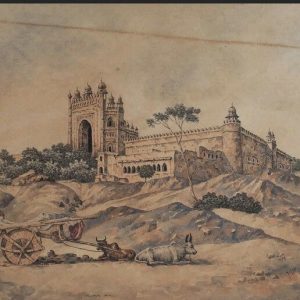
Syed Ali Nadeem Rezavi
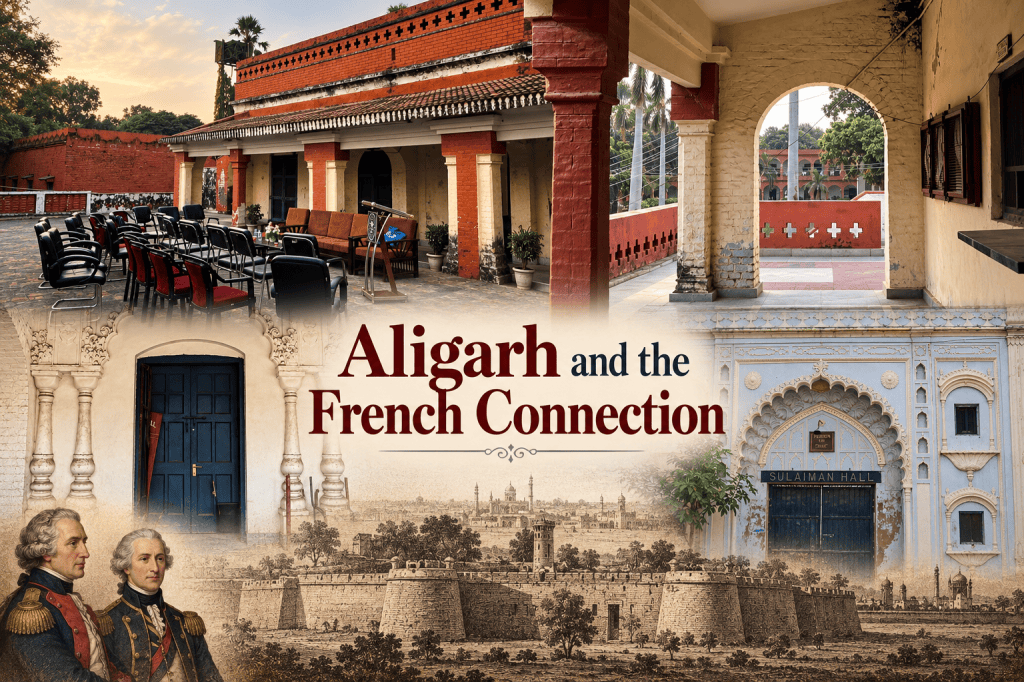
The history of Aligarh is generally associated with Sir Syed Ahmad Khan, the establishment of the Muhammadan Anglo-Oriental College in 1875, and the subsequent emergence of Aligarh Muslim University. Yet long before it acquired its modern educational identity, Aligarh, or Kol, as it was then known, had been an important centre of political and military activity in northern India. During the eighteenth century, its fort and surrounding territories witnessed the struggles between a declining Mughal establishment, the Jats of Bharatpur, the Marathas and, eventually, the expanding East India Company.
One of the most fascinating chapters of this history concerns Aligarh’s association with European military adventurers, particularly Benoît de Boigne and Pierre Cuillier-Perron. Their careers were closely intertwined with the rise of Mahadji Scindia, the transformation of Maratha military organisation, and the continuing political importance of the Mughal emperor Shah Alam II. Under these European commanders, Aligarh became a major military and administrative centre, housing regular infantry formations, artillery establishments and the headquarters of an extensive territorial command.
The surviving fortifications, the historic gateway associated with Sahib Bagh, and the Persian inscription recording Perron’s titles provide tangible reminders of this remarkable period.
What makes the story particularly interesting is that these European officers were not initially representatives of European colonial rule. They served Indian rulers, commanded armies composed overwhelmingly of Indian soldiers, and operated within an Indo-Persian political culture in which Mughal titles and imperial legitimacy continued to matter. Their presence in Aligarh thus represents a fascinating intersection of Mughal sovereignty, Maratha political power and European military expertise.
From Muhammadgarh to Aligarh: The Earlier History of the Fort
The fort of Aligarh, situated to the north of the old town of Kol, had a history considerably older than the arrival of the French officers. Its importance arose from its strategic position in the Upper Ganga-Yamuna Doab, along routes connecting Delhi, Agra, Mathura and the territories further east.
Although local traditions associate the site with earlier fortifications, its more clearly recorded history begins during the reign of Ibrahim Lodi. Around 1524–25, Muhammad, son of Umar, who held authority over Kol, is said to have constructed or rebuilt a fortress that came to be known as Muhammadgarh.
During the reigns of Farrukhsiyar and Muhammad Shah, Sabit Khan, an important Mughal noble and governor associated with Kol, undertook substantial reconstruction of the fort, which thereafter became known as Sabitgarh. Sabit Khan also left a significant architectural legacy in the town, most notably the Jama Masjid, completed around 1728. The mosque, with its Persian inscription, remains an important monument of eighteenth-century Mughal Aligarh.
As central Mughal authority weakened, the fort became an object of contention among competing regional powers. The Jats of Bharatpur, particularly under Maharaja Suraj Mal, extended their influence into the Upper Doab during the middle decades of the eighteenth century. The fort passed into Jat possession and became known as Ramgarh.
Its subsequent history was shaped by the attempts of the Mughal emperor Shah Alam II and his leading commanders to recover territories that had slipped from imperial control.
Among these commanders, Mirza Najaf Khan occupies a particularly important place. An Iranian-born noble who had risen to prominence in Mughal service, Najaf Khan emerged as one of the most capable military and political figures of the emperor’s later reign. He attempted to restore a measure of discipline to the imperial army, reorganise its finances and recover strategically important territories.
In 1775, Najaf Khan’s forces moved against the Jat-held fortress of Ramgarh. The operations were conducted principally under his subordinate Afrasiyab Khan, who secured the fort after a prolonged siege and negotiations. The campaign formed part of Najaf Khan’s wider efforts to re-establish Mughal authority over the Doab.
It was around this period that Ramgarh acquired the name Aligarh. The renaming has commonly been attributed to Najaf Khan, whose Shi’i background has encouraged an association between the new name and reverence for Imam Ali. Other accounts attribute the actual naming to Afrasiyab Khan, who conducted the military operations. The distinction is significant, and the precise circumstances of the renaming deserve closer examination through contemporary Persian records.
The new name was itself suggestive. Ali and garh, combining a personal or religious association with the Indic word for fort, reflected the cultural and linguistic environment in which Indo-Persian political traditions interacted with local forms of nomenclature.
Following Najaf Khan’s death in 1782, factional rivalries weakened the attempted restoration of Mughal power. Afrasiyab Khan, who had emerged as an influential figure at the imperial court, was assassinated in 1784. Meanwhile, Mahadji Scindia, the powerful Maratha chief, was extending his authority over Delhi and the surrounding territories.
Aligarh consequently passed into the expanding sphere of Maratha influence. It was this already established fortress, with its successive Lodi, Mughal and Jat phases, that would become one of the principal military centres of Scindia’s European commanders. And the fort continued to be known as Aligarh under Mahadji and his European commanders.
De Boigne and the Transformation of Maratha Military Power
Born in Chambéry in Savoy, De Boigne was not strictly French by birth, although his language and cultural background connected him with the wider French-speaking European world. His varied military experiences eventually brought him to India, where he entered the service of Mahadji Scindia.
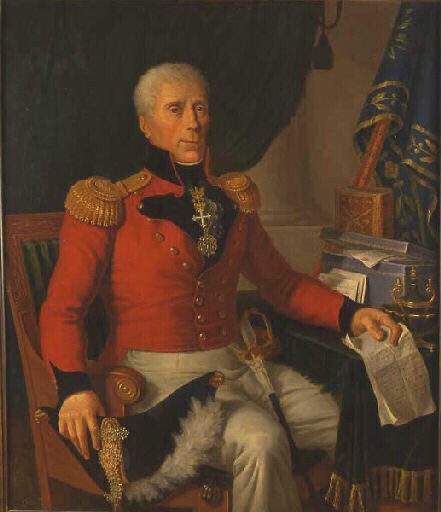
Benoît de Boigne
(24 March 1751 – 21 June 1830)
Mahadji Scindia had recognised the importance of reorganising his military forces. The traditional Maratha cavalry remained formidable in mobile warfare, but the changing military environment required disciplined infantry formations supported by effective artillery. The successes of the East India Company’s armies had demonstrated the advantages of coordinated infantry drill and battlefield firepower.
De Boigne became one of the principal architects of this transformation. He organised regular battalions trained in European-style manoeuvres, equipped with firearms and supported by artillery. These formations gradually expanded into powerful brigades, which became central to Scindia’s military establishment.
It would, however, be misleading to regard this as a simple transplantation of European military methods into India. Indian armies had long possessed sophisticated artillery traditions, and Indian rulers had repeatedly experimented with new methods of military organisation. The brigades raised by De Boigne were composed predominantly of Indian soldiers, recruited from various regions and communities. Their maintenance depended upon Indian revenues, merchants, bankers, artisans and administrators.
Aligarh became one of the principal centres of this military experiment. Here De Boigne established facilities for training, provisioning and maintaining his troops. The surrounding territories supplied the revenues necessary to sustain the regular brigades. Military organisation was therefore closely connected with fiscal administration.
De Boigne’s forces played decisive roles in Scindia’s campaigns against rival powers, particularly at Patan and Merta in 1790. Their successes strengthened Maratha influence over northern India and contributed to Mahadji’s predominance at the Mughal court.
The relationship between Scindia and Shah Alam II was especially revealing. Although the emperor retained his imperial titles and ceremonial authority, effective military power increasingly rested with the Maratha chief. Yet Scindia did not seek to abolish Mughal sovereignty. Instead, he operated within its framework, deriving prestige and legitimacy from the emperor while exercising substantial control over imperial affairs.
De Boigne’s military establishment was thus sustained by a political arrangement in which Mughal sovereignty, Maratha authority and European military expertise coexisted.
Perron and the Rise of Aligarh as a Military Capital
Perron, a Frenchman of comparatively modest origins, arrived in India in search of military employment. After joining De Boigne’s establishment, he gradually rose through its ranks and, following De Boigne’s retirement, succeeded him as commander of Scindia’s northern forces in 1796.
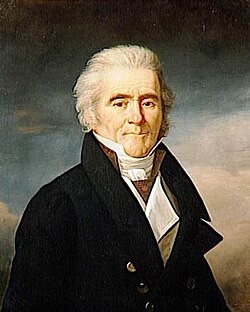
Pierre Cuillier-Perron (1753 to 1755–1834)
Under Perron, Aligarh acquired even greater importance. It became not merely a military cantonment but an administrative headquarters from which an extensive territory was governed. His authority extended across substantial portions of the Upper Doab and connected Aligarh with the political affairs of Delhi and Agra.
Perron’s position was extraordinary. Formally, he remained a servant of Scindia, but he commanded considerable military resources, supervised revenue collection, administered territories and negotiated with powerful political figures. He exercised a degree of autonomy unusual even in the fluid political circumstances of late eighteenth-century India.
His establishment included European officers of different nationalities, although the soldiers themselves were overwhelmingly Indian. The army was maintained through territorial assignments, revenue arrangements and an elaborate system of supply.
Aligarh consequently developed into a centre of military expenditure and commercial activity. The maintenance of regular infantry and artillery formations required large quantities of grain, cloth, leather, metal, timber, gunpowder and other materials. Merchants, bankers, transporters, artisans and revenue officials must all have participated in this military economy.
The growth of the military establishment therefore affected the surrounding agricultural and commercial communities. The history of De Boigne and Perron cannot be separated from the social and economic history of Kol.
It is also worth noting that De Boigne’s economic activities extended beyond military command. He encouraged European indigo planters to settle in the Aligarh district, and several established factories in the surrounding parganas. Among them, a certain Longcroft operated a concern at Jalali, and the indigo vats associated with that enterprise are said to survive in a village near the present-day town—a modest but tangible trace of the commercial networks that sustained the military establishment. These planters were not merely agricultural entrepreneurs; their operations formed part of the wider fiscal and commercial infrastructure upon which Scindia’s brigades depended.
Sahib Bagh: The French Residence within Today’s AMU
One of the most remarkable surviving reminders of Aligarh’s French connection is Sahib Bagh, the garden residence associated first with De Boigne and subsequently with Perron.
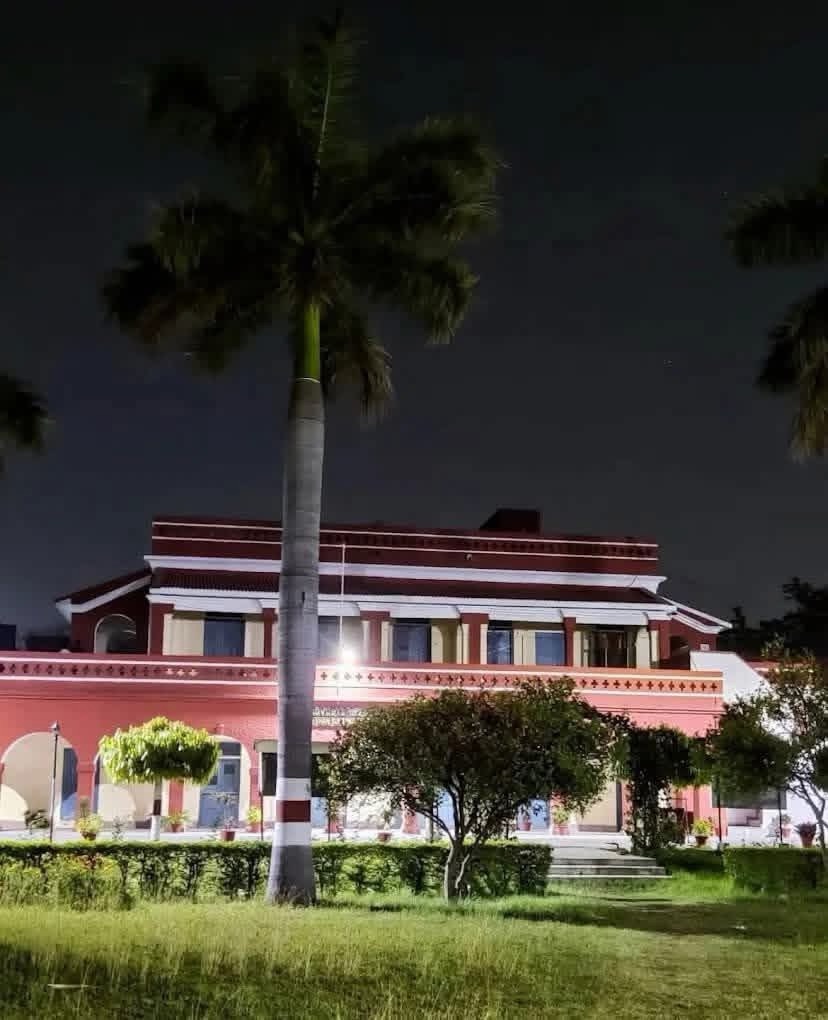
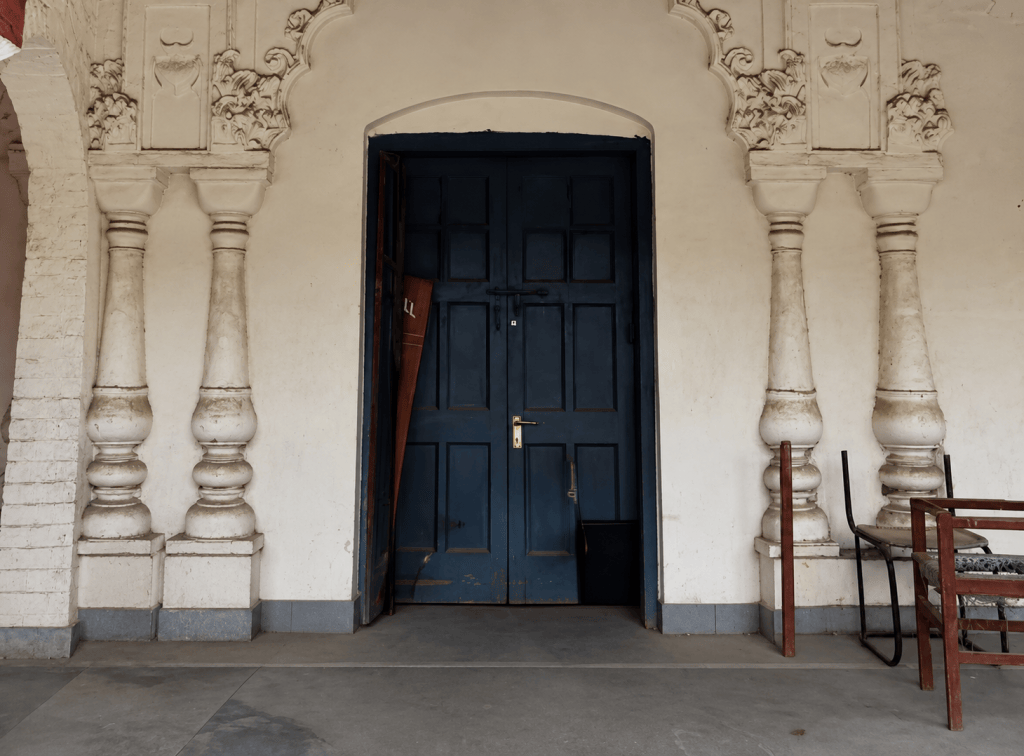
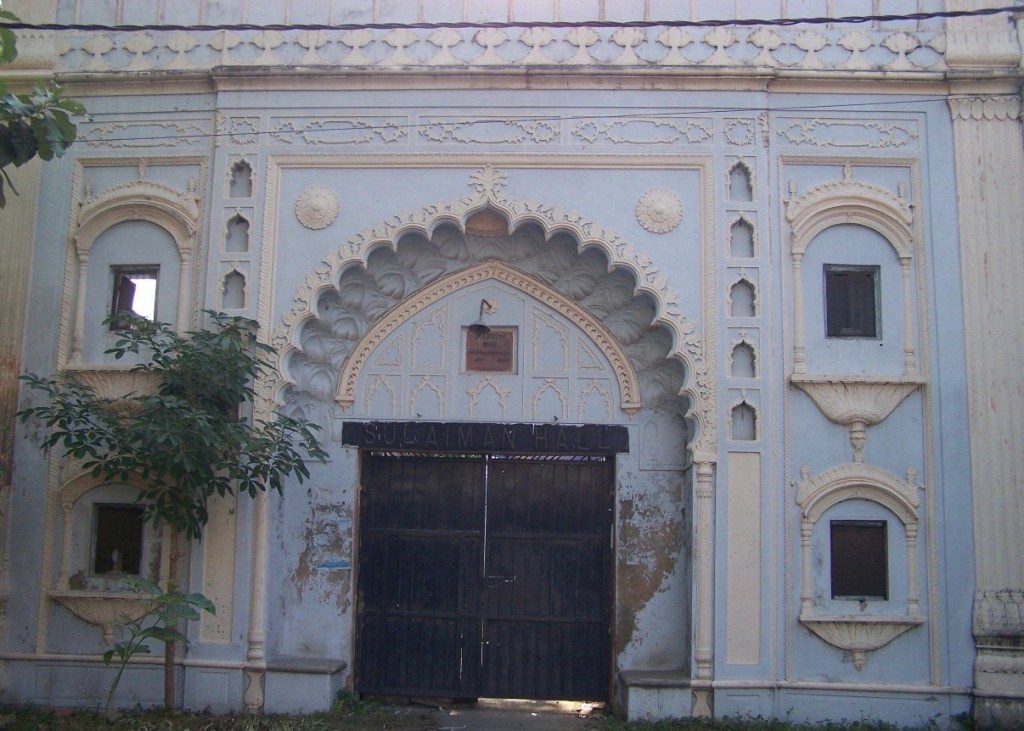
Situated between the fort and the old town, Sahib Bagh was a substantial residential and administrative establishment. A description reproduced by H. G. Keene from the Delhi Gazette of 5 June 1874 records that De Boigne had occupied the mansion and that Perron subsequently improved both the residence and its gardens.
The garden was reportedly planted with fruit trees obtained from different regions and was considered by some French officers to rival the celebrated Ram Bagh at Agra.
Such descriptions suggest that Sahib Bagh was not simply a military commander’s residence. It represented the adoption of elite Indo-Persian traditions of garden planning, architectural display and aristocratic living.
The complex combined residential, administrative and defensive functions. Its enclosure, gateways and associated buildings reflected the position of a powerful military governor who held court and exercised authority over a substantial territory.
Its importance for the history of Aligarh is enhanced by the fact that the site subsequently became part of Aligarh Muslim University. The property was converted into a university residential complex in the twentieth century and is now associated with Sir Shah Sulaiman Hall. The historic gateway and surviving structures preserve a physical connection between eighteenth-century military history and the modern educational institution.
An important photographic record also survives in the British Library’s Archaeological Survey of India collection. Catalogued as Aligarh. Entrance gate of de Boigne’s House, it bears the reference Photo 1007/16(3581) and belongs to the Northern Circle photographs of 1916–20.
Comparison of this photograph with the present gateway could reveal alterations in the masonry, parapet, arches and decorative details. It could also help establish how much of the original eighteenth-century architectural fabric survives.
Perron’s Persian Inscription: Mughal Titles for a French Commander
Perhaps the most historically revealing feature of Sahib Bagh is the inscription associated with its gateway.
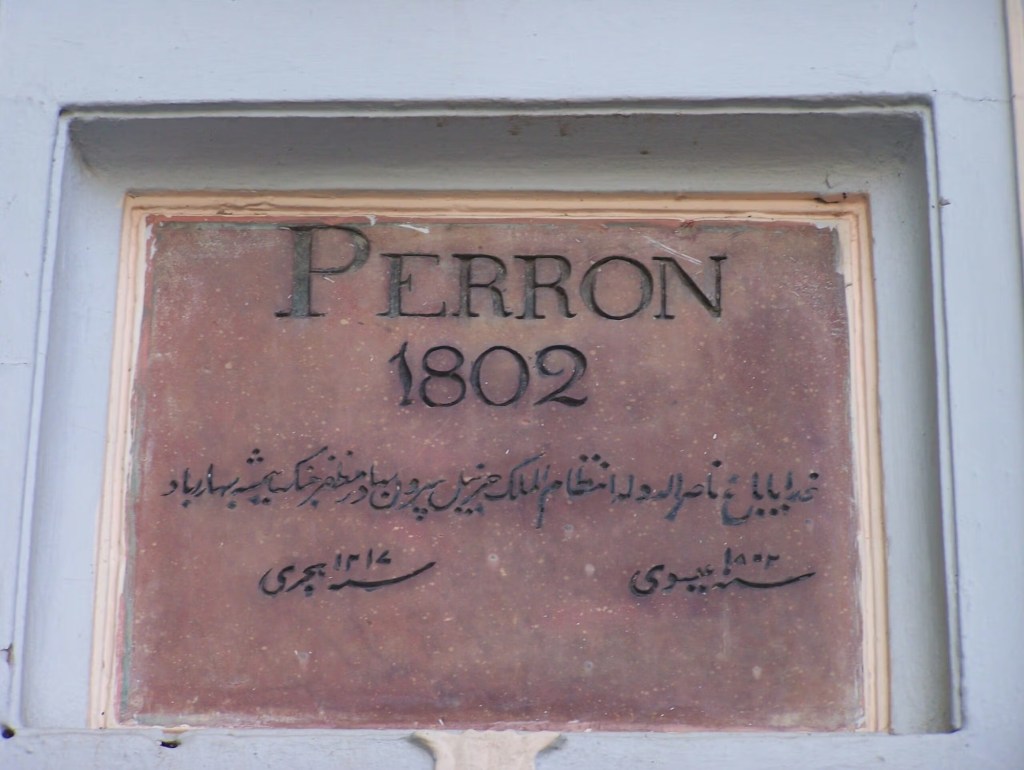
The bilingual tablet records Perron’s name and the year 1802 in English, while the Persian inscription identifies him through a series of honorifics, including Nāṣir al-Daula, Intiẓām al-Mulk, Bahādur and Muẓaffar Jang. The date 1217 AH is also recorded.
The inscription is significant for several reasons.
First, it demonstrates the continued importance of Persian as the language of political authority in northern India. Although Perron was a Frenchman commanding troops organised along European lines, the public representation of his status employed the vocabulary of Mughal nobility.
Second, the titles reveal how European military commanders could be incorporated into the ceremonial hierarchy of the Mughal Empire. Nāṣir al-Daula conveyed the idea of a supporter of the state, while Intiẓām al-Mulk referred to the ordering or administration of the realm. Muẓaffar Jang evoked victory in battle.
Third, the inscription reflects the distinction between effective political power and imperial legitimacy. Perron’s authority depended upon Scindia’s military establishment, yet the language through which his status was publicly acknowledged remained Mughal.
This was characteristic of the later eighteenth century. Even when the emperor lacked the resources necessary to exercise independent authority, imperial titles and honours continued to possess political value.
The inscription therefore provides an unusually clear material expression of the relationship between Mughal sovereignty, Maratha dominance and European military service.
Its architectural context is equally important. The gateway appears to draw upon late Mughal traditions of monumental entrances rather than a purely European architectural vocabulary. It would be anachronistic to classify it uncritically as Indo-Saracenic, a term more commonly associated with the eclectic architectural practices of the later nineteenth century.
A detailed epigraphic examination of the tablet, including an accurate Persian transcription, palaeographic analysis and comparison of the English and Persian sections, would be a valuable contribution to the architectural history of AMU.
It should be noted that no comparable building inscription survives for De Boigne. His presence in the documentary record is attested instead by a Persian seal impression reading Karnail Dubain Itmad-ud-daula Shamshir-Jung Bahadur 1208, found on Persian documents of the period. The seal—rather than an architectural tablet—is the principal epigraphic trace of his authority, and its wording reveals the same incorporation of a European commander into Mughal honorific conventions that the Perron inscription displays in stone.
Aligarh Fort and the French Military Engineers
Although the fort had passed through several phases of construction and reconstruction, its association with De Boigne and Perron marked a particularly important stage in its military development.
The French officers strengthened the existing fortifications and adapted them to the requirements of contemporary artillery warfare. The surviving enclosure, with its polygonal plan, projecting bastions, deep ditch and defensive approaches, reflects the increasing importance of artillery and coordinated infantry operations.
The Imperial Gazetteer of India specifically acknowledges that De Boigne and Perron devoted considerable attention to strengthening the fort.
The bastions enabled defenders to direct flanking fire along the adjoining walls, while the ditch and outer works complicated attempts to approach the principal defences. The arrangement was intended to make an assault difficult even for a disciplined army supported by artillery.
Yet these developments should not be attributed exclusively to European military ingenuity. Indian fortifications had long incorporated bastions, artillery platforms, deep ditches and multiple defensive lines. The French contribution lay in the adaptation and reinforcement of an existing fortress according to the requirements of Scindia’s regular army.
It is also important to distinguish between the different construction phases. The fort visible today cannot be treated as an entirely French creation. Its fabric reflects earlier Mughal and Jat interventions, Maratha-period reconstruction, British military alterations after 1803 and subsequent changes.
A proper architectural study would therefore require a measured survey of the bastions, curtain walls, gateways, masonry and defensive works, supported by historical maps and contemporary military descriptions.
The Other Europeans of Aligarh
De Boigne and Perron were not the only European officers associated with the military establishment of Aligarh.
Colonel Pedron, who commanded the fortress during the British assault of 1803, maintained a residence and garden in the town. According to the nineteenth-century account reproduced by Keene, the property subsequently became associated with the Judges’ Court.
Another officer, the Chevalier Dudernaque, possessed a house on the edge of the town. The same account also refers to European officers of English, French and Italian origin serving in Perron’s military establishment.
These details suggest that Aligarh contained a wider European military community, with residences, gardens and commercial connections extending beyond the fort and Sahib Bagh.
The phenomenon was not confined to Scindia’s service. Elsewhere in India, European officers were employed by various Indian rulers. Michel Joachim Marie Raymond served the Nizam of Hyderabad, while the military establishment of Begum Samru at Sardhana included European commanders and Indian troops. George Thomas, John Hessing and James Skinner similarly belonged to the wider world of military entrepreneurs who moved between competing political establishments.
Their careers challenge the conventional distinction between European and Indian military history. These men did not invariably represent European imperial states. Their loyalties were often contractual and personal, and their fortunes depended upon the Indian rulers who employed them.
At the same time, their military expertise became increasingly important in a political environment characterised by intense competition for territory, revenue and military resources.
The Fall of Aligarh, 1803
The fortunes of Perron and the Maratha military establishment changed dramatically with the expansion of British power.
By the beginning of the nineteenth century, the East India Company had become increasingly concerned about Scindia’s military strength and the employment of French officers in his service. The wider conflict between Britain and France during the Napoleonic period gave these concerns an additional strategic dimension.
The British frequently represented French military influence in Indian states as a potential threat to their interests. Such arguments also provided justification for intervention against Indian rulers who sought to strengthen their armies through European expertise.
The Treaty of Bassein, concluded between the East India Company and the Peshwa in December 1802, altered the political balance within the Maratha confederacy. The resulting tensions contributed to the outbreak of the Second Anglo-Maratha War in 1803.
Aligarh became one of the principal objectives of the British campaign in northern India.
Perron, whose relations with Scindia’s ministers had deteriorated, found his position increasingly precarious. Internal divisions, uncertainty among subordinate officers and the difficulties of maintaining his extensive military establishment weakened his capacity to resist the British advance.
Rather than conducting a sustained defence, Perron withdrew and subsequently surrendered to the British. His conduct has been interpreted differently by historians. Some contemporary British accounts represented his withdrawal as evidence of the unreliability of European officers in Indian service, while other interpretations emphasise the political pressures and personal insecurity that influenced his decisions.
The fortress itself, however, continued to resist.
On 4 September 1803, British forces under General Gerard Lake stormed Aligarh Fort, which was defended by troops commanded by Colonel Pedron. The assault was fiercely contested, and the formidable defences imposed substantial difficulties upon the attackers.
The capture of Aligarh opened the way for the British advance towards Delhi, which fell later that month. The Mughal emperor Shah Alam II subsequently came under British protection, marking a decisive change in the relationship between imperial sovereignty and effective political authority.
The fall of Aligarh was therefore much more than a local military defeat. It formed part of the larger struggle through which the East India Company displaced the Marathas as the dominant power exercising influence over the Mughal court and northern India.
The Forgotten Military Landscape of Kol
The history of Aligarh’s French connection becomes even more interesting when we move beyond the fort and the residences of its European commanders to examine the wider urban landscape.
The nineteenth-century accounts refer to several establishments associated with the military community, including gardens, residential buildings, commercial premises and the locality known as Perronganj. The continued survival of names such as Sahib Bagh and Perronganj suggests that the presence of these European officers left traces in the town’s historical geography long after their political authority had disappeared.
Aligarh was not simply a fortified military station. It was a centre where military organisation, fiscal administration, commerce and urban development intersected. The provisioning of Scindia’s regular brigades would have required an extensive network of suppliers, bankers, merchants, artisans and transporters.
The revenues of the surrounding countryside sustained the military establishment, while the presence of a large army stimulated demand for agricultural produce, textiles, metal goods, animals and other commodities. The military economy must therefore have affected the social and economic life of Kol and its hinterland.
This aspect of the French connection remains insufficiently explored. Much of the surviving literature concentrates upon the personalities of De Boigne and Perron, their military campaigns and their eventual confrontation with the British. Far less attention has been devoted to the Indian soldiers who served under them, the revenue officials who financed their armies, or the merchants and artisans who supplied their establishments.
There is also a historiographical problem. A substantial portion of the English-language narrative was produced during or after the consolidation of British rule. British accounts frequently portrayed European officers in Indian service as adventurers, mercenaries or potential agents of French influence. Such descriptions need to be examined critically, particularly when explaining Perron’s withdrawal and the defeat of Scindia’s forces.
The history of Aligarh during this period was not simply a contest between British and French military interests. It was fundamentally a struggle among Indian political powers in which European officers participated.
The French Legacy and Aligarh Muslim University
Perhaps the most remarkable feature of this history is the survival of its architectural remains within the landscape of Aligarh Muslim University.
The historic gateway associated with Sahib Bagh, the Persian inscription recording Perron’s titles and the surviving structures connected with the old garden residence establish a direct link between the eighteenth-century military establishment and the modern university.
The transformation is striking. A site once associated with a powerful military commander, his administrative headquarters and the political intrigues of the late Mughal world eventually became part of an institution devoted to modern education.
Yet these structures are more than picturesque survivals. They constitute valuable historical evidence. The Persian inscription reveals the continuing importance of Mughal political conventions. The gateway illustrates the architectural tastes of European officers operating within an Indian cultural environment. The fortifications demonstrate the adaptation of military technology during a period of intense political competition.
Together, they provide an opportunity to reconstruct a neglected chapter of Aligarh’s history.
A systematic architectural and epigraphic survey of the gateway and inscription at Sir Shah Sulaiman Hall, supported by the historical photographs preserved in the British Library, could help establish the original character of Sahib Bagh. Similarly, a detailed examination of the fort’s masonry, bastions, gateways and defensive arrangements could distinguish the various phases of its construction.
The older history of the fortress, particularly its association with Sabit Khan, Suraj Mal, Mirza Najaf Khan and Afrasiyab Khan, must remain central to such an investigation. Without this background, the French contribution risks being presented as the beginning of Aligarh’s military importance rather than one phase in its long evolution.
Aligarh at the Crossroads of Empires
The story of Aligarh’s French connection brings together several major developments in the history of eighteenth-century India: the weakening of central Mughal authority, the rise of regional powers, the expansion of Maratha influence in northern India, the reorganisation of military establishments and the eventual emergence of the East India Company as the dominant political power.
From Muhammadgarh and Sabitgarh to Ramgarh and Aligarh, the successive names of the fortress reflected changing political circumstances. Under Mirza Najaf Khan and Afrasiyab Khan, it became an important centre in the attempted restoration of Mughal authority. Under Mahadji Scindia and his European officers, it emerged as a major military establishment of the Marathas. Its capture by the British in 1803 marked another decisive transition.
De Boigne and Perron stood at the intersection of these developments. Their careers demonstrate the extraordinary opportunities available to European military entrepreneurs in an age of shifting political allegiances. Yet their achievements were inseparable from the Indian political institutions, fiscal resources and military personnel that sustained them.
The Persian inscription of Perron is perhaps the most eloquent expression of this historical complexity. A French commander, serving a Maratha chief, proudly displayed titles derived from the Mughal emperor. Few objects could better illustrate the intertwined character of political authority in late eighteenth-century northern India. De Boigne’s Persian seal, though a less conspicuous artefact, belongs to the same world: a European commander adopting the titulature and documentary conventions of the Mughal state.
Today, thousands of students pass through the precincts of Aligarh Muslim University, often without realising that parts of its landscape were once associated with one of the most powerful military establishments of the Marathas.
The fort, the gateway of Sahib Bagh and Perron’s inscription remind us that Aligarh’s historical importance did not begin with the educational movement of Sir Syed Ahmad Khan. Long before that, it had occupied a significant position in the political and military transformations of northern India.
Aligarh’s French connection is therefore not merely the story of two European adventurers. It is a chapter in the history of Mughal sovereignty, Maratha power, military innovation and the making of colonial India.
Select references and further reading
Edwin T. Atkinson, Statistical, Descriptive and Historical Account of the North-Western Provinces of India, Vol. II (1875), for the earlier history of Kol, the fort, the European establishments and the indigo factories of the district.
H. G. Keene, The Fall of the Moghul Empire of Hindustan, particularly the sections concerning Scindia, De Boigne, Perron and the French residences at Aligarh.
Herbert Compton, A Particular Account of the European Military Adventurers of Hindustan, from 1784 to 1803 (London, 1893).
H. R. Nevill, Aligarh: A Gazetteer (1909).
Imperial Gazetteer of India, entry on Aligarh Fort and its successive phases of reconstruction.
Archaeological Survey of India, Aligarh. Entrance gate of de Boigne’s House, photograph 1007/16(3581), British Library, Northern Circle Collection.
Rehan Asad, “Aligarh’s French Connection”, Live History India, 22 February 2019, particularly for Sahib Bagh, the Persian inscription and the surviving architectural remains.


