Syed Ali Nadeem Rezavi
A protest is not a polite gathering. It is raw, human, and meant to be felt. It exists to pierce through indifference, to make strangers stop in their tracks, to force conversations at dinner tables, and to rattle the windows of power. When that power is stripped away, what is left is not protest. It is theatre. A stage where anger performs for itself while the rest of the world scrolls past.
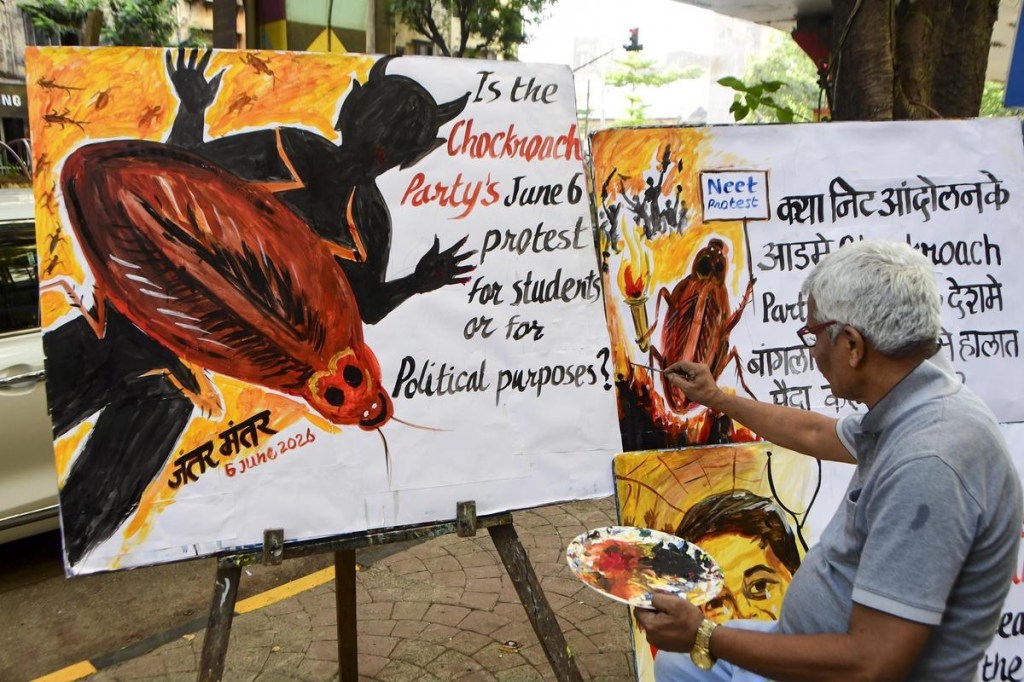
The recent permission given to the Cockroach Janta Party (CJP) to demonstrate at Jantar Mantar in Delhi captures this quiet tragedy perfectly. On paper, it looks like democratic accommodation. In practice, it is democratic containment. Jantar Mantar and places like Azad Maidan in Mumbai have become official protest pits, designated zones where citizens are politely told: You may speak your truth here, and only here.
From the Heart of Power to the Edge of Hearing
Jantar Mantar was not built for slogans. It was an 18th-century astronomical observatory, a place of stars and precision. Today, it serves a different purpose: the careful mapping of where dissent is allowed to orbit without ever touching the centre.
Older Indians still speak with a certain ache about the Boat Club lawns on Rajpath. You could see Parliament from there. When thousands gathered, farmers with calloused hands, students burning with idealism, workers demanding dignity, the seat of power could not look away. The protest was not hidden behind barricades or drowned out by competing chants. It stood in the open, visible, impossible to ignore.
Then the rules changed. Security concerns. Traffic problems. Public inconvenience. Slowly, steadily, the state did not ban protest. It simply relocated it. Away from the eyes of the powerful. Away from the daily commute of the middle class. Into a cordoned-off enclosure where voices echo among the already convinced.
That single shift from “You cannot protest” to “Protest here” changed everything.
At Jantar Mantar, you can raise your voice until it cracks. You can wave placards until your arms ache. But the only audience is often other protesters, each carrying their own heavy sorrow. One group’s march becomes another’s background noise. The real public, the shopkeepers, the office-goers, the families planning weekend outings, continues untouched. The rage stays safely quarantined.
A Sophisticated Kind of Silencing
This is not old-school authoritarianism that throws people in jail for speaking. That was crude and visible. Modern management of dissent is gentler, almost courteous. It issues permissions. It erects metal barricades. It deploys police to maintain order. And then it returns to business as usual, satisfied that the thermometer has been allowed to let off steam without breaking the system.
The citizen is permitted to shout. Nobody important is required to listen.
The irony cuts deep. Every year on Republic Day and Independence Day, we celebrate the freedom struggle. School assemblies echo with stories of Gandhi’s Salt March, the Non-Cooperation Movement, Quit India. Children memorise tales of satyagraha and civil disobedience. Leaders lay wreaths at statues of revolutionaries.
Yet imagine if those same figures tried it today. Gandhi’s Salt March would likely be redirected to a designated site to avoid disrupting traffic. A massive gathering against unjust laws would be advised to obtain permission and not inconvenience the general public. The very methods that won us freedom, disrupting normality and forcing society to confront uncomfortable realities, have been sanitised out of democratic practice.
Because real protest must disturb. Not with violence, but with presence. It should make the comfortable feel uneasy. It should turn private pain into a public question. A protest that changes nothing in the rhythm of daily life is little more than performance art.
When Dissent Disappears from View
The media ecosystem makes this containment even more effective. In an age of endless content and shrinking attention, a protest tucked away in an enclosure can vanish from collective memory by evening. People living insulated lives rarely encounter the exhaustion of a young student crushed by competitive exams and uncertain futures, a farmer staring at mounting debt, or a worker whose dignity has been eroded by precarity. Instead, they are fed polished narratives of progress.
This creates two Indias living side by side. One that feels the daily bite of unemployment, inflation, educational pressure, and institutional decay. Another that mainly encounters slogans of achievement and shining statistics.
The bridge between them was supposed to be protest, the visible, inconvenient reminder that not everyone is thriving. When that bridge is dismantled or cordoned off, the suffering of one India becomes inaudible to the other.
The Farmers’ Lesson and the Danger of Managed Anger
The farmers’ movement showed what happens when dissent refuses the cage. Whatever one thought of the specific demands, it broke through. It occupied physical and mental space. It forced families across the country to discuss, argue, and confront realities that neat news cycles preferred to ignore. It reminded us that democracy is not just about elections every five years. It is about how governance feels to those living under it.
Today, the Cockroach Janta Party’s protest at Jantar Mantar stands as a fresh example of this very dynamic. Born from youth frustration over exam scandals and governance failures, this Gen Z-led movement has channeled widespread anger into a permitted gathering at the designated site. While it highlights genuine student anxieties about education and futures, its confinement to the enclosure risks limiting its reach, turning raw discontent into another contained spectacle rather than a force that disrupts daily complacency across the nation.
History warns us what happens when listening stops. Frustration can simmer quietly for years among students worried about jobs, young people staring at uncertain futures, ordinary citizens tired of being managed rather than heard. Then it erupts suddenly, as seen from Eastern Europe’s Velvet Revolutions to the streets of Sri Lanka or Bangladesh. The spark is often not one policy, but the accumulated sense that power has stopped caring.
What a Living Democracy Demands
Democracy is not merely the right to vote or the formal permission to protest. It is the right to be heard. It requires citizens brave enough to be disturbed by others’ pain. It requires governments secure enough to face criticism instead of regulating it into irrelevance.
A healthy democracy needs inconvenient protests. It needs voices that spill beyond designated enclosures. It needs leaders who understand that the loudest threat is not shouting in a cage, but the quiet withdrawal of trust by millions who no longer believe anyone is listening.
The question facing us today is not whether citizens are still allowed to protest. The question is whether those in power are still compelled to hear them.
When people can scream with everything they have and it changes nothing, when dissent becomes background noise rather than a call to conscience, that is when democracy begins to hollow out from within. Not with tanks in the streets, but with the polite, bureaucratic domestication of the citizen’s voice.


