Syed Ali Nadeem Rezavi
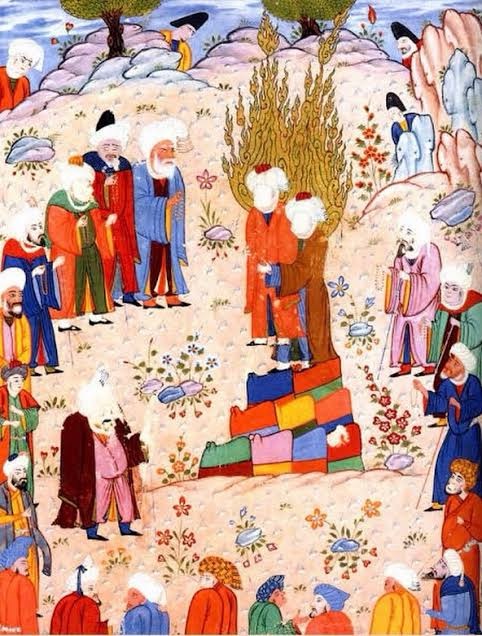
Eid al Ghadir is one of the most profound occasions in the Islamic calendar, commemorating an event that took place on the 18th day of Dhu al Hijjah in the year 10 AH, which corresponds to 632 CE. The location was a sun baked crossroads known as Ghadir Khumm, situated between the holy cities of Mecca and Medina. The Prophet Muhammad had just completed his Farewell Pilgrimage, known as Hajjat al Wada, the only Hajj he would ever lead. As he and the large caravan of Muslims made their way back toward Medina, something unexpected happened. The Prophet ordered those who had ridden ahead to turn back, and he instructed those who were lagging behind to hurry forward. He wanted everyone to gather together in that barren valley under the scorching Arabian sun. The travellers must have wondered why they were stopping in such an unforgiving place. A makeshift pulpit was quickly assembled from camel saddles and woven panniers. The Prophet climbed onto this simple platform and began to speak at length, reminding the believers of his mission and his responsibilities toward them.
Then came the moment that would echo through history. The Prophet took the hand of his cousin and son in law, Ali ibn Abi Talib, and raised it high so that everyone could see. He then made a declaration that has been preserved in countless historical and hadith sources. He said, “Man kuntu mawlāhu fa hādhā `Aliyyun mawlāhu,” meaning, “For whoever I am his mawla, this Ali is his mawla.” He immediately followed this with a heartfelt prayer. “O God, befriend those who befriend him, oppose those who oppose him, support those who support him, and abandon those who abandon him.” The crowd stirred with emotion. The first to step forward and offer congratulations to Ali were the senior companions, including Abu Bakr and Umar, who reportedly said, “Well done, O son of Abu Talib. You have become the mawla of every believing man and woman.”
To understand why this moment carried such weight, we need to know who Ali ibn Abi Talib was. He was not a stranger suddenly elevated. Ali had been raised in the Prophet’s own household from the age of six. He was the first male to embrace Islam, only a boy of ten or eleven when he accepted the message. On the night of the Prophet’s migration from Mecca to Medina, when assassins surrounded the Prophet’s house, Ali bravely slept in the Prophet’s bed, risking his own life so that his cousin could escape safely. The Prophet had already declared on multiple occasions that Ali held the same position to him as Aaron had held to Moses, with the only difference being that no prophet would come after him. This is known as the Hadith al Manzilah and is recorded in the most trusted Sunni collections, including Sahih al Bukhari and Sahih Muslim. The Prophet had also famously said, “I am the city of knowledge, and Ali is its gate. So whoever wants knowledge, let him enter through the gate.”
The Prophet was not acting on his own at Ghadir Khumm. According to the overwhelming majority of classical sources, he had received a direct command from God just before the stop. The verse of the Qur’an revealed to him said, “O Messenger, convey what has been sent down to you from your Lord, and if you do not, then you have not conveyed His message. And God will protect you from the people.” This verse, chapter 5 verse 67, left the Prophet with no choice. He had to make the announcement publicly even though he feared that some might accuse him of favouring his own family. After the declaration at Ghadir, another well known verse was revealed, this time chapter 5 verse 3, which declares, “Today I have perfected for you your religion, completed My favour upon you, and chosen Islam as your religion.” For Shi’i Muslims, this verse signifies that the religion was completed only with the appointment of Ali as the Prophet’s successor and the guardian of the community.
The word mawla is the key to understanding why Ghadir became a dividing line in Islamic history. In Arabic, mawla can mean master, leader, guardian, protector, or friend. For Shi’i Muslims, the Prophet’s use of the word in that specific context, combined with the raised hand, the prayer, and the divine command to convey the message, could only mean one thing. The Prophet was publicly designating Ali as his successor, the vicegerent who would lead the community after him. This was not merely a praise of Ali’s virtues. It was the formal inauguration of the Imamate, a divinely ordained institution of leadership that would continue through Ali and his descendants. For Sunni Muslims, the event remains deeply important as a testament to Ali’s unparalleled virtue and closeness to the Prophet, but the word mawla is understood more in the sense of friendship and religious authority rather than political succession. Despite this difference in interpretation, Ghadir Khumm remains part of the shared historical memory of all Muslims, a moment when the Prophet publicly affirmed the special station of a man who embodied knowledge, courage, piety, and justice.
The Prophet also used the sermon at Ghadir to remind the community of what he called the two weighty things, or al Thaqalayn. He said, “I am leaving among you that which if you hold fast to it, you will never go astray after me. The Book of God and my progeny, my family. Indeed, the two will never separate until they return to me at the Pond.” This declaration, recorded in Sahih Muslim and other reliable collections, emphasises that spiritual guidance after the Prophet’s passing would require clinging to both the Qur’an and the Prophet’s household, especially Ali and his righteous descendants.
Ali’s personal qualities make it clear why the Prophet would have wanted such a man to lead. He was unmatched in his knowledge of the Qur’an and its inner meanings. He was the most courageous fighter in early Islam, carrying the standard in nearly every major battle, including Badr where he defeated the Quraysh champion, Uhud where he defended the Prophet when most of the army fled, and Khaybar where the Prophet said, “Tomorrow I will give the standard to a man who loves God and His Messenger, and whom God and His Messenger love.” Yet Ali was equally known for his justice and his simple way of life. As caliph years later, he patched his own sandals, ate coarse food, and distributed the state treasury’s wealth so quickly that nothing remained. He famously said that the world was a carcass and that those who fought over it were like dogs. His sermons, letters, and sayings, collected in the book Nahj al Balaghah, are celebrated for their eloquence and their deep insight into God, governance, and the soul.
One lesser known but important detail is that the declaration at Ghadir immediately provoked opposition. Shortly after the event, the Prophet sent Ali to Yemen to deliver a chapter of the Qur’an to the polytheists. On his way back to join the Prophet in Medina, some men who resented the Ghadir announcement plotted against him and attempted to ambush him. The Prophet learned of this and prayed for Ali’s safety. This early act of hostility showed that the question of leadership after the Prophet had already begun to stir conflict, confirming that the Ghadir declaration was understood by many as a political as well as a spiritual appointment.
For Shi’a Muslims around the world today, Eid al Ghadir is celebrated as the greatest of the Eids, even greater than Eid al Fitr and Eid al Adha in their spiritual significance. It is called the Eid of Wilayah, meaning the festival of divine guardianship and authority. On this day, believers fast if they are able, wear new or clean clothes, visit each other to exchange congratulations, and recite special prayers that repeat the Prophet’s original invocation, “O God, befriend those who befriend Ali and oppose those who oppose Ali.” It is a day of joy, but also a day of deep reflection on what it means to follow the Prophet’s teachings by holding fast to both the Qur’an and the example of his pure household.
Beyond any sectarian division, Ghadir Khumm remains a living symbol of loyalty to the Prophet’s message, the importance of righteous leadership, and the enduring love that millions of Muslims feel for Ali ibn Abi Talib, the gate to the city of knowledge, the lion of God, and the first guardian of a community that the Prophet prayed would never stray.


