Report on the Symposium “Our Heritage At Risk” held on 5June at AMU

Report on the Seminar by Zainab Naqvi and Lubna Irfan:
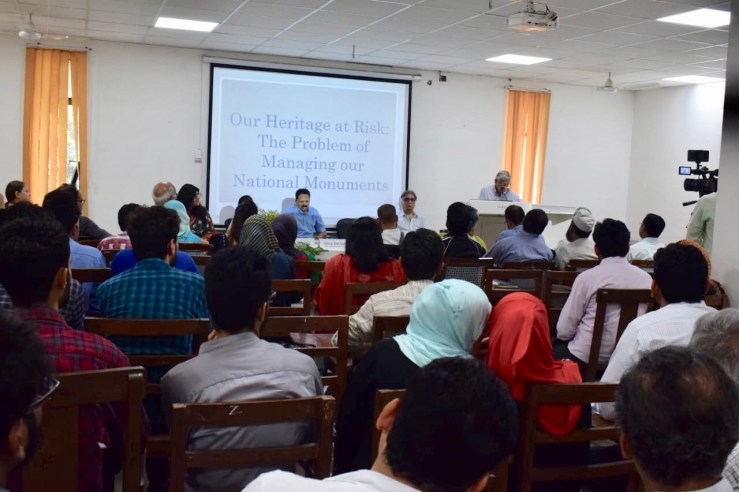
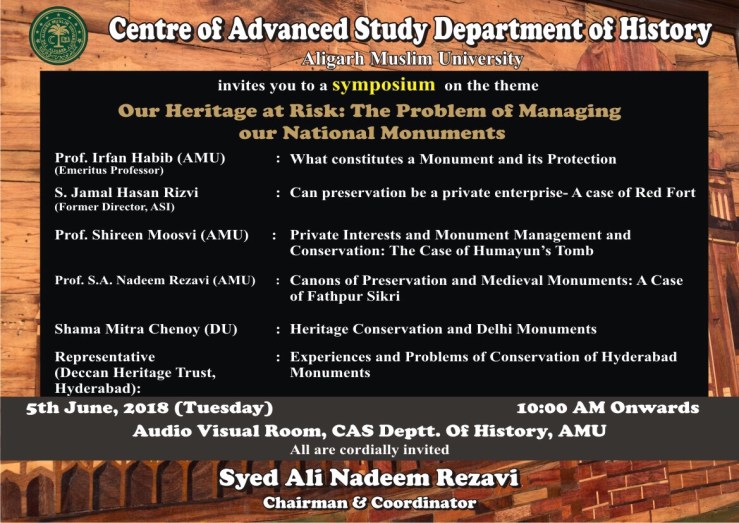
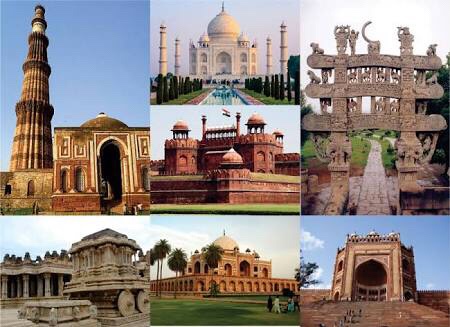
On June 5th, 2018 a Symposium on “Our Heritage at Risk : The Problem of Managing our National Monuments” was organised by the Centre of Advanced Study, Department of History, AMU. The symposium was conducted to raise concern regarding the harm being done to national Heritage with increasing privatization and handing over of India’s heritage to Private groups and trusts, the primary focus of the symposium was the passing of Red Fort to the Dalmia Group and the Case of handing over of Humayun’s Tomb to the Agha Khan Trust. These groups in the name of restoring the structures seem to trample upon the essence of a heritage building by ‘reconstructing’ them.

The seminar saw some prominent names in the field of archaeology and Monumental restoration as speakers. Dr Jamal Hasan, Former Director (Archaeology), ASI ( New Delhi) and Dr. Shama Mitra Chenoy (DU) were the guest speakers. Dr Rana Safvi, a well known historian and heritage walk organiser and expert on Delhi monuments also came to attend the function.

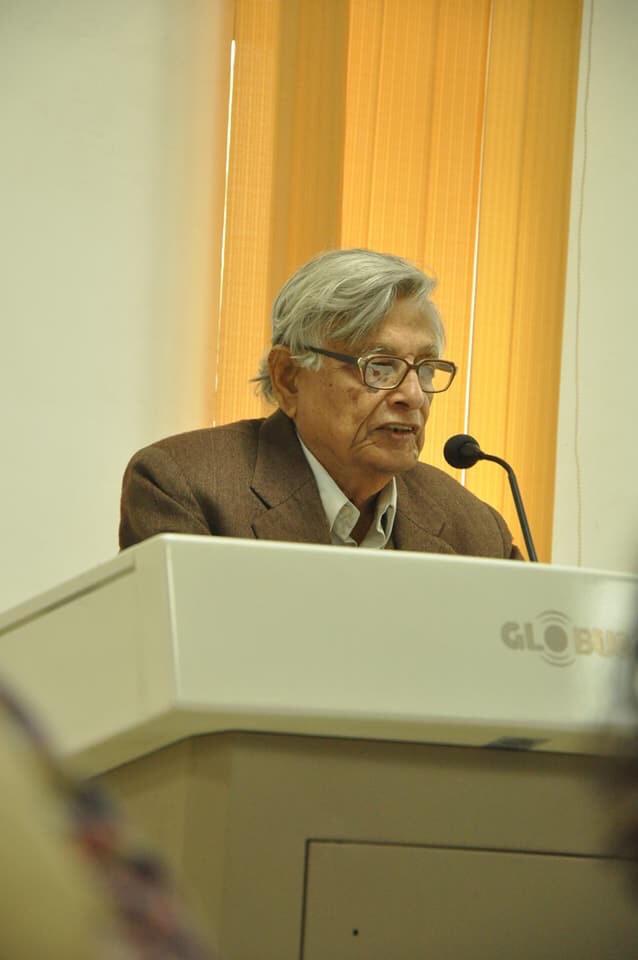
Professor Emeritus, Irfan Habib introduced the seminar theme by elaborating on, ‘What Constitutes a Monument and their Protection’. Professor Habib said the Latin word ‘monumentum’ means to ‘remind’ and our efforts at preserving heritage must necessarily not compromise the authenticity of the Historical structures. He voiced that the injustice to the Monumental heritage is either done on:

a) Communal grounds or

b) For Big business,
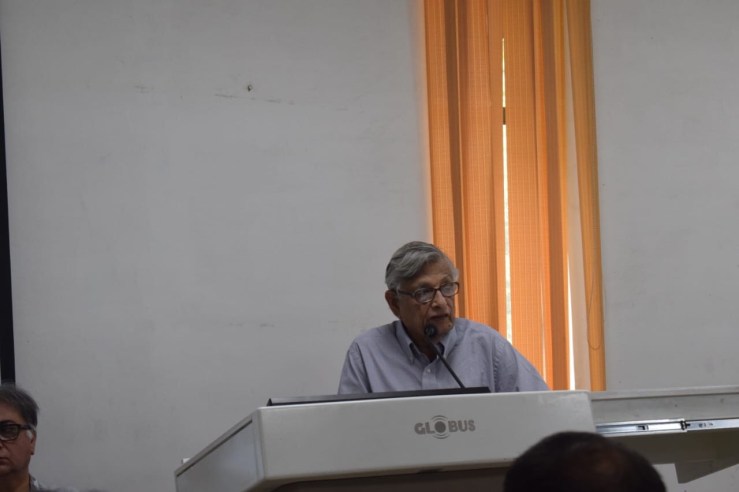
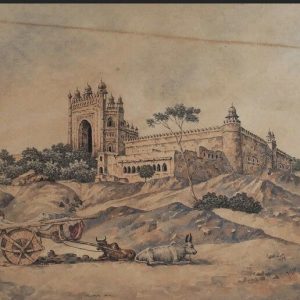
He stated that the policy of ‘De- Protection’ as in the case of Water works at Fatehpur Sikri or the misrepresentation of Monuments done by monopolising information / propaganda /ticketing are major challenges. He highlighted the importance of preserving the heritage but not ‘renewing’ it.

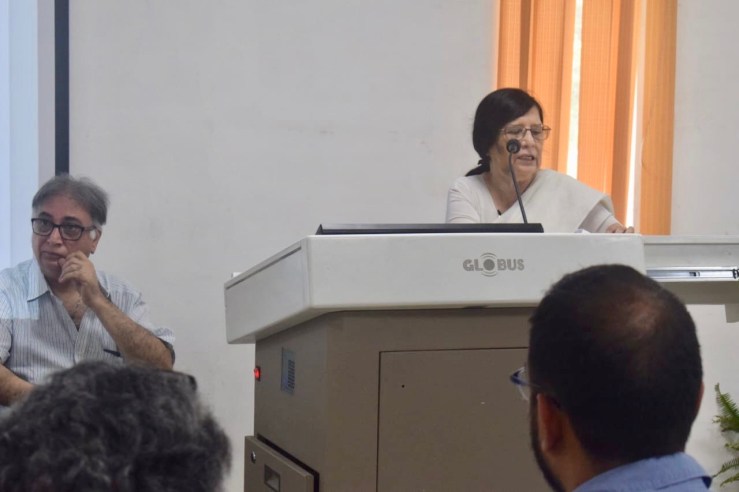
Professor Shireen Moosvi (AMU) who has till recently been a member of CABA, a consultative Advisory Boar of Archaeology of ASI, dissected the effect of Private interests on Monument Management as in the case of Humayun’s Tomb at the hands of the Agha Khan Trust and its tampering with the originality of the tomb without any consultation with the Advisory Board of ASI. She insisted that preservation must not collide with the authenticity of any structure, which unfortunately has been the case of Humayun’s Tomb.
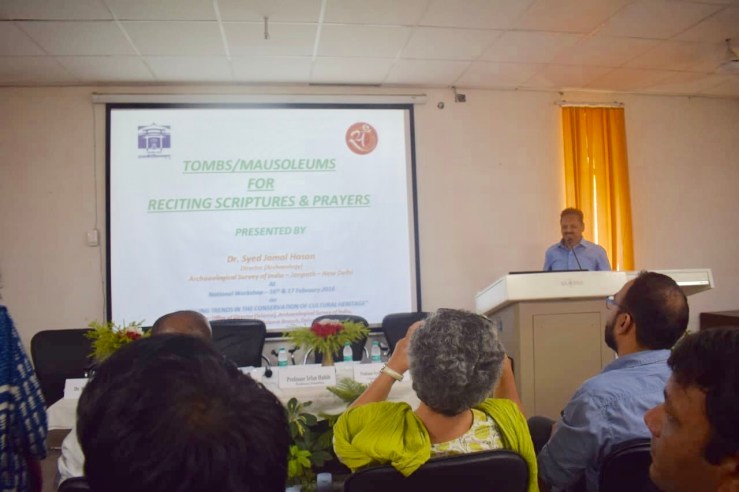
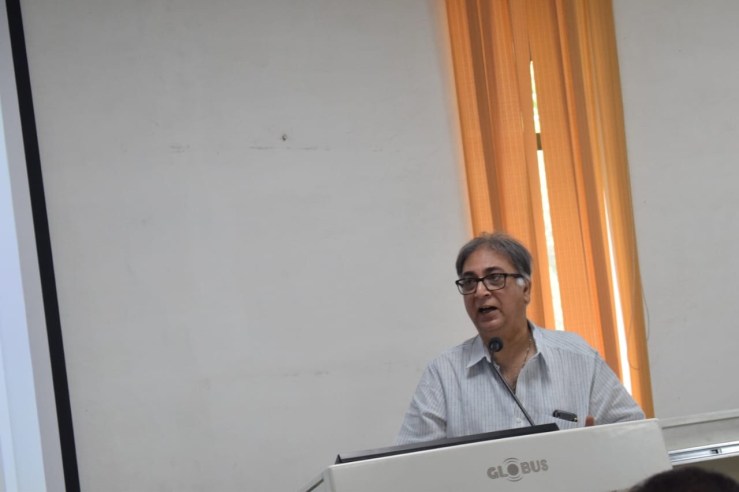
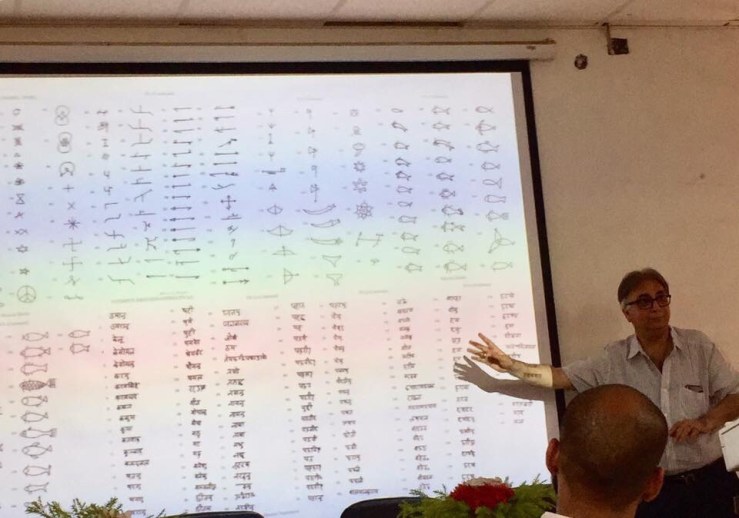
Dr. Jamal Hasan on the question of Preservation being a Private enterprise, gave a presentation on how the repair works of Private bodies mock the essence of History and dignity for a tomb or mouseoleum, he cited a number of examples where reconstruction was guised as preservation as in the case of Humayun’s Tomb and the Sunder Nursery area at the hands of Agha Khan Trust. Furthermore he also urged the need for more academicians joining the ASI to better collaborate with preservation works.
Dr. Shama Mitra Chenoy of DU gave a talk on Heritage preservation and Delhi Monuments. She pointed at the unfortunate disappearance of many important structures from Delhi. She also pointed to private ownerships of structures like within the Golf Club, like Lal Bangla or Tomb of Syed Abid and the violation of the 300- meters rule with many constructional works springing up near these monuments. She insisted at the need for setting a certain standard for the Policy of Preservation and one such could be Public Partnerships, because people in themselves are central in owning the heritage of a certain place as in the Case of preservation of Shahjahanabad.
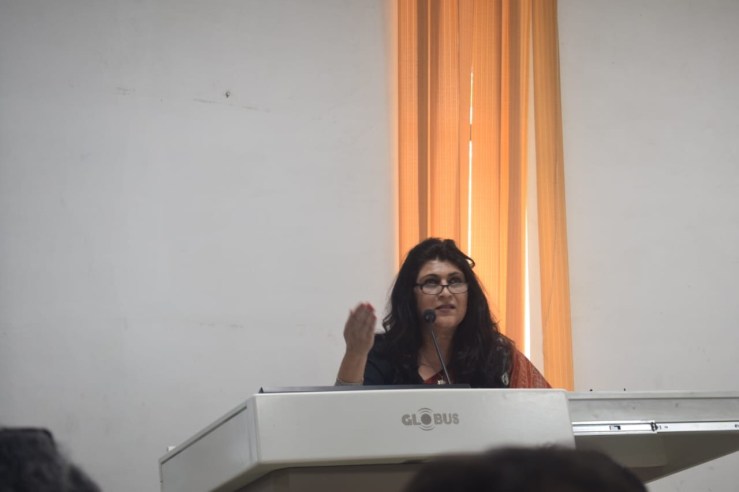
Lastly, Professor Ali Nadeem Rezavi, Chairman, Department of History (AMU) made a presention on The Canons of Preservation of Medieval Monuments as in the case of Fatehpur Sikri. He elaborated on the harm done to these buildings at the hands of certain functionaries of the ASI itself by doctoring reconstruction into them. He also elaborated on the eradication of many important historical relics such as the paintings on the walls or mason’s marks in the name of preserving a Monument. Earlier while introducing the theme, Professor Rezavi wondered that how come the present government can launch a thousand toilets via Swachhta Abhiyan but needs a private entity like Dalmias to build toilets at Nation Heritage sites. He pointed out that in fact these were attempts at tampering with history and creating myths in place of historical facts! An inkling is got from the fact that an “Interpretation Centre” was also being created which would help in dessiminating the distortions!
The Symposium aimed to give a call for agitation and raising awareness for people’s own Heritage and History before it is completely lost. It was a first step towards making the general public aware of the plight of our past heritage and recent attempts to tamper then.

A large number of staff members, research scholars and students attended the daylong symposium.
Razmi Rizwan Husain and the Memorial Awards, Fellowships and Lectures at AMU, JMI and JNU

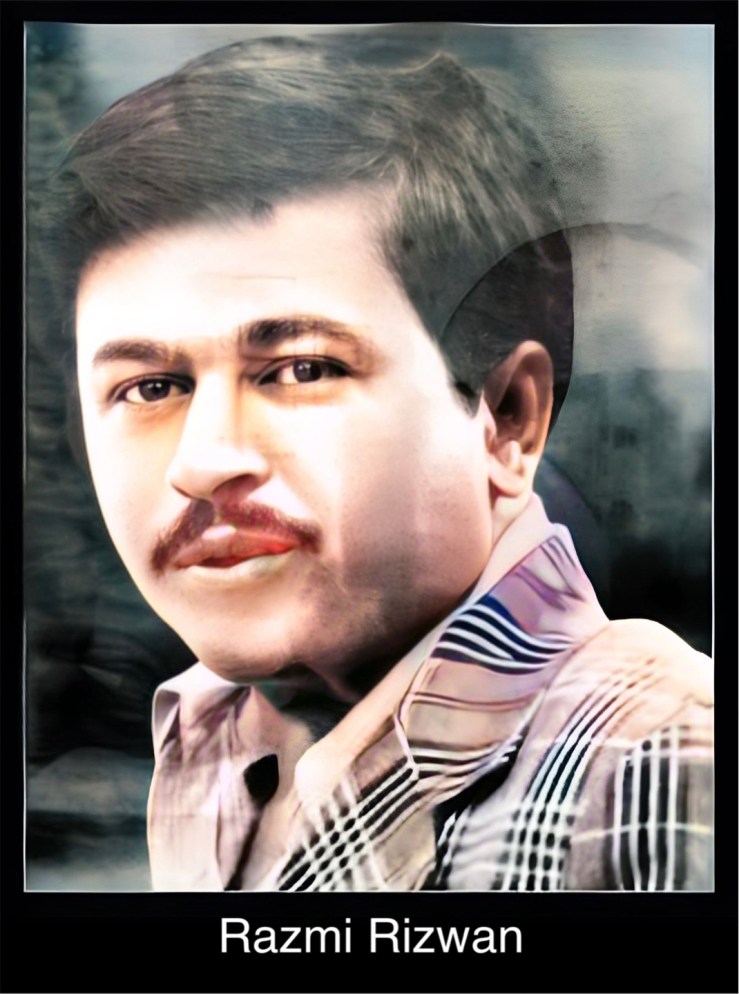
Who was Razmi Rizwan in whose name an Annual Award at the CAS in History is instituted?

During the course of the Sultania Historical Society function of the Centre of Advanced Study Department of History, AMU, an Award is given, year after year, to a student (for aquiring the highest marks in Medieval India in MA I year) in the name of Razmi Rizwan Husain. But unfortunately the students are not informed who this person was.

Razmi Rizwan Husain died in a road accident in Delhi on 1January 1982. He had by then completed his MPhil under the supervision of Professor Bipin Chandra at JNU and had been appointed as a lecturer in History at Jamia Milia Islamia, New Delhi.

Having started his primary education from Our Lady of Fatima Hr. Sec. School, Aligarh, Razmi went on to join the Centre of Advanced Study in History, Aligarh Muslim University in 1975 as a student of BA (Hons). He completed his postgraduation from the same department before migrating to JNU.

At Aligarh he was not only known as an excellent student but was also quite popular amongst his contemporaries for his independent views. He was a great debator and was known for his elocution as well as essays on various topics. We still remember his oratorial debate with Irfan Habib at a function held after Zulfiqar Ali Bhutto’s execution in Pakistan. He firmly but politely differed from what Habib had to say.

Though he himself could never qualify the Civil Service interviews, he qualified for the mains thrice. Many who did make it to IAS, are on record that they qualified through his endeavours and academic help.

Just a week before his death, as he was preparing to come home for his scheduled marriage, Razmi took a pillion ride on the bike of a fellow Alig who was at JNU in the chilling and morning fog of a freezing Delhi. A minor accident occurred which caused harm only to the rider: Razmi fell and his head hit the pavement. He was ultimately, after some unforgivable delay to AIMS, where he remained till 1st of January, a date when the doctors declared him dead. He was ultimately brought back to Aligarh where he was buried in the University graveyard.

While in JNU, he not only devoted his time to his academic pursuits but was also instrumental in leaving his mark on the JNU student’s politics. He could not remain bound by the traditional politics of SFI or AISF, but charted his own path by floating a new student’s political organization.

Soon after his death, the well known poet, and a family friend, Akhlaq Muhammad Khan Shaheryar composed and dedicated the following ghazal in his memory:

عہد گل کا کوئ قصہ نہ سنا ئیں گے تمہیں

تم بہت جاگ چکے اب نہ جگا ئیں گے تمہیں

تھی کشش وسعت افلاک میں ہم سے بھی سوا

ورنہ سوچا تھا کہ اس دل میں بسائیں گے تمہیں

وقت رخصت تمہیں اک بار نہ دیکھا مڑ کے

گرچہ معلوم تھا ہم بھول نہ پائیں گے تمہیں

تم پہ کیا گزرے گی یہ سوچ کے جی ڈرتا ہے

ہم کہ جب بھیڑ میں تنہا نظر آئیں گے تمہیں

سر بر ہنہ ہیں سبھی پیڑ ہوا چپ چپ ہے

اور سبب کیا ہے ابھی یہ نہ بتائیں گے تمہیں۔

The famous painter from Pakistan who was on a visit to Aligarh soon after the death of Razmi composed the script to be put up on the cenotaph stone of the grave.

Soon after his death, on the initiative of another bohemian scholar, Late Dr. Iqbal Ghani Khan (simply IG to his friends), the Board of Studies, CAS in History, AMU instituted a “Razmi Memorial Award” to be given to the student who secured the highest percentage of marks in Medieval India in the first year. The Award was to be given during the Annual Function of the Sultania Historical Society of the CAS in History. The student who tops in MA gets the Sultania Gold Medal.

The first Razmi Memorial Award was given in 1983. It went to, if I remember correctly to Ms. Fatima Ahmad Imam, currently teaching at University of Toronto in Canada. The second recipient was Farhat Hasan, now Professor at Delhi University.

For a number of initial years the undersigned, along with IG had to literally fight for the continuance of this Award.

In the past it was only in 2020 that no award could be given as due to Covid-19 no function could be held that year. It was resumed from 2021 onwards.

The Razmi Memorial Award for 2023 has been given to Ms. Najia Aiman Rizvi who secured the highest marks in MĀ first year amongst the students who offered to major in Medieval Indian History.


Razmi Rizwan Memorial Fellowship, JMI

Later in 2008, the Executive Councl of the Jamia Milia Islamia in its meeting (EC-I/2008) held on Tuesday, the 11th March, 2008 under the Vice Chancellorship of Professor Mushirul Hasan, intituted a Scholarship in the name of Razmi. Noting in its minutes, clause 4.2 , it approved the following modalities for regulating the scholarship namely “Razmi Rizwan Hussain Memorial Scholarship” to be awarded to the best student of M.A. History from the Academic Session 2007-2008:

1. The name of the scholarship shall be ‘Razmi Rizwan Hussain Memorial Scholarship’.

2. The scholarship shall be awarded for academic achievements, keeping in view of the financial need of the best student in M A History.

3. Students shall apply to the Head, Department of History and Culture after the declaration of their result of M A previous year, following the notice to be issued by the Department.

4. The student shall attach an attested copy of his/her marks sheet of the M.A. (previous examination) along with the proof of income for the related academic year.

5. Selection of the candidate shall be made on the basis of the candidate’s academic achievements, financial position, and performance in the interview to be conducted by a committee consisting of (a) Dean, Students’ Welfare-Chairman (b) Head, Department of History and Culture– Member; (c) Dean, Faculty of Humanities and Languages– Member

6. No award shall be made unless there is a candidate of sufficient merit available.


Razmi Rizwan Husain Foundation (RRHF), JNU

Ultimately, some former students of JNU got together in 2012 and formed the Razmi Rizwan Husain Foundation (RRHF), which was registered as a society in Delhi with certain social and literary-cultural objectives and to perpetuate Razmi’s memory. To begin with, they have started organising Memorial Talks, to be taken further for more constructive outcomes in near future.

Two such Memorial Talks have been organized so far, the first in 2012 itself, and the second in 2013. The 1st Razmi Memorial Talk was held at India International Centre, New Delhi on March 30, 2012. Mr. Raja Mohan, noted scholar and social scientist spoke then on Indo-Afghan strategic relationship. Noted historian, Prof. Harbans Mukhia presided over the function and Sh. D. P. Tripathi, MP was the Guest of Honour. More than 60 friends from JNU participated in that function. The second lecture, organized on 8 September 2013, organized at IIC, New Delhi, was delivered by Professor Emeritus Irfan Habib.

The memory of Razmi is thus being perpetuated by three well known institutions of India: AMU, his original alma mater, Jamia Milia Islamia, where he briefly served, and JNU which was his ideological home.

Razmi was the son of an English Professor, Prof. Rizwan Husain, and my eldest sister Najma Rizwan Husain. One of his brother, Bazmi Husain, is Managing Director, ABB, while the other, Fehmi Husain is Assistant Vice President ( East) at HT Media Limited.

Be a Part of the Movement: Join Aligarh Historians in the Fight to Safeguard our Built Heritage!

The Tomb of Humayun built during the reign of Akbar and the Red Fort of Delhi are amongst the two jewel built heritage sites in the country and both are being tampered with: the first by handing it over to a private firm: The Agha Khan Trust, which “rebuilt” it; while the second is in the process of being handed over to another private group, the Dalmias.

Humayun’s Tomb and Agha Khan Trust

Agha Khan Trust before starting their work should have read the small book on Conservation by Sir John Marshall, considered the Bible for conservationists. The work of conservation does not translate to rebuilding, remaking or beautifying: it simply means to arrest the rot and arrest the decay. Completing the whole is not a work to be attempted by conservationists.

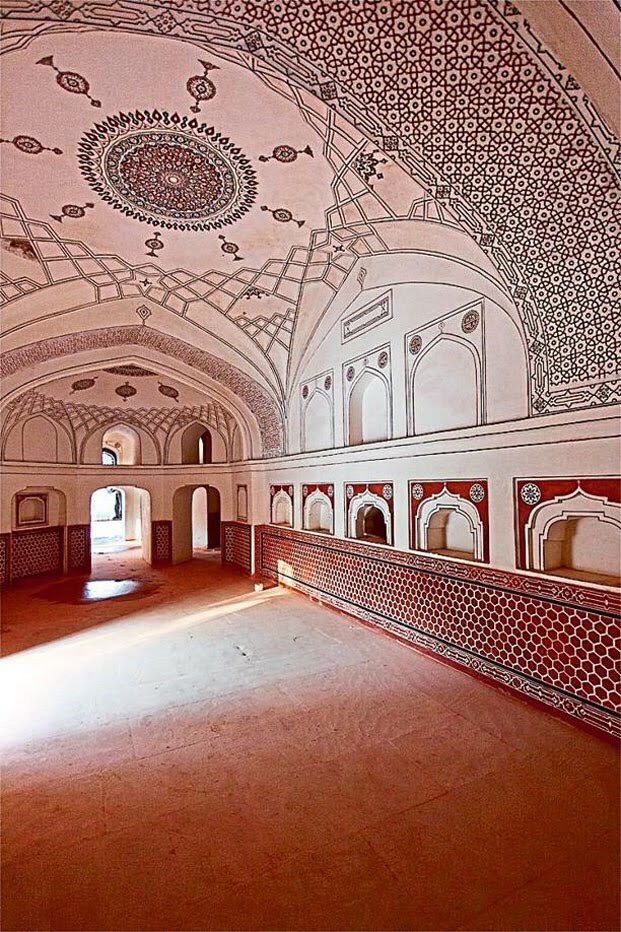
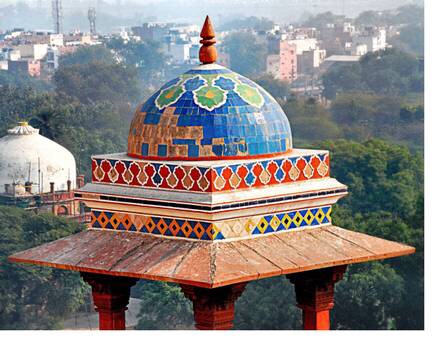
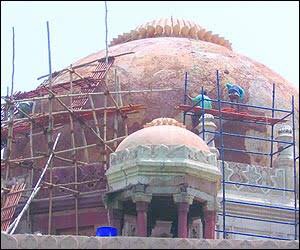
No doubt HT has been sparklingly “renewed” with replastering of interior surfaces, dome and finials. They may have also “authenticated” designs and patterns and tried to use (as closely as possible methods of making plasters- though full details in this regard are not fully known or described in Mughal sources; they may be known for the Ottomon empire); but none of this qualifies as per the rigour prescribed by John Marshall.

What they have virtually done is that they have completely scrapped the original and after replastering they have repainted. Howsoever “authentic” it is not Humayun’s – but a modern endeavour of a modern-day architect!

Mirza Ghiyas has now a partner with whom he shares the credits!

Nizamuddin Basti and Sundar Nursery

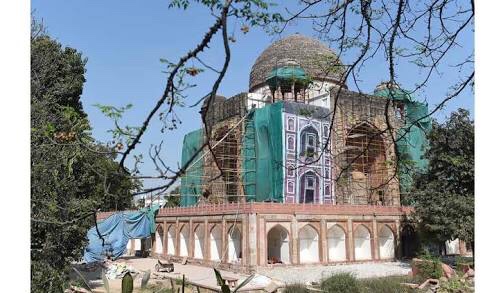
The whole of Nizamuddin Basti is going to suffer the same fate, as has the Tomb of Humayun, the Monuments in the so-called Sundar Nursery and the Adil Shahi Tombs and other structures in Bijapur and Golcunda. The Tomb of Khan-i Khanan is similarly being “renewed” (and vandalised) by Agha Khan Trust.

In spite the breast-thumping by Ratish Nanda of Aga Khan Trust, the professional body of Indian historians, the Indian History Congress has opposed the recently carried out preservation at historical monuments, as Humayun’s Tomb. “Preservation” does not translate as “modernization” or “rebuilding”. In spite of claims, many changes have been introduced in the design at the site which we condemn.

The Agha Khan Foundation has in fact played a lot with the original design and decoration in the interior of the monument. The Indian History Congress too has passed a strong resolution condemning it! I adviced R Nanda to have a dialogue with historians and those who are in the knowledge of Mughal design! Increase of footfalls in the monument is no proof of authenticity to original design. Nor is “beauty” which he claims to have bestowed on the said monument!

The IHC Resolution on Humayun’s Tomb ‘Conservation’ by Agha Khan Trust

The 75th IHC adopted a resolution on preservation of monuments and opposed the involvement of private agencies in restoring monuments. “We have opposed the involvement of private agencies like Aga Khan Trust and INTACH. No private agency has given any research on what scheme they are adopting or how they will preserve monuments.”

The resolution passed at the Annual Session of the 75th Session of the Indian History Congress held at JNU on 30 December 2013 is as follows:

Resolution 2

Preservation and Conservation of Monuments

The Archaeological Survey of India (ASI) has adopted a document containing rules for conservation of monuments and archaeological sites and remains (“The National Conservation Policy”). There are, in addition, international practices governing preservation and conser-vation of ancient structures as well as detailed norms adopted by the Archaeological Survey of India itself. Many of these basic rules, however, appear to have been violated in the case of such conservation projects assigned by the ASI to private agencies. One notable example is Humayun’s Tomb. Here two principles, namely, strict use only of materials that were originally employed in construction and repair, and clear demarcation of the current additions in the name of restoration, have been clearly violated. Even colour-schemes appear to have been changed. Moreover, facilities are being provided to tourists in a manner that threatens to damage the environment of the monument.

The Indian History Congress is disturbed at what has happened at this World Heritage Site, and hopes that a full report on the so-called restorations and a fresh colour-scheme that have been devised by the private agency concerned, and how the lapses made can now be rectified. At the same time, until the matter is settled, no preservation and restoration work on other monuments by private agencies should be permitted.

Handing over of Fort of Shahjahanabad to Dalmia Group and IHC Resolution

As recently as May 2018, expressing serious concern over the maintenance of the historic Red Fort here being auctioned out to the Dalmia Bharat Group, the Indian History Congress (IHC) has called for an “impartial review” of the arrangement by “the Central Advisory Board of Archaeology or any other recognised body of experts”.

“The Indian History Congress is greatly perturbed at the announcement that Dalmia Bharat, a cement company with no known experience of maintenance of monuments, is being made the custodian of the Red Fort of Delhi, a major national monument. It has also been announced that other monuments, including the Taj Mahal, are also in line for being handed over to similar private parties,” said a statement issued by the IHC.

“The terms on which the Red Fort is to be handed over to Dalmia Bharat are disturbingly broad. The company can ‘construct’ as well as ‘landscape’, and it will run an ‘interpretation centre’ as well,” the statement added, picking holes in the MoU.

The IHC recalled that it had also “expressed dismay” over the permission offered to the Aga Khan Trust “to interfere with the basic structures, decorations and ornamentation of Mughal monuments in the Humayun’s Tomb complex and surrounding areas”.

“The way the Red Fort is being entrusted to Dalmia Bharat is still more troubling for the company has no claim to any experience in maintenance, conservation, preservation and interpretation of monuments,” it said.

“There is ample room for the fear that in order to attract tourist traffic it may propagate false or unproven interpretations of particular structures in the complex. Once such claims are set afloat, especially when they are of a sectarian character, it is found extremely difficult to get rid of them,” it added.

Appeal to All

We the Aligarh Historians, the members of the Centre of Advanced Study Department of History, as well as the Aligarh Historians Group condemn the attempts to play with our Monuments. A large number of other historians from Delhi to Hyderabad have joined hands to raise our voice against such blatant vandalism. Join us on 5th June and be a part of the Movement!

Heritage At Risk! Save them!

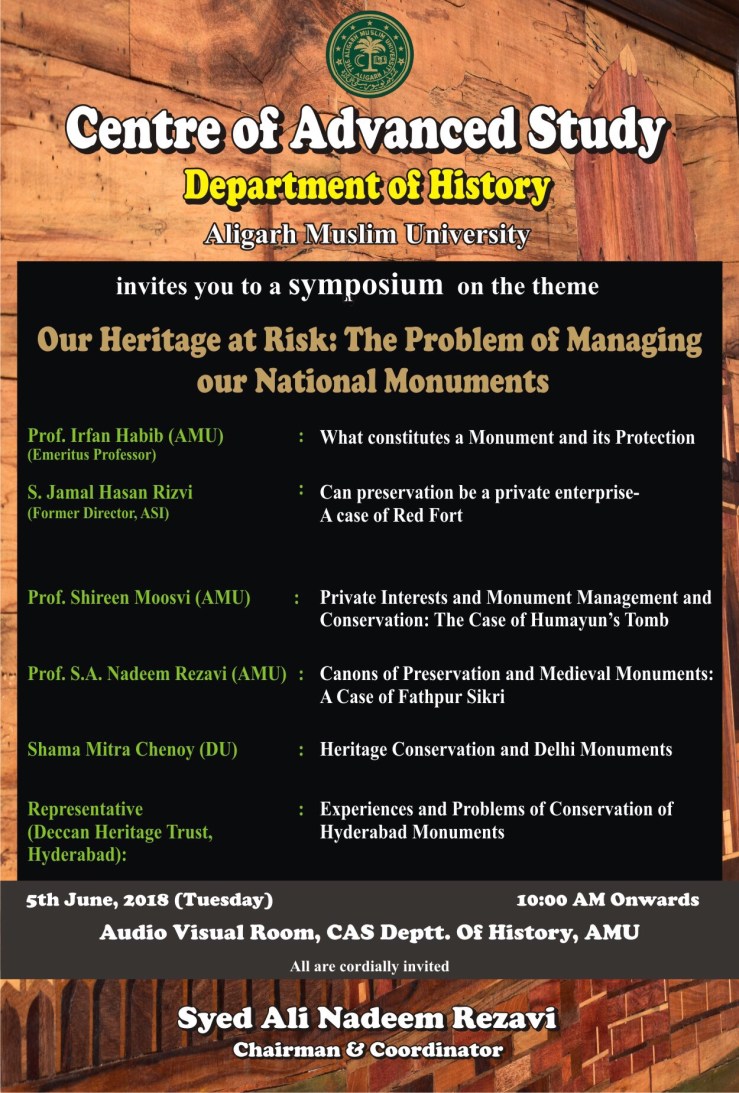
Symposium on Our Heritage At Risk: The Problem of Managing our National Monuments

5th June 2018. 10 am onwards

Audio Visual Room, Centre of Advanced Study Department of History, AMU, Aligarh

Come to hear the following Speakers:

(1) Irfan Habib (AMU): What Constitutes a Monument and Their Protection


(2) Jamal Hasan (New Delhi): Can preservation be a private enterprise- A case of Red Fort?


(3) Shireen Moosvi (AMU): Private Interests and Monument Management and Conservation: The Case of Humayun’s Tomb


(4) S Ali Nadeem Rezavi (AMU): Canons of Preservation and Medieval Monuments: A Case of Fathpur Sikri


(5) Shama Mitra Chenoy (DU): Heritage Conservation and Delhi Monuments


(6) A Representative of Deccan Heritage Trust: Experiences and Problems of Conservation in Hyderabad Monuments

Symposium on Our ‘Heritage At Risk: The Problem of Managing our National Monument’

Symposium on Our Heritage At Risk: The Problem of Managing our National Monuments

Date & Time: 5th June 2018. 10 am onwards

Venue: Audio Visual Room, Centre of Advanced Study Department of History, AMU

A few years back it was Humayun’s Tomb which was handed over in the name of Conservation to a private trust, the Agha Khan Trust. They instead of conserving, renewed and rebuilt it! The original layers of plaster and drawings were removed and replaced by what engineers and architects of the Trust thought it to be!

Not only the emperor’s Tomb but a number of Monuments in the vicinity, the so-called Sundar Nursery structures too were rebuilt! Even today this official vandalism is being carried out at the Tomb of Abdur Rahim Khan-i Khanan! Even in far off Andhra Pradesh, similar fate awaits the famous Golcunda Monuments and Tombs!

More recently the government of the day is bent upon selling our National Heritage to private hands. A beginning has been made by selling off the Red Fort to the Dalmia group! There is loud thinking of mortgaging even the iconic Taj!

At a number of occasions, even our Archaeological Survey of India has sullied its hands in such wanton destruction: a case in point is of “tailoring” certain Monuments at Fathpur Sikri to satisfy the whims of some of its misguided officers!

The Indian History Congress had in the past passed resolutions against such wanton destructions. In 2014 a resolution for example was passed against the mishandling and deliberate destructive “renovation work” at Humayun’s Tomb.

In order to remind our rulers to desist from such acts and protest against attempts to give our Heritage structures to private groups who have neither an understanding nor the wherewithal to renovate or interpret our built heritage, the Centre of Advanced Study Department of History is organising a one Day Symposium. All of you who care about our National Heritage are requested to attend. The programme is as follows:

Speakers:

(1) Irfan Habib (AMU): What Constitutes a Monument and Their Protection

(2) Jamal Hasan (New Delhi): Can preservation be a private enterprise- A case of Red Fort?

(3) Shireen Moosvi (AMU): Private Interests and Monument Management and Conservation: The Case of Humayun’s Tomb

(4) S Ali Nadeem Rezavi (AMU): Canons of Preservation and Medieval Monuments: A Case of Fathpur Sikri

(5) Shama Mitra Chenoy (DU): Heritage Conservation and Delhi Monuments

(6) A Representative of Deccan Heritage Trust: Experiences and Problems of Conservation in Hyderabad Monuments

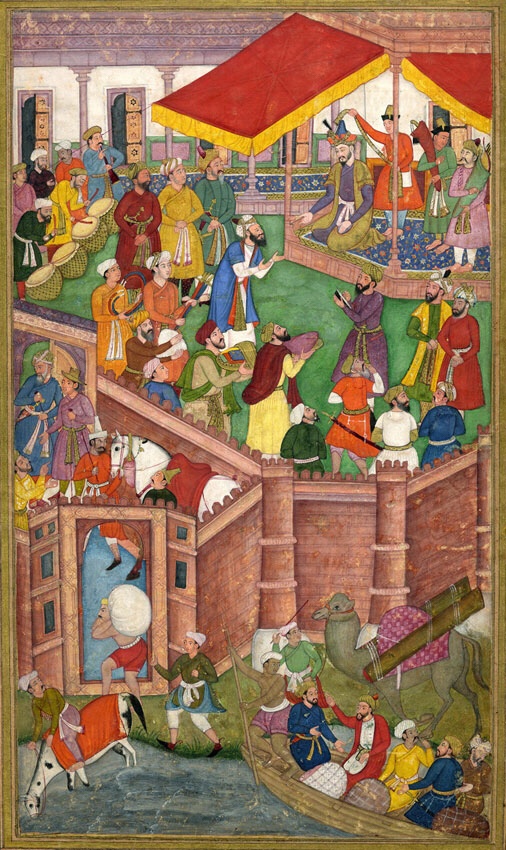
‘ARRIVAL OF HUMAYUN IN THE CITY OF LAHORE’: An Illustrated Folio from the “Third” Akbarnama Manuscript

Mounted on an album page most probably dating to the eighteenth century.

Inscribed to the bottom of the red border with the subject of the painting:

āmadan-e hazrat jannat āshiyāni be-lāhur

“The coming of His Majesty Jannat Ashiyani to Lahore”.

Further inscribed in the lower right corner with the names of the two artists:

‘amal-i makra(?), chehra mukund

“Work of Makra(?), portraits by Mukund”.

The Akbarnāma of Abu’l Fazl is the biography of the Mughal emperor Akbar and an imperial chronicle of his reign  (1556-1605) and that of his father Humayun (1530-1540; 1555-1556).

The event of the Mughal emperor Humayun’s arrival in Lahore took place on 24th February 1555, on his way to defeat Sikandar Shah at Sirhind, followed by his occupation of Delhi where he died in January 1556.  In this painting, Humayun is shown in the fort near the river Rāvi with drummers celebrating his arrival and gifts being presented to the emperor.

Humayun wears the distinctive turban with a tall pointed cap which he designed himself to distinguish his rule.  A boat laden with gifts is moored on the riverbank and men are beginning to unload the boat, entering the fort though the door in the lower left.  Foreign ambassadors wearing unusual hats including a European can be seen in the first courtyard through the door.  A horse accompanies these visitors in the courtyard while another horse drinks from the river to the bottom left of the painting.  To the right is a camel carrying logs or rolled carpets and textiles on its back.

According to Abu’l Fazl, Humayun was given an extremely warm welcome at Lahore.  He writes in the Akbarnāma:

“The nobles of that country came forward to welcome him.  They offered up thanks for this glorious favour and gave large presents.  High and low were treated with royal favours according to their degree.  On the 2nd Rabi-us-Sāni (24th February 1555), the illustrious city of Lahore, which is in fact a great city in India, was made glorious by his advent, and all classes and conditions of men were freed from the evils of the times, and attained the objects for which they had been long waiting on hope’s highway”.(1)

Mukund is listed by Abu’l Fazl as one of the leading artists of Akbar’s court. He is chiefly known as a portrait painter and amongst fifty-three of his known works, Som Prakash Verma in Mughal Painters and Their Work, 1994, pp. 304-308, lists four signed portraits by him, including a portrait of Akbar.  The majority of these works are in Jaipur Royal Collection, the British Library, London and the Chester Beatty Library, Dublin.

A 1598 portrait of Genghis Khan, in the Imperial Library, Tehran, by Sanwala, is inscribed as having been sketched by Makra and coloured by Mukund.  Makra is also known for his animal studies, as illustrated here by his careful and accurate depiction of the horses and the camel.

This page is one of sixteen miniatures that have recently come to light from an important royal manuscript thought to have belonged to Akbar’s mother, Hamida Banu Begum.  Scholars who have studied these paintings, in particular Linda York Leach, have identified the manuscript as a third royal Akbarnāma.

The earliest Akbarnāma manuscript is primarily in the collection of the Victoria and Albert Museum, which has 116 miniatures.  This first Akbarnāma was painted around 1590-1595 and presented to the emperor as his close friend Abu’l Fazl was still working on the text.

The second copy of the Akbarnāma is divided between the British Library, which owns 39 illustrations, and the Chester Beatty Library in Dublin, which has 66 paintings.  This second Akbarnamāma is quite different in style from the first manuscript, more refined and less dynamic, with many of the pages lightly tinted rather than highly coloured like that of Akbar’s own copy.  It was produced between 1603 and 1605, probably to commemorate the tragic assassination of Abu’l Fazl in 1603.

According to Leach in her study, “Pages from an Akbarnama”, in Rosemary Crill, Susan Stronge and Andrew Topsfield (eds.), Arts of Mughal India: Studies in Honour of Robert Skelton, 2004, pp. 42-55, the newly discovered third Akbarnama pages are related to the Victoria and Albert Museum’s highly coloured, dynamic illustrations and were probably painted after Akbar’s own series, between 1595 and 1600.

Leach convincingly suggests several reasons for identifying the royal family member for whom this Akbarnāma was commissioned as Hamida Banu Begam.  Firstly, the text is written in the conservative naskh script as opposed to the nasta‘liq used on the other two copies.  Naskh is a script that Hamida is thought to have preferred.  From her personal library is a naskh manuscript with her ownership seal, penned for her just before her death.  Secondly, a number of scenes centre on women and their activities, depicting them with unusual animation and intimacy, and showing scenes from the zenana that would have appealed to Hamida.  These include “Humayun surprising his parents”, discussed by Leach on pp. 44 and 47, fig. 1.

Finally, several paintings such as the present depict her husband Humayun in the context of much greater warmth, tenderness and drama than his portrayals in the other Akbarnāma mas.  One of the finest, combining all these aspects, is “Festivities at the wedding of the Emperor Humayun and Hamida Banu Begam” now in the Cynthia Hazen Polsky Collection in New York.  With radiant faces painted by Daulat, this is illustrated by Leach on pp. 44-45, figs. 2, 3 and 4; and also by Jerry Losty in Andrew Topsfield (ed.), In the Realm of Gods and Kings: Arts of India, 2004, pp. 372-373, cat. no. 165.

A painting depicting “The game of wolf-running in Tabriz”, by Banwari, now in the Cleveland Museum of Art, is illustrated by Leach on p. 46.   Leach also illustrates on p. 52, “The supply train crosses the bridge of boats on the Ganges”, attributed to Basawan.

Provenance:
From a private collection that has been in England since the 1940s.

Reference:
1. H. Beveridge (trans.), The Akbarnāma of Abu-l-Fazl, 1897, vol. 1, p. 623.
IS.2.1270