Sir Syed Ahmad Khan: A Connoisseur of Our National Heritage

“Do not show the face of Islam to others; instead, show your face as the follower of true Islam.”

— Sir Syed Ahmad Khan

Born on 17 October 1817 in Delhi, Sir Syed Ahmad Khan emerged as one of the most remarkable figures of 19th-century India — a philosopher, social reformer, historian, and educator whose vision shaped modern Indian Muslim identity. Deeply devoted to the cause of education, he believed that only widespread, modern learning could enlighten and empower the masses.

A devout Muslim, yet deeply troubled by orthodoxy, Sir Syed’s reformist zeal found expression in his modernist commentary on the Qur’an and a sympathetic interpretation of the Bible, both seeking harmony between revelation and reason. His intellectual temperament was rational and inclusive, shaped by both Islamic theology and Enlightenment humanism.

He established schools at Moradabad (1858) and Ghazipur (1863), founded the Scientific Society (Aligarh, 1864) to translate Western works into Indian languages, and launched the periodical Tehzīb-ul-Akhlāq (1870) to reform social and moral attitudes. The culmination of his lifelong mission was the foundation of the Muhammadan Anglo-Oriental College (MAO College) on 7 January 1877, patterned after Oxford and Cambridge which would eventually evolve into Aligarh Muslim University.

Sir Syed and the Colonial Moment

Sir Syed’s long association with the East India Company placed him in a complex position during the Revolt of 1857. Witnessing the devastation of Delhi and the collapse of Mughal institutions, he sought to diagnose the roots of the tragedy. In his path-breaking work Asbāb-i Baghāwat-i Hind (The Causes of the Indian Revolt, 1859), he held the British government itself responsible, citing its aggressive expansionism, racial arrogance, and ignorance of Indian traditions.

He followed it with Tārīkh-i Sarkashī-i Bijnor, a detailed local account of the revolt. These works marked Sir Syed as an early historian of modern India, who analyzed events through empirical observation and social reasoning, not blind loyalty.

Though often called a British loyalist, and later associated with the formation of the Muslim League to safeguard community interests, he was doubly misunderstood.

The orthodox clergy denounced him as a “Natury Jogi,” a follower of Darwin and a denier of the Qur’an. The British establishment distrusted him as a critic who exposed their administrative failures.

Yet, beyond these misreadings stood a man envisioning a revived Indian Muslim community, equipped with both the ethical strength of Islam and the scientific temper of the West.

The Historian and Archaeologist

Few realize that Sir Syed Ahmad Khan was not only a reformer but also one of India’s first historical archaeologists. His monumental work Āthār-ul-Ṣanādīd (1847; revised 1854), literally “Monuments of the Nobles”, was the earliest survey of Delhi’s monuments written in Urdu and Persian.

In this text, he meticulously documented mosques, tombs, gardens, and madrasas, recording measurements, architectural details, and inscriptions with the precision of a modern archaeologist. It remains, even today, an indispensable primary source for the study of Delhi’s medieval architecture.

In 1847, the Delhi Archaeological Society was established, and Sir Syed became an active member. In its journal, he published a path-breaking article on the ancient bricks of Hastinapur, identifying strata and typologies that prefigured later archaeological methods. The only comparable study came decades later from Sir John Marshall, Director-General of the Archaeological Survey of India.

Sir Syed’s approach was holistic. He copied inscriptions in languages he did not know, including Prakrit, out of sheer respect for historical record. His attention to epigraphy, architecture, and urban morphology marks him as a genuine pioneer of historical archaeology in India.

The Aligarh Legacy and Archaeological Tradition

Sir Syed’s intellectual curiosity extended into his institutional creation at Aligarh. During his residence there, he collected antiquities, sculptures, and architectural fragments from neighboring regions, which were displayed in the Department of History and later preserved in the Central University Museum.

This collection catalogued by Professor R. C. Gaur, includes stone sculptures, door jambs, and ornamental fragments, embodying the founder’s passion for preserving the material past.

The Department of History, following his tradition, developed a robust Archaeology Section, which became one of the premier centers of field archaeology in India. Its excavations at Atranji Khera, Jhakera, Lal Qila, Fathpur Sikri, and along Mughal highways stand as enduring tributes to the legacy of Sir Syed whose integration of history, archaeology, and education gave Aligarh its distinct identity as both a seat of learning and a guardian of heritage.

Connoisseur of Composite Culture

Sir Syed’s appreciation of heritage went beyond monuments and manuscripts. He was, above all, a connoisseur of India’s composite culture, its interwoven Hindu-Muslim traditions, its shared languages, and its syncretic arts. His friendships with Hindu scholars such as Raja Jai Kishan Das, his use of Urdu as a cultural bridge, and his assertion that “Hindus and Muslims are the two eyes of the same beautiful bride of India” reflect his belief in the essential unity of the subcontinent.

The British decision in 1842 to replace Persian with English in administration had deeply alarmed Indian Muslims, but Sir Syed’s response was constructive, not reactionary. He urged the community to master English and Western sciences so as to remain socially and politically relevant. His educational reforms thus became acts of cultural preservation through adaptation and a renewal of heritage, not its abandonment.

The Context of His Nationalism

It is important to remember that Sir Syed lived in an age before the modern concept of “nationhood.” Terms like watan and qaum were fluid and contextual, denoting a people, region, or community. Sir Syed’s vision of a qaum was civilizational rather than territorial.

He was no Jamaluddin Afghani, nor a pan-Islamist agitator. His reforms were firmly rooted south of the Himalayas in the soil of India. His dream was of an enlightened Indian Muslim community, loyal to its faith yet integrated with the progress of its homeland.

Sir Syed Ahmad Khan stands today as one of the earliest interpreters of India’s national heritage, a man who combined the scholar’s precision, the reformer’s courage, and the patriot’s faith in the civilizational unity of India.

His Āthār-ul-Ṣanādīd illuminated the architectural past; his Asbāb-i Baghāwat-i Hind explained the political crises of his present; his Scientific Society, Tehzīb-ul-Akhlāq, and MAO College prepared the ground for an enlightened future.

In celebrating him, we celebrate the enduring belief that education and heritage are twin pillars of national regeneration. To walk through the gates of Aligarh today past the Victoria Gate, Strachey Hall, and the Sir Syed University Museum (now known as Musa Dakri Museum) is to retrace the vision of a man who sought to unite the reason of the modern age with the wisdom of our collective past.

Sir Syed Ahmad Khan was, and remains, a true connoisseur of our national heritage.

Syed Ali Nadeem Rezavi

INDIAN FEUDALISM: VARIOUS APPROACHES

The first assimilation of ‘feudalism’ in the Indian context occurred at the hands of Col. James Tod, the celebrated compiler of the annals of Rajasthan’s history in the early  part of the nineteenth century, For Tod, as for most European historians of his time in Europe, lord-vassal relationship constituted the core of feudalism. The lord in medieval Europe looked after the security and subsistence of his vassals and they its Continuities in turn rendered military and other services to the lord. A sense of loyalty also tied the vassal to the lord in perpetuity. Tod found the institution and the pattern replicated in the Rajasthan of his day in good measure. 


The term feudalism continued to be viewed, off and on, in works of history in India, often with rather vague meanings attached to it. It was with the growing Marxist influence on Indian history writings between the mid-1950s and the mid-60s that the term came to be disassociated from its moorings in lord-vassal relationship and acquired an economic meaning, or rather a meaning in the context of the evolution of Indian class structure. One of the major imperatives of the formulation of an Indian feudalism was, paradoxically, the dissatisfaction of Marxist historians with Marx’s own placement of pre-colonial Indian history in the category of the Asiatic Mode of Production. Even though Marx had created this category himself, much of the substance that had gone into its making was commonplace among Western thinkers of the eighteenth and the nineteenth centuries. 


Marx had perceived the Asiatic Mode of Production as an ‘exception’ to the general dynamic of history through the medium of class struggle. In Asia, he, along with numerous other thinkers, assumed there were no classes because all property belonged either to the king or to the community; hence there was no class struggle and no change over time. He shared this notion of the changeless Orient with such eminent thinkers as Baron de Montesquieu, James Mill, Friedrich Hegel and others. Real dynamism, according to them, came only with the establishment of colonial regimes which brought concepts and ideas of change from Europe to the Orient. Indian Marxist historians of the 1950s and 60s were unwilling to accept that such a large chunk of humanity as India, or indeed the whole ofAsia, should remain changeless over such large segments of time. They expressed their dissatisfaction with the notion of the Asiatic Mode of Production early on. In its place some of them adopted the concept of feudalism and applied it to India. Irfan Habib, the leading Marxist historian of the period, however, put on record his distance from ‘Indian feudalism’ even as he vehemently criticised the Asiatic Mode of Production. 


D. D. Kosambi gave feudalism a significant place in the context of socio-economic history. He conceptualised the growth of feudalism in Indian history as a two-way process: from above and from below in his landmark book, An Introduction to the Study of Indian History, first published in 1956. From above the feudal structure was created by the state granting land and rights to officials and Brahmins; from below many individuals and small groups rose from the village levels of power to become landlords and vassals of the kings. 


Kosambi, in his characteristic mode, formulated the notion of feudalism in the shape of a formula rather than in a detailed empirical study. This major task was taken up by Professor R. S. Sharma in his Indian Feudalism, 1965. However, R. S. Sharma did not follow the Kosambian formula of feudalism from below and from above; instead, he envisioned the rise of feudalism in Indian history entirely as ‘the consequence of state action, i.e. from above. It was only later that he turned his attention to the other phenomenon


R. S. Sharma essentially emulated the model of the rise and decline of feudalism in Europe formulated in great detail by the Belgian historian of the 1920s and 3Os, Henri Pirenne. Pirenne had displaced the dominant stereotype of European feudalism as lord-vassal relationship and substituted in its place one that had much wider and deeper range of consequences for society. He postulated that ‘grand trade’, i.e long distance trade in Europe across the Mediterranean, had allowed European economy, society and civilisation to flourish in Antiquity until its disruption by the Arab invasions of Europe in the seventh century. Disruption of trade led to the economy’s ‘ruralisation’, which made it inward, rather than outward looking. It also resulted in what Pirenne called ‘the closed estate economy’. The closed estate signified the unit of land held as estate by the lord [10,000 acres on an average] and cultivated by the peasant, where trade was minimal and almost everything the inhabitants of the estate required was produced within. These estates, in other words, were economically ‘self-sufficient’ units. The picture changed again from the eleventh century when the Crusades threw the Arabs back to the Near East; this led to the revival of trade and cities and the decline of feudalism. Pirenne thus posited an irreconcilable opposition between trade and urbanisation on one hand and feudalism on the other. 


R S Sharma copied this model in almost every detail, often including its terminology, on to the Indian historical landscape. He visualised the decline of India’s long distance trade with various parts of the world after the fall of the Guptas; urbanisation also suffered in consequence, resulting in the economy’s ruralisation. A scenario thus arose in which economic resources were not scarce but currency was. Since coins were not available, the state started handing out land in payment to its employees and grantees like the Brahmins. Along with land; the state also gave away more and more rights over the cultivating peasants to this new class of ‘intermediaries’. The increasing subjection of the peasants to the intermediaries reduced them to the level of serfs, their counterparts in medieval Europe. The rise of the class of intermediaries through the state action of giving grants to them is the crucial element in R S Sharma’s construction of Indian feudalism. Later on in his writings, he built other edifices too upon this structure, like the growth of the class of scribes, to be consolidated into the caste of Kayasthas, because state grants needed to be recorded. The crucial process of land grants to intermediaries lasted until about the eleventh century when the revival of trade reopened the process of urbanisation. The decline of feudalism is suggested in this revival, although R S Sharma does not go into this aspect in as much detail. The one element that was missing in this picture was the Indian counterpart of the Arab invasion of Europe; however, Professor B N S Yadava, another eminent proponent of the Indian feudalism thesis, drew attention to the Hun invasions of India which almost coincided with the beginning of the rise of feudalism here. The oppressive feudal system in Europe had resulted in massive rebellions of the peasantry in Europe; in India R S Sharma looked for evidence of similar uprising but found only one example of Kaivartas – who were essentially boatmen in eastern Bengal but also engaged part time in cultivation – having revolted in the eleventh century. 


The thesis propounded in its fully-fledged form in 1965 has had a great deal of influence on subsequent history writing on the period in India. Other scholars supported the thesis with some more details on one point or another, although practically no one explored any other aspect of the theme of feudalism, such as social or cultural aspect for long afterwards. B N S Yadava and D N Jha stood firmly by the feudalism thesis. The theme found echoes in south Indian historiography too, with highly acclaimed historians like MGS Narayanan and Noburu Karashima abiding by it. There was criticism too in some extremely learned quarters; the most eminent among critics was D C Sircar. There was too a fairly clear ideological divide which characterised history writing in India in the 1960s and 70s: D D Kosarnbi, R S Sharma, B N S Yadava and D N Jha were firmly committed Marxists; D C Sircat stood on the other side of the Marxist fence. However, neither support nor opposition to the notion of feudalism opened up the notion’s basic structure to further exploration until the end of the 1970s. The opening up came from within the Marxist historiographical school. We shall return to it in a little while. 


In 1946 one of the most renowned Marxist economists of Cambridge university, UK, Maurice Dobb, published his book, Studies in the Development of Capitalism in which he first seriously questioned the Pirennean opposition between trade and feudalism and following Engels’ insights drew attention to the fact that the revival of trade in Eastern Europe had brought about the ‘second serfdom’, i.e., feudalism. He thus posited the view that feudalism did not decline even in Weskrn Europe due to the revival of trade but due to the flight of the peasants to cities from excessive and increasing exploitation by the lords in the countryside. This thesis led to an international debate in the early 1950s among Marxist economists and historians. The debate was still chiefly confined to the question whether feudalism and trade were mutually incompatible. Simultaneously, in other regions of the intellectual landscape, especially in France, where an alternative paradigm of history writing, known as the Annales paradigm, was evolving, newer questions were being asked and newer dimensions of the problem being explored. Some of these questions had travelled to India as well. 

WAS THERE FEUDALISM IN INDIA? 

It was thus that in 1979 a Presidential Address to the Medieval India Section of the Indian History Congress’s fortieth session was entitled ‘Was There Feudalism in Indian History?‘ Harbans Mukhia, its author, a committed practitioner of Marxist history writing, questioned the Indian feudalism thesis at the theoretical plane and then at the empirical level by comparing the medieval Indian scenario with medieval Europe. 


The theoretical problem was concerned with the issue whether feudalism could at all be conceived of as a universal system. If the driving force of profit maximisation had led capitalism on to ever rising scale of production and ever expanding market until it encompassed the whole world under its dominance, something we are witnessing right before our eyes, and if this was a characteristic of capitalism to thus establish a world system under the hegemony of a single system of production, logically it would be beyond the reach of any precapitalist system to expand itself to a world scale, i.e. to turn into a world system. For, the force of consumption rather than profit maximiation drove precapitalist economic systems, and this limited their capacity for expansion beyond the local or the regional level. Feudalism thus could only be a regional system rather than a world system. The problem is hard to resolve by positing different variations of feudalism: the European, the Chinese, the Japanese and the Indian, etc., although this has often been attempted by historians. For, then either the definition of feudalism turns so loose as to become synonymous with every pre-capitalist system and therefore fails to demarcate feudalism from the others and-is thus rendered useless; or, if the definition is precise, as it should be to remain functional, the ‘variations’ become so wide as to render it useless. Indeed, evenwithin the same region, the variations are so numerous that some of the most respected historians of medieval Europe in recent years, such as Georges Duby and Jacques Le Goff, tend to avoid the use of the term feudalism altogether; so sceptical they have become of almost any definition of feudalism. 


The empirical basis of the questioning of Indian feudalism in the 1979 Presidential Address lay in a comparison between the histories of medieval Western Europe and medieval India, pursued at three levels: the ecological conditions, the technology available and the social organisation of forms of labour use in agriculture in the two regions. With this intervention, the debate was no longer confined to feudalism/ trade dichotomy which in any case had been demonstrated to be questionable In its own homeland. 


The empirical argument followed the perspective that the ecology of Western Europe gave it four months of sunshine in a year; all agricultural operations, from tilling the field to sowing, tending the crop, harvesting and storing therefore must be completed within this period. Besides, the technology that was used was extremely: labour intensive and productivity of both land and labour was pegged at the dismal seed-yield ratio of 1 :2.5 at the most. Consequently the demand for labour during the four months was intense. Even a day’s labour lost would cut into production. The solution was found in tying of labour to the land, or serfdom. This generated enormous tension between the lord and the serf in the very process of p-reduction; the lord would seek to control the peasant labour more intensively; the peasant would, even while appearing to be very docile, try to steal the lord’s time to cultivate his own land. The struggle, which was quiet but intense, led to technological improvement, rise in productivity to 1 :4 by the twelfth century, substantial rise in population and therefore untying of labour from land, expansion of agriculture and a spurt to trade and urbanisation. The process was, however, upset by the Black Death in 1348-51 which wiped out a quarter of the population leading to labour scarcity again. The lords sought to retud to the old structures of tied labour; the peasants, however, who had tasted better days in the 11th and 12th centuries, flew into rebellions all over Europe especially during the 14th century. These rebellions were the work of the prosperous, rather than the poor peasants. By the end of the century, feudalism had been reduced to a debris. 


Indian ecology, on the other hand, was marked by almost ten months of sunshine where agricultural processes could be spread out. Because of the intense heat, followed by rainfall, the upper crust of the soil was the bed of fertility; it therefore did not require deep, labour intensive digging. The hump on the Indian bull allowed the Indian peasant tp use the bull’s drought power to the maximum, for it allowed the plough to be placed on the bull’s shoulder; the plain back on his European counterpart would let the plough slip as he pulled it. It took centuries of technological improvement to facilitate full use of the bull’s drawing power on medieval European fields. The productivity of land was also much higher in medieval India, pegged at 1 : 16. Besides, most Indian lands yielded two crops a year, something unheard of in Europe until the ninteenth century. The fundamental difference in conditions in India compared to Europc also made it imperative that the forms of labour use in agriculture should follow a different pattern. Begar, or tied labour, paid or unpaid, was seldom part of the process of production here; it was more used for non-productive purposes such as carrying the zamindar ‘s loads by the peasants on their fields or supplying milk or oil, etc. to the zamindars and jagirdars on specified occasions. In other words tension between the peasant and the zamindar or the jagirdar was played out outside the process of production on the question of the quantum of revenue. 


We do not therefore witness the same levels of technolagical breakthroughs and transformation of the production processes in medieval India as we see in medieval Europe, although it must be emphasised that neither technology nor the process of agricultural production was static or unchanging in India.


The 1979 Address had characterised the medieval Indian system as one marked its Continuities by he peasant economy. Free peasant was understood as distinct from the medieval European serf. Whereas the serf’s labour for the purposes of agricultural production was set under the control of the lord, the labour of his Indian counterpart was under his own control; what was subject to the state’s control was the amount of produce of the land in the form of revenue. A crucial difference here was that the resolution of tension over the control of labour resulted in transformation of the production system from feudal to capitalist in European agriculture from the twelfih century onwards; in India tension over revenue did not affect the production system as such and its transfornation began to seep in only in the twentieth century under a different set of circumstances. 


‘Was There Feudalism in Indian History?’ was reprinted in the pages of a British publication, The Journal of Peasant Studies in 198 1. Within the next few years it had created so much interest in-international circles that in 1985 a special double issue of the journal, centred on this paper, comprising eight articles from around the world and the original author’s response to the eight, was published under the title Feudalism and Non-European Societies, jointly edited by T. J. Byres of the School of Oriental and African Studies, London University, editor of the journal, and the article’s author. It was also simultaneously published as a book. The title was adopted keeping in view that the debate had spilled over the boundaries of Europe and India and had spread into China, Turkey, Arabia and Persia. The publication of the special issue, however, did not terminate the discussion; three other papers were subsequently published in the journal, the last in 1993. The discussion often came to be referred to as the ‘Feudalism Debate‘. A collection of concerned essays was published in New Delhi in 1999 under the title The Feudalism Debate. 

FEUDALISM RECONSIDERED

While the debate critically examined the theoretical proposition of the universality of the concept of feudalism or otherwise – with each historian taking his own independent position – on the question of Indian historical evidence, R S Sharma, who was chiefly under attack, reconsidered some of his earlier positions and greatly refined his thhsis of Indian feudalism, even as he defended it vigorously and elegantly in a paper, ‘How Feudal was Indian Feudalism?‘ He had been criticised for looking at the rise of feudalism in India entirely as a consequence of state action in transferring land to the intermediaries; he modified it and expanded its scope to look at feudalism as an economic formation which evolved out of economic and social crises in society, signifying in the minds of the people the beginning of the Kaliyuga, rather than entirely as the consequence of state action. B N S Yadava also joined in with a detailed study of the notion of Kaliyuga in early medieval Indian literature and suggested that this notion had the characteristics of a crisis -the context for the transition of a society from one stage to another. All this considerably enriched the argument on behalf of Indian feudalism. R.S. Sharma was also able to trace several other instances of peasant resistance than the one he had unearthed in his 1965 book. This too has lent strength to the thesis. R S Sharma has lately turned his attention to the ideological and cultural aspects of the feudal society; in his latest collection of essays, published under the title Early Medieval Indian Society: A Study in Feudalisation in 2001 in New Delhi, he has revised several of his old arguments and included some new themes such as ‘The Feudal Mind’, where he explores such problems as the reflection of feudal hierarchies in art and architecture, the ideas of gratitude and loyalty as ideological props of feudal society, etc 


This venture of extension into the cultural sphere has been undertaken by several other historians as well who abide by the notion of feudalism. In a collection of sixteen essays, The Feudal Order: State, Society and Ideology in Early Medieval India, 1987 and 2000, its editor D.N.Jha has taken care to include papers exploring the cultural and ideological dimensions of what he calls the feudal order, itself a comprehensive term. One of the major dimensions so explored is that of religion, especially popular religion or Bhakti, both in north and south India and the growth of India’s regional cultures and languages. Even as most scholars have seen the rise of the Bhakti cults as a popular protest against the domination of Brahmanical orthodoxy, the proponents of feudalism see these as buttresses of Brahmanical domination by virtue of the ideology of total surrender, subjection and loyalty to a deity. This surrender and loyalty could easily be transferred on to the feudal lord and master. 


There have been certain differences of opinion among the historians of the Indian feudalism school too, D N Jha for example had found inconsistency between the locale of the evidence of the notion of Kaliyuga and site of the ‘crisis’ which the kaliyuga indicated: the evidence came from peninsular India, but the crisis was expected in Brahmanical north. B P Sahu too had cast doubt on the validity of the evidence of a kuliyuga as indicator of a crisis; instead, he had perceived it more as a redefinition of kingship and therefore a reassertion of Brahmanical ideology rather than a crisis within it. 


Taking the cue from D.D. Kosambi’s formulations and inspired by Marc Bloch’s view that feudal social formations took place in non-European contexts, DN Jha followed the footsteps of R.S. Sharma, his mentor. He argued for a social formation marked by decentralised polity, preponderance of feudal lords (samantas), de-urbanisation, impoverishment of the peasantry and mounting influence of Brahmanical varna–jati norms at the cost of the lower social order, especially what is now called the a-varna group.

From the 1960s till the late 1990s, this was the most important historiographical debate among the specialists on early India, as Hermann Kulke and B.P. Sahu (History of Precolonial India: Issues and Debates, 2019) demonstrate. Afew things need to be noted here. 

First, by arguing for a feudal formation in India, the thoroughbred Marxist historians – D.N. Jha included – moved away from Marx’s formulation of the Asiatic Mode of Production that perceived the pre-colonial Indian society as unchanging and immutable.

 The proponents of Indian feudalism established the capacity of the Indian society to change and change outside dynastic shifts. This was the most significant impact of their studies and led to the coinage of a new period, the early medieval in Indian history. Ranging from roughly AD 400 to 1300, this period now figures as a phase of transitions from the ancient to the medieval. 

The third point of note is their profuse use of inscriptional data, mainly gleaned from copper plates recording grants of revenue-free landed properties in favour of brahmanas and other religious grantees. These documents are descriptive sources, no less significant than the prescriptive Brahmanical sources in the Sruti-Smriti tradition. Raging debates ensued for and against feudal formations in India of the pre-1300 days.

A striking point is that major critiques to R.S. Sharma, D.N. Jha, B.N.S. Yadava and K.M. Shrimali came from several Marxist historians themselves, notably Harbans Mukhia. Using the same genre of inscriptional data, scholars like B.D. Chattopadhyaya, Noboru Karashima, Hermann Kulke and B.N. Mukherjee presented images to the contrary and portrayed the consolidation of the monarchical state-society, vibrant trade, new forms of urban growth and most importantly, the significance of socio-political formations at local levels. The search for centralisation and decentralisation of the state machinery was not given centrality in the counter-arguments to the proponents to Indian feudalism. 

 Syed Ali Nadeem Rezavi 

“We Constitute One Nation and Progress is possible by Mutual Cooperation”

Excerpts from Sir Syed Ahmad Khan’s Speech delivered in January 1883 at Patna:

“….Friends, in India there live two prominent nations which are distinguished by the names of Hindus and Mussulmans. Just as a man has some principal organs, similarly these two nations are like the principal limbs of India.

To be a Hindu or a Muslim is a matter of internal faith which has nothing to do with mutual relationship and external conditions. How good is the saying, whoever may be its author, that a human being is composed of two elements—his faith which he owes to God and his moral sympathy which he owes to his fellow-being. Hence leave God’s share to God and concern yourself with the share that is yours.

Gentlemen, just as many reputed people professing Hindu faith came to this country, so we also came here. The Hindus forgot the country from which they had come; they could not remember their migration from one land to another and came to consider India as their homeland, believing that their country lies between the Himalayas and the Vindhiyachal.

Hundreds of years have lapsed since we, in our turn, left the lands of our origin. We remember neither the climate nor the natural beauty of those lands, neither the freshness of the harvests nor the deliciousness of the fruits, nor even do we remem-ber the blessings of the holy deserts. We also came to consider India as our homeland and we settled down here like the earlier immigrants.

Thus India is the home of both of us. We both breathe the air of India and take the water ofthe holy Ganges and the Jamuna. We both consume the products of the Indian soil. We are living and dying together. By living so long in India, the blood of both have changed. The colour of both have become similar. The faces of both, having changed, have become similar. The Muslims have acquired hundreds Of customs from the Hindus and the Hindus have also learned hundreds of things from the Mussulmans. We mixed with each other so much that we produced a new language— Urdu, which was neither our language nor theirs.

Thus if we ignore that aspect of ours which we owe to God, both of us, on the basis of being common inhabitants of India, actually constitute one nation; and the progress ofthis country and that of both of us is possible through mutual cooperation, sympathy and love. We shall only destroy ourselves by mutual disunity and animosity and ill-will to each other. It is pitiable to see those who do not understand this point and create feeling of disunity among these two nations and fail to see that they themselves will be the victims of such a situation, and inflict injury to themselves.

My friends, I have repeatedly said and say it again that India is like a bride which has got two beautiful and lustrous eyes—Hindus and Mussulmans. If they quarrel against each other, undoubtedly, that beautiful bride will become ugly and if one destroys the other, she will lose one eye. Therefore, people ofHindustan! You have now the right to make this bride either squint-eyed or one-eyed What to say of Hindus and Mussulmans, a quarrel among human beings is a natural phenomenon. Within the ranks of the Hindus or Mussulmans themselves, or even between brothers as also between fathers and sons, mothers and daughters there are dissensions. But to make it perennial is a symptom of decay of the family, the country, and of the nation. How blessed are those who repent, and step forward to untie the knot which has by chance, marred their mutual relations and do not allow it to get disrupted. O! God, let the people of India change to this way of thinking.”

  • Source: Makers of Modern India, edited & Introduced by Ramachandra Guha; translated by Dr. Shan Muhammad, 2010, p.68-70.
    (Excerpts from Sir Syed’s speech).

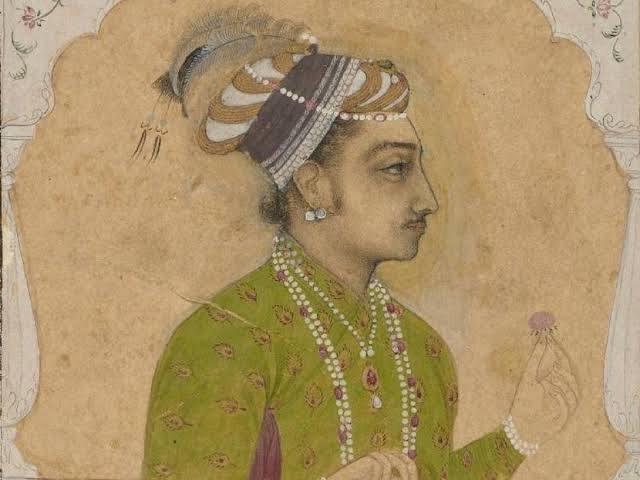
Rise of Sher Shāh

Sher Shāh,
Tarikh-i-Khandan-i-Timuriya (dated between ca.1570–1590)
Khuda Bakhsh Oriental Public Library in Patna, India

Farid was born in 1485-90 at Narnaul at a time when his father Hasan Khan was serving as a petty officer under Umar Khan Sarwani, Hasan Khan made a beginning as a petty officer of 40 horsemen under a Sur officer in 1452-85, after which he had shifted to Narnaul. From Narnaul he had been shifted to the east under Ahmad Khan Lodi, the commandant of Jaunpur who appointed Hasan Khan as a sub-assignment holder of Sahsaram in 1499.

Thus as a child, Farid was educated at Sasaram and then at Jaunpur. In 1510 when he returned to Sahsaram after completing his education he was given the charge of his father’s jagir which he administered for a few years.

His administrative measures, including revenue administration, at pargana Sahsaram are recorded in detail by Abbas Khan Sarwani. As a result of his measures, we are informed he considerably improved the financial position of his pargana. This also enabled him to study in detail the nature of the land-revenue structure in the Sultanate administration. It also gave him an opportunity to establish close contacts with the local zamindars of eastern Bihar. These contacts proved helpful to him in his subsequent career. He used the same area as his base.

It was, again during this period that Farid, began the process of replacing the local chiefs of Sahsaram belonging to the Cheru tribe by a Rajput clan, who called themselves as ‘Ujjainiyas’. But there came a break in his career around 1523 when he developed differences with his father and was obliged to leave Sahsaram.

Subsequently he remained for some time he remained with the Mughal commandant of Jaunpur, Junaid Barlas. It was in Junaid’s company that Farid visited Babur’s court. Abbas Khan Sarwani says observing him Babur remarked “Keep an eye on this person, he seems dangerous”.

On his return, he came to Sahsaram once again and was living as a bandit. He raised a small band and made plundering raids in different directions and raised resources and sustained himself between 1523-28. His father died during this period and Farid got the opportunity to establish himself as his father’s succession at Sahsaram.

Sometime around 1528 he took up service under the Nauhani chief of Bihar, Jalal Khan who had declared himself as an independent king after the overthrow of Lodis. In this period, Farid was able to secure his position in Sahsaram against any immediate pressure of the Nauhani’s. He also utilized this opportunity to consolidate his hold on the region by overcoming or subduing other petty Sur officials who were controlling a number of adjoining parganas. Amongst them the most noteworthy was Muhammad Khan Sur.

By 1532 Farid, who had in the meanwhile earned the title of Sher Khan from Jalal Khan Nauhani, who also picked up quarrel with the dominant section of the Nauhani nobility. He used his newly gained resources and military power to establish an upper hand inside the Nauhani principality. So much so that in 1532, the senior Nauhani chiefs thought that their position in Bihar had become untenable and escaped to Bengal with Jalal Khan. Therefore by the end of 1532, Sher Khan was controlling the whole territory of Bihar south of Ganges up to Talaiya Garhi.

But then the Nauhanis sheltering in Bengal succeeded in persuading the ruler of Bengal to give them military assistance for re-establishing their authority in Bihar.

Thus a number of conflicts between Sher Khan and the Bengalis took place. However, the exact date of these battles is difficult to establish. But a decisive battle took place at Surajgarh, near Talaiyagarhi sometime during 1533, in which the Bengalis were defeated and thus the Nauhanis were totally eliminated from Bihar. Sher Khan became the master of the whole territory from Sahsaram to Talaiyagarhi.

But still in Northern Bihar, at Hajipur ans Saran, there were a large number of Afghan chiefs who belonged to influential and reputed families who had risen to prominence during the Lodi period. There were also a large section of Afghan populace who regarded them as their natural leaders. These groups had added prestige due to the presence of Sultan Mahmud Lodi in their midst. Therefore even after Sher Khan succeeded in establishing his say over Bihar, he was still far from the position of the undisputed leader of the Afghans.

This problem was resolved, though accidentally, by the outcome of the Battle of Dadra.

Then came another significant phase during 1533-36. On account of Bahadur Shah’s mounting pressure on the Mughals on their western and southern flanks, Humayun was prevented from taking any action or measure against Sher Khan. Sher Khan got this respite from 1533 to the end of 1536 to augment his forces. During this period, Sher Khan invaded Bengal and forced its ruler to conclude a treaty with him which stipulated that the ruler of Bengal would not put any claim on any territory in Bihar to the east of Talaiyagarhi. Secondly, that he would be paying an annual tribute to Sher Khan.

During the same period he also succeeded in making an appeal to th national sentiments of the Afghan chiefs in the east and succeeded in rallying them around him.

And thus in 1540 after the battle of Kannauj, Sher Khan was able to capture power. He reigned up till his accidental death at Kalinjar in May 1545.

Syed Ali Nadeem Rezavi  

Sultania Historical Society

Sultan Jahan Begum, First Chancellor of AMU

The Sultania Historical Study has been functioning as a part of the Department of History since the very early years of its existence. Named originally as Historical Society, it was renamed after Nawab Sultan Jahan Begum subsequent to MAO Collage being upgraded as a University in 1920. Begum Sultan Jahan, after whom the Sultania Historical Society was renamed, was the Begum of Bhopal who contributed immensely towards the establishment of the MAO College and was ultimately the founding Chancellor of the Aligarh Muslim University between 17 December 1920 to 12 May 1930.

            The revival of the earlier Historical Society as Sultania Historical Society was done by the efforts of Prof. A.B.A. Haleem, the then Chairman of Department of History and Politics, Prof. Mohammad Habib and Mr. S. Naushey Ali. At a time when the society was revived in 1923, it emerged as one of the most active societies in the University. Some inkling of its aims and objectives, as well as functioning can be got from a notice to this society recorded in the pages of the Aligarh Magazine dated 1934-35.

            From the date of its re-emergence in 1923 the society had well laid out dual objectives, viz., (a) to encourage and popularise the study of History; and (b) to foster research work in History. In order to fulfil these aims, it functioned at three levels. One, it organised excursions of students to various historical sites under the guidance of the faculty members. Thus for example Professors Mohammad Habib and S. Moinul Haq accompanied a tour to Afghanistan which also visited Ghazni in 1932. The same year, another set of teachers accompanied another group of students to historical places in Southern India. We are informed that in order to acquaint the students with historical sites, tours were organized  to places like Taxila, Peshawar, Bijapur, Chittor, Ajmer, Sanchi as well as Delhi and Agra. This helped the students to obtain “firsthand knowledge of the actual working of the administrative machinery of, and the general conditions prevailing in the country”.

            At the second level, the society organized and arranged lectures and seminars of eminent historians. Thus Fr. Heras, Rushbrooke Williams, Stella Kramrisch, Srinivas Iyengar and Sulaiman Nadvi, amongst others, delivered stimulating and thought provoking lectures, igniting lively discussions and debates.

            The third level at which the Sultania Historical Society functioned was the work of bringing out publications. The Publications Programme of the Department in fact was an important work of the society. Important early publications of the Department of History, like Khazainul Futuh of Hazrat Amir Khusrau, edited by S. Moinul Haq, and Sultan Mohmud of Ghazna of Mohammad Habib, are some of the important publications of this Sultania Historical Society.

            How and in which circumstances the Sultania Historical Society transformed into a defunct society responsible for organizing only a ‘Farewell Party’ of the M.A. Students is not properly recorded or known. However at least since the 1970’s the Society has only functioned as such. A gold medal, the ‘Sultanjahan Gold Medal’ is also given to the student securing the highest marks at the post-graduate level. The tradition of “appointing” a Secretary of the Sultania Historical Society has however survived the ravages of time. A student securing the highest aggregate marks is usually declared ‘Secretary’ a few days before the ‘Function’ and his/her only duty is to occupy a chair besides the Chairman and the Guest of Honour at the time of the Group Photo-session.

            In the past few decades, two “awards” have been added to the Farewell Party which is given the name of the Sultania Historical Society Function: the Razmi Memorial Award (given to a person securing highest marks in the first year with Medieval India) and the Sohail Ahmad Award (to the recipient of highest marks in first year in Ancient India).

            Razmi Rizwan Husain was a promising scholar who passed his M.A. (Medieval India) in 1980. He met with a tragic road accident in Delhi in December 1981. At the time of his passing away, he had completed his M.Phil. from JNU under the supervision of Professor Bipan Chandra, and had been appointed as a faculty at Jamia Millia Islamia. The Board of Studies, Department of History, AMU unanimously passed a resolution instituting the Razmi Memorial Award which is a token of appreciation for the aspiring and budding scholars of Medieval India. [Incidentally in Razmi’s memory there is a fellowship each in JMI and JNU. An Annual Memorial lecture is also organised at 11C, New Delhi since the last six years].

            Sohail Ahmad, like Razmi Rizwan, was also a student of our Department. He did his M.A. in Ancient India History. He expired in 1992 and his classmates instituted an Award in his name which is given at the Annual Sultania Historical Society function. Both the awards are in the form of a book.

Between 2017-19 during the Chairmanship of Professor Syed Ali Nadeem Rezavi, the Society held weekly seminars and symposiums in which not only the faculty from outside, but research scholars and students were invited to make presentations. Selections from these were included in an online journal Bulletin of the Sultania Historical Society [BOSHS] which was not only uploaded on the department website, but was also made available on the internet archive from where it can still be downloaded.

Unfortunately with the onset of the Pandemic all this ended abruptly. The annual function is still held, but all the academic activities have mostly ceased.

Monotheistic Movement and Bhakti Sects in Medieval Period in Indian History

Monotheism is the belief in the existence of one god, as distinguished from polytheism, the belief in more than one god. The earliest known instance of monotheism dates to the reign of Akhenaton of Egypt in the 14th century BCE. Monotheism is characteristic of the Abrahamic religions, (Judaism, Christianity, and Islam), but is also present in Neoplatonism, in the Advaita, Dvaita and Vishishtadvaita philosophies of Hinduism and in Sikhism and it is difficult to delineate from notions such as pantheism and monism.

Bhakti, (devotion or portion) in practice signifies an active involvement by the devotee in divine worship. The term is often translated as “devotion”, though increasingly “participation” is being used as a more accurate rendering, since it conveys a fully engaged relationship with God. One who practices bhakti is called a bhakta, while bhakti as a spiritual path is referred to as bhakti marga, or the bhakti way. Bhakti is an important component of many branches of Hinduism, defined differently by various sects and schools.

Bhakti emphasises devotion and practice above ritual. Bhakti is typically represented in terms of human relationships, most often as beloved-lover, friend-friend, parent-child, and master-servant. It may refer to devotion to a spiritual teacher (Guru) as guru-bhakti, to a personal form of God, or to divinity without form (nirguna). Different traditions of bhakti in Hinduism are sometimes distinguished, including: Shaivas, who worship Shiva and the gods and goddesses associated with him; Vaishnavas, who worship forms of Vishnu, his avatars, and others associated with; Shaktas, who worship a variety of goddesses. Belonging to a particular tradition is not exclusive—devotion to one deity does not preclude worship of another.

The Bhagavad Gita is the first text to explicitly use the word “bhakti” to designate a religious path, which the Bhagavata Purana develops more elaborately. The so-called Bhakti Movement saw a rapid growth of bhakti beginning in Southern India with the Vaisnava Alvars (6th-9th century CE) and Saiva Nayanars (5th-10th century CE), who spread bhakti poetry and devotion throughout India by the 12th-18th century CE. Bhakti influence in India spread to other religions, coloring many aspects of Hindu culture to this day, from religious to secular, and becoming an integral part of Indian society.

The Bhakti movement, started sometimes from 8th Century by Shankara and Ramananda in the South, emphasized the unity of all the different Hindu gods, the surrender of the self to God, equality and brotherhood of all people, and devotion to God as the number one priority of life. One of the most important impacts of the Bhakti movement on Indian society was the rejection of the caste system.

During the 14-17th centuries, a great bhakti movement swept through Central and Northern India, initiated by a loosely associated group of teachers or sants. Chaitanya Mahaprabhu, Vallabha, Surdas, Meera Bai, Kabir, Tulsidas, Ravidas, Namdeo, Dnyaneshwar, Tukaram and other mystics spearheaded the Bhakti movement in the North. They taught that people could cast aside the heavy burdens of ritual and caste, and the subtle complexities of philosophy, and simply express their overwhelming love for God. This period was also characterized by a spate of devotional literature in vernacular prose and poetry in the ethnic languages of the various Indian states or provinces.

While many of the bhakti mystics focused their attention on Krishna or Rama, it did not necessarily mean that the sect of Shiva was marginalized. In the thirteenth century Basava founded the Vira-Shaiva school or Virashaivism. He rejected the caste system, denied the supremacy of the Brahmins, condemned ritual sacrifice and insisted on bhakti and the worship of the one God, Shiva. His followers were called Vira-Shaivas, meaning “stalwart Shiva-worshipers”.

The Saiva-Siddhanta school is a form of Shaivism found in the south and is of hoary antiquity. It incorporates the teachings of the Shaiva nayanars and espouses the belief that Shiva is Brahman and his infinite love is revealed in the divine acts of the creation, preservation and destruction of the universe, and in the liberation of the soul.

Seminal Bhakti works in Bengali include the many songs of Ramprasad Sen. His pieces are known as Shyama Sangeet. Coming from the 17th century, they cover an astonishing range of emotional responses to Ma Kali, detailing philosophical statements based on Vedanta teachings and more visceral pronouncements of his love of Devi. Using inventive allegory, Ramprasad had ‘dialogues’ with the Mother Goddess through his poetry, at times chiding her, adoring her, celebrating her as the Divine Mother, reckless consort of Shiva and capricious Shakti, the universal female creative energy, of the cosmos.

Amongst the most prominent monotheistic movements and saintly figures one may name the following:

  1. The Kabir Panthis – which included the teachings of Sant Kabir and Sant Ravidas
  2. The Nanak Panthis – or the philosophy of monotheistic faith as propounded by Guru Nanak and his followers;
  3. Dadu Panthis – that is Dadu and his disciples; and
  4. Other Vaishnava movements which talked of monotheism, eg. The Chaitanya Movement.

Let us start with the Vaishnava movements.

Surdas (1478/1479 – 1581/1584 in Braj, near Mathura), was an Indian saint and composer.

What little knowledge we have of Surdas’s life comes from Ain-e-Akbari and Munshiat-e-Abul-Fazl, both written during the time of Akbar

Tulsidas (also Tulasidas, Gosvāmī Tulsīdās, Tulasī Dāsa) (1532 – 1623) was a great Awadhi bhakta (devotee), philosopher, composer, and the author of Ramcharitmanas, an epic poem and scripture devoted to Rama.

Like Ramanuja, Tulsi believes in a supreme personal God, possessing all gracious qualities (sadguna), as well as in the quality-less (nirguna) neuter impersonal Brahman of Sankaracharya; this Lord Himself once took the human form, and became incarnate, for the blessing of mankind, as Rama. The body is therefore to be honored, not despised. The Lord is to be approached by faith (bhakti) disinterested devotion and surrender of self in perfect love, and all actions are to be purified of self-interest in contemplation of Him. Show love to all creatures, and thou wilt be happy; for when thou lovest all things, thou lovest the Lord, for He is all in all. The soul is from the Lord, and is submitted in this life to the bondage of works (karma); Mankind, in their obstinacy, keep binding themselves in the net of actions, and though they know and hear of the bliss of those who have faith in the Lord, they don’t attempt the only means of release. The bliss to which the soul attains, by the extinction of desire, in the supreme home, is not absorption in the Lord, but union with Him in abiding individuality. This is emancipation (mukti) from the burden of birth and rebirth, and the highest happiness. Tulsi, as a Saryupareen Brahmin, venerates the whole Hindu pantheon, and is especially careful to give Shiva or Mahadeva, the special deity of the Brahmins, his due, and to point out that there is no inconsistency between devotion to Rama and attachment to Shiva (Ramayana, Lankakanda, Doha 3). But the practical end of all his writings is to inculcate bhakti addressed to Rama as the great means of salvation and emancipation from the chain of births and deaths, a salvation which is as free and open to men of the lowest caste as to Brahmins.

However it is important to understand that for Tulsidas “doctrine” is not so important. Far more relevant is practise, the practise of repeating Rama-Nama, the name of the Rama. In fact, Tulsidas goes as far as to say that the name of Rama is bigger than Rama Himself (कहउँ नामु बड़ राम तें निज बिचार अनुसार,). Why is the name of Rama bigger than Rama? Because “Rama” is a mantra, a sound, the repetition of which can lead one to higher states of consciousness. Because the name itself contains Lord Rama himself in it. Rama itself means the one which is present in every atom of this universe (Ramta sakal jahan).

Gaudiya Vaishnavism (also known as Chaitanya Vaishnavism and Hare Krishna) is a Vaishnava religious movement founded by Chaitanya Mahaprabhu (1486–1534) in India in the 16th century. “Gaudiya” refers to the Gauḍa region (present day Bengal/Bangladesh) with Vaishnavism meaning “the worship of Vishnu”. Its philosophical basis is primarily that of the Bhagavad Gita and Bhagavata Purana, as well as other Puranic scriptures and Upanishads such as the Isha Upanishad, Gopala Tapani Upanishad, and Kali Santarana Upanishad.

The focus of Gaudiya Vaishnavism is the devotional worship (bhakti) of Radha and Krishna, and their many divine incarnations as the supreme forms of God, Svayam Bhagavan. Most popularly, this worship takes the form of singing Radha and Krishna’s holy names, such as “Hare”, “Krishna” and “Rama”, most commonly in the form of the Hare Krishna mantra, also known as kirtan. The movement is sometimes referred to as the Brahma-Madhva-Gaudiya sampradaya, referring to its traditional origins in the succession of spiritual masters (gurus) believed to originate from Brahma. It classifies itself as a monotheistic tradition, seeing the many forms of Vishnu as expansions or incarnations of the one Supreme God, adipurusha.

Kabir Panthis:

 Kabir, whose dohas or poems have been sung for the last 500 years.  A Vaishnava bhakta to Hindus, a pir to the Muslims, a bhagat to the Sikhs and an avatar of the Supreme Being to the Kabir Panthis, Kabir was a radical social reformer, who attacked the principles of untouchability, caste distinctions, all forms of social discriminations and ritualism.

There were three major traditions of Kabir’s compositions, the bijak, the panchavani and the Granth Sahib. In his common padas he reveals emphasis on the unity of God, the Creator of the universe. In them, God is the painter, the weaver and the thug. The stars in the sky are witness to his Art, the sun and the moon, to his Light in the entire universe. As a weaver (kori) his network spreads all over the universe, the earth and the sky are his workshops, the sun and the moon his shuttles. God (Har) is a great thug who deceives the whole World: whose son? Whose father? Who dies and who is to be blamed? Whose wife? Whose husband? Once deception is recognized for what it is, then it is no deception. God is recognized in and around the universe.

Kabir, like other low-born saints of that time represented a wholesale rejection of Hinduism and Islam. He demanded an acceptance of God but rejection of all formal religions.

The Hindu when dying cries Ram! The Musalman ‘O Khudai!’

Says Kabir, he (alone) is alive, who never accepts this duality!

Kabir then becomes Kasi, Ram becomes Rahim

Moth (coarse grain) becomes fine flour, and Kabir sits down to enjoy it!

That is why during the 16th Century Kabir was recognized not as a Hindu or Muslim, but as a muwahhid. Abdul Haq Muhaddith reports a converstion between his grandfather and father as early as 1522 in which Kabir was nomenclated so. This is how he is defined in Dabistan-i Mazahib as well.

The unity of God becomes for Kabir the means of comprehension of the unity of Man; and so, there comes an absolute rejection, explicit and vocal, not only of the concept and practice of purity and pollution of the caste system, but also of conventional mode of worship and all ritual.

Sant Ravidas (1450-1520) was a chamar, ‘the carrion remover’ dhuvantar dhor, who also lived at Benares. His God was also Omnipresent. But he was with and without attributes (nirguna-saguna) at the same time. He had no fixed abode and was unique (anupa) his essence is in his naam: Ram naam or naam-narayana. In a verse God is compared to beautiful silk, while Ravidas himself is a silkworm that dies when it leaves his cocoon. Human life and world are not eternal (sach): One has to break this coming and going (avagaman) by recognizing the eternity of God. Ravidas also gives lot of importance to ‘Knowledge’ (gyan), and sang for loving devotion (prem bhakti) and believed that the difference of caste had no meaning. An out caste or chandal can become a bhagat.

The Nanak Panthis:

A Khatri by birth, Nanak was a contemporary of Babur. Like Kabir, he was against the caste system and ritualism. No one was high or low on the basis of birth / caste. Nanak himself identified with the lower castes and untouchables and placed the sudras and untouchables at par with Brahmans and khatris. Similarly women were placed at par with men.

For Nanak, Brahma, Vishnu and Mahesh are created by God himself, who himself is the Creator, Preserver and Destroyer. Vedas, Puranas, Smritis and Shastras, none was a ‘revealed’ book. Thus it was a virtual rejection of traditional deities and religious texts. Reading of scriptures was a waste of time. There was no merit in rituals like pilgrimage and hom (ritual fire). The pandit only dealt with externalities and was like a spider who weaves its web living and dying upside down. His sacred thread, dhoti and rosary are useless. So was the yogi: Nanak was against renunciation.

He rejected the idea of re-incarnation: thus a rejection of Rama & Krishna as deities.

His attitude towards ulema and mashaikh was similar. Just as thousands of Brahmas, Vishnus and Shivas are created, so are millions of Muhammads. Quran and other texts were no better than the Vedas / Puranas. However, he showed preference to Sufis: those who want to become true Musalmans, should first adopt the path of the Auliya, treating renunciation as the file that removes rust. But then he reminds the Shaikhs that only God is everlasting.

God, to Nanak, was eternally unchanging Formless One. He had no material sign and was beyond the reach of human intellect. He was boundless, beyond time, beyond seeing, infinite, not reachable, beyond description, eternally constant, unborn, self existent and wholly apart from creation. He is the only One, there is no second, there is no other. He possesses unqualified power and absolute authority. He is ‘within’, and He is ‘without’. The ocean is the drop, and the drop is in the ocean. He stands revealed in his creation.

Loving devotion and dedication to God is true bhakti without which there is no liberation. Bracketed with bhakti is bhay (awe). God’s awe is the remedy for the fear of death. He who lodges God’s fear in his heart becomes fearless.

In contrast to the ‘truth’ of God, his creation is ‘false’ – who keeps attached to the creation suffers from dubidha (misery).

Nanak considered himself as God’s herald (tabal-bāz) to proclaim His Truth. Thus he assumes the formal position of Guru (a guide) and admitted disciples who would then practice corporate worship (sangat) and communal meals (langar). The believers would contribute in cash, kind or service (kar seva).

As there was a rejection of scriptures, worship would be performed through his own compositions (japu ji).

Nanak died at Kartarpur in 1539 and chose his successor from amongst his disciples. Lehna was installed as the Guru and was entitled Guru Angad (1539-52). He popularized gurmukhi, a nes script. He composed his writings in the name of ‘Nanak’.

He was followed by Guru Amardas (1552-74) who founded a new centre on the route from Lahore to Delhi: Goindwal. He underlined the importance of true association (sat-sangat) of his followers who came to the door of the Guru (Guruduara) for singing shabad of the Guru.

When Amardas died, he installed his son-in-law Bhai Jetha as Guru Ramdas (1574-81) who was responsible to dig a tank (sarovar) ‘a divine pool filled with the nectar of immortality (Amritsar). Initially this city was called Ramdaspur.

Ramdas was succeeded by Guru Arjan (1581-1606) who was opposed by his elder brother Prithi Chand. During his period, the Harmandir (Temple of God) was built in the midst of the Amritsar and a Granth was compiled in 1604.

Dadu (1544-1603):

He was a dhuniya (cotton carder) and was born in a Muslim family. His teachings are contained in his Bāni. He, like Kabir, Nanak and others, rejected the Vedas, the Vedantic philosophy, ritualism and formalism, priesthood, idolatory, the use of rosary, pilgrimages and ceremonial ablutions, and the caste and the caste marks. According to him, Shiva, Vishnu and Brahma were only men who had been canonized. He again and again repeated that he was neither a Hindu nor a Muslim. He rejected Quran.

He loved the merciful God as self-existent, immortal, unchangeable, fearless, pure, unimaged, unseen, infinite, incomprehensible, almighty, beautiful and joy-giving. Dadu believed that this life was separation from God. Thus the largest poem in his Bāni is called ‘Separation’ which is ‘the wail of a woman sick of love and maddened by the pain of separation’. Union or meeting with God was his goal.

He uses the epithets Allah, Khuda, Ilahi, Rahim, Karim, Malik, Sahib, Raziq, Ghani and Sultan for God. Allah is present in the heart, the body is the mosque, the five senses are the congregation, the heart is the mulla and the imam. Real worship is to take the name of the Compassionate, with the whole body as the rosary. The real fast is to acknowledge only One God.

Dadu was much close to the Islam of Sufis than to the Islam of the mullas. He rejected the idea of incarnation and was opposed to idol worship. All gods were created beings and the shakta drinks the poison of sensual ‘pleasures’.

According to him the distinction between men was on the basis of piety or devotion to God.

Like Kabir, he is mentioned by the author of Dabistan-i Mazahib: as a naddaf who lived in Naraina in Marwar during the reign of Akbar and who forbade idolatory and eating of flesh.

Dadu in one of the mythical stories in Dadu Janmlila of Jan Gopal (tr. Winand M. Callewaert) came to meet Akbar at Fathpur Sikri.

He was invited by Akbar through Raja Bhagwandas and Lord Rama in meditation gave him orders to go for the meeting. He first met Abul Fazl, Birbal and a Brahmin called Tulsi. During his meeting Akbar offered the saint to ask for some wish. He got the reply: “What can you do with water, if you are not thirsty?” when Akbar asked for a treasure, he got the reply: “First destroy the physical desires which tie you to worldly passions.

The true believer (momin) according to Dadu, is he whose heart is soft like a wax (mom), who knows God and does no violence.

Syed Ali Nadeem Rezavi