
(This article is taken from the 26 July 2008 EPW issue on DD Kosambi (download pdf version)
By Irfan Habib
(Irfan Habib is professor emeritus, Department of History, Aligarh Muslim University, Aligarh.)
Summary: D D Kosambi profoundly redefined the message that Marxism had for historians. What set him apart from others who “applied” Marxism to Indian history was his determination to maintain, indeed increase the standard of rigour in his factual and textual research, for Marxism dealt with a far more extensive area than the one over which research had conventionally been conducted. Guided by the basic thesis about how social evolution occurs, he rejected the view that India had ever passed through a phase of slavery; rather it was the construction of caste society that happened here. The reasons for his acceptance of a stage of feudalism spanning the period from that of the Guptas to the Mughals are most interesting.
*
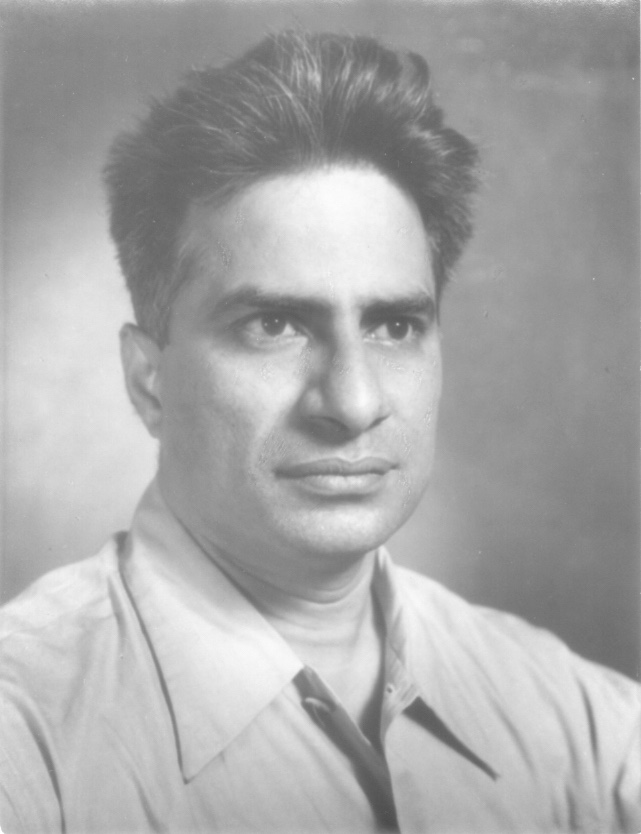
It was a happy day for Indian historiography when D D Kosambi began to take interest in the interpretation of the past of Indian society, doubtless at the expense of his studies in Mathematics, the field where he had already earned so much distinction. This shift of interest was probably not unconnected with Kosambi’s own growing sympathies with Marxism. The collection of Kosambi’s articles on history, which Brajdulal Chattopadhyaya has assembled with so much labour, contains one published as early as 1938-39, in which Kosambi cites Marx and calls attention to his articles on India, to which he had apparently gained access through a publication by the Socialist Book Club, Allahabad.1 He was later to express the grouse that the editors of this volume did not tell the reader of Marx and Engels’ writings on primitive societies.2 After Hitler’s attack on the Soviet Union in June 1941, communist literature began to be widely available in India. Kosambi himself now contributed a paper to the American Marxist journal, Science and Society, as early as 1944, on the issue of caste.3 He was apparently greatly affected by the famous passage in Marx’s Preface to his Critique of Political Economy, where Marx concisely enunciates his thesis that historical changes are brought about by the growth of contradictions in each “mode of production”, and explains how man’s “social being” shapes his action.4
‘Applying’ Marxism to Indian History
What sets Kosambi apart from some others who began to “apply” Marxism to Indian history around the same time, was his determination to maintain, and, indeed, increase, the standard of rigour in his factual and textual research. His own work on the Sanskrit poet and grammarian, Bhatrihari, published during the years 1945-48 was in the best “Orientalist” tradition. In 1949 in his review of S A Dange’s India from Primitive Communism to Slavery, published that year, he took Dange to task for his gross errors of fact and lack of linguistic comprehension, and issued a notable caution: “Marxism is not a substitute for thinking, but a tool of analysis”.5
In the same article Kosambi noted that “most of our source material was first collected, analysed and arranged by foreign scholars”, though he agreed that the British historians’ writings had been coloured by their “national and class prejudices”.6 He would not also allow any pandering to nationalist or communal prejudices. This was especially brought forth in his critical review of the first three volumes of the Bharatiya Vidya Bhavan’s History and Culture of the Indian People, with K M Munshi and R C Majumdar as the principal editors. Observing that Islam’s chief contribution to India was to increase commodity production in the feudal period, he noted dryly that this was the period “when Munshis and Majumdars were created, though not their mentality”.7
For Kosambi, Marxism required more academic rigour, not less, while it dealt with a far more extensive area than the one over which research had conventionally been conducted. The post-modernist insistence on the non-separation of subject and discourse had not been heard of in his time; in fact, that separation was basic to his method. The critical tools shaped by “orientalism”, or, in India’s case, “Indology”, had to be perfected further, not thrown away or bypassed. This was the thrust of his influential paper ‘Combined Methods in Indology’, published in the most “orientalist” of journals, the Indo-Iranian Journal, in 1963.8 Here Kosambi takes up words and concepts and offers important hypotheses on the basis of critical studies of them. He also insisted on fieldwork, that is, looking at customs and practices whether recorded in the past or found, unrecorded, among contemporary primitive communities or, for that matter, among Brahmans, so as to trace earlier situations from later distorted or altered survivals.9
With the knowledge so gained, and constantly expanded, Kosambi embarked on his ambitious project of studying Indian history on the basis of his own understanding of the ideas of historical materialism laid out by Marx and Engels. An early critique of a Soviet writer D A Suleikin in 1951 and, then, a clearly outlined statement of his own views on the stages of evolution of Indian history in 1954 were preliminary indications of where his research and reflection were leading him.10
Two years later, in 1956, came Kosambi’s major historical work, An Introduction to the Study of Indian History, Bombay, which substantiated and extended his views on both how Marxist insights needed to be used to reconstruct Indian history and how history would appear after being thus reconstructed. It was not intended to be a straightforward narrative: it assumed that the reader has read the conventional “bourgeois” textbooks by V A Smith and his successors. After expressly locating his basic approach in Marxist theory, Kosambi eschewed conventional narrative and raised such problems as he thought to be important in successive periods. He, however, often enters lanes and by-lanes, linked to the main path of his argument, whether to substantiate a hypothesis by appealing to a distant piece of evidence or just to record a curiosity. He could also go forward and then come back: In his Chapter VII, Asoka came first, and “the pre-Asokan state and administration” later: this apparently seemed to him to be the more convenient way to present his argument.
From a less sure hand, such a procedure might have looked especially idiosyncratic, but the mere weight of what Kosambi had to say reduced all such objections to petty carping.
Periodisation of Indian History
In the first place, Kosambi profoundly redefined the message that Marxism had for historians. In an attempt to impart to the Marxist perception of class struggle and its different forms the colour of universal application, the “Leningrad discussions” of the 1920s had led to the conclusion that the unilinear succession of modes of production, primitive community-slavery-feudalism-capitalism, was followed in practically all countries, except for those with very recent immigrant populations. This thesis played its part in countering the belief fostered in western social democracy that, in the words of an anti-communist propagandist, Karl A Wittfogel, “class-struggle far from being a chronic disease of all mankind is the luxury of multi-centred and open [that is, Western] societies”.11 But having played its due part in controverting such beliefs, the standard scheme of periodisation began to gravely shackle Marxist historiography. By overuse both “slavery” and “feudalism” seemed to lose all meaning when the most divergent forms of social organisation in different societies went on being assigned to these two categories, just to keep formally to the standard scheme. Kosambi now boldly asserted that Marxist historians ought to take their cue only from the basic thesis about how social evolution occurs, and not blindly apply a single prescribed pattern.
Taking the case of India, Kosambi summarily rejected the view that it had ever passed through a phase of slavery. Rather it was the construction of caste-society that happened here – a cruel form of bondage, but different, nevertheless, from slavery. He argued that the term “Asiatic” occurring in Marx’s passage in the Preface to the Critique of Political Economy should be taken to cover a case like India’s and, for this reason, the term should not be ignored, as had been done in Stalin’s interpretation of the passage.12 This did not mean that he accepted for the “Asiatic”, the sense of a stagnant despotic system, as some of Marx’s own words would suggest.
Indeed, Kosambi directly contested Marx’s observations about the “unchangeableness” of Asiatic societies. Conceding that these remarks were “acute and brilliant”, he yet held that the proposition was “misleading” and “cannot be taken as it stands”.13 It was as if Kosambi was inviting historians to take Marx’s method and apply it to Indian history on a clean slate; and his own book was to serve as an illustration of what could be achieved if this was done.
What Kosambi set out to do in his Introduction was, therefore, to investigate both the economic basis (“the means and relations of production”) and the changing beliefs, customs, and culture (“superstructure”) and their mutual relationships. In carrying out this task he raised questions that conventional historians too found challenging and exciting. For example, should not the technology of production be closely studied, so as to understand the nature of the social organisation that corresponded to it? Quite early in his book he commented:
The villages did not exist “from times immemorial”. The advance of plough-using agrarian village economy over tribal India is a great historical achievement by itself.14
Before Kosambi, little work had been done on the history of technology in India; his senior friend, P K Gode, was practically the lone scholar in the field, with a series of papers on the most diverse devices and processes of manufacture in ancient and medieval times. But the evidence available had not yet been assembled and critically analysed. Kosambi underlined the importance of this aspect of history by his numerous references to tools and products, such as the late use of the shaft-hole axe or the arrival of the coconut no earlier than the first century AD.
On the other side of the spectrum was religion: Kosambi saw in religious beliefs and ritual the reflections of economic and social circumstances which he so loved to trace often in minute detail.16 Religion was also the means by which exploited classes could be kept reconciled to their position, believing it to be divinely ordained, and, by such consent, reducing the amount of violence (with the expenses involved) which would be otherwise needed to keep them under control.17 To Kosambi, this role of religion provides the key to a proper understanding of the rise of the caste system.
Rise of the Caste system
To begin with, he had no quarrel with the suggestion made by many Indologists that the Shudra class arose largely out of the subjugated Dasas, though some of the latter were admitted into the Aryan fold as well. Such a situation, however, would not of itself create a caste system as the parallel Iranian development showed.18 The evidence as to how castes were created could be seen in the evolution of the priestly Brahman caste.
Kosambi shows that Brahman priests did not belong to any tribe and there were non-Aryan priests who also entered their ranks. He concluded that the Brahmans created the model for the other castes: “With him (the Brahman)”, he says, “begins the later reorganisation into caste”.19 The priest served not only as the model but also, of course, the religious spokesman of the caste system. There was another process too behind the formation of castes, namely, “tribal elements” being “fused into a general society”.20 Kosambi appeals to contemporary ethnography to show how endogamous tribes or clans have been absorbed into society as castes.21 In a sense, then, priestly consolidation, on the one hand, and tribal absorption into the agrarian population, on the other, have been the historical sources for the creation of a caste system, serving for India’s major institutional frame for exploitative relationships. One can here go back to what Kosambi had said in his 1954 ISCUS article:
Caste is class at a primitive level of production, a religious method of forming social consciousness in such a manner that the primary producer is deprived of his surplus with the minimum coercion.22
Indian Feudalism
Kosambi has much to say in the Introduction about the growth of the states, the rise of Jainism and Buddhism, the punch-marked coins and the economy of the Mauryan Empire. Important as many points made by Kosambi about these themes are, lack of space forbids a discussion of these here. However, one cannot leave Kosambi’s reconstruction of Indian history without a comment on his acceptance of a stage of feudalism spanning the period from that of the Guptas to the Mughals.
Kosambi recognised that the elements of demesne-farming and serfdom, crucial to the Marxian perception of feudalism as a mode of production, were missing here; but he believed that other features were common between the Indian and European forms, viz, low level of production techniques, growth of rusticity and decline of urban life, political decentralisation and service tenures, and that these justified one to designate the mode of production in India for well over a millennium as “feudal”.23 In the political and fiscal spheres, he discerned two different processes of feudalisation: (1) “From above”, when centralised states created local rights by grants and concessions; and (2) “From below”, when “landowners developed from within the village [to stand] between the state and the peasantry”.24 There seems to be an echo here of Marx’s formulation about capitalists emerging from above (merchants) and below (craftsmen). It may be noted that Kosambi’s remarks about the period of Muslim dynasties (thirteenth to seventeenth centuries) also contain many important insights and suggestions: For instance, we have from him the significant proposition that “Islamic raiders” played “a role similar to that of the Aryans over two millennia earlier, in breaking down hidebound custom, in the adoption and transmission of new technique”.25
One needs to stress that like any work of history, Kosambi’s work too is limited by the evidence available at the time it was composed; and there is the further matter of the range of an author’s own extent of knowledge (vast enough in Kosambi’s case) and his own subjective preferences when attempting an analysis of existing evidence. Kosambi asked questions few or none had asked before, and as a pioneer many of the solutions he proposed needed verification. Some assumptions (such as the one regarding the absence of plough in the Indus Civilisation) were not sustained as more evidence came to light. For Kosambi himself, the Introduction was not the end-product of his research. He continued to contribute research papers and published two important collections of essays,26 and a straightforward restatement of his major findings in The Culture and Civilisation of Ancient India in Historical Outline, published from London in 1965.27 Death took Kosambi away the very next year when he was at the height of his powers – not yet even 60. But he had done enough to ensure that history-writing in India would not be the same again.
A Personal Note
On late December evening in 1963 at Pune, Barun De (later to be professor and director, Centre for the Study of Social Sciences, Kolkata) and I called on Kosambi at his house. I had arranged the interview on telephone but perhaps I was not able to explain clearly who both of us were, since we had no claim on his attention other than a desire to have his darshan. He apparently thought we were some Soviet scholars. As may be imagined he was none too pleased when he found that we were not the guests he expected. A certain coolness on his part was the natural result and Kosambi was not the one to hide it. He spoke acidly of his bad experience with some people at my university (Aligarh) where he had served early in his career.
Seeking to turn the conversation into other channels, Barun mentioned that we were due to attend H D Sankalia’s lecture the next day. This too did not help matters: “Oh, Sankalia! He would show you how the primitive people of Narbada culture had windows in their houses, as if they were cottages in Sussex.” (Sankalia must have had some telepathic means of knowing about our conversation, because the next evening he began his lecture with a respectful reference to Kosambi as a theoretician, while he himself was only a fieldworker. The windows, however, were there on the slides.) When exactly interpreting prehistory and tracing its distorted survivals in living communities. We had an evening to remember all our lives. Kosambi later visited Aligarh especially to see the early iron site of Atranji Khera. He had wonderful stamina, and when I received him at the railway station, he insisted on carrying his own rucksack. Who could then imagine we would so soon lose him for ever?

Notes
1 ‘The Emergence of National Characteristics among Three Indo-European Peoples’, reprinted:
D D Kosambi, Combined Methods in Indology and Other Writings
(ed), Brajdulal Chattopadhyaya
(henceforth Combined Methods), pp 753-61. A very useful list of Kosambi’s publications would be found in V V Gokhale, ‘Damodar Dharmanand Kosambi’, in R S Sharma and D N Jha, Indian Society, Historical Probings: In Memory of D D Kosambi, New Delhi 1974, pp 4-15.
2. An Introduction to the Study of Indian History (hereafter, Introduction), Bombay, 1956, pp 15-16, fn 15.
3. Combined Methods, pp 773-79.
4 Karl Marx, A Contribution to the Critique of Political Economy, trans S W Ryazanskaya (ed), Maurice Dobb, Moscow, 1978, pp 20-22. This passage has been quoted most widely, perhaps of all of Marx’s pronouncements, and the English renderings of the German original have varied.
5 ‘Marxism and Ancient Indian Culture’ in
Combined Methods, pp 784-89.
6 Ibid, p 785.
7 ‘What Constitutes Indian History’ in
Combined Methods, pp 790-96; for words quoted, see p 796.
8 Combined Methods, pp 3-29.
9 See a late paper of his ‘Living Prehistory in India’,Scientific American (February 1967), reprinted in: Combined Methods, pp 30-48.
10 ‘On a Marxist Approach to Indian Chronology’ (1951) in Combined Methods, pp 49-56, and ‘Stages in Indian History’ (1954) in Combined Methods,
pp 57-71. Since the latter article was published in ISCUS, the journal of Indo-Soviet Cultural Society, this was the first piece by Kosambi that I happened to read and remember being struck by its self-confident note.
11 Oriental Despotism – A Comparative Study in Total Power, Yale University Press, 1957, p 329. Kosambi’s own criticism of this work has been reprinted in Combined Methods, pp 797-801.
12 Introduction, pp 8-14.
13 Ibid, pp 10-11.
14 Ibid, p 11.
15 Ibid, pp 61, 255-56.
16 I select at random the following comment: “Among names common to several of our sources that of Iksvaku (an obscure chief in RV, 10.60.4) occurs as founder of the Kosalan line of kings. The derivation is from iksu = sugar cane (first men- tion, AV, 1.34.5; also a kind of gourd), obviously totemic, presumably pre Aryan” (p 118).
17 See, eg, pp 58-62, the context of the Indus Civili- sation. Kosambi was writing just before Gramsci’s concept of “hegemony” entered common use.
18 See pp 91-96.
19 See pp 96-101; quoted words on p 100. 20 See p 25.
21 See pp 25-34. Combined Methods, p 59.
22 See Introduction, pp 326-28.
23 Ibid, p 275.
24 Ibid, pp 340-41. Exasperating Essays: Exercise in the Dialectical Method, Poona, 1957, and Myth and Reality: Studies in the Formation of Indian Culture, Bombay, 1962. Characteristically, Kosambi spoke in his Preface to this book of the tendency to talk “about India’s glo- rious past, unhampered by fact or commonsense”, while he disowned any intention on his own part to indulge in “scholarly display”.