Some Controversial and Discriminatory Measures of Aurangzeb: Music “Ban”, imposition of Jizya and Attitude towards Temples

There are three very controversial and disputed measures initiated by Aurangzeb during his five decade rule: the Imposition of Jizya, a discriminatory tax on Hindus, the demolition of temples and the ban of music which was considered “un-Islamic”.

Let us here analyse these three measures of Aurangzeb.

All these three measures were discriminatory and aimed to humiliate the non-Muslims.

Jizya:

It has been points out that it was 22 years after his ascent to the throne that Aurangzeb decided to impose the jizya on the Hindus, and this may have actually been a response to the outbreak of rebellions of the Marathas, Sikhs, Jats and others. Certain classes of Hindus, including government officials, were exempted from the jizya, while, at the same time, Aurangzeb made arrangements for the zakat to be collected from Muslims. ML Bhatia in his book writes that “It is also stated that long before jizya was imposed, Aurangzeb had ordered the abolition of a number of unauthorized taxes which placed heavy burden on the Hindus” (p. 52). He admits that one of the aims of imposing the jizya, as the court ulema saw it, was to degrade the Hindus, and this naturally caused considerable ill-will and resentment among them. That the financial aspect of the jizya was not seen by the ulema as equally important as its symbolism is reflected in the fact that the total collection from the jizya was only slightly more than the money spent on collect- ing it, with much of the money collected going into the pockets of corrupt officials. And as for the resumption of tax-free land grants to Hindu priests and yogis, this was only a temporary measure in the wake of Hindu-led rebellions and that when these subsided the edict was allowed, for all practical purposes, to lapse.

Jizya was a discriminatory tax, alright. And of course it was humiliative, but then the Rajputs were exempted, the Brahmins were exempted and all those who were in the Mughal service were exempted! In terms of collection, the jizya was graded: the richest man was to pay Rs.12/= per annum, while the less prosperous was supposed to pay Rs.8/= per annum. According to Jadunath Sarkar, it was ` 3 ¼ , 6 2/3 and 3 1/3 per annum for the three classes.

The most pinching aspect of the Jizya was that it was a tax on the poor, who had to pay an average of one month’s salary as tax.

Temple Destruction:

As early as 1669 orders were issued (says JN Sarkar) to demolish all the schools and temples of the ‘infidels’. Thus for example, the Maasir-i Alamgiri notes, the Temple of Malarna in Jaipur was demolished.

When the Rathor Rebellion was on the verge of breaking out and Aurangzeb had decided to award the tika to Inder Singh, the widow of late Jaswant Singh vehemently protested and through a letter written to Aurangzeb, reproduced by the Waqai Ajmer in Bikaner Archives, offered to break every temple in the Jodhpur region if Aurangzeb agreed to award tika to her candidate and not to Indar Singh. Aurangzeb refused. However this letter does reveal that it was widely believed that the emperor would be please by vandalising the temples. Aurangzeb’s refusal however reveals that he resorted to temple destruction only in certain situations.

It was, however in 1679 itself, only after the Rathores had revolted, that the orders for the destruction of temples were given. Probably these orders were partly in retaliation of the Rathore rebellion, for a number of temples were demolished in Jodhpur. Some of the most famous shrines demolished were the Somnath (Gujarat), the Vashvanath (Varanasi) and the Keshava Rai (Mathura). In January 1680 Aurangzeb ordered the demolition of three temples standing on the edge of Udai Sagar. If we believe SR Sharma, at Udaipur 172 temples were broken. In Chitor the number stood at 63.

Contrarily we also have well-documented evidences of Aurangzeb’s patronage of various Hindu religious institutions, namely temples, maths, grants to Brahmins and pujaris:

Land grants were renewed to the temples at Mathura, Banaras, Gaya, Gauhati, and others, while the emperor is known to have donated ghee for the navadeep in a few temples, including the Mahabateshwar temple at Agra;

Gifts were offered to the Sikh gurudwara at Dehradun;

Madad-i ma’ash grants, as listed in the Rajasthan documents, were continued to a math of Nathpanthi yogis in parganaDidwana, sarkar Nagor;

Grants were also made to Ganesh Bharti faqir and his successors in pargana Siwana with the instructions that the faqir should not be disturbed so he could ‘pray for this sultanat’.

The Vrindavan document of 1704 referred to a parwana which sanctioned the rights of Chaitanya gosains who had founded Vrindavan and established pilgrimages in Braj Bhumi, and recognised the right of Brajanand Gosain to receive a fee from the followers of the sect on account of kharj sadir o warid, that is, expenses on guests and travellers from each village. In effect, it was a government levy for the benefit of Brajanand Gosain and his Vaishnavite followers.

We have a farman of Aurangzeb which he issued to Balaji temple of Chitrakut. It begins with the symbolic Allah-o-Akbar (Allah is great) incantation. Below the invocation is the royal seal of Aurangzeb, whose orders saw the destruction of several Hindu shrines. And then comes the farmaan (regal notice), extending royal patronage to the Balaji temple and its erstwhile priest. Mahant Balak Das, Penned on the 19th day of Ramzaan in the 35th year of Aurangzeb’s tenure (June 16, 1691), the farmaan is now a part of Chitrakoot’s folklore.

From the above description, Aurangzeb’s patronage to temples appears without doubt. And yet some temples were attacked, while others were spared. This aberration in the emperor’s attitude can be explained by only one rationale: it was not iconoclasm, but reprisal for rebellion or political misconduct or disloyalty to the emperor.

This exposition can be applied to understand the attack on the Vishwanath temple at Kashi, the Keshav Dev temple at Mathura, and several prominent temples in Rajasthan. In 1669, during a zamindar revolt in Banaras, it was suspected that some of them had assisted Shivaji in his escape from imperial detention. It was also believed that Shivaji’s escape was initially facilitated by Jai Singh, the great-grandson of Raja Man Singh, who had built the Vishwanath temple. It was against this background that Aurangzeb ordered the destruction of that temple in September 1669.

Around the same time, in a Jat rebellion that had erupted in the neighbouring regions of Mathura, a patron of the local congregational mosque was killed, leading to Aurangzeb’s order in 1670 to attack the Keshav Dev temple at Mathura. Temples in Marwar and Mewar were also attacked following the death of Maharaja Jaswant Singh to reprimand and crush the Rathor rebellion and the development of a Sisodia– Rathor alliance. These included temples in Khandela patronised by rebel chieftains; temples in Jodhpur maintained by a former supporter of Dara Shukoh; and the royal temples in Udaipur and Chittor patronised by Rana Raj Singh after the Rana entered into an alliance with the Rathors that signalled the withdrawal of loyalty to the Mughal State. It may be observed that the Rathor rebellion was not a reaction or a protest against the re-imposition of jizya. Instead, this re-imposition, as Abu’l Fazl Ma’muri observed in the context of the suppression of the Satnami revolt and prior to the emperor’s expedition to Ajmer, was meant for ‘the affliction of the rebellious unbelievers’.

Farman of Aurangzeb and Balaji Temple of Chitrakoot

Jizya and temple destruction were both discriminatory policies. But then we have evidence of grants to the temples as well. A number of documents published in the Journal of the Bombay Historical Society as well as the Pakistan Historical Society mention a number of such grants to hindu temples by Aurangzeb. These documents testify to a number of villages being sanctioned for the upkeep of the temples.[eg. The Vrindavan temples and the ‘Nonidhara Temple at Bahraich].

A Contradictory Policy?

So was there a contradiction in the personality of Aurangzeb? It was not. There was a contradiction in the situation which reflected in the policies of Aurangzeb. Nothing can stay static and yet survive. Aurangzeb knew that change was called for. However, he committed the mistake that he forgot that the religious revival was not the solution for the Mughal problems.

Let us take contemporary evidence. Bhimsen is the author of Nuskha-i Dilkusha. His is an eye-witness account of the military expedition in the Deccan. He was the peshkar of Dalpat Rao Bundela, an outstanding officer of Aurangzeb and is extremely critical of Aurangzeb’s Deccan policy. According to him Aurangzeb followed a policy of qila’ giri while the Marathas controlled the lands. Because of this policy, the area from where formerly gold coins were realized, now not even copper was forthcoming. Thus Bhimsen was quite critical of Aurangzeb, but then what is important to mark is that never does he criticize Aurangzeb on religious ground. He mentions the imposition of jizya but without any rancour.

No Hindu writer of Aurangzeb’s period, whether it is Bhimsen, or Isardas Nagar, the author of Futuhat-i Alamgiri or Sujan Rai Bhandari are critical of Aurangzeb on the grounds of the re-imposition of jizya or the destruction of the temples. These contemporary historians are infact silent on the religious policy of Aurangzeb and from their rading it appears that neither the line taken by Hindu communal historians, headed by Sir Jadunath Sarkar, and followed by S.R.Sarma, and Ashirbadilal Srivastava, nor the line taken by Muslim communal historians headed by Shibli and followed by I.H.Qureshi and others satisfactorily explains the religious policy of Aurangzeb and the stresses and strains to which the Indian Society was subjected to during the second half of the 17th Century.

In fact both the set of arguments are not supported by the contemporary accounts of Bhimsen or the others. Prof. M. Athar Ali deals with this problem in his book as well as in one of his papers.

According to his general assessment, in order to assess the results of Aurangzeb’s religious policy, one should imagine, not the India of the 19th Century with a new national as well as religious consciousness, motivating the various sections of the people, but of a period when vital loyalties to one’s caste or master superseded to a considerable degree other claims upon one’s conscience. In so far as Aurangzeb was careful to respect some privileges, e.g., exemption of the Rajputs from jizya or to exempt temples commanding great devotion (e.g., Puri or Thanjavur Temples) or temples built by loyal officials, he on his own part, recognized that there was a limit beyond which it was impolitic to go.

But above all, according to Athar Ali, one should remember that Aurangzeb’s policy could not be implemented as rigorously as it could be prescribed on paper. This was particularly true in relation to the temple destruction. A few prominent temples could not be saved; but local shrines were often a matter of adjustment with local officials, as the official news-reports from Ajmer testify.

On the whole, while one might deplore the long term effects of Aurangzeb’s Religious policy, specially the way it echoes poison and embitter modern minds. Its short term effects were probably not very significant. To a writer like Bhimsen, who though loyal to the Mughal cause, is also capable of being a friendly critic, the real problem with Aurangzeb was the increasing economic pressure on the peasantry, in which connection he lists the jizya, and the way Aurangzeb was concentrating on taking forts while leaving the country to the Marathas. He does not seem to think that Aurangzeb’s religious measures by themselves had any role in his difficulties. So also Manucci, whose long discourse on the ills of the Mughal Empire in the last years of Aurangzeb’s reign, does not even once brings in the question of any popular hostility aroused against Aurangzeb on account of his religious policy.

One may, on the whole, say that given Aurangzeb’s personal inclination, his religious policy was framed to win some sectional support in a period of political difficulty. The support he won on this basis was probably limited; the support he lost was perhaps even more limited. But the ills of the Mughal Empire were far more deep rooted than to be cured by such measures, or for that matter, be made much worse.

Aurangzeb and Music:

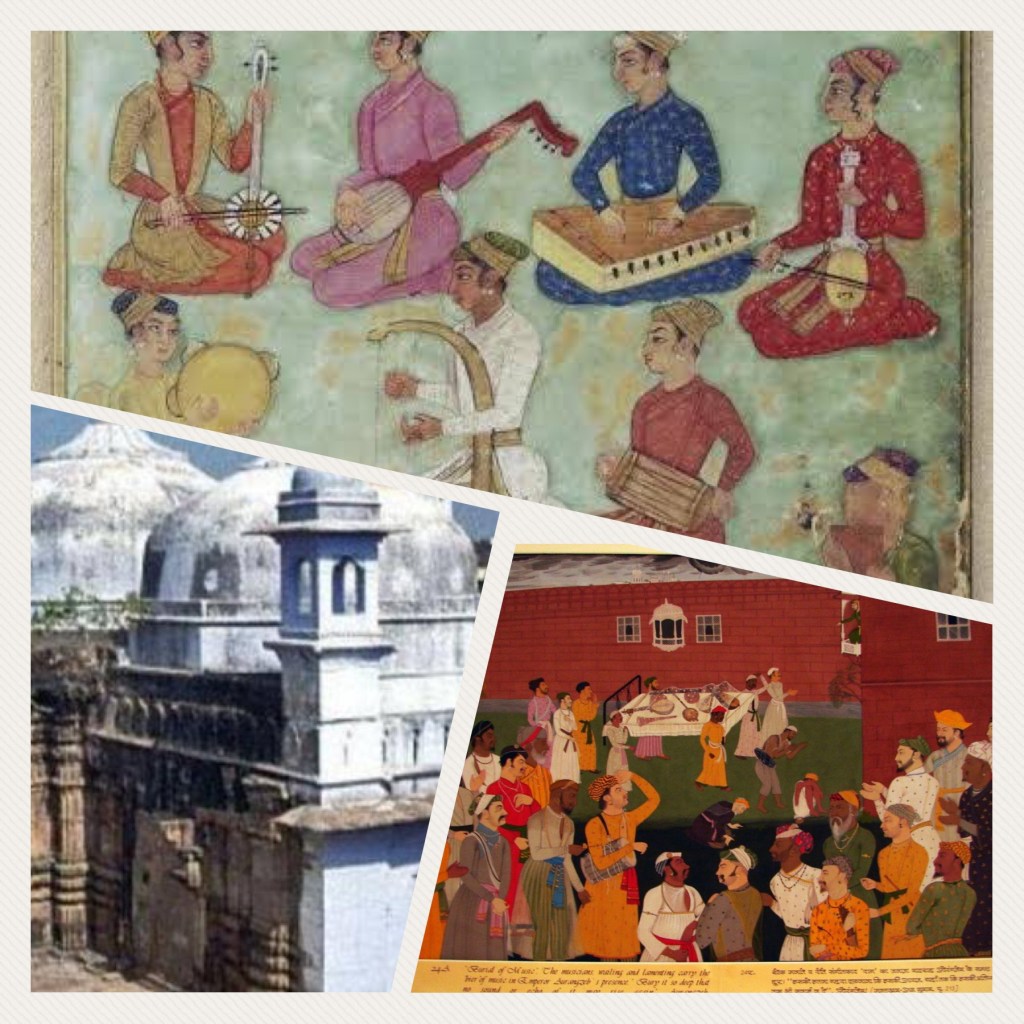
It is generally stressed that one of the worst sufferers during the reign of Aurangzeb was the art of Music. It has been argued that Aurangzeb being a bigot was against music which he banned soon after ascending the throne. There has been an overwhelming reliance on just two near contemporary sources, Manucci’s Storia do Mogor (begun 1699) and Khafi Khan’s Muntakhab al-Lubab (begun 1718). According to Manucci, he not only ‘banned’ music from the court but also arrested those from whose houses he heard its sound. He would also break the instruments. This resulted in a ‘great destruction of musical instruments as well.

However we have a different kind of information as well.

After the death and execution of Dara, we have evidence (cited by Jadunath, vol. III) that Aurangzeb demanded from Shahjahan women singers of Dara. Why? – ‘As there is no skilled songstress with me whose music may soothe my ears!’

Even after 1668 when the ban on music is said to have been imposed, we find that music still remained not only as part of court functions – the ensemble – but also within the haram. Manucci himself tells us that music remained allowed for queens and the princesses. Manucci also provides us with the names of 33 Superintendants in the haram who were ‘overseers of music’. They had Hindu names – Surosh Bai, Chanchal Bai, Dhyan Bai etc – who were however Muslims. Each had under her charge about 10 apprentices. Manucci further informs us that each queen had her own set of musicians.

In a letter reproduced both by Ruqqat-i Alamgiri and Rag Darpan, written to his son Muhammad A‘zam Shah around c.1690 Aurangzeb demonstrates that, at least in private, the exact opposite was the case. In praising his own father’s way of life, he wrote:

After sunset he retired from the ‘Divan-i-Am’, offered evening prayers and (then) entered his special private chamber. There were present sweet tongued historians, eloquent story-tellers, sweet-voiced musicians [qawwalani khush al-han]. . .In short, His Majesty passed, till midnight, the hours of day and night, in this manner, and (thus) did justice to life and sovereignty. As (my) paternal love regarding (my) son is from the heart (i.e. true) and not from the pen (i.e. false), I was obliged to write and inform (my) dear son what was good and valuable.
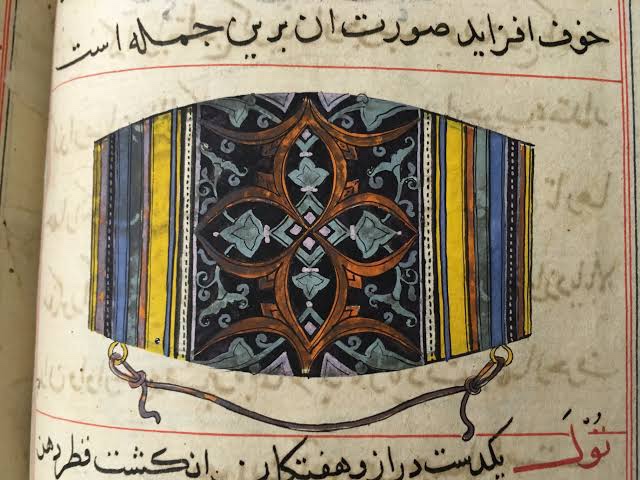
bherī or dhol, from the chapter on instruments. Ghunyat al-Munya (British Library IO Islamic 1863, f. 47v)

It conclusively demonstrates contrary to expectation that he considered the patronage and performance of music, at least in relation to the qawwals, to be essentially ‘good and valuable’. In this letter he strongly recommends Shah Jahan’s practice to his son. It is impossible to argue on this basis that Aurangzeb actively discouraged his subjects from listening to music.

That his patronage was not simply a concession to court ceremonial is demonstrated by Bakhtawar Khan in the Mir’at-i ‘Alam, which describes Aurangzeb as possessing a ‘perfect expert’s knowledge’ of, and enjoying, the musical art. The high-ranking nobleman Faqirullah described Aurangzeb’s favourite singers and instrumentalists by name in 1666 in his musical treatise Rag Darpan, and noted the emperor’s enthusiastic enjoyment of their talents.

We have further evidence to show that music in fact was never buried deep!

More musical treatises in Persian were written during Aurangzeb’s reign than in the previous 500 years of Muslim rule in India, and all of them make significant references to current music making.

The two major Persian language works on music, the Rag Darpan and the Tuhfat ul Hind were written during Aurangzeb’s reign. Both works are very crucial for Hindustani music history. Rag Darpan was written in 1665 by Faqirullah, an expert of music recruited in Mughal service during the reign of Shahjahan. Under Aurangzeb he was not only bestowed a title, Saif Khan, but also elevated as the governor of three subas: Kashmir, Allahabad and Multan. The work is a translation of the famous treatise on music, Man Kautuhal originally written at Gwalior under Raja Man Singh Tomar (1486-1516).

Tuhfat ul Hind, on the other hand was written by a person known either as Mirza Jan / Mirza Khan / Mirza Muhammad. It is in five parts, of which one is totally devoted to music. One of its chapters deals with tala (musical metres). This work was written either for Aurangzeb or for his favourite son Prince Azam, a great patron of literature, poetry and music.

As Prince Azam was only fifteen years old in 1668, and died in the same year as his father, Katherine Butler Brown points out, his entire career as a patron coincided with the years of Aurangzeb’s supposed ‘ban’. A‘zam was famous for his superior musicianship. According to Bindraban Das, (Safina-i Khushgu), he was unequalled in his knowledge of the fundamentals of music and dance, and even the great masters asked his advice. He possessed a perfect command of many genres of Hindavi poetry, and he was above all famed for his excellent musical compositions.

Not only music continued to exist but it also actively evolved during this reign. this is demonstrated by the modern works of Bonnie C Wade and Katherine Butler Brown. Thus from a Sanskrit work – an important text on music – prepared during the same reign (1665) Sangitaparijata of Ahobala, we come to know that the tambur, a drone instrument, came to be indigenized and was available both in its fretted and unfretted version.

The reign of Aurangzeb was a reign of popularisation of music. The Mirzanama of Mirza Kamran, written no earlier than 1672, shows that musical patronage continued as customary amongst the Mughal amirs. The popular masnavi of Muhammad Akram Ghanimat, Nairang-i ‘Ishq, written in 1685, makes extensive (if partly allegorical) commentary on the presence of musicians and dancers at mehfils he attended, one of whom he famously fell in love with. A large number of Aurangzeb’s amirs are remembered as patrons of music during his reign, including many who were his close associates and relatives. The father of Aurangzeb’s principal wife, Shah Nawaz Khan Safavi, is described in the Ma’asir al-Umara’ as having ‘given his heart to rag. . . He gathered together singers and instrumentalists, the like of which were not to be found in any other place at that time’.

Conclusion

The above discussion brings out the fact that all these measures of Aurangzeb are not so simple to interpret. At the time of Rathor Rebellion Prince Akbar had written a letter to his father reminding him of the fact that he (Aurangzeb) could never have gained the thrown but for the support of the Rajputs. The fact that most Hindu nobles had kept supporting Aurangzeb is well established. So why was he imposing Jizya and demolishing temples? He took these measures only in face of rebellions against his rule. For 22 years he did not think of Jizya, as no revolt had occurred. He forbade Rani Hadi to demolish temples in Jodhpur inspite of her offer, simply because there was no need. No rebellion had occurred. And when an area became zor talab, he had no option.

Similarly the curtailment of music was also aimed as an economic measure. The music was never “buried”, it in fact flourish, and even percolated down to the masses. His son too was into music and dance!

Aurangzeb was nothing but a sovereign dictator whose policies were aimed at furthering his empire.

• Syed Ali Nadeem Rezavi


Religion under Aurangzeb: Some Early Measures

There were a number of early measures initiated by Aurangzeb which have been interpreted as ‘religious measures’. Were they taken in order to pamper the Turani Hanafi Sunni Muslim orthodox elements? For example such practices as tuladan (weighing against gold & silver) as well as jharokha darshan were stopped. Khafi Khan informs that Aurangzeb ‘gave up sitting at the jharokha and ordered people not to assemble for the ceremony’. Prohibition was imposed on the consumption of wine. The usual way of saluting (the chahar taslim) was also discouraged. The science of astrology was also banned and the patronage to the astrologers was withdrawn: no almanacs were to be made heretofore.

Then in 1664, Surat was sacked by Shivaji. Around the same time, Aurangzeb ordered that the custom duties on goods imported by the Muslims should be half as compared to the duty levied on the goods imported by the non-Muslims. This enhancement of duty by100% on goods imported by non-Muslims as compared to their Muslim counter-parts was apparently a discriminatory action of Aurangzeb. But some historians have tried to give and extended interpretation to this obviously discriminatory measure: a compensation for the lack of Muslim commerce!            

After this measure, the Muslims started importing goods belonging to the Hindu merchants in their own name and divided the surplus customs duty. This resulted in a loss to exchequer. Ultimately Aurangzeb withdrew the customs duty from the Muslims altogether.

Just after the accession, Aurangzeb ordered that the nobles should not wear the coloured garments: colours which were prohibited in Islam. Then he banned music which was considered un-Islamic. Musicians protested against this, and when Aurangzeb was going to offer prayers riding an elephant, musicians carried a fake funeral, all the time weeping. When asked, Aurangzeb was told that music had died and they were carrying its bier. Aurangzeb retorted bury it so deep that it never comes out again!

Sir Jadunath is of the opinion that it was banned because of religious considerations. But RP Tripathi is of the opinion, that in the same year in which the music was banned, the allowances of the princes and princesses were also curtailed. As we have already discussed that the early years of Aurangzeb were marked with a financial crisis. Thus to Tripathi, ban on music was an economic device curtailing unproductive matters.

 But one of the most important and relevant action taken by Aurangzeb in this connection was the liberal attitude towards the madad-i ma’ash holders (revenue free grantees). Madad-i ma’ash was maintenance grant to ulema and mashaikh so that they may pray for the long life of the emperor and the prosperity of the empire without concern for their maintenance. 90% of the recipients of such grants were Muslims. Sole justification for this was only that they should concentrate undisturbed in their academic pursuits. This grant was only in the form of land; rozina or daily cash allowance was very rare. In 1670’s and 80’s, Aurangzeb was having political problems with the zamindars: as has been argued, the Jat rebellion, the Rathore rebellion, etc were all zamindar uprisings. Ninety percent of the zamindars were Hindus; and by and large (i.e., around 70%) of the Jagirdars were Muslims. That is why Sir Jadunath Sarkar defined it as a ‘Hindu Reaction’. Secondly, the zamindars were concentrated in the villages. What Aurangzeb did was that to counteract the growing influence of the zamindars in the rural areas, he (a) created Muslim zamindars at the village levels to counteract the growing influence of the Hindu zamindars; and (b) He made madad-i ma’ash holders permanent and in some places, hereditary – just at par with the zamindari rights.   

We have the evidence from Tarikh-i Aurangzeb of Abul Fazl Mamuri. Mamuri says that before his departure from Deccan (before 1681), Aurangzeb was faced with a Jagirdari crisis. Mamuri used the phrase: hama ālam bējāgīr mand.

Before his departure for the Deccan, Mamuri says, Aurangzeb exercised care and caution in granting promotions or fresh appointments to the Rajputs. And the jagis so saved, by placing restrictions on promotions and appointments to Rajputs, became loaves and fishes which Aurangzeb gave to the Muslims to consolidate them behind the throne. It appears that Aurangzeb succeeded in his plans.

We have seen that the institution of the monarchy had been weakened by the way Aurangzeb ascended the throne. A new prestige had to be added to the institution of the monarchy if the same process was to be avoided: and that is why Aurangzeb made a deliberate attempt to attach religious sanctity to the institution of the monarchy. That is why Aurangzeb chose to be known as Alamgir and zindapir. He made a determined and deliberate attempt to prove his vigour and to emerge as a vigorous king by sanctioning military expeditions. He failed as natural geographical barriers had been reached during the reign of Shahjahan. And when he failed on the political front and a chain reaction started, he tried to conceal his failures behind the shield of emphasising on Shariat. Ultimately, the die was cast and the day of all precautionary measures dawned when in 1679, his youngest son Prince Akbar revolted and wrote a very nasty letter to his father in which he pointed out that ‘you are responsible for the death of Shah Shuja, Dara and so forth, and now it is you who are teaching morality…’. But the fiasco, with which the rebellion of Akbar ended with his flight to Persia, is the conclusive evidence that Aurangzeb had succeeded in binding the Muslim aristocracy behind the Mughal throne by emphasising the Shariat laws. It was in the same year that Jizya was imposed. Why did Aurangzeb not impose the jizya from 1658 to 1679? What was the sudden need now?

• Syed Ali Nadeem Rezavi

Aurangzeb and the Muslim Orthodoxy

Qazi Abul Wahhab

During his reign, Aurangzeb did increase the role of the ʿulamāʾ and promulgated laws that overtly conformed to the dictates of the sharīʿah. The Mughal historian Khāfi Khān notes, “the Emperor gave such extensive powers to the Qāḍis in the civil administration and general and detailed affairs of the state that it become a cause of jealousy and envy of the leading nobles of the Empire.” Prohibitions of the use of intoxicants, of extravagant pilgrimages to Hindu places of worship, and of music and dancing were decreed. The state systems of taxation were brought in line with the sharīʿah, and patronage of court astrologers ceased.18 As a result, subsequent generations of ʿulamāʾ as well as a number of modern scholars have declared Aurangzeb as a champion of orthodox Islam, arguing the triumph of the reforms of Sirhindī. Others have challenged that view, suggesting that the records indicate that Aurangzeb’s practice was more eclectic, especially later in his reign, and have argued that political considerations outweighed any commitment to religion.

While scholars continue to debate his motivations and how the legacy of Aurangzeb is to be portrayed, what is evident is that the ʿulamāʾ perceived his reign to enhance their influence in the imperial court.of court ulama under Aurangzeb.

From the time of his accession to the time when Shahjahan expired, Aurangzeb’s tenuous position as king was augmented by Qazi Abdul Wahhab. He provided the legal sanction to his disputed accession in 1658. Starting from the Shaikh ul-Islam and the chief imperial qazi in Delhi, this carried all the way down to the local level, including the vast chain of muhtasibs or censors of public morals. These ulema were, in effect, government employees, paid in cash as well as in the form of tax-free lands by the state. They manned the courts, acted as conduits for information to the Emperor and also served as an important source of legitimacy for the regime.

But was this elaborate hierarchy of religious specialists, trained in the shari’ah, truly able to function in the manner that is made out by pro-Aurangzeb propagandists? On the one hand we have the evidence that this apparent ascendancy of the theologians was resented by the general nobility. At a time when Shivaji had attacked the Mughal subahdar, Shaista Khan, who met with a humiliating defeat and was recalled, Aurangzeb tried to give the command to another noble, but the man retorted, “why appoint me or anyone else, ask the lashkar i dua to raise their hands in prayers!”

We also know that the system was riddled with corruption and inefficiency. Many qazis were indeed upright but many others were not, and some used their position to extort money from the public. One Qazi was caught drunk, another found in indulging in unethical acts. The muhtasibs were charged with enforcing Islamic laws and morality, but were often unable to do so, particularly when it came to local Muslim elites, many of who were given to a life of wanton luxury, including usury, drinking and music, which the “orthodox” Sunni ulema condemned. We have evidence that numerous Sufis protested against the harshness of the muhtasibs, particularly on the issue of banning music. Despite the ulemas’ insistence on the strict following of Islamic jurisprudence in matters related to revenue collection, the traditional revenue system remained intact. Likewise, local caste panchayats, even among local Muslim convert groups, continued to be allowed to function and decided disputes on lines that sometimes contravened the shari’ah as the court ulema understood it. Despite stern opposition from the “orthodox” ulema, partly for what these ulema saw as some of their unwarranted beliefs and practices but also because of jealousy owing to their mass support, popular Sufis, including those who preached the doctrine of wahdat al-wujud or the “unity of existence” and sought to stress the oneness of Hindus, Muslims and others, continued to flourish. Furthermore, the “orthodox” ulema, were unable to present a united front, were often at odds with each other and riddled with internal jealousies and rivalries.

Far from causing a radical break with the Mughal precedent, Aurangzeb’s religious policies, in particular his attitude towards the orthodox Sunni ulema, represent, in many senses, a continuation of it. As before, under Aurangzeb, sections of the ulema received generous royal support, and they, in turn, proved to be a major ideological pillar for the regime. Although Aurangzeb was certainly more generous with his patronage of the ulema than several of his predecessors, he did not allow them to dictate state policies. Though they were given prestige, the ulema remained, in the final analysis, subservient to the state and lacked an effective independent voice to enforce their views. While Aurangzeb sometimes sought their advice on matters of the shari’ah, he often dispensed with their views altogether, preferring his own opinions to theirs. As before, the shari’ah, in the sense of fiqh or historical Muslim jurisprudence, remained only one, although in some spheres major, source of law under Aurangzeb, and it was often supplemented, even supplanted, by imperial edicts and customary laws, some of which were directly in contravention of the shari’ah as the “orthodox” Sunni ulema viewed it.

Our sources provide many instances to substantiate this argument. Aurangzeb’s imprisonment of his own father and murder of his brothers, which brought him to power, were, of course, just two of these instances, but there were others as well. When the imperial qazi refused to read the khutba in his name, Aurangzeb had him summarily dis- missed, and, later, when the Shaikh ul-Islam refused to supply him with a fatwa legitimising his plans to invade the Muslim kingdoms of the Deccan, he caused him to meet with the same fate.

Aurangzeb did take certain other steps that were calculated to win the approval of the “orthodox” ulema. One of his major achievements in this regard was to commission the compilation of a code of Hanafi law, named after him as the Fatawa-e Alamgiri, the collective work of several ulema. Bhatia opines that in itself this did not represent a major development in Islamic law as it was simply a digest of secondary sources by earlier ulema for the guidance of the qazis or judges, and, despite it, the qazis continued to hand out judgments according to their own understanding and interpretations of the shari’ah.

Aurangzeb’s religious policies, in particular his attitude towards the orthodox Sunni ulema, represent, in many senses, a continuation of it. As before, under Aurangzeb, sections of the ulema received generous royal support, and they, in turn, proved to be a major ideological pillar for the regime. Although Aurangzeb was certainly more generous with his patronage of the ulema than several of his predecessors, he did not allow them to dictate state policies. Though they were given prestige, the ulema remained, in the final analysis, subservient to the state and lacked an effective independent voice to enforce their views. While Aurangzeb sometimes sought their advice on matters of the shari’ah, he often dispensed with their views altogether, preferring his own opinions to theirs.

Syed Ali Nadeem Rezavi

A Date with Mujaddid Alf-i Sāni, Shaikh Ahmad Sirhindi

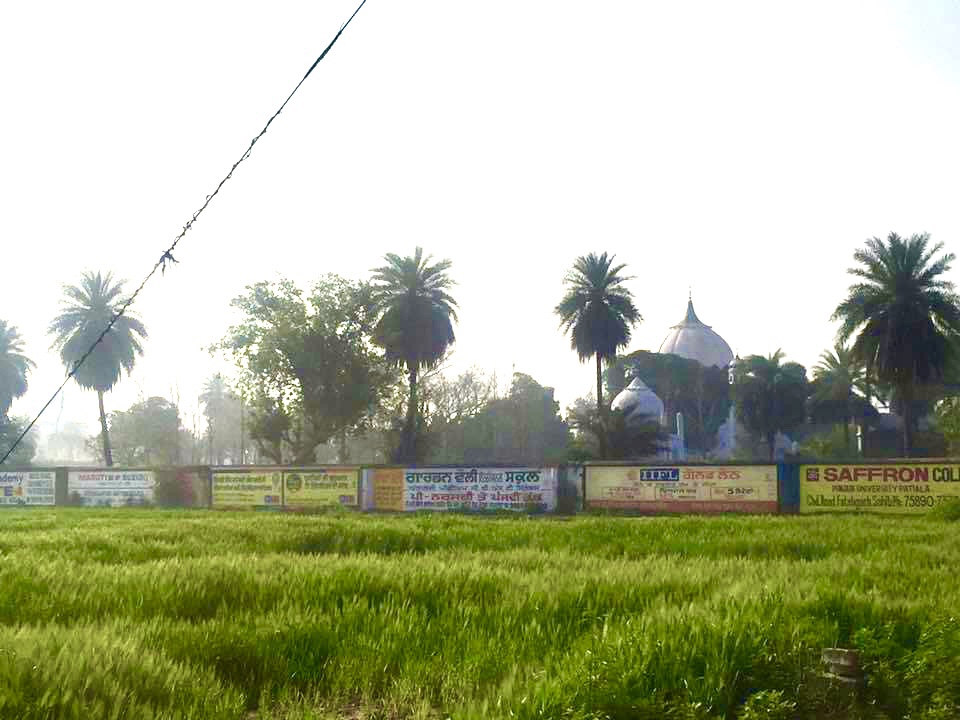
The first view across the green fields
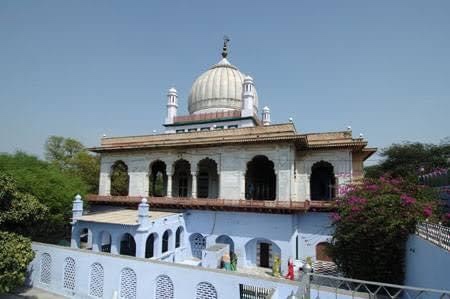
The complex
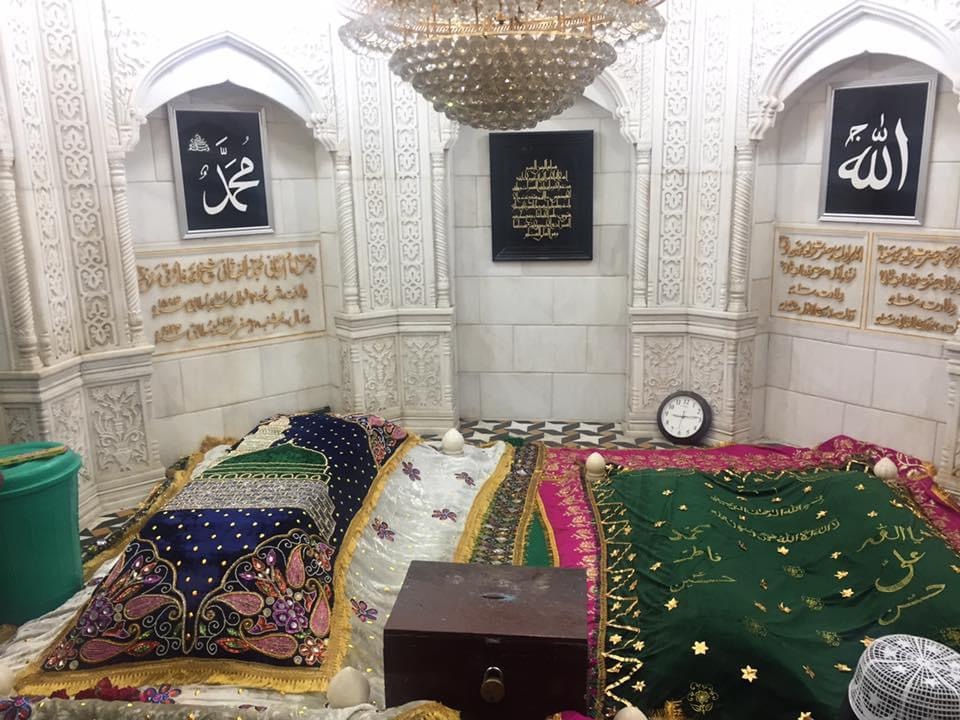
The Tomb of Shaikh Ahmad & his sons

I never ever thought of ever having a date with Shaikh Ahmad Sirhindi Mujaddid-i Alf-i Sāni, the Redeemer of the second Millennium who lies buried at Sirhind in Punjab. But destiny willed otherwise and the Shaikh beckoned me to his tomb at Sirhind!

Shaikh Ahmad of Sirhind was an uncompromising orthodox with whom I can never see eye to eye. Like Jahangir, I also believe that he had “opened a shop of sedition” and strife between communities.

I had heard of the Shaikh from my childhood when we used to go to Agra to visit the tomb of Qazi Nurullah Shustari who had been allegedly done to death due to Shaikh Ahmad’s insinuations. Again I heard of him when I read one of Professor Khaliq Ahmad Nizami’s piece where he alleged that Nur Jahāñ caused the incarceration of the Shaikh as she was a Shia and held him responsible for the execution of the Shia Qazi!

My real exposure to the Shaikh was however when I was doing my MA in history and Professor M Athar Ali taught us about him and his movement. It was a much more moderate view of Sirhindi which I had heard so far! And then I read Yohanne Friedman’s detailed article on him. And then ultimately I went through the pathbreaking article written by Irfan Habib where he analysed the thought and writings of Shaikh Ahmad threadbare.

Belonging to the Naqshbandi Silsila (Order), Shaikh Ahmad was a disciple of Khwaja Baqi Billah, buried in Delhi. He believed that Islam had been severely contaminated with heterodoxy. Shi’ism and Hindus had both so polluted the true faith, that the true piety had disappeared and that as a new millennium was starting, there was the need of a Redeemer. He believed that he himself was that great Redeemer who was destined to save the religion of Islam: he was the Mujaddid of the Second Millennium.

He wrote letter after letter to various nobles (and interestingly none apparently replied or even acknowledged these letters) that to sit with Shias and Hindus was similar to eating food with dogs!

Sirhindi also wrote a treatise under the title “Radd-e-Rawafiz” to justify the slaughter of shias by Abdullah Khan Uzbek in Mashhad. In this he argues:

“Since the Shia permit cursing Abu Bakr, Umar, Uthman and one of the chaste wives (of the Prophet), which in itself constitutes infedality, it is incumbent upon the Muslim ruler, nay upon all people, in compliance with the command of the Omniscient King (Allah), to kill them and to oppress them in order to elevate the true religion. It is permissible to destroy their buildings and to seize their property and belongings.”

In one dream included in his Maktūbāt, he narrated how he while being taken to heavens to meet God, passed the stages of the Four Pious Caliphs and with the exception to the Prophet (thankfully) he reached closest to the God!

He wrote that in this dream when an angel led him towards heaven, he reached a stage where there was a beautiful mansion which he was told was of the fourth Caliph, Imām Ali. He proceeded further and reached a second mansion which was that of Uthman. He was urged to go further and thus he reached the mansion of second Caliph. He then went further where he found the mansion of Abu Bakr the first Pious Caliph. However, his journey didn’t end there, as he was beckoned to go beyond these limits and go closer to God than any of them!

Jahangir was left with no option but to throw him in jail in 1610-11 where he remained for around a year. In the Tuzuk Jahangir says that Shaikh Ahmad had opened a dukan of sedition and strife which had to be quelled. Subsequent to his release the nature of his letters changes. The second volume of his Maktubat are now devoid of rabidly communal claims as contained in volume one. All the rhetoric against the Hindus and Shias is now gone! He is ultimately said to have died by 1624. He however remained popular even after his death.

Later day Mujaddidi sources also allege that he played an active role in the execution of the Shia divine, judge and scholar Qazi Nurullah Shushtari. The contemporary sources of the period however are absolutely silent on this issue.

The Mujaddidi sources, especially those like Rūd i Kausar and Āb i Kausar stress his political role. The compilations of his letters in three volumes, Maktūbāt i Imām Rabbāni, have letters which he allegedly wrote to many high nobles of Akbar and Jahangir where he is found critical of Akbar’s and Jahangir’s religious views. He is also found exhorting the nobles to act against such moves. The Mujaddidi sources also claim that it was due to Shaikh Ahmad that Jahangir got the throne: Jahangir’s accession was a triumph of Islam!

Unfortunately these claims are belied by history! No historical source of the period mention him or his alleged role! Even Jahangir on coming to the throne took measures, and openly declared that he was following the footsteps of his father and that his religious views were the same as that of his father! And this finds support from the newly discovered Jahangiri source, the Majālis i Jahangiri compiled by Abdul Sattar Lahori!

Further, Irfan Habib has perceptively pointed out: yes the letters written to various nobles by Shaikh Ahmad are there in his own collection. But did any of the alleged nobles ever reply back to him? We have no evidence that any grand noble was ever in his influence or ever took any notice of him. It was just self claim and posturing!

While on a visit to Patiala for a conference, I had the chance to visit the “shrine” of this orthodox saint at Sirhind, now called Fatehgarh Sahib.

At Fatehgarh Sahib, I skipped the Jahangiri Bāgh and Palace complex, but decided to visit the tomb of the controversial saint. It was as if he was beckoning me! So after visiting a few early Mughal period tombs and the Gurudwara, we headed straight to where the Shaikh lies buried: in fact the only “Muslim” shrine or structure in the whole region which is “living” and “thriving” with visitors and curious travellers like us!

In spite of his own teachings to not revere the dead, a big shrine has been built over his grave, an annual Urs is also held despite his teachings and chadors (grave covering cloth) are offered.

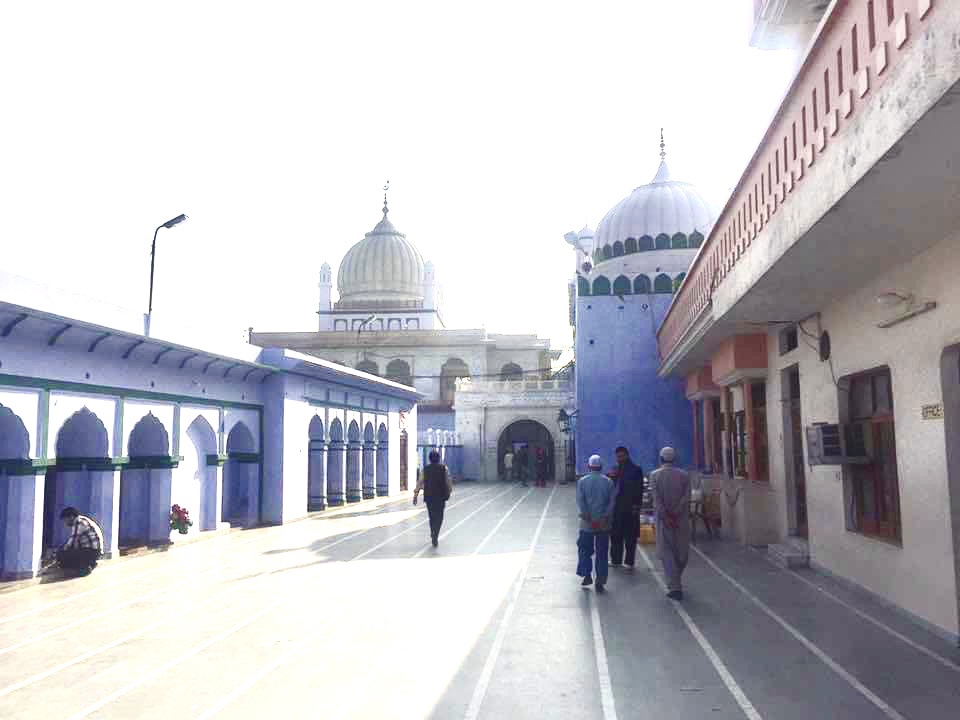
His dargah appears like any other dargah of a Sufi who’s rituals he was critical about: the same type of reverence being showered to the grave, the rituals of chadorposhi and the mujawirs eyeing your pocket for nazrana! However the whole layout of the complex as well as the main shrine, reminds one more of the Gurudwara architecture of the nearby area.

The complex spans over several courtyards, individuals tomb structures as well as simple graves of the devotees of the Shaikh. One of the prominent tomb is that of an Afghan king, Shāh Zaman and his wife.

The portal
The entry gate
The large passage which leads to the shrine
A subsidiary structure in the complex
Grave of Sirhindi
Tomb of Shāh Zaman

I had no wish to meet him at a spiritual level, but as a historian I had a date with him on 19th March 2017: it provided me neither with spiritual solace or satisfaction as a historian: as the place is nothing but a modern structure- a whim of some modern disciple of the Naqshbandi Silsila, the only chain of Sufis who have nothing to do with Imam Ali!

Emergence of Mughal School of Architecture under Akbar

It was the period of Akbar which laid the foundation of the Mughal Architecture as it developed in India. Traditionally speaking, there are a number of architectural features which are associated with the reign of Akbar. According to Percy Brown these salient features were:

The structures were chiefly executed in red sandstone with insertions of white marble introduced for purposes of emphasis.

The construction, in principle, was of the trabeate order, and the use of arcuate and trabeate was in almost equal proportions.

The technique of building construction was not far removed from a wooden archetype, a method of construction that was still practised in the more northern parts of the country, like Punjab and Kashmir.

 The dome was of the “Lodi” type, sometimes built hollow but never technically of the true double order.

 The pillar shafts were usually many-sided and the capitals were almost invariably in the form of bracket supports.

As to the ornamentation, carved or boldly inlaid patterns were common while painted designs were often introduced on the interior walls and ceilings.

As the Mughals considered themselves to be the heirs of the Timurid tradition, they borrowed heavily from the Iranian style which had developed under the Ilkhanids, Timurids, and Muzaffarids. When Babur came, he brought along with him two Iranian architects, Ustad Mir Mirak Ghiyas of Herat and Ustad Shah Muhammad of Khurasan. Recent researches have also shown that the Indo-Muslim architecture, as it developed in Medieval India, heavily borrowed stylistic, idiomatic (characteristic forms, architectonic and decorative), axiomorphic (form appropriate to the purpose of the structure) and aesthetic traditions from Iranian, Trans-Oxonian and regional Indian styles. Mughal architecture borrowed extensively from Delhi Sultanate, Sharqi, Gujarat, Malwa, Bengal,and Rajasthani styles as well as from styles abroad, so much so that it has itself been defined as a synthesis of this foreign and indigenous styles.

It should be borne in mind that much of this borrowing and the synthesis of the Iranian and Central Asian style with the Indo-Muslim style of architecture in India took place especially during the reign of Akbar. It was a period when a large borrowing of ‘Indian’ traditions in the field of art, literature, painting, music and architecture takes place. These were seamlessly diffused in the newly emerging Iranian and Timurid idiomatics, axiomorphics and aesthetics.

During this reign structures were generally constructed on Central Asian and Iranian plans while the surface decorations, more or less, were as per the traditions more closer at hand.

The Iranian / Timurid Influences:

1. The Iranian four- centred (as well as the two centred) pointed arch which came to be identified as the typical Mughal arch during the reign of Akbar.

2. A plan which has been labelled hasht bihisht or nonipartite plan. [Humayun T – chamfered, square etc]

3. the ‘arch-and-panel’ articulation

4. The stellate vaults (the Chahar taq) based on cruciform domed-chambers [a square vaulted chamber spanned by four large intersecting arches, resting on massive wide piers, form a cruciform with an open square in the centre. This square is then turned into a polygon or circle with the help of smaller arches, supplemented by the decorative ribs rising from the main arches. In this chahartaq plan, the Iranian architects improvised a new type of a vaulting system, now generally known as the Khurasanian vault. The Khurasanian (multi-partite) vault was invoked by the Timurid architects by reviving the Ilkhanid and Seljuq stelliform vault on the system of intersecting arches

The Indegenous Influences:

1. As far as the residential structures are concerned, it appears that the Akbari architects preferred the indigenous plan known in India since the Mauryan times, the well known catuhśālā plan. [Jodhbai Palace, Jahangiri Mahal]

2. The surface decoration: carvings, ‘Lodi domes’, the use of trabeate roofs etc

3. Templar Mosques: the triplication of the sanctuary, Secondly we find the placement of the mosque on a high plinth or platform, Thirdly greater sacrality is given to the western liwan through a gradual hierarchy starting from the portals.

4. This process, however, a two way process: if the temple architecture had its influence on the mosque construction, the Akbari temples were not left far behind in this process of shared heritage and feature exchange. The Govind Dev Temple at Vrindavan, Mathura has a typical cruciform plan covered with a well developed Timurud chahartaq Khurasanian vault. This temple along with Madan Mohan Temple and Jagat Kishore temple resemble the elevations and surface decorations of Akbari red sand stone structures at Fathpur Sikri and else where.

5. The most distinguishing feature of the Akbari architecture was the use and combination of the post-and-beam trabeate technique of construction with the arcuate. From the ‘Akbari Mahal’ and ‘Jahangiri Mahal’ at Agra Fort to almost all the structures at Fathpur Sikri to the Vrindavan temples, this blending of the two very diverse techniques is encountered. So much so that even when a building is domed or vaulted, the dome or the vault is deliberately hidden below a flat platform giving the structure a classic trabeate shape. The trabeate style is further accentuated by providing heavy brackets to the drooping eaves. It seems that the Akbari architects were trying to hide the arcuate elements of the structures.

6. Secondly the Akbari architect dispersed these visually hidden vaulted and domed chambers around vast open spaces which were linked to each other through elaborate post-and-beam colonnades. Some of these colonnaded structures were super-imposed to form two or more stories. Two examples of such constructions are the Khilwatkada structure in the daulatkhana-i Anuptalao and the chaharsuffa (Panch Mahal) in the buffer-zone between the Shabistan-i Iqbal and the daulatkhana.

7. The Khilwatkada structure is a double-platformed post-and-beam construction on top of which is constructed the khwabgah with a covered (hidden) circular vault. This structure appears to have been loosely based on the palace of Mahmud Begra at Sarkhej.

8. However the most distinguishing feature which can be discerned from the study of the development of architecture under Akbar is that though the post-and-beam tradition might have been derived from the local indigenous trabeated examples, the Akbari architects, known as muhandis (geometricians), tempered it with their recently acquired geometrical knowledge of weights and measures. The trabeate structures of Akbar are lighter and slimmer as compared to their cousins in Rajasthan-Gujarat-Malwa tradition. Secondly, as Koch puts it, the use of red sand stone, apart from its symbolic connotation of being the colour of the sovereign, ‘glossed over stylistic clashes resulting from the amalgamation’ of heterogenous architectural traditions of the Timurid, Central Asian and the more indigenous styles of the Delhi Sultanate, Bengal, Rajputana, malwa and Gujarat. The symbiotic result was the secular architecture of Akbar which was ultimately to result in the Taj, the most indigenous and famous of the Mughal monuments.

Akbar’s strive at religious and cultural reconciliation, in particular between his Hindu and Muslim subjects, has been used to explain the arts created for him, especially his architecture. Akbar built more and on a larger scale than any Indian ruler before him, we owe to his patronage the great Mughal fortress palaces of Agra (1564-1570s), and Lahore (completed 1580), the suburban residence Fathpur Sikri with its monumental mosque (1571-85), and Humayun’s tomb at Delhi (1562-71), to name just the most outstanding architectural achievements of his reign.  It is however not quite clear to which extend Akbar was personally interested in architecture; Abu’l Fazl has remarkable little to say about it, and the Jesuit observer Monserrate refers to it as an occasion for Akbar to demonstrate his physical prowess, when he mingled with his builders and carried blocks of stones.  The official Akbari view on architecture can be obtained from Qandahari, another historian, who claimed that Akbar designed parts of Fatehpur Sikri, and who represented the architecture of his emperor as a testimony to his rule:

“…a good name for kings is [achieved by means] of lofty buildings …That is to say the standard of the measure of men is assessed by the worth of [their] building (`imarat) and from their high-mindedness is estimated the state of their house.”

And

“Whosoever saw the spacious expanse of that place (makan) and the arrangement of ornament (nuzhat) of that edifice (bunyan) [ the Agra fort]  found the affairs of the kingdom and means of authority in full accord with this order and the high and low, in consonance with allegiance and obedience.”

           These statements of Qandahari justify the interpretation of Akbar’s architecture as a “lithic expression of his policies,” to borrow a phrase from Giles Tillotson who argues against it. However, art historians have too easily drawn an equation between the forms of Akbar’s architecture and his Weltanschauung (philosophy of life). A common practice, which goes back to British notions of the nineteenth century, is to describe arches and vaults as “Muslim”, and brackets and beams as “Hindu”, and their common use in one building as an expression of Akbar’s tolerance. 

         Abu’l Fazl saw the use of Indian forms rather in regional terms; he tells us that the buildings of the Red Fort of Agra “were built in the beautiful styles of Gujarat and Bengal.” Gujarat in particular had, as no other region of India,  absorbed older local  forms in its Muslim architecture, thus  the Gujarati  buildings types and  forms adopted in Akbari architecture could be read as “Hindu”, if one wanted to disregard their historical development. A particular telling example comes from the so called Astrologer’s Seat at Fathpur Sikri. Its prominent caterpillar (ilika-valana) or serpentine brackets are a characteristic element of the architecture of Gujarat and thus they have caused this pavilion frequently to be cited as evidence of the direct imitation of Gujarati Hindu or Jain religious architecture. But the structure has a much nearer forerunner in an Islamic building of Gujarat, in the mukabbar kiosk in the courtyard of the Jami` Masjid in Cambay, constructed in 1325.  This means that Akbar’s builders made with the Astrologer’s Seat a reference to what they considered a trans-culturally successful regional style of India.

Another Indian style which was highly influential for the architecture of Akbar was the ornamental sandstone tradition of the early Delhi sultanate. It had gone out of fashion during the fourteenth and fifteenth centuries in Delhi but continued   uninterrupted in provincial centers like Bayana or Kannauj, creating an architectural heritage from which early Mughal architecture could draw its inspiration.

When we want to regard Akbari architecture as a testimony of his rule, it seems more likely that its intention was to bring “the regional” on to a supra regional imperial level. Selected styles and forms of Hindustan were merged with building principles and forms of Timurid Central Asia, and these components were given new emphasis by magnified proportions, by a new approach to structural logic, reflected in décor and detail, and, at least in the heartland of Mughal building activities at Delhi, Agra and Fathpur Sikri, by the unifying medium of the red sandstone which had a high symbolic value. Red had been since ancient times the color of kings and was also used exclusively for imperial Mughal tents. In India, the old Shastric texts, such as the Vishnudharmottara (probably eight century), recommended red stones for the buildings of the kshatriyas, the warrior and kingly caste, and white for Brahmins, the priestly caste. By adopting red sandstone as their preferred building material and by highlighting it with white marble, the Mughals revived a practice of the early sultans of Delhi and associated themselves architecturally with what they considered their counter parts, the uppermost ranks in the Indian social hierarchy. Since the red sandstone had royal properties linked to both the Muslim and Hindu tradition, it worked, if we are allowed to make this cross disciplinary comparison, even better than the Persian language as an unifying appropriating element.

• Syed Ali Nadeem Rezavi

Revenue Administration of Sher Shāh Sūr

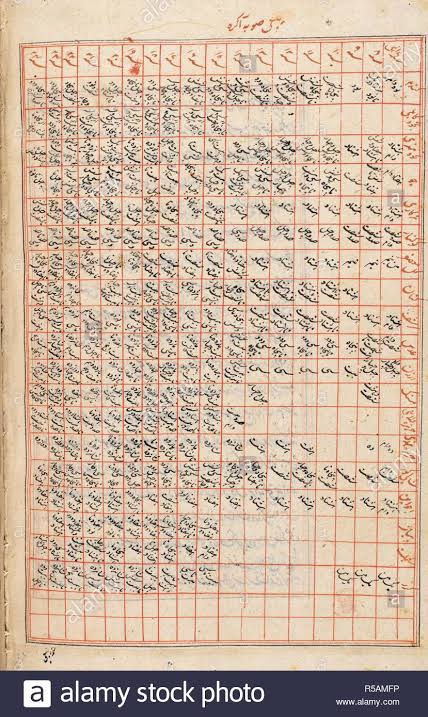
The Zabt System: Statistical Table of Akbar based on Sher Shāh’s rai (tabulation)

The mode of assessment and realization of the revenue as the rate of payment by the cultivators was sought to be built by Sher Shah.

About the revenue administration of this period, our information or evidences, which we can use for ascertaining the nature of Sur Revenue administration, is rather limited. However we have three kinds of informations and evidences which we can use to ascertain its nature:

First we have the evidences furnished by Abul Fazl in the Ain: These consist of a number of statements and some specific information regarding the revenue system inherited by Akbar from the Surs. This is the only evidence for the mode of assessment and realization.

Secondly, there are evidences which we get from Abbas Khan Sarwani’s account of Farid Khan’s administration of his father’s jagir at Sahsaram. Some experiments made at Sahsaram by Farid were perhaps carried further by him after coming to the throne.

This impression is endorsed by the information we have of the working of revenue system of Sher Shah in Ain as well as Abbas Khan’s evidence regarding Sher Shah’s revenue administration after his establishment as the supreme ruler over Hindustan.

The third set of evidences is furnished, again by Abbas Khan Sarwani. But this evidence of Abbas Khan is that which he furnishes in the concluding chapter of his narrative and which pertains to the Sur administration in general. This is rather meagre information. It is only in the light of the other two sets of information that it becomes useful and significant.

Let us start with the first set of evidences and see what picture emerges from them.

All the three sets of evidences, that is Ain-i Akbari, and Abbas Khan Sarwani in both his sections, that is in his account of the early career at Sahsaram, and in the section dealing with the general administration, testify, that under Sher Shah and Islam Shah, the entire imperial territory was brought under a new kind of system which i referred to by Abbas Khan as base on jareeb [i.e., jareebana]; Abul Fazl calls it as zabti system. According to him:

ﺪﺮﺰﻤﺎﻧﻪﺷﻴﺮﺧﺎﻦﻮﺴﻠﻳﻢﺧﺎﻦﻜﻪﻫﻧﺪﻮﺴﺗﺎﻦﺍﺯﻏﻠﻪﺒﺨﺷﻰﻮﻤﻘﻄﻌﻰﺒﻀﺑﻄﺁﻤﺪ ﺒﻬﻤﻳﻦﮔﺰﭙﻳﻤﻭﺪند

[dar zamana-i Sher Khan wa Salim Khan ke Hindustan az ghalla bakhshi wa muqta’i ba zabt amad, ba hamin gaz paimudand]

He mentions this under the rubric “Ain-i gazi-i ilahi”. This is the new system which was other than the “gaz-i sikandari”.

This aside by Abul Fazl is made while discussing the reigns of Sher Khan and Salim Khan when Hindustan was brought from ghalla bakhshi and muqtai to zabt, the measurement was made with the same old gaz known as gaz-i sikandari.

This incidental statement is very vital to understanding the nature of the Sur administration. From the context in which the word zabt is used, it is clear that zabt is a system which is based on measurement.

Abul Fazl in other writings also makes this point clear.

This passage is a good explanation of the term jareeb used by Abbas Khan. Jareeb is the same system which Abul Fazl refers as zabt, the new system of assignment, introduced by Sher Shah, which was based on the measurement of land.

Let us first try to understand what was ghalla bakhshi. Prof. Irfan Habib has established that ghalla bakhshi system had three forms:

First, Khet batai: the division of standing crop in the field. The muhasil would come to the village, and whatever cultivated, he would take the share of the standing crop. It would be taken directly from the field – say 1/3rd of the standing crop.

Second, the Batai: is a division on the threshing ground, just after the threshing. Here one has just to take 1/3rd or whatever share of the government from the ground.

Measurement of the area was not necessary in both these systems.

Lastly is lang batai. This is when the division is made after harvest but before threshing, when the crop is stacked on the ground for threshing.

The muqtai on the other hand meant the group assessment of the whole village. The state agents would negotiate the state’s share from the village with the head man of the village by getting a visual survey – a vague assessment to be made. Officials would not go to each field to assess the produce. Agreement would be made with the village headman. Whatever assessment made, was not based on the measurement of the land.

Jareeb or Zabti System, as against these systems, was the one which was based on the measurement of the land.

Abbas Khan gives the impression that a system based on measurement of land was enforced in the whole of the Empire without giving any option to the cultivators whether they would prefer the old or the new system. This impression is created by Abbas Khan while describing Sher Shah’s revenue administration in the concluding part of his book which comes in conflict with the impression given by him in his discussion of Farid’s administrative policy at Sahsaram. For that period, Abbas Khan states that Farid had given an option to the cultivators to choose between the two – the old and the new systems:

“When he had finished his admonition to the troopers, he turned to the raiyat and said, ‘I this day give you the choice in your hands.’ Some of the raiyat stood for jarib, whereas others accepted ghalladadan. Farid accepted this and took written and signed acceptance (patta-i qubuliyat) from the raiyat. He also fixed the rate for jaribana, mahasilana, as well as the charges for the food of the revenue collectors.”

Now this is one of the most important points of difference given by Abbas Khan himself. He later says that no option was given to the cultivators.

Thus it appears that this system was introduced by Sher Shah first at Sahsaram and later in the whole of Hindustan was a binding system on the entire peasantry and cultivating class.

How did this system work?

Some answer can be found to this on the basis of information furnished by Abul Fazl in his Ain-i Akbari under the ain-i zamin (the ain of the land) and andaza (estimate) of paranji-i farman-i farman dahi (i.e., of sovereignty).

Revenue demand is actually a remuneration of the holding and safeguarding this land to the king of the Empire. Moreland calls this chapter as the ‘Ain of land and assessment of Revenue’.

In this chapter, first, the categories of lands are described – polaj, parauti, chachchar, and banjar.

Abu’l Fazl defines that polaj is land which is cultivated “every year and every season” [   ﻓﺻﻝﺑﻪﻓﺻﻝ ﺳﺎﻝﺑﻪﺳﺎﻝ ]

To regain fertility, land is occasionally left fallow. This is parauti.

Chachchar is that which has not been brought under cultivation from 3-4 years, but cultivated in the 5th year.

Banjar is that land which is not under cultivation for more than five years.

Now this information of Abul Fazl can be connected with Sher Shah’s administration indirectly by a close scrutiny of Sher Shah’s rai [ﺭﻳﻊ ] as described by Abul Fazl.

This ﺭﻳﻊ is provided by Abu’l Fazl in a tabulated form regarding the per bigha rate at which revenue was assessed on different kinds of crops during Sher Shah’s reign.

Abu’l Fazl first writes:

Rabi’i rai polaj” [ ﭘﻭﻟﺞ ﺭﻳﻊ ﺭﺑﻳﻌﻲ ], sometimes known as “asārhi crop”.

Under this, information is provided in a peculiar form and manner. This information is provided under different crops of the season – gandum (wheat), nakhud (gram), adas (sarson) etc.

Each of this is under the following pattern:

Gandum: dar yak bigha āla hizhdah man [ āla (good) – 18 man per bigha ] miyana duazdeh [ middle – 12 man per bigha] zubun [i.e. poor] hasht wa si wa panj ser [ 8 man, 35 ser], jumla si wa hasht man wa si wa panj ser [ total – 38 man, 35 ser] wa sulus-i u duazdeh man wa si wa hasht ser wa yak pa [one third of that being 12 man, 38 ser, 1 pao] mahsul giraft chahar man duazdeh ser wa sih pa…[ the mahsul (state demand) at this on polaj land would be one third of this 12 m, 38 ser, i.e., 4m, 12s & 3p!

This is the calculation of wheat on the best quality of the land, polaj. For other categories of land it would be different.

This is one piece of information. In fact other information are also given. For example what was the per bigha production of crop on good, middling and bad quality of land is also given. This ﺭﻳﻊ gives the average per bigha produce on particular category and the revenue demand fixed at 1/3rd of the average per bigha produce of a per bigha crop on a particular category of land. This information is available for all the crops for different harvests & crops raised on different categories of land.

But then certain questions arise: one question which is raised by Moreland is as to whether it (i.e the ﺭﻳﻊ) applied to the whole of the empire or is it one of the many rais that existed during the Sur period and which related to the different parts of the empire. What was the exact situation is difficult to say.

Productivity would vary from Punjab to Malwa to Agra. During Akbar’s period when cash rates were worked out, different rais were worked out for different sarkars. It was hoped that these rais would furnish rates of realization which would approximate the actual produce.

So if this was the only rai applied to the whole empire, then we would view efficiency of Sur administration from a different angle. This rai would not be approximate, and would not be conforming with the reality of the situation as the production varied from region to region. If it was the only rai then this fact was not kept in mind. We may also assume that the jama’ would not be faithful but inflated as is borne out by figures given for ten years of Akbar’s reign as given in ain-i nuazdeh sala, as calculated on the basis of one rai for the whole empire.

But there is a possibility that like Akbar, the Surs also prepared different rais for different regions. But we can’t give any conclusive answer as we have no evidence apart from the one quoted above.

Then another question is raised by Moreland which relates to the criteria used to determine the produce of the different parts of the same field having good, middling or poor productivity. What were the criteria of deciding which particular bigha was good, middling or poor? The answer which Moreland gives for this is that most probably, the rule of thumb was used, i.e., a vague assessment by an expert.

As was the case under the Mughals, men of practical knowledge would visit a particular field and would select, using their own understanding, three patches within a field and the damples would be taken. In many cases these samples would work out. No scientific criteria existed.

Then of course, another question which arises is regarding the weights and measures: The rate is shown as per bigha produce; and the produce is mentioned in mans and sers. Are these measures the same as they were under the Mughals, or were they different?

So far as the bigha referred to is concerned, it is clear that the bigha referred is the Sikandari bigha. Abu’l Fazl distinguishes gaz-i ilahi and gaz-i sikandari. Now what was the length of this gaz-i sikandari? If Abu’l Fazl’s testimony is followed, it probably stood at 411/2 Sikandaris in length. Sikandari was the tanka of a mixed nature (tanka-i siyah during Akbar’s reign). The length of the gaz-i sikandari thus was equal to 411/2  tankas put in a straight line. Then he also says that this sikandari gaz was also modified by Humayun and then measured 42 sikandari tankas exactly. If we accept these informations, then according to Wright, who made the calculations, it was approximately 30.336 inches in length. Thus one bigha was 60 sq yards. This bigha was 10.5 % less than the bigha introduced by Akbar which was known as ilahi bigha.

So far as the man and ser are concerned, they also were different from those of the Akbari period. The ilahi weights were introduced in the second half of Akbar’s reign. In the first half, the earlier weights and measures were being used. Abul Fazl says that befor Akbar, a ser was equal in weight to 18-22 dams. Here the measure of weight is determined with the help of the copper coin, which was prevalent in the Mughal period and even earlier. Then he also says, Akbar fixed the ilahi ser equal to 28 dams and subsequently raised it to 30 dams. So towards the end of Akbar’s period it was 30 dams. But this ser mentioned is not the same as the ilahi one.

The weights referred here are weights continuing from the Lodi period. Thus here 1 ser was equal to 18-22 dams

So far as the actual working of the system is concerned, the procedure laid down at Sasaram remained by and large un-altered, if there were any modifications introduced in this system, they are explicitly and clearly pointed out by Abbas Khan. Thus if we reconstruct the picture it would be as follows: that at the time of cultivation, the cultivator was asked to furnish qubuliyat to the state and then the patta was given to them by the state regarding the assessed revenue due on them. Then it seems that Sher Shah made it a rule that at the time of collection of revenue, no concession was to be shown to the raiyat. He would be asked to pay the entire amount that was assessed for him and for which he had furnished the qubuliyat. To quote Abbas Khan:

“At the time of sowing, the agreement for revenue with the raiyat will be executed; but at the time of collection no departure will be made from what has been agreed upon; that whatever promise has been made with the raiyat will not be breached and that the soldiers (troopers) & muhasils (tax gatherers) will be ordered to refrain from oppression”.

 This is not contradicted in Sher Shah’s account. So we may gather that this was also followed by Sher Shah when he became the king.

How was this agreement reached between the state and the cultivators?

Some amils would go and measure the land of the individual cultivator and then apply the rate of the ﺭﻳﻊ quoted above. They would then give this in writing to the cultivator. In return the cultivator would give his qubuliyat that is he agreed to pay the revenue now calculated before harvest through the measurement and the schedule of rates available with the state.

This agreement would be reached before the harvest. At the time of harvest, the collector would actually know how much he had to collect. Once the patta and qubuliyat was entered into, there was no leniency to be shown at the time of harvest.

Abbas Khan informs us:

“The state dues for the kharif should be collected in the kharif and those of rabi’ in rabi’, for the arrears of dues in the diwani are the cause of the ruination of the pargana and lead to trouble between the raiyat and the ‘amils.”

Thus for each season, the collection was to be made at the time of harvest. The dues of arrears of one season were not to be carried to the next.

Abbas Khan also informs us about the staff of the revenue administration:

“There were posted in each pargana one shiqdar, one amin, one karkun to write in hindi and another to write in Persian.”

    It appears that during the period of Sher Shah and his successor, the annual measurement of land was a must.

“He issued orders that they should measure the land every year and should collect the revenue in accordance with the measurement, so that the muqaddams and amils might not be able to practice tyranny and oppression even on raiyat-i reza who constituted the pivot of prosperity.”

In the Sasaram part of the account this fact was not very clear. But now Abbas Khan is very explicit on the annual assessment.

All this indicates an elaborate collection of information at village level. It also indicates that the standard rate of of demand during the Sur period was 1/3rd. But then in the wilayat of Multan as well as that of Jodhpur, the rate of revenue demand mentioned is 1/4th of the total produce. This was due to an acceptance of a local custom in Rajputana.

Another significant point to be pondered upon, but missing in our sources is as to how the revenue demand or the rate of revenue demand was realized in cash?

There can be two explanations for this lacunae. In the table of rai, the rate per bigha is given in kind. Thus, most probably in the Sur period, the introduction of the zabti system did not necessarily mean realization of revenue in cash. Or else cash rates would also have been given, as in Akbar’s period. But then, it is also possible that the realization in cash was made and it is just a chance that Abul Fazl did not copy the standard cash and price lists which converted kind into cash rates.

Whether cash or kind, the attempt it seems was to enforce the zabti or jarib system throughout the empire, without giving an option of ghalla bakhshi or dadani as was done earlier in Sasaram.

For example, referring to the establishment of the firm control of Sher Shah’s officers in the Punjab foot hills, Abbas Khan makes the following statement:

“That no man dared to breathe opposition to him, and he collected the revenue by measurement of land from these people.”

Another such statement relates to the sarkar Sambhal:

“He so humbled and overcome by sword the contumacious zamindars of those parts that they did not rebel even when ordered to cut down their jungles and they reformed and repented of their thieving and highway robberies, and they paid in at the city headquarters, their revenue according to jarib.”

Lastly Abbas Khan indicates that Sher Shah was fully conscious of the corrupt practices of the amils and therefore during this period, it was his policy to frequently transfer them from one pargana to the other.

“After an year or two, he (Sher Shah) changed his amils and sent fresh ones for he used to say: ‘I have examined very closely and have come to the finding on the basis of my experience and observation that there is not so much of room for making money in other professions as in case of amils.

This was another feature of the Sur administration leading to the process of centralization of the empire. The revenue administration led to the control of the Sur central authority to the resources of the empire, which was not possible during the earlier Delhi Sultanate. 


Syed Ali Nadeem Rezavi