First Change Thyself then the World

Bayazid, a Sufi mystic, has written in his autobiography, “When I was young I thought and I said to God, and in all my prayers this was the base: ‘Give me energy so that I can change the whole world.’ Everybody looked wrong to me. I was a revolutionary and I wanted to change the face of the earth.

“When I became a little more mature I started praying: ‘This seems to be too much. Life is going out of my hands–almost half of my life is gone and I have not changed a single person, and the whole world is too much.’ So I said to God, ‘My family will be enough. Let me change my family.’

“And when I became old,” says Bayazid, “I realized that even the family is too much, and who am I to change them? Then I realized that if I can change myself that will be enough, more than enough. I prayed to God, ‘Now I have come to the right point. At least allow me to do this: I would like to change myself.’

“God replied, ‘Now there is no time left. This you should have asked in the beginning. Then there was a possibility.’”

• Syed Ali Nadeem Rezavi

Aurangzeb: Myths vs. Facts

There are facts and historical facts. Facts are actualities which occurred; Historical facts are those actualities which had an effect, good or bad.

And then there are myths and half truths, some of which through sheer repetition over a long period of time attain the status of facts, even historical facts. At times they become so deeply ingrained in our psyche that we simply assume them to be true.

The stories circulating these days about Aurangzeb are some such mythologies paraded as historical facts. Here are some of them:

A) Aurangzeb was a temple breaker – a ‘butshikan’.

A half truth: Yes he demolished temples, but only of those regions or groups who opposed or fought him.

When Rani Hadi, the widow of Raja Jaswant Singh Rathor of Marwar wrote to him to given her the successorship (tīka) and that she was ready to break all the temples of the region, Aurangzeb refused.

And this information is from a contemporary source, Waqā’i Ajmer, maintained at the Marwar court!

Further, the temple grants, and grants given to priests under Aurangzeb were larger than the grants given ever before! And this is confirmed by a large number of contemporary documents. For example land grants given by Aurangzeb to the temples and priests at Vrindavan belonging to Sri Chaitanya sect are higher than those given by even Akbar!

Incidentally, Peter Mundy, a contemporary of Shivaji tells us that under Shivaji, the jails were full of ‘Brahmins’, who had been imprisoned for not paying their taxes!

B) Aurangzeb was anti-Hindu.

Totally wrong. He opposed anyone who could oppose him!

The Rajputs had been his major supporters from the time he started his revolt in 1657. His princely communication (nishān) to Rana Raj Singh of Mewar is indicative of his views. In his war against Dara he was supported by majority of Rajputs: Mirza Raja Jai Singh, Jaswant Singh etc etc.

A letter written by his own son, Akbar, reminds him that he had emerged victorious due to the support of the Rajputs! Dara lost as they did not support him!

After becoming the king some of the highest mansabs (ranks) in the empire -7000/7000, which could be given to a noble – were awarded to a number of Rajputs.

Crucially important states, like Gujarat, Bengal, Deccan etc which had been previously been reserved for princes, were given to Rajputs.

(C) Who worsted Shivaji at Purandhar and got him packed to Agra? Aurangzeb?

No. It was Mirza Raja Jai Singh. Shivaji was kept a prisoner in Agra in the house of Raja Ram Singh…

Yes Aurangzeb also imposed jizya, stressed Shari’at, preferred mullas and followed policies of discrimination. Many practices like jharokha were banned. None can deny that. But above facts are to be remembered too! He was not living in the modern age. There were no binaries.

D) Aurangzeb banned music.

Half Truth.

The same Manucci who informs us of the ban, also inform us about the lavish musical ensembles!

Most important musical texts were composed / translated under him. His own son was not only an accomplished musician but a dancer as well!

There is a letter which survives, written by Aurangzeb to one of his sons. In this he asks his son to follow the cultured practices of his grandfather: dance, music and poetry.

Aurangzeb himself was a good veena player!

The Naib-i Imam, the Ayatollah & Ayatollah al-Uzma

Who is an Ayatollah? Any person with some religious education and a turban? Or is it essential for that person to have some requisite qualification?

In recent years there has been a dilution in the meaning and sense of many such terms. A case in point may be the concept of ‘Shaheed’: a term which once stood for someone who sacrificed his/her life in the way of God. In recent years the term came to apply on any one who “sacrificed” his/her life for a cause.

Same ‘vulgarisation’ appears to have been done in recent years in the Shi’i world for other terms as ‘Ayatollah’ which literally means “sign of God”, and ‘Naib-i Imam‘, a term traditionally but sparsely used for select marja‘ who were attributed to have attained the status of ‘deputy’ of the living 12th Imam of the Ithna ‘asharis.

Some time back a Shi’i pesh imam (one who leads prayers) and imam-i juma’ (one who leads Friday prayers) declared that all who don a turban (‘ammāmah) are the Naib-i Imam. He declared this in a way as if the only demarcator and qualification to be the Naib of the Living Imam was this sartorial marker: the ubiquitous turban! This was a declaration which made a mockery of the hesitation of many previous spiritual and scholarly marja‘ who had literally trembled to be placed anywhere near this position! To them it was only the Divinely Inspired and appointed Imam, who could elevate any of his servant to that exalted position!

Similar obfuscation has been committed to the title and position of Ayatollah and Ayatollah al-Uzma!

Those who carry the title Ayatollah are experts in Islamic studies such as jurisprudence, ethics, and philosophy and usually teach in Islamic seminaries (hauza).

The title gained worldwide popularity only after the Islamic Revolution of Iran.

The title is granted to top Shia mujtahid ( those who can do ijtihad), after completing sat’h and kharij studies in the hauza (seminary). By then the mujtahid would be able to issue his own edicts from the sources of Islamic religious laws: the Qur’an, the Sunnah, ijmāʻ, and ‘aql (“intellect”, rather than the Sunnī principle of qiyas). Most of the time this is attested by an issued certificate from his teachers. The ayatollah can then teach in hawzas (shia seminaries) according to his speciality, can act as a reference for their religious questions, and act as a judge. There is an important difference from Shi’a ayatollahs and “saints” in other religions: ayatollahs are not regarded as enlightened by God Himself, but by the Word of God.

Only a few of the most important ayatollah are accorded the rank of Grand Ayatollah (Ayatollah Uzma, “Great Sign of God”). This usually happens when the followers of one of the ayatollahs refer to him in many situations and ask him to publish his Juristic book in which he answers the vast majority of daily Muslim affairs. The book is called Resalah, which is usually a reinvention of the book Al-Urwatu l-Wuthqah, according to their knowledge of the most authentic Islamic sources and their application to current life.

There are 66 living worldwide as of 2013, mainly based in Najaf and Qom. The most prominent of these include Ali Sistani, Mohammad Yaqoobi, Hossein Vahid Khorasani, Makarem Shirazi, Yousef Sane’i, Malakouti, Haeri, and Sadiq Shirazi. There are currently five grand ayatollahs in Najaf, Iraq, center of the Iraqi Shi’i seminaries or Hawzas; the most senior of which is Ali al-Sistani. Other grand ayatollahs based in Najaf include Mohammad Yaqoobi, Basir Najafi, Mohammad Saeed Al-Hakim and Mohammad Ishaq Al-Fayyad.

Unfortunately today in the Shi’i world every second mulla is seen usurping this title. Some who during their whole lifetime had no ‘amaliya‘ (book of rulings or ijtihad, to be followed by others) are even being labelled as Ayatollah al-Uzma!

A Fable of Prostitutes & Wines

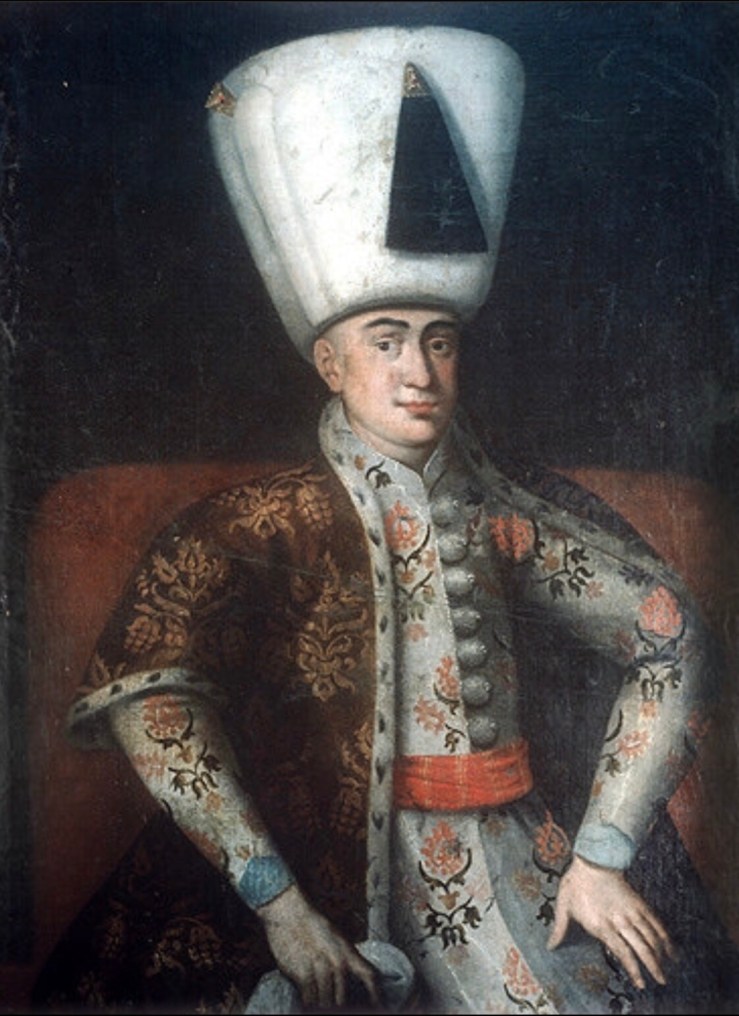
Sultan Murad IV, 1623-1640, portrait in the Topkapi Palace Museum, Istanbul, Turkey

Sultan Murad IV, the Sultan of the Ottoman Empire from 1623-1640, would often anonymously go into the midst of the people and see their state. One evening, he felt an uneasiness in himself and the urge to go out. He called for his head of security and out they went. They came to a busy vicinity, and found a man lying on the ground. The Sultan prodded him but he was dead and the people were going about their own business. Nobody seemed to care about the dead man lying on the ground.

The Sultan called upon the people. They didn’t recognize him and asked him what he wanted. He said, “Why is this man lying dead on the ground and why does no one seem to care?

Where is his family? “They replied, “He is so and so, the drunkard and fornicator!”

The Sultan said, “Is he not from the Ummah of Muhammad SAW? Now help me carry him to his house” The people carried the dead man with the Sultan to his house and once they reached, they all left. The Sultan and his assistant remained.

When the man’s wife saw his dead body, she began weeping. She said to his dead body, “Allah have mercy on you! O friend of Allah! I bear witness that you are from the pious ones.

“The Sultan was bewildered. He said, “How is he from the pious ones when the people say such and such things about him. So much so that no one even cared he was dead?”

She replied, “I was expecting that. My husband would go to the tavern every night and buy as much wine as he could. He would then bring it home and pour it all down the drain. He would then say, “I saved the Muslims a little today.” He would then go to a prostitute, give her some money and tell her to close her door till the morning. He would then return home for a second time and say, “Today I saved a young woman and the youth of the believers from vice.”

The people would see him buy wine and they would see him go to the prostitutes and they would consequently talk about him. One day I said to him, “When you die, there will be no one to bathe you, there will be no one to pray over you and there will be no one to bury you!”He laughed and replied, “Don’t fear, the Sultan of the believers, along with the pious ones shall pray over my body.”

The Sultan began crying. He said, “By Allah! He has said the truth, for I am Sultan Murad. Tomorrow we shall bathe him, pray over him and bury him.” And it so happened that the Sultan, the scholars, the pious people and the masses prayed over him.

We judge people by what we see and what we hear from others. Only if we were to see what was concealed in their hearts, a secret between them and their Lord.

“O you who believe, abstain from many of the suspicions. Some suspicions are sins. And do not be curious (to find out faults of others), and do not backbite one another. Does one of you like that he eats the flesh of his dead brother? You would abhor it. And fear Allah. Surely Allah is Most-Relenting, Very-Merciful.”

(Quran 49:12)