Medieval State during the 17th Century: Various Interpretations

The Great Mughals: Akbar, Jahangir & Shahjahan

Copyright: Syed Ali Nadeem Rezavi

Mughal Empire, 1526 – 1707

The nature of the state in medieval India has been the subject of discussion since the writing of Ziya Barani’s Fatawa-i Jahandari, c. 1357, in the Indo-Persian tradition, and since Francois Bernier’s Travels in the 1660’s. These have led from the nineteenth century to debates about whether the State belonged to the category of Oriental Despotism (since James Mill’s depiction of it as the rent-contracting state) or to that of feudalism, the latter often in a Marxist framework. Within the last decades the thesis of the Segmentary State, originally put forward by Burton Stein has also gained currency, the emphasis being laid here on the limitations to the exercise of sovereign power by the pre-colonial state.

While debates around these issues have proceeded the information about the actual functioning of the states in question has grown remarkably at least for the Mughal Empire, where we have now at our disposal a wealth of primary documents, Village-level inscriptions from Vijayanagara Empire, now published in a series of volumes by the ICHR, similarly provide us with rich data by which different perceptions of the state put forward by scholars can be tested.

Let us first try to understand what the contemporaries looked at the Medieval Indian State. It has been argued that it was the state which took what in European equivalence is known as the ‘rent’. In the first important Persian dictionary compiled in India by Munshi Tek Chand Bahar, māl and kharāj are considered equivalent. He says that this is so as the king owns the mālikiyat of the soil. Similarly Qazi Muhammad Ala also tells us that though the zamindars claimed to be the owner of the soil, they were not, as they did not get rent. The rent goes to the state, the Sultan. But the actual owner was not even the king, but the bait ul mal, and thus the scholars had the first claim. And if rent was being collected, the state was quite centralized.

The debate of medieval Indian state had in fact been started in 1357 by Ziya Barani in his Tarikh-i Firuzshahi and Fatwa-i Jahandari. There had been no concept of state of sovereignty in Islam. So he looked towards the Iranians and the Byzantines, where there were dynastic principles based on law of primogeniture. In Islam the principle was violence. The prophet’s family had been set aside and the Umayyid state formed. He also differentiated between men of high and low birth. A religious person should be the ruler. Finally in India, there being a majority of non-muslims, Shariat would not suffice. Zawabit were needed.

After the establishment of the Mughal Empire by Akbar, Abul Fazl rejected the ideas of Barani in entirety. In Ain, Abul Fazl points out that a religious person should not be a ruler. If a ruler is religious, or falls in the hand of religious, the result is intolerance and wise men are denounced as ‘infidels’, while mischievious are groomed and nurtured. The entire notion that religion could lead to a civilized polity is rejected. Instead, there is the ‘Social Contract’ and thus the sovereign is responsible to all subjects. The element of ‘divine connection’ is provided by the mystic Ishraqi (Illuminationist) philosophy which goes back to the 11th Century. Thus the king is not zillallah but farr-i izadi, light emanating from God. Noor ila noor, the divine light, the light of lights. There should further be sulh-i kul, absolute peace.

Further the influences of tura/ yasa and the Turkish traditions. Bandigi

Modern Theories:

In the past two or three decades also a number of interpretations have been offered as to the nature of the Mughal Empire. There is considerable disagreement among historians concerning the strength and competence of the Mughal state, with some describing it as a huge leviathan, others a paper tiger. These interpretations have been based principally on the mansabdari system which was introduced during the reign of Akbar. For a proper understanding they can be divided into two distinct groups.

The first group of interpretations, propounded by historians like M.Athar Ali and John F.Richards, is based on a detailed study of the administrative system of the Mughals as gleaned from the contemporary sources. (M.Athar Ali, Presidential Address, Medieval India Section, Proceeding of the Indian History Congress, Muzaffarpur Session, 1972, and its slightly revised version, “Towards an Interpretation of the Mughal Empire”, Journal of the Royal Asiatic Society, 1978, no.1, pp.38-49; J.F.Richards, The Mughal Empire, The New Cambridge History of India Series, 1993. See also Richards, Mughal Administration in Golcunda, Oxford, 1975.)

 According to Athar Ali, Akbar’s attempt to make the entire administrative structure of one suba into the exact replica of the other, “with a chain of officers at various levels ultimately controlled by the ministers at the centre, gave identity to Mughal administrative institutions, irrespective of the regions where they functioned.” Further, according to him the mansab system was “a unique and unrivalled device for specialists”. This system, however, according to Richards, fell short of “a centrally recruited and paid, bureaucratic, standing army”.

Thus according to this group of historians (including Athar Ali, Richards, Irfan Habib) the Mughal administrative structure waqs highly centralized. And this centralization is manifested in the efficient working of land revenue system, mansab, jagir, uniform coinage etc.

The second group of interpretations of the Mughal Empire is more esoteric in nature and hark back the theory of Oriental Despotism of the colonial era. This group of interpretation bases itself on the assumption of a distinct inferiority of the ‘Asian’ as compared to the ‘European’. This group is represented amongst others, by scholars like Stephen Blake and Christopher A. Bayly. (Stephen Blake, “The Patrimonial-Bureaucratic Empire of the Mughals”, Journal of Asian Studies, vol.XXXIX, no.1, November, 1979, pp.77-94; idem, Shahjahan the Sovereign City in Mughal India, 1639-1739, Cambridge, 1996, pp.17-25; C.A.Bayly, Rulers, Townsmen and Bazaars: North Indian Society in the Age of British Expansion, 1770-1870, Cambridge, 1983).

In his book Bayly argued that the Mughal rule was more like a grid of imperial towns, roads and markets which pressed heavily on society and modified it, though only at certain points. The system depended on the ability of the Mughal state to appropriate in cash as much as 40 % of the value of the total agricultural product (S. Moosvi). He further argued that the military power was the ultimate sanction, but like the medieval canon, the Mughal main force was a cumbersome and hazardous weapon to point at an adversary. It failed as, “the problem was that in the longer term it did not secure the obligation of its subjects and so lacked the resources to carry on its course of military expansion”. The empire could only survive if it penetrated further beneath the level of the pargana administration, and into tight clan-like brotherhood of peasant farmers in the lands away from the great roads and the country towns – penetration required an ideology which justified appropriation of growing quantity of revenues. He however acceded that the Mughals could appropriate as much as 40 % of the value of total produce. He further argued that the Mughal power rested on local ‘corporate groups’.

Frank Perlin (“State Formation Reconsidered,Part Two”, Modern Asian Studies, xix,3, 1985) identified the locality (vatan) as the basic unit of political power in India. Andre Wink, in 1986 (Land and Sovereignty in India) followed Bayly and treated fitna (sedition, rebellion) as a process by which adjustments were made. Thus as it already existed on the basis of compromise and adjustment, its decline was not really a decline.

Then we have MN Pearson (“Shivaji and the Decline of the Mughal Empire”, Journal of Asian Studies, 35, ii, 1976), according to whom the medieval states were organized as oligarchies on patron-client basis and no social commitment, loyalty or legitimacy. He suggests all this when he tries to argue that the only tie between the king and the 8,000 mansabdars “was the tie of a patronage and loyalty” which depended upon ‘continued military success’ and “neither religion nor racial origin provided any reason for loyalty”. He further suggests that the Mughal rule was was ‘indirect’: the subjects of the state constituted themselves into ‘one or more groups’ and each group had a head of some sort who according to Pearson, ‘was the intermediary with the Mughal administration on rare occasions when the group or member needed to be connected to this administration’. The 8000 mansabdars in an empire of ‘sixty or seventy million people’ was the maximum core of the empire: others were connected through them by their own patron-client ties. He then further goes on to reduce this number to 1000 men. His thesis is in fact such as to destroy the basic frame-work of the empire.

Butun Stein in his Peasant, State and Society of Medieval South India published in 1980 argued that the Medieval Indian state was in fact Segmentary. Argueing for South India, specially the Vijayanagara Empire, he said that there were limitations to soverieng power, and that one can speak of a sovereignty composed of segments. Thus it was a “nominal” state. In one of his paperes (Eighteenth C in India: Another View, first pub. 1989, reprinted in PJ Marshall ed 18th C book in 2003) he not only extended his views to the Mughal Empire, but condemned the Aligarh interpretations.

Then we have scholars like Marshall G.S. Hodgson (The Venture of Islam, Chicago, 1974) and William H. McNeill (The Pursuit of Power, Chicago, 1982), accepting the idea of bureaucratic dominance, assert that the diffusion of firearms, especially siege artillery, explains the increase in central power which brought the Mughal Empire into being. Their thesis had been nomenclated as the ‘gunpowder hypotheses’.

The agenda is set by Stephen Blake when he criticized M.Athar Ali and his predecessors (like P.Saran, A.L.Srivastava, Ibn Hasan) for having misunderstood the Mughal government “as a kind of undeveloped fore-runner of the rational, highly systematized military, administrative, and legal framework of British Imperial India”. Blake disapproves of the fact that Athar Ali puts forward the notion that Mughal Empire was ancestor to the “British Raj”, which instead of being a colonial period, was “late Imperial India”. Blake further comments that the views of the above mentioned scholars (especially of Athar Ali) were “a set of unexamined assumptions” which were “non- compensated by assigned ‘prebends or benefices’ and served “at the pleasure of the ruler and often performed tasks unrelated to their appointments.” This system of assigning ‘benefices or prebends’ (the mansab and the jagir), led to a loosening of the emperor’s control over his officials. To retain his personal grip, the ruler undertook frequent travels to different parts of his empire. These face-to-face encounters renewed the personal bond between the master and the subject. The power of the officials was also sought to be kept under check through frequent transfers, a strong intelligence network and deliberate overlapping of powers and responsibilities between provincial and district offices. Blake goes on to cite Abul Fazl’s  A’in-i Akbari as the major proof for his Weberian thesis.

We know that Abul Fazl divides his description of Akbar’s empire under three heads, viz. the manzil abadi (Imperial Administration), sipah abadi (the Army Administration) and mulk abadi (the Empire) and then sets out to deal with their respective regulations (a’in).  Like Blochmann (Abul Fazl, A’in-i Akbari, trans.H.Blochmann and H.S.Jarrett, annotated by Jadunath Sarkar, New Delhi, 1965, vol.I, p.9), Blake translates manzil as ‘house hold’ and holds this division by Abul Fazl as evidence for the Mughal Empire being a patrimonial-bureaucratic empire. Interestingly, Blake counts the various karkhanas (like the stables of elephant, horse, cow, camel and mules), matbakh (the Kitchen Establishment), khushbu khana (the Perfumery) and the Building establishment (imarat), mentioned in the first section (manzil abadi) of the A’in-i Akbari as ‘purely domestic’. Their mention along with the mint, the arsenal, the treasury, etc., convinces him of the ‘mixing of household and state’. Secondly, he found it significant that the Book Two of  A’in-i Akbari, which deals with the army organization, contains regulations dealing with charitable contributions, feasts, ‘fancy bazar’, marriage and education. In this scheme Blake found an attempt of the emperor to influence order and shape the lives of his subordinates, which according to him was typical for a patrimonial-bureaucratic ruler.

While analyzing the third section of the A’in-i Akbari, which deals with mulk abadi (the Empire), Blake finds the Mughal policy of dividing the realm into khalisa and jagirs “the household lands and the assignable lands” as a means to control a large part of the state revenues personally, which is typical of a patrimonial-bureaucratic ruler. He concludes from his interpretation of the third section of the A’in that the Mughal method of governance had no clear-cut lines of authority, no separate departments at successive levels of administration and no tables of organization. On the contrary, there were groups of men in the Imperial household, who, on the behalf of the emperor, oversaw the provincial and sub-provincial officials. Thus the Mughal Empire, Blake concluded, was not a prototype of the ‘British Indian Empire’ but was simply an example of the patrimonial-bureaucratic empire. One finds a weak echo of this thesis in even J.F.Richards, who briefly and hesitatingly states this concept in the context of the grandees of the empire. (J.F.Richards, The Mughal Empire, op.cit., p.59)

On the other hand, Christopher Bayly goes a step further than Blake and indirectly denies the very concept of the Empire in the context of the Mughals. According to him:

“Outwardly, Mughal rule was a huge system of house-hold government reinforced by an overwhelming but unwieldy military power. One can easily over-estimate its control, especially in the outlying areas. But the empire was more than a mere umbrella raised over virtually autonomous local groups. It was more like a grid of imperial towns, roads and markets which pressed heavily on society and modified it, though only at certain points.  The  system  depended  on  the  ability  of  the  Mughal  state  to appropriate in cash as much as 40 per cent of the value of the total agricultural product.”

The question of the core and the periphery was further stressed by Douglas Streusand (Formation of the Mughal Empire) and Chetan Singh. For Streusand, despite being centralized, the Mughal structure was less centralized at its periphery. Chetan Singh supports this view ( “Centre and Periphery in the Mughal State: The case of Seventeenth Century Punjab”, Modern Asian Studies, XXII, no.2, 1988).  According to him it was not correct to argue that due to the frequent transfers the Mughal bureaucracy was unable to develop regional moorings. On the contrary he held that the officials (governors) who were appointed in the peripheral areas (Punjab) in fact “belonged to areas lying within it”. In other words, the periphery was developing into regional entities at the expense of the centre under the Mughals. Further according to him the jagir transfers were not as frequent as they appear, and the local elements at the periphery were quite successful in influencing the policies at the centre.

Then we have Farhat Hasan (State and Locality in Mughal India, 2006) according to whom the state does not only extort revenues but also redistributes them. Correspondingly, the state not only uses force but also manufactures consent to ensure obedience. He also sees the state from the perspective of localities and asserts that the Mughal state was buttressing the local system of power in the localities and was concomitantly opening up negotiated space for the assimilation of forces resisting them in the political system.

If we sum up the above mentioned theories, what emerges is that the Mughal Empire was a state where (a) there was an official class which was somewhat bureaucratic in nature; (b) this bureaucracy was totally ‘subordinate’ in nature and closer to a patrimonial ideal; (c) the writ of this ‘patrimonial-bureaucratic’ empire ran only in major towns and on highways; and (d) due to these limitations, the core was shrinking in the face of the regional pressures.

As has been noted earlier, all these assertions are based on a study and analysis of the Mughal ruling elite, the mansabdars. The views of Christopher Bayly, Andre Wink, Muzaffar Alam and Chetan Singh, have been exhaustively dealt with by M.Athar Ali and Irfan Habib in the light of the empirical data and need no further comment.

There is no denying the fact that the Mughal Empire was an absolutist state which was presided over by a despotic ruler who held his sway over the ruling elite which was organized on the basis of the innovative institution of the mansabdari system. It was this system which generated the centripetal tendencies in linking the remote areas with the heart of the empire, the king. For the sake of administration, the entire land of the empire was divided into two administrative categories, the khalisa and the jagirs. The ‘khalisa sharifa’ was the land which was kept aside for the imperial use and establishment. [1] The size of this imperial khalisa, according to Irfan Habib, was not constant. During the later years of Akbar’s reign, the khalisa accounted for a quarter of the total jama’ (assessed revenue) in at least three provinces. It shrank to only one-twentieth of the jama’ of the whole empire under Jahangir, but slowly rose to one-seventh during the reign of Shahjahan, and ultimately to one-fifth of the total jama’ in the 10th R.Y. of Aurangzeb. The revenues from the khalisa were not meant only for the ‘personal’ use of the emperor and his household. The ‘personal’ in Mughal jargon was connoted by the term khasa (khasa sharifa in the case of the emperor). The income from the khalisa was collected by the officials for the Imperial treasury (khizana-i ‘amira) and was spent to maintain the ‘Imperial establishment’ which comprised a large number of officers, bureaucrats, troopers and artillery-men, apart from a number of retainers and servants, which in no way can be termed as belonging to the ‘household’. The large number of karkhanas (workshops), including the stables for various kinds of animals, were also maintained out of this income. The first section of the A’in-Akbari, which Abul Fazl labels as ‘regulations’ (a’in) for manzil abadi, deals with the institutions and heads concerned with such establishments. Except for the matbakh , which might be termed as khasa, the other departments mentioned in this section are purely related to the state and have nothing to do with ‘purely domestic matters’, as alleged by Blake. Horses were the mainstay for any pre-modern and pre-industrial army and society. The invention and diffusion of stirrup in the preceding centuries had enabled the horse and rider to be ‘effectively welded into a lethal fighting unit capable of unprecedented violence’. [2] Warfare under the Mughals relied heavily on heavy cavalry for attack and fire power for skirmishes. This assertion becomes apparent from the fact that in 1647, the Mughal army consisted of a total of 200,000 stipendiary cavalrymen: 8000 mounted mansabdars, 185,000 cavalrymen under the charge of the Princes, grandees and other mansabdars and 7000 imperial cavalry. In addition almost another 300,000 cavalry were employed by zamindars of various ranks. This was in contrast to just 40,000 artillery and 40,000 infantrymen. [3] Further, transportation of army equipment and material in a pre-modern society depended solely on the strength of the bullocks, carts and mules. Their availability and maintenance would ensure the health of the state more than that of an individual. Their inclusion in the Imperial establishment, whether Western or Asiatic, along with the mint, the state arsenal and the treasury was thus not symbolic of a ‘patrimonial’ nature of the empire.

Blake also finds proof of a patrimonial nature in this section when Abul Fazl lauds Akbar as an ‘insan-i kamil’ (Perfect Man) and his defining the relationship between the emperor and his subject in the A’in-i Rahnamuni (The Regulations on Guidance). We have seen this was based on the thesis of Mahmud Pasikhwani, the early 15th Century originator of Wahidiya or Nuqtawiya sect, who believed that the great spiritual souls are born at particular periods. This would then suggest that the thesis of the ‘Perfect Man’ who is born once in a while is more suggestive for the person of Akbar, rather a theory of state developed for the Mughal Emperors. Interestingly this status was neither claimed nor attributed to any of the other Great Mughals. It however cannot be denied that the Mughal State was an absolute monarchy where the emperor tried to shape the lives of his subjects. The Mughal emperor tried to regulate not only the marriages of his nobility but also their educational curriculum. As rightly pointed out by Blake, Akbar tried to include rational sciences like arithmetic, agriculture, household management, rules of governance, medicine, etc., in the educational curriculum. Along with it there was a stress on reason (‘aql) which was to be given precedence over traditionalism (taqlid). This stress on rationalism and reason was something which was unique.

 Recent researches have shown that there indeed was a bureaucracy in the Mughal Empire which was far better organized and systematic than Blake could imagine. Inspite of his known belief in social hierarchy Abul Fazl very specifically states that the emperor ‘knows the value of talent, honours people of various classes with appointments in the ranks of the army, and raises them from position of a common soldier to the dignity of a grandee’. Abul Fazl in this regard further quotes Akbar’s advice to Daniyal in 1597-98:

“Judge nobility of caste and high birth from the personality (of the individual), and not goodness from the ancestors, or greatness from (the nobility) of the seed”.

Members of this class were neither solely at the ‘mercy’ of their employer nor were they remunerated only through the assignment of ‘prebends and benifices’. Even those belonging to the Mughal elite, the mansabdars, who, according to Bayly had ‘some features of the classic bureaucracy’ and enjoyed prebends and benifices’ depended on the service of the members of this class. By the early seventeenth century a skilled and efficient professional corps of “lower and middle-status officials” had emerged as a viable group under the Mughals. [4]

A large number of these officers were khanazads (lit.’house-born’, or those whose ancestors had also served the empire), although fresh recruitments to this category also took place. This latter group was drawn from kayasthas, khatris, petty merchants and groups of ‘Indian Muslims’. It was this group which “possessed and refined demanding skills in book-keeping, auditing, minting, correspondence, procurement and supply, record-keeping, information retrieval, and office, stores, and industrial management.”

Studies on Mughal administrative system have further shown that the administrative system at the centre was duplicated and replicated at the suba and pargana levels. At the central level the administrative posts were held exclusively by the ruling elite, the mansabdars, while those at the provincial level were shared between the elite mansabdars and the petty officers who could be generally assigned mansabs of not more than 500 zat.

It appears that the financial administration was managed and controlled by this group of proficient officers and clerks. By the 16th Century this class of bureaucrats became indispensable to the state. Although not formally trained in the job of administration in the modern sense , they were trained by their family in official Persian terminology, accounting, and reporting methods. It is also important to note that none of the Mughal bureaucrat had a zamindari or landed origin, neither did they invest their wealth in it. A perusal of the sources, on the other hand, hints at their being regarded as the potential enemies of the ruling classes. Kabir in one of his verses, in fact compares ‘amils’ attitude in settling the accounts with God’s taking account of deeds after death. Surat Singh mentions the harsh treatment meted out to petty bureaucrats by the state.

To conclude, we can say that there was a class of officials, apart from the mansabdars, who closely resemble the modern concept of bureaucracy, which was not exactly ‘subordinate’ in nature and was far removed from a patrimonial ideal of Weber and Blake. They were a trained, salaried, non-combative administrative class which was extremely loyal to the Mughal ‘constitution’ and helped in extending its authority beyond the narrow confines of major cities and highways. This meant that the Mughal administrative structure was highly ‘centralized and bureaucratic’ in nature. It was a state if not exactly modern, but on the verge of the modern age.
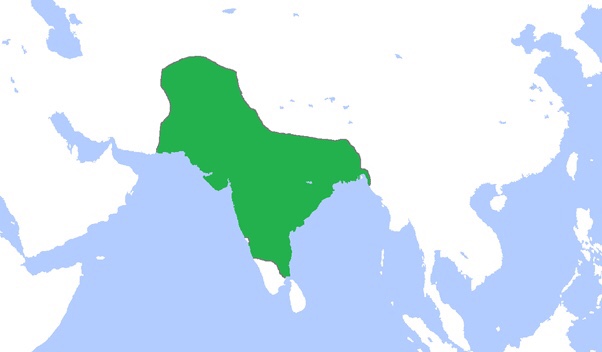
The Extent of the Mughal Empire spanned of present day nations of India, Pakistan, Bangladesh, and Afghanistan

[1] M.Athar Ali, The Mughal Nobility under Aurangzeb, Bombay, 1970 (first pub.1968), p.74; Irfan Habib, “Agrarian Relations and Land Revenue”, in Tapan Raychaudhuri & Irfan Habib (eds.), The Cambridge Economic History of India, vol.I, c.1200- c.1750, OUP, 1982, pp.240-41.

[2] Cf.Rohan D’souza, “Crisis before the fall: some speculations on the decline of the Ottomans, Safavids and Mughals, Social Scientist, vol.30, nos.9-10, Sept-Oct. 2002, pp.3-30;  For the diifusion of stirrups and horses see, Lyn White, “The Crusader and the Technological thrust of the West”, in V.J.Parry and M.E.Yapp, War, Technology and Society in the Middle East, OUP, London, 1975, see also idem,Medieval Technology and Social Change , OUP, New York, 1970.

[3] Tapan Raychaudhuri and Irfan Habib (ed.), The Cambridge Economic History of India, Vol.I, 1982, p.179; see also Andrea Hintz, The Mughal Empire and its Decline: An Interpretation of the sources of Social power, Brookfield USA, 1997, p.58.

[4] See for example, J.F.Richards, “Norms of Comprtment among Imperial Mughal Officials”, in Moral Conduct and Authority: The place of Adab in South Asian Islam, (ed.) Barbara Daly Metcalf, Univ.of California Press, 1984, pp.255-89. Subsequently reprinted in J.F.Richards, Power, Administration and Finance in Mughal India, Great Britain, 1993, pp.255-89.

• Syed Ali Nadeem Rezavi
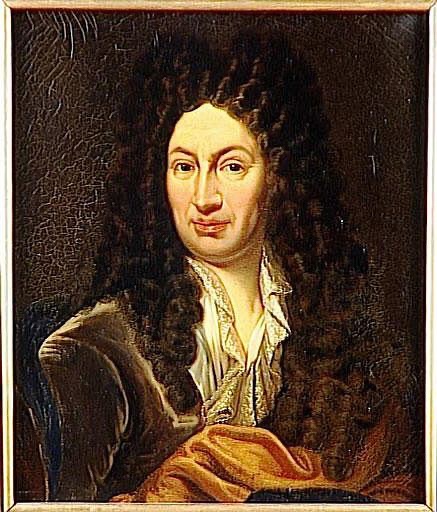
Bernier’s Theory of Agrarian Decline

Monsieur François Bernier (25 September 1620 – 22 September 1688)

Copyright: Syed Ali Nadeem Rezavi

In the first ten years of Aurangzeb’s reign, there was a scarcity of food grains although there is no direct evidence for that. This being not complementary to the emperor, the official history of Aurangzeb, Alamgirnama, is silent over this fact. Kazim Shirazi, in other words, conceals this fact. But at the same time, he says, Aurangzeb ordered langars to be opened:

“The Emperor in his gracious kindness an bounty directed the officials of Burhanpur, Ahmadabad and the country of Surat to establish soup kitchens, or alms-houses, such as are called langar in the language of Hindustan for the benefit of the poor and destitute.”

         The question is why this if there was no scarcity? This piece of evidence and certain other measures which were taken by the emperor conclusively prove that there was scarcity of food grain in the first decade OF Aurangzeb’s reign. Now what was the reason or the cause of this scarcity? Was there an economic crisis and what were the reasons for it?

         One would recall that in the war of succession which continued for about 2 yrs and in which more than half of the empire became involved area-wise, as first battle fought at Dharmat (Malwa), then at Samugarh (Agra), Khajua (Allahabad), and then Ajmer. Shah Shuja was pursued till Munghyre so Bihar involved too. Of course Bengal and Gujarat were also involved as Shah Shuja and Murad came from there. So this war caused damage to the standing crops which were destroyed due to the movement of large number of troops.

         Secondly there was a double realization of revenue in certain parts of the empire. For example in Gujarat, Bengal and Bihar, revenues were realized by Murad and Shah Shuja and then the area was taxed again by Aurangzeb. So no surplus was left with the peasants and their backbone was broken. The peasants were not in a position to invest in agricultural operation which came to a standstill due to the tyranny of the officials. The result was the flight of peasants from the villages.

         Thirdly, the rains failed and where it rained, it rained so heavily that there were floods. The cumulative effect of all these was scarcity of food grains but still not a famine condition. It was a result of the realization of this fact by Aurangzeb himself that he abolished rahdari or road tolls.

The innocent people thought it to be a philanthropic move for the welfare of the people, the khalqullah. As a matter of fact what he wanted was a flow of grain to the area of need without official hindrance. This fact points out that in certain areas there was a scarcity of food grains.

Aurangzeb also abolished other cesses which were levied on the peasants.

As usual every crisis was to be placed in a theoretical framework and had to be theorized. Thus Francois Bernier put up a theory. The simple fact of scarcity was theorized by Bernier to explain the scarcity of the food grains and make an attempt to explain the agrarian decline in the Mughal Empire.

According to Bernier’s theory of Agrarian Decline, as the Jagirdari System was transferable and not hereditary or permanent, the jagirdar was not interested in the development of the area assigned to him in jagir, because he was convinced that neither he nor  his descendants would be benefited by the investment of money or labour in the development of the area. This was so, as according to Bernier, the Jagirdars argued that they could be transferred the next year. Thus there was no guarantee of them or their descendants getting benefited from the labour or investment in the area. So they tended to exploit peasants to the maximum without putting a single pie. Result was the ruination of the peasants.

In the theory spelled out by Bernier on the pre-colonial state, he takes the Oriental Monarchies, i.e., the Mughal Empire and Turkey in to account. According to him these eastern states were different from their European counterparts in two major particulars: A) The king here was the owner of the soil, in other words, the exactor of rent; and B) as we have seen, those who actually collected the tax-rent, unlike the hereditary European lords, held only temporary tenures, as holders of jagirs or timars. The temporary tenures, which were a necessary reflex of state ownership of land, led to over-exploitation of the peasantry, and therefore, a progressive decline of the economy and polity.

This was in contrast to Western Europe, where the limitation of state right of sovereignty and the dominance of private property over the land, under its protection, were the surest means to progress and prosperity. Thus in this theory we see an emphasis towards a contrast between the Oriental Despotic state and the Occidental laissez-fare state.

The theory as propounded by Bernier does look attractive. Bernier was heavily obsessed and prejudiced by the sanctity of the right of private property and he was examining the Indian situation through the European glasses and was unnecessarily bracketing European feudalism with the Mughal Jagirdari system.

It will be a mistake to call the jagirdari system as a feudal system. It was not. At the most, the Mughal Jagirdari system can be defined as a bureaucratic feudalism: to be a jagirdar one had to be a mansabdar while a European feudal lord had to be a hereditary lord. Here until someone did not prove his worth, he could not be a mansabdar. If not a mansabdar, he could never be a jagirdar.

Abul Fazl says that as the transplantation of the plant is good for the health of the plant, the transfer of jagirs was absolutely necessary for the health of the administrative system. Abul Fazl is right as it was this system of transfer which ensured cohesion of the empire for about 200 years. The jagirdar should never think the jagir to be his own. This was the beauty of the system. Bernier could never visualise it.

So Bernier is not scientific in analysing the causes of agrarian decline and is unconsciously prejudiced. This was as he examined the Indian situation through European experience.

It is conceded that the jagirs were transferable. And again it may be conceded for the sake of argument that the jagirdars tended to exploit the peasants to the maximum limit and were blind enough to kill the goose which lay the golden eggs (the peasants). How the emperor could tolerate the situation? Obviously there were administrative checks on jagirdars practicing over-realization and exploitation. We have the evidence that whenever excess realization was resorted to, the jagirdars were punished or their jagirs were resumed. So checks and balances were there as far as the jagirdari system is concerned.the system functioned reasonably well so long as the emperor remained powerful and had the will and resources to impose rules , which on all accounts Aurangzeb was when he left in 1681 for the Deccan.

The theory advanced by Bernier for the agrarian decline doesn’t stand to be historically correct. Jagirdari system was the cardinal system of the Mughal Empire as Abul Fazl says and it was not responsible for the agrarian decline at least in the first 10 years of Aurangzeb’s reign.

Agrarian Revolts During The Reign of Aurangzeb

Copyright: Syed Ali Nadeem Rezavi

The reign of Aurangzeb witnessed a number of revolts which occurred due to the agrarian crisis which was enveloping the Mughal empire during this period. There had been revolts and rebellions during the earlier reigns as well, but they had been all of nobles or princes. Aurangzeb’s reign was the first when revolts having origins in peasant or zamindar class and due to agrarian causes occurred. Let us deal with those led by the Jats, Satnamis and Sikh peasants.

The Jats

The Jats in Mathura region in the 17th Century constituted majority of the population and they were agriculturists par excellence. Gokla, the leader of the Jat community, was a zamindar of 11 villages in this region and this was the period when the pressure of the Jagirdars as Jagirdars was increasing on the zamindars as zamindars, which the zamindars resented.

The first shot was fired when Gokla revolted in 1669. He was the zamindar of Tilpat. As was the tradition amongst the Mughals, the zamindaris were created on caste basis. So when Gokla revolted, the entire Jat community, because of the cast ties, and that of the traditional feudal ties, followed him in his rebellion. Thus the lead was taken by Gokla, the peasants followed and that created a serious problem for the Mughal administration.

Hasan Ali Khan, the faujdar of Mathura, attacked the Jats who were about 20,000 in number and a fierce battle was fought in which Hasan Ali Khan succeeded in defeating the Jats after great difficulty. About 4000 Mughal soldiers and 5000 Jats died. 7000 Jats, along with Gokla and his family members were arrested and ultimately Gokla was executed.

Because of the effective use of the artillery by Hasan Ali Khan, his strong measures and the superiority of the Mughal soldiers, the Jats were defeated and the rebellion was suppressed.

What was the nature of this rebellion?

Some of the historians, especially Irfan Habib have argued that the Jat Rebellion was a peasant uprising because the peasants resented their exploitation by the Mughal administrative machinery. Jat rebellion was a peasant revolt. M. Athar Ali on the other hand analysed the nature of the rebellion and opined that the origin of the rebellion lay in exercising pressure by jagirdar as jagirdar on zamindar as zamindar. Gokla was a zamindar, and he revolted. The peasants followed due to caste ties and feudal ties. To him it was not a peasant revolt; Athar Ali’s logic was: a zamindar could defy, how could a peasant defy?

The Satnamis:

The Satnamis were a religious sect in the Punjab and they were concentrated in sarkar Narnaul. They were a religious community which believed in the brotherhood of Mankind; they used to shave their hairs, so were also called ‘Mundiyas’. They had a strong sense of brotherhood and there were no untouchables in their sect. It was a compact community prepared to help each other. They were basically agriculturists, petty merchants and traders who were very honest in their dealings. But if any one attempted to pressurize them, they reacted violently. They were opposed to oppression and exploitation. It was the community which had immense self confidence.

In 1672 these Satnamis revolted. It was essentially a peasant uprising and the uprising of the landless labourers. Saqi Musta’id Khan in Ma’asir-i Alamgiri had given a vivid description of their rebellion. In a very beautiful passage he says that shop-keepers, iron smiths, peasants etc assembled at one place and fought the Imperial army. According to him the Satnamis were ordinary menials, labourers, peasants, etc who started the rebellion. The Satnami rebellion was a peasant rebellion and an uprising of the landless labourers.

The dispute started when a piyada (foot soldier) who was guarding the field attacked a Satnami with a stick and injured him. A number of Satnamis came and killed the piyada. The faujdar of Narnaul sent a force to suppress the Satnamis who were beaten back, but soon they collected in large numbers and the faujdar was killed. This emboldened the Satnamis; their number increased and as their prestige was enhanced due to their victory over the forces of the faujdar, now they advanced towards Delhi. Rumours spread that the Satnamis had supernatural powers and if one satnami soldier was killed, 10 were born in place of him. The Mughal nobles were also superstitious and were not ready to fight such an army in which 10 were born if one was killed! So the nobles were hesitant and the Satnamis kept on advancing towards Delhi. Thus just to boost the morale of the Mughal commanders, Aurangzeb issued a tawiz (talisman) and asked the military commanders to tie it to their banner and then fight. It was only then that Murtuza Khan Baraha and others readied to fight the Satnamis. It was after greatest difficulty that the Imperial forces succeeded in defeating the Satnamis. Saqi Musta’id Khan says that though ill armed, they created the scenes of Mahabharat, i.e., they fought very bravely. The Satnami rebellion could be suppressed after great hardship.

The Sikhs:

In the first half of the sixteenth century, a new sect in the Punjab came into existence that was known as the Sikhs. Like the Satnamis, they also believed in brother hood of their community. There was no concept of untouchability in this sect as well. There was the concept of equality, helping and loving each other. Sikhism is basically and actually a religion of peasants because in the Guru Granth Sahib, the terminology which has been used was the terminology of the peasants and that of the revenue officials. It is different from Hinduism as well as Islam, but some of the sayings of Shaikh Farid Ganj-i Shakar have been incorporated in the religious scriptures of the Sikhs.

For the first time the Sikh community came into conflict with the Mughals during the reign of Jahangir. But during that time, there was no enmity between the Mughals on the one hand and the Sikhs on the other. The treatment meted out to Guru Arjun was an isolated incident.

During the reign of Aurangzeb, Guru Tegh Bahadur encouraged the people against Aurangzeb as he was totally opposed to the attempt which was being made by certain officials of Aurangzeb in Kashmir: forcing non-Muslims to accept Islam. Guru Tegh Bahadur acted against those who were involved in these forcible acts and came out openly in rebellion against Aurangzeb. In retaliation, Tegh Bahadur was arrested and ultimately executed in 1675. the execution of Guru Tegh Bahadur without doubt had religious overtones to the extent that the guru was against the policy of forcible conversion.

Consequences of The Rathore Rebellion During the Reign of Aurangzeb

Copyright: Syed Ali Nadeem Rezavi

As pleaded by Khan-i Jahan Kokaltash and other nobles, and not withstanding the niceties of law and tradition which were evoked, the issue of the accession to the gaddi of Jodhpur was not dealt with sympathetically by Aurangzeb. It ultimately resulted in the rebellion of the Rathores and also a continuous struggle throughout the reign of Aurangzeb, i.e., from 1679 till his death with the Rajputs asking that Ajit Singh be declared to the gaddi. War continued for about 20 – 25 years with the result that Aurangzeb was deprived of the services of the Rathore soldiers, especially in the Deccan wars: the Rathores were familiar in fighting in the mountainous regions, a tactic needed in the Deccan of which thus the Mughals were deprived of. This rebellion also resulted in much confusion between Aurangzeb and the Rajputs. The feeling that Aurangzeb was against the Rajputs still prevails.

The Rathore rebellion in continuing for 25 years in one form or the other, contributed in the confusion that Aurangzeb was not only anti-Rajput but also anti-Hindus. The whole issue had started on technicalities – zābita in ast wa zābita in nīst. But the personality of Aurangzeb was hurt because of it.

Another important consequence was that to some extent, the flight of Prince Akbar from Jodhpur and his shelter in the court of Sambhaji, directly involved Aurangzeb in the affairs of the Deccan. Aurangzeb resisted involvement in the Deccan for 22 years and was opposed, as emperor, in the Forward policy being followed in the Deccan. But the flight of Akbar and his shelter in the court of Sambhaji, placed Aurangzeb in a dilemma: it was because of this dilemma that Aurangzeb had to leave north for the Deccan in 1681.

Once the policy was adopted, it had to be accomplished to its logical end and the policy of annexing of the whole of the Deccan involved immense military commitment on the part of the Mughals on the one hand and the dangerous consequences of this process on the other. It will not be safe to argue that the involvement of Aurangzeb in the Deccan was solely because of the flight of Prince Akbar. But it certainly compelled Aurangzeb to get involved. Once this policy was adopted, fully knowing the consequences of the involvement, neither Deccan nor the Mughal Empire would have been the same again. Whether one agrees or not with Sarkar that Spanish Ulcer ruined Napoleon, Deccan Ulcer ruined Aurangzeb. Fact remains that involvement after 1681 had serious repercussions in the functioning of the empire and the apparatus of the empire.

Perhaps if not completely avoided, the process of involvement would have been delayed if Prince Akbar had not fled. Flight of Akbar was a direct result of the Rathore rebellion. But it will be incorrect to assert that as a result of the Rathore rebellion, Aurangzeb became anti-Rajput. The Rajputs continued to serve Aurangzeb till the last days of the empire. And in the last 10 years [1698 – 1707], when Aurangzeb died, there were only 3 generals conducting military operations with their full contingents, against the Marathas: Ram Singh Hada, Dalpat Bundela and Jai Singh Sawai. These three nobles were the only persons who were serving the emperor with their full contingents, as they had a separate income from their watan jagirs.

When the doli of Princess Nadira Begum, the wife of Prince Azam, was surrounded by the Marathas while going from Islampuri (where Aurangzeb was at that time situated) to Gilgit, and no re-inforcements could reach to rescue her, Ram Singh Hada was with the princess with 750 of his soldiers. The surrounding Marathas were around 10,000 in number and wanted to kidnap the princes to dictate terms to Aurangzeb. Since the princess was travelling on a doli, the Hada contingent had to follow on foot. So there was no horse available either. The Marathas surrounded the doli. The contingent of the Hadas was at a distance as the princess observed purdah.

When the doli was surrounded, Nadira Begum sent word to Ram Singh, summoned him and told him that: “asmat-i Rajputiya wa Chaghtaiya yak ast”, i.e., ‘the honor of the Chaghtais is identical with that of the Rajputs.’ “agar īn roz asmat-i Chaghtai raft, ba māra be asmat-i Rajputiya raft!” Ram Singh could understand Persian but could not speak it. So in a broken Persian he replied, ‘the malichhas (the unclean, i.e., the Marathas) will not be permitted even to look at the dola and there is no question of their even coming near it!’

Throughout the 17th Century such stiff resistance was never given to the Marathas as was offered by Ram Singh and his Hada contingents in spite of the heavy odds. Ram Singh Hada ultimately succeeded; around 300 Rajputs and 3-4 sons of Ram Singh Hada lost their lives and true to his words, the malichhas were not even permitted to have a look at the dola of Nadira Begum. This was the confidence between the Rajputs and the Mughals: a Mughal princess at a critical hour could appeal to a Rajput as to a Mughal!

This took place in 1699. So it would be incorrect to say that Aurangzeb lost the Rajputs because of the Rathore rebellion. But it is a fact that he was deprived of good soldiers who could have been of immense use to him in the Deccan.

Apart from the matrimonial alliances and sentimental attachments, the natural interest between the two was also identical. So long as the Mughals expanded or continued to expand, the Rajput states flourished and remained prosperous. When the Mughal Empire declined, as it did in the 18th Century, the grand houses of Rajputana were plundered by the Marathas. So practically throughout the 16th, 17th and 18th Centuries the Mughals and the Rajputs swam together and sank together.

Prince Akbar, the Rajputs and the Deccan

Prince Muhammad Akbar s/o Aurangzeb

Copyright: Syed Ali Nadeem Rezavi

Muhammad Akbar (11 September 1657 – 31 March 1706) was the youngest son of Aurangzeb and Dilras Banu Begum. Prince Akbar led a rebellion against his father and fled the Deccan after the failure of that venture.

At the time when Rathore Rebellion broke out in 1679-80, Aurangzeb took prompt action by deputing Prince Azam to check the advance of the Sisodias so that no re-enforcements should reach the Rathores while Prince Akbar was assigned to suppress the Rathore rebellion. Aurangzeb himself remained at Ajmer. The Sisodias withdrew from the plain area and pressed the Mughal army in to the mountainous regions and adopted the guerrilla techniques to harass them.


From the Waqa’i Sarkar Ajmer we come to know that the Mughal army was rendered motionless due to the fear of the Sisodias in the mountainous region. Yet, we are informed, the entire country was over run by the Mughals and captured except the hilly regions where the Sisodias operated.

But on the Rathore front, a new situation developed. Prince Akbar was misled by the Rathores to believe that Aurangzeb was bent upon to destroy the Rathores and as such weaken the Mughal Empire. Prince Akbar was also persuaded by the Rathores, especially by Durgadas in to believing that in order to save the empire it was essential that Aurangzeb should be dethroned and he, that is Prince Akbar, be declared the emperor.
At this time Prince Akbar was accompanied by 70,000 best troops of the Mughal Empire; and now 30,000 Rathores joined him. He thus was now leading a formidable army of one lakh soldiers. Aurangzeb was at Ajmer with an army of only 3000 or 4000, personal guards and servants included.

Another thing which added to the seriousness of the situation was the fact that no re-enforcements could reach Aurangzeb before the rebels: the nearest Mughal army which could reach him was that of Prince Akbar. This created a serious crisis for Aurangzeb.

To justify his rebellion, Prince Akbar wrote a detailed and sarcastic letter to his father, Aurangzeb, which is important from the point of view of the Mughal-Rajput relations. A copy of this letter is preserved in the British Museum.


In this letter, Prince Akbar says that in reality Dara Shukoh was hostile to the Rajputs and faced the consequences for this act. If he had befriended the Rajputs from the very beginning, the situation would have taken another turn. It was because of the support extended to emperor Akbar, that he had consolidated the whole of India under him and it was with the support of the Rajputs that Mahabat Khan was able to restrict the movements of Jahangir and it was the support ‘to you’ by the Rajputs, ‘that you ascended the throne. You doubt the loyalty of the Rajputs in spite the fact that they are laying down their life for a suckling child [Ajit Singh]. During your reign the ministers have no power [wuzara be ikhtiyar and]’, i.e., suspicious of Aurangzeb, ‘nobles cannot be relied upon [nawisanda bekar and], merchants [ tujjar] have nothing, peasants are ruined. Especially in the Deccan, which is a vast area, is being constantly attacked by Marathas. All the people of noble birth are being ignored.’ Many of the advisers of the emperor consist of new people, i.e., they are either julaha, bāfinda (i.e. rafugar), sabun farosh (soap sellers), jaroop farosh (jharoo/ mop sellers) etc. that is ruffians or men of low birth are the main advisors of the emperor and the people who are hypocrites to the Muslim law, having memorized a few sayings and by repeating them to show off their knowledge; such persons are the advisors.’

Thus Prince Akbar points out the chaotic situation which was being faced by the Mughal Empire. Petty officials purchased appointments and then sell them at higher prices. In short they indulge in corruption.

Conclusively two facts emerge from these statements of Prince Akbar in this letter:

(a) that during the War of Succession, the Rajputs were the firm supporters of Aurangzeb as against Dara according to Prince Akbar; and

(b) Prince Akbar felt justified in revolting against Aurangzeb as continuation of Aurangzeb was thought to be detrimental to the Mughal Empire.

Prince Akbar advanced from Jodhpur to Ajmer very leisurely as if he was already the emperor. Aurangzeb was extremely worried about the situation but at the same time he was a man of steel-frame. He ordered that canons should be fixed at Deori and immediate orders were sent to all the nobles in different parts of the empire to come to the help of the emperor.

Aurangzeb was sure that no re-enforcements could reach him in time. But Prince Akbar proceeded just like a king at a leisurely pace. In the meantime an order was sent and Shahabuddin Khan in 3 days covered the distance which could have been covered normally in 10 days. He reached along with 16,000 troops. With their arrival a possibility of resistance increased. Nest day Prince Azam came along with 40,000 troops. Thus now the strength of the troops along with Aurangzeb was around 60,000 and the emperor now felt confident. He now resorted to a tactics he was quite adept at: He wrote a letter to Prince Akbar commending him and congratulating him that he had brought 30,000 Rathore soldiers along with him. He advised him to place the Rathore troops under Durgadas in the vanguard of his army so that from the rear ‘you could attack and from my side I, so that the Rathores would be no more’.

He gave this letter to a messenger to stroll near the camp of Durgadas Rathore. The scouts of the Rathore intercepted the messenger, discovered the letter of Aurangzeb to Prince Akbar. When it was read, Durgadas thought that he was caught in a treachery and fled. This sudden misunderstanding between two allies, caused confusion in the camp of Prince Akbar who too was constrained to flee in the face of the desertion of the Rathores. His Mughal soldiers joined Aurangzeb. The rebellion collapsed within no time. Akbar fled to the Deccan and took shelter with Shambha Ji.

The flight of Prince Akbar to the court of Shambha Ji in the Deccan created a serious problem for the Mughal administration in the Deccan as a Mughal puppet prince with Shambhaji, supported by Golcunda and Bijapur could have created very serious repercussions for the Mughals. Only a prince could fight a prince. So a sufficient army to tail Shambhaji and fight Golcunda and Bijapur must comprise a large force to fight on three fronts in the front; and now must be headed by a prince of the royal blood. And what was the guarantee that that Prince would not rebel?


So the flight of Prince Akbar and his taking shelter in the Deccan created a situation which forced Aurangzeb to revive the temptation to annex and follow a forward policy in the Deccan. Now if the prestige of the Mughal Administration in the Deccan was to be maintained, the Emperor himself had to go there; there was no way out. And Aurangzeb left Ajmer in 1681 for the Deccan never to return again. Once this forward policy was undertaken, neither the Deccan nor the Mughal Empire could be the same!

Causes of The Rathore Rebellion of 1679

Raja Jaswant Singh Rathore

Copyright: Syed Ali Nadeem Rezavi

In December 1678, Maharaja Jaswant Singh, the Rathore ruler of Jodhpur died at Jamrup in Afghanistan. At the time of his death, Maharaja Jaswant Singh had no son. But it was reported to Aurangzeb that two ranis of Jaswant Singh were expectant. At the time of his death, Jaswant Singh was indebted to the State. So Aurangzeb ordered that efforts should be made to realize the amount from the property of the deceased Raja, as was the customary law. But pending any final decision regarding the conferring of tika on any one, Aurangzeb waited for the birth of the child. Under the Mughals, the conferring of the tika had a political and administrative significance; it meant recognition of a particular person as a raja of a particular place by the emperor. The tika was applied on the fore head of the raja by the emperor himself.

After the death of Jaswant Singh, Rani Hadi, the chief queen of the late Raja, was pleading that the tika should be conferred on her. But according to the law of succession followed by the Mughals in respect of conferring the tika, it could not be conferred on a widow (who had no status in the Hindu law).

So the weakness in the Rajput case was that they had no candidate on whom the tika could be conferred.

In the meantime, one of the Ranis gave birth to a son who was named Ajit Singh. After the birth of Ajit, the situation slightly changed because now the Rajputs had a candidate for the gaddi of Jodhpur. Initially, Aurangzeb had not doubted the genuineness of Ajit Singh, which is evident from the fact that the fort of Pokhran which had been assigned to Askaran by Aurangzeb, was cancelled on the plea that a son had been born to Jaswant Singh.

But again, the weakness in the Rajput case was that the tika could not be conferred on an infant. At this stage, Aurangzeb ordered that Jodhpur be included in the khalisa.

A question which can be raised here is: why did Aurangzeb wait for 4 or 5 months after the death of Jaswant Singh for passing an order of inclusion of Jodhpur into the khalisa? Answer to this is that as it was reported to Aurangzeb that the two Ranis of the late Raja were expecting, Aurangzeb wanted that if they turned out to be daughters, the task would have been comparatively easy. However, even if they turned out to be sons, it would hardly make a difference as the tika could not be conferred on a child.

The Rathores resented the inclusion of Jodhpur into the khalisa. Durgadas fled with Ajit Singh to Jodhpur. Rani Hadi, the chief queen of the late Jaswant Singh protested against the order of the inclusion on the ground that no bhumiya (zamindar) had ever been dispossessed from their watan (native land). Why were Rathores who had done so much distinguished service, being humiliated and asked to leave Jodhpur at a time when ceremonies of the deceased Raja were being held? Durgadas and Sona Bhati spear-headed the cause of the Rathores and pleaded that the order for inclusion of Jodhpur into khalisa be revoked and the tika be conferred on Ajit Singh.

The resentment of the Rathores was genuine, but the difficulty with the Mughals was also genuine. The tika could not be conferred on a widow or a child. Sir Jadunath Sarkar has made an attempt to explain the causes of the Rathore Rebellion in the usual framework of the so-called hostility of Aurangzeb towards Hindus and the Rajputs. Sarkar, being a ‘scientific historian’, however concedes that there was a difficulty in conferring a tika on the widow – a technical hitch, and again, on conferring a tika on a child.

So the fact that the tika could not be conferred on either is conceded by Sarkar. But, he says, it could have been conferred on Inder Singh, who was the grandson of Amar Singh, the elder brother of Jaswant Singh, that is, a very near blood relation of Jaswant Singh.

Sarkar further argued that Inder Singh was a very seasoned commander and an accomplished general serving in the Deccan as a mansabdar of 1500/1000. So if Aurangzeb was honest enough to confer the tika on a suitable candidate, then he should have been given; but the territory was instead included in to the khalisa because, Sarkar argues, Aurangzeb wanted to deprive the Hindu community from a powerful centre against his anti-Hindu policies.

Because of the protests of the Rathores, and due to the indignation amongst the Rathores against the inclusion of Jodhpur into the khalisa, Aurangzeb changed his mind. At this stage, he doubted the genuineness of Ajit Singh being the legitimate heir to Jaswant. He doubted him to be the son of a milk woman or a maid-servant and as such, no significance was to be attached to him.

Fortunately for us, all despatches of the waqi’a nigar of Ajmer, which were sent to the emperor, are preserved and are a part of a two volume manuscript in the Asafiya Library, Hyderabad. A transcript of this ms. is present in our library as well. These despatches provide a first hand information regarding events which took place in 1679-80 and a correct appraisal of the situation as the waqi’a nigar is writing for the exclusive eyes of the emperor. To be fair to Sir Jadunath, these despatches were not discovered in his time. They provide extremely useful information regarding the Rathore rebellion.

The information contained by the waqa’i Ajmer have been used by M.Athar Ali in his article on the causes of the Rathore Rebellion which was published in the PIHC, Delhi, 1961.

Thus having in view the reaction of the Rathores against the inclusion of Jodhpur territory in the khalisa Aurangzeb cancelled the order of inclusion and conferred the tika on Inder Singh for a consideration of 36 lakhs of rupees. Another claimant was Karan Singh, who was not so closely connected but offered 45 lakhs. His offer and claim was rejected by the emperor. So the money motive is to be ruled out.

After the appointment of Inder Singh as the Raj of Jodhpur, the Rathores went to the extremes, sharply reacting to his appointment. Rani Hadi made a petition to Aurangzeb that if you want the destruction of the temples, we are ready for that and would do so willingly, but that the appointment of Inder Singh should be revoked. The inclusion of the territory to khalisa was better than the appointment of Inder Singh.

Had Aurangzeb been in spreading Islam or in destruction of the temples, he would have accepted and welcomed the petition and the proposal of Rani Hadi. But the plea of the Rani was rejected. Rani Hadi now took the extreme step of filing a suite in the court of Qazi Hamid praying to know what the legal position in Shariat was. He however boycotted the petition.

Two questions arise at this stage. Why was Inder Singh not acceptable to the Rathores at all? Reason was that Inder Singh was the grandson of Amar Singh, the elder brother of Jaswant Singh, who had been deprived and humiliated by Jaswant Singh and his family. Durgadas and the other Rathore leaders, and the widows of the late Jaswant feared that if he was appointed and allowed to come from Bikaner where he was presently residing, he might take revenge on behalf of his grandfather and other family members.

These internal tensions, strains and stresses were known to Aurangzeb, while Sir Jadunath seems to be either unaware or forgetful of them. When the appointment of Inder Singh was not cancelled, the Rathores made it clear that they would not let him enter.

So the cause of the Rathore Rebellion was the appointment of Inder Singh as the new ruler and not the inclusion of Jodhpur to the khalisa.

Let us now come to the fallacies of Sarkar. If his argument is to be accepted at the face value, that Aurangzeb wanted to deprive the people of a Hindu centre against the anti-Hindu policies of Aurangzeb, that objective could have been achieved easily by appointing Ajit Singh as the Raja of Jodhpur, even if his patrimony in the eyes of Aurangzeb was doubtful, as for about 20 years, he would have been incapable of ruling. Rathores would have been satisfied and Aurangzeb could have named an administrator to administer the territory till Ajit Singh was a child. This could have been the easiest way to weaken Jodhpur. Aurangzeb did not do that as Aurangzeb wanted Jodhpur to flourish as (a) it should flourish so that a continuous supply of soldiers be continued from the rank of the Rathores, who were excellent soldiers; and (b) the law and order be maintained as Jodhpur was situated on the highway of the trade route from Agra to Gujarat.

Sarkar committed a mistake while giving the reasons for the rebellion. The depth of the bitterness of the Rathores – Durgdas, Sonar Bhati and Rani Hadi – was against Inder Singh. And when the order was not withdrawn by Aurangzeb, the Rathores asked the qile’dar of Jodhpur, Iftekhar Khan, to leave the place as they were starting a rebellion.