A Letter from Father to Son, The Last Will of Ali ibn Abi Talib (a)
After returning from the Battle of Siffin, Imam ‘Ali (a) gave certain pieces of advice to one of his sons. Some historians consider him to be Imam Hasan (a) while others are of the opinion that he was Muhammad al-Hanafiyya.
He wrote the letter in the form of a will. They deal with almost every aspect of life which goes a long way to make a man successful in life – brave, humane, generous, virtuous and pious.
These exhortations are from a father who realizes the morality of life, who is getting old, who has patiently borne reverses and calamities, who hates inordinate desires and has overcome them, and who is shortly going to pass out of this world, to his son who is young, who has the desire of leading the world to sober ways of thinking and better ways of life, a desire which is rather difficult to be achieved.
A son, who is mortal and is bound by nature to follow the steps of all mortals, is subject to ailments, is surrounded by misfortunes and calamities, has to face oppressions and tyrannies, has often to confront with and sometimes to tolerate hypocrisy, deceit, guile, duplicity and treason and who is to end his life in death, is to bear sufferings, is the heir to a person who is dead and gone and who finally ended his life as a martyr to the animosity of his enemies. (What a prophecy!)
This letter was written nearly 1400 year ago and is applicable and appropriate even nowadays.
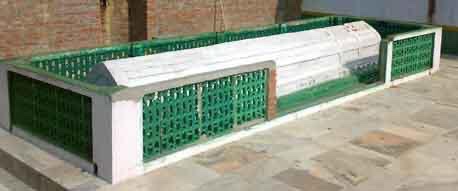
In the 40th year of Hijri, in the small hours of the morning of 19th Ramadan, Imam ‘Ali (as) was struck with a poisoned sword by the Kharijite Ibn Maljam while offering his prayers in the Masjid of Kufa. He died on the 21st day of Ramadan 40 A.H. and buried in Najaf ul-Ashraf. He was born in the House of Allah, the Kaaba, and martyred in the House of Allah, Masjid al-Kufa. The Lion of Allah, the most brave and gentle Muslim after the Prophet (S) himself, began his glorious life with devotion to Allah and His Messenger, and ended it in the service of Islam.
“And do not speak of those who are slain in the Way of Allah as dead; nay, they are alive, but you perceive not.” Quran 2:154
My Dear Son,
Let it be known to you that decay of health, passing away of time and nearness of death, have made me realize that I should give more thought to my future (next world) and to my people; advise them more and spend more time in equipping them mentally to face this world.
I felt that my own sons and my near ones have as much right to utilize my experiences and knowledge, all the ups and downs of life, all the realities and all the truths about life in this world and in the Hereafter, which are as much known to me as others.
I decided, therefore, to spend more time over you and to prepare you more for your. This was neither selfishness nor self-esteem nor any mental luxury of giving away pieces of advice, but it was the sincere desire of making you see the world as I found it, look at the realities of lives as I looked at them, and do the right thing at the right time and right place as it should be done which made me write down these exhortations to you. You will not find in them anything but truth and realities.
My dear son! You are part of my body and soul and whenever I look at you I feel as if I am looking at myself. If any calamities befalls you, I feel as if it has befallen me. Your death will make me feel as if it was my own death. Your affairs are to me like my own affairs.
Therefore, I committed these pieces of advice to paper. I want you to take care of them, to pay attention to them and to guard them well. I may remain longer in your life or I may not, but I want these pieces of advice to remain with you always.
My first and foremost advice to you, my son, is to fear Allah. Be His obedient servant. Keep His thought always fresh in your mind. Be attached to and carefully guard the principles (Islam) which connect you with Him. Can any other connection be stronger, more durable and more lasting than this to command greater respect and consideration or to replace it?
Accept good exhortations and refresh your mind with them. Adopt piety and kill your inordinate desires with its help. Build your character with the help of true faith in religion and Allah. Subjugate your nature with the vision of death, make it see the mortality of life and of all that it holds dear, force it to realize the actuality of misfortunes and adversities, the changes of circumstances and times and compel it to study the lives of past people.
Persuade it to see the ruined cities, the dilapidated palaces, decaying signs and relics of fallen empires of past nations. Then meditate over the activities of those people, what they have all done when they were alive and were in power, what they achieved, from where they started their careers; where, when and how they were brought to an end, where they are now; what have they actually gained out of life and what was their contributions to the human welfare.
If you carefully ponder over these problems, you will find that each one of those people has parted company with the others and with all that he cherished and loved and he is now in a solitary abode, alone and unattended; and you also will be like him.
Take care to provide well for your future abode. Do not barter away eternal blessing for pleasures of this mortal and fleeting world.
Do not talk about things which you do not know. Do not speculate about and pass verdicts on subjects about which you are not in a position to form an opinion and are not called upon to do so. Give up the way where there is a possibility of your going astray.
When there is danger on your wandering in the wilderness of ignorance, possibility of losing the sight of the goal which you want to attain and of reaching the end aimed at, then it is better to give up the quest than to advance facing uncertain dangers and unforeseen risks.
Advise people to do good and to live virtuously because you are fit to give such advice. Let your words and deeds teach the world lessons of how to abstain from wickedness and vicious deeds. Try your best to keep away from those who indulge in vices and sins.
Fight, whenever required, to defend the cause of Allah. When you think of defending the cause of Allah do not be afraid that people will laugh at you, censure your action or slander you. Fearlessly and boldly help truth and justice. Bear patiently the sufferings and face bravely the obstacles which come in your way when you follow truth and when you try to uphold it. Adhere to the cause of truth and justice wherever you find it. Try to be well versed with Islamic Jurisprudence and theology and acquire a thorough knowledge of the canons of this religion.
Develop the habit of patience against sufferings, calamities and adversities. This virtue of patience is one of the highest values of morality and nobility of character and it is the best habit which one can develop. Trust in Allah and let your mind seek His protection in every calamity and suffering because you will thus entrust yourself and your affairs to the Best Trustee and to the Mightiest Guardian.
Do not seek help or protection from anybody but Allah. Reserve your prayers, your requests, your solicitations, your supplications, and your entreaties to Him and Him alone because to grant, to give, to confer and to bestow, as well as to withhold, to deprive, to refuse, and to debar, lies only in His Power. Ask as much of His Blessings and seek as much of His Guidance as you can.
Try to understand my exhortation, ponder over them deeply; do not take them lightly and do not turn away from them because the best knowledge is that which benefits the listener. The knowledge which does not benefit anybody is useless, not valuable and not worth learning and remembering.
My dear son! When I realized that I was getting old and when I felt that weakness and feebleness are gradually creeping into me then I hastened to advise you as to the best ways of leading a noble, virtuous and useful life. I hated the idea that death should overtake me before I tell you all that I wanted to tell or before my mental capacities like my bodily strength are weakened.
I convey all this to you lest inordinate desires, temptations and inducement should start influencing you, or adverse changes of times and circumstances should drag your name in the mire or I should leave you like an untrained colt because a young and fresh mind is like a virgin soil which allows things sown in it to grow verdantly and to bear luxuriantly.
Then, I have made use of early opportunities to educate you and train you before your mind loses its freshness, before it gets hardened or warped, before you start facing life unprepared for the encounter, and before you are forced to use your decisions and discretions without gaining advantages of cumulated traditions, collected knowledge and experiences of others.
These words of advice and counsels that I give you, will save you from the worry of acquiring knowledge, gathering experiences and soliciting advice from others. Now you can easily make use of all the knowledge which men have to acquire with great care, trouble and patience. Things which were hidden from them and which only experiments, experiences and sufferings could bring to light are now made easily available to you through these exhortations.
My dear son! Though the span of my life is not as that of some other people who have passed away before me yet I took great care to study their lives, assiduously I went through their activities, I contemplated over their deliberations and deeds, I studied their remains, relics and ruins, I pondered over their lives so deeply that I felt as if I have lived and worked with them from early ages of history down to our times and I know what did them good and what brought harm to them.
Sifting the good from bad I am concentrating within these pages, and for your good, the knowledge that I so gathered. Through these pieces of advice I have tried to bring home to you the value of honest-living and high-thinking and the dangers of a vicious and sinful life, I have taken care to cover and guard every aspect of your life as it is the duty of a kind, considerate and loving father.
From the very beginning, I took care to help you to develop a noble character and to fit you for the life which you will have to lead, to let you grow up to be a young man with a noble character, an open and honest mind and clear and precise knowledge of things around you. Originally my desire was only to teach you the Holy Book thoroughly, to make you understand its intricacies, to impart to you the complete knowledge of His commandments and interdictions and not to leave you at the mercy of the knowledge of other people.
But after having succeeded in this task I felt nervous that I may leave you untrained and uneducated in the subjects which themselves are subject to so much confusion and so many contradictions. These are the subjects whose confusions have been made worse confounded by selfish desires, warped minds, wicked ways of life and sinful modes of thinking. Therefore, I have noted down, in these lines, the basic principles of nobility, piety, truth and justice.
You may feel them to be over-bearing and harsh but my desire is to equip you with this knowledge instead of leaving you unarmed to face the world where there is every danger of loss and damnation.
As you are a noble, virtuous and pious young man, I am sure you will receive Divine Guidance and Succour. I am sure He will help you to achieve your aim in life. I want you to promise to yourself to follow my advice carefully.
Remember my son! The best out of these pieces of advice of mine are the those which tell you to fear Allah, to concentrate and to confine yourself to the performance of those duties which have been made incumbent upon you by Him and to follow in the footsteps of your ancestors [The Holy Prophet (S) & Imam ‘Ali (a)] and your pious and virtuous relationship. Verily, they always carefully measured their thoughts and deeds, as you must also try to do and they carefully thought over the subject before saying anything about it or before doing a deed. You should also follow the same.
This kind of deliberation made them take from life what was really the best and forsake that which was not made incumbent upon them or which was not the best. If your mind refuses to accept my advice and you persist to try your own experiments like them then you are at liberty to arrive at your conclusions but only after thoroughly studying the subject and after acquiring the knowledge necessary for such decisions.
You must not allow uncertainties and doubt poison your mind, scepticism or irrational likes and dislikes should not affect your views. But remember that before you start thinking and deliberating over a problem seek guidance of the Lord and beseech Him to give you a lead in the right direction. Avoid confusion in your ideas, and do not let disbelief take hold of your mind because the first will lead you to agnosticism and the others towards errors and sins.
When you are thus prepared to solve any problem and you are sure that you possess a clear mind, a sincere and firm desire to reach the truth, to say the correct thing and to do the correct deed, then carefully go through the advice that I am leaving for you.
If your mind is not clear and it is not as free from doubts as you wish it to be, then you will be wandering in the wilderness of uncertainties and errors like a camel suffering from night-blindness. Under these circumstances it is best for you to give up the quest because with such limitations none can ever reach the truth.
My dear son! carefully and very carefully remember these sayings of mine. The Lord who is the Master of death is also the Master of life. The Creator is the Annihilator. And the One who annihilates has the power to bring everything back again to existence. The One who sends calamities has also the power to protect you from them.
Remember that this world is working under the laws ordained by Him, and it consists of assemblage and aggregation of actions and reactions, causes and effects, calamities and reverses, pains and pleasures and rewards and punishments, but this is not all which the picture depicts, there are things in it which are beyond our ken, things which we do not and cannot know and things which cannot be foreseen and foretold, for example the rewards and punishments on the Day of Judgement.
Under these circumstances, if you do not understand a thing, do not reject it. Remember that your lack of understanding is due to insufficiency of your knowledge. Remember that when you came into this world your first appearance was that of an ignorant, uneducated and unlearned being. Then you gradually acquired knowledge, but there were several things which were beyond your knowledge, which perplexed and surprised you, and about which you did not understand. Gradually you acquired knowledge about some of those subjects and in future your knowledge and vision may further expand.
Therefore, the best thing for you to do is to seek guidance of One who has created you, Who maintains and nourishes you, Who has given you a balanced mind and a normally working body. Your invocations should be reserved for Him only, your requests and solicitations should be alone to Him and you should only be afraid of Him.
Be it known to you, my son, that nobody has given mankind such detailed information about Allah as our Holy Prophet (S). I advise you to have faith in his teachings, to make him your leader and to accept his guidance for your salvation. Thus advising you I have done the best that I can do as a sincere and loving adviser and I assure you that however you may try to find a better way for your good, you will not find any superior to the one advised by me.
Remember, my son, had there been any other god, besides the One, he would have also sent his messengers and prophets and they would have pointed out to mankind the domain and glory of this second god, and you would have also seen them. But no such incident ever took place. He is One Allah whom we should all recognize and worship. He has explained Himself. Nobody is a partner to Him in His Domain, Might and Glory. He is Eternal, has always been and shall always be. He existed even before the Universe came into being but there is no beginning to His Existence. He shall remain when every other thing shall vanish, and there shall be no end to His Existence. His Glory and His Existence is so supreme, pre-eminent, transcendent, incomparable and excellent that it is beyond the grasp of intellects. No one can understand or visualize Him.
When you have accepted these facts then your behaviour, so far as His commands are concerned, should be that of a person who realizes that his status, power and position is nothing when compared to that of His Lord; who wants to gain His Blessings through prayers and obedience, who fears His Wrath as well as His Punishments and who absolutely in need of His Help and Protection. Remember, my son, Allah has not ordered you to do anything but that which is good and which propagates goodness and He has not prohibited you from anything but that which is bad and will bring about bad effects.
My dear son, through this message of mine, I have explained everything about this world, how fickle and fleeting is its attitude, how short-lived and evanescent is everything that it holds or offers about and how fast it changes its moods and favours. I have also explained about the life to come, the pleasures and blessings provided there, and the everlasting peace, comfort and happiness arranged for in Paradise.
I have given enough examples of both aspects of life, before and after death so that you may know the reality and lead your life on the basis of that knowledge.
As a matter of fact those people who have carefully studied the condition of life and the world, pass their days as if they know that they are travellers, who have to leave a place which is famine-stricken, unhealthy and uncongenial, and they have to proceed towards lands which are fertile, congenial, and where there is abundant provision of all comforts and pleasures.
They have eagerly taken up the journey, happy in the hope of future blessings and peace. They have willingly accepted the sufferings, troubles and hazards of the way, parting of friends, scarcity of food and comfort during the pilgrimage so that they may reach the journey’s end – a happy place. They do not refuse to bear any discomfort and do not grudge any expenditure by way of giving out alms and charities, and helping the poor and the needy.
Every step which they put forward towards their goal, however tiring and exhausting it may be, is a happy event of their lives. On the contrary the condition of those people who are solely engrossed in this world and are sadly engulfed in its short-lived, quickly fading and vicious pleasures, is like that of travellers who are staying in fertile and happy regions and who have to undertake a journey, knowing fully well that the journey is going to end in a rough, arid and infertile land.
Can anything be more loathsome and abhorring to them than this journey? How they would hate to leave the place where they are and to arrive at a place which they so much hate and which is so dismaying, dreadful and horrifying!
My dear son, so far as your behaviour with other human beings is concerned, let your ‘self’ act as scales to judge its goodness or wickedness. Do unto others as you wish others to do unto you.
Whatever you like for yourself, like for others, and whatever you dislike to happen to you, spare others from such happenings. Do not oppress and tyrannize anybody because you surely do not like to be oppressed and tyrannized. Be kind and sympathetic to others as you certainly desire others to treat you kindly and sympathetically. If you find objectionable and loathsome habits in others, abstain from developing those traits of character in yourself.
If you are satisfied or feel happy in receiving a certain kind of behaviour from others, you may behave with others in exactly the same way. Do not speak about them in the same way that you do not like others to speak about you. Do not speak on a subject about which you know little or nothing, and if you at all want to speak on anything or about anyone of whom you are fully aware, then avoid scandal, libel and aspersion as you do not like yourself to be scandalized and scorned in the same manner.
Remember, son, that vanity and conceit are forms of folly. These traits will bring to you serious harm and will be a constant source of danger to you. Therefore, lead a well-balanced life (neither be conceited nor suffer from inferiority complex) and exert yourself to earn an honest living. But do not act like a treasure for somebody (do not be miserly so that you leave what you hoard for others).
And whenever you receive guidance of the Lord to achieve a thing you desire, then do not get proud of your achievement but be humble and submissive to Him and realize that your success was due to His Mercy.
Remember my son, that before you is a long and arduous journey (life). The journey is not only very long, exhausting and onerous but the route is mostly through dismal, dreary and deserted regions where you will be sadly in need of refreshing, renovating and enlivening aids and helps and you cannot dispense with such provisions as to keep you going and to maintain you till the end of the journey – the Day of Judgement.
But remember not to overload yourself (do not entrust yourself with so many obligations and duties that you cannot honourably fulfil them or with such luxurious life as to be wicked and vicious).
Because if this load is more than what you can conveniently bear then your journey will be very painful and tiresome to you. If you find around you such poor, needy and destitute people who are willing to carry your load for you as far as the Day of Judgement then consider this to be a boon, engage them and pass your burden on to them. (Distribute your wealth amongst the poor, destitute and the needy, help others to the best of your ability and be kind and sympathetic to human beings).
Thus relieve yourself from the heavy responsibility and liability of submitting an account on the Day of Judgement of how you have made use of His Bounties (of health, wealth, power and position) and thus you may arrive at the end of the journey, light and fresh, have enough provision for you there (reward of having done your duty to man and Allah in this world).
Have as many weight-carriers as you can (help as many as you can) so that you may not miss them when you very badly need them (when your sins of commission and omission will be balanced against your good deeds you must have enough good deeds to turn the scale in your favour). Remember that all you give out in charities and good deeds are like loans which will be paid back to you.
Therefore, when you are wealthy and powerful, make use of your wealth and power in such a way that you get all that back on the Day of Judgement, when you will be poor and helpless. Be it known to you, my son, that your passage lies through an appallingly dreadful valley (death or grave) and extremely trying and arduous journey.
Here a man with light weight is far better than an over-burdened person and one who can travel fast will pass through it quickly than the one whose encumbering forces go slowly. You shall have to pass through this valley.
The only way out of it is either in Paradise or in Hell. Therefore, it is wise to send your things there beforehand so that they (good deeds) reach there before you, prearrange for the place of your stay before you reach there because after death there is no repentance and no possibility of coming back to this world to undo the wrong done by you.
Realize this truth, my son, that the Lord who owns and holds the treasures of Paradise and the earth has given you permission to ask and beg for them and He has promised to grant your prayers. He has told you to pray for His Favours that they may be granted to you and to ask for His Blessings that they may be bestowed upon you. He has not appointed guards to prevent your prayers reaching Him. Nor is there any need for anybody to intercede before Him on your behalf.
If you go back upon your promises, if your break your vows, or start doing things that you have repented of, He will not immediately punish you nor does He refuse His Blessings in haste and if you repent once again He neither taunts you nor betrays you though you may fully deserve both, but He accepts your penitence and pardons you. He never grudges His Forgiveness nor refuses His Mercy, on the contrary He has decreed repentance as a virtue and pious deed.
The Merciful Lord has ordered that every evil deed of yours will be counted as one and a good deed and pious action will be rewarded tenfold. He has left the door of repentance open. He hears you whenever you call Him. He accepts your prayer whenever you pray to Him. Invoke Him to grant you your heart’s desire, lay before Him the secrets of your heart, tell Him about all the calamities that have befallen you and misfortunes which face you, and beseech His help to overcome them. You may invoke His Help and Support in difficulties and distresses.
You may implore Him to grant you long life and sound health, you may pray to Him for prosperity and you may request Him for such favours and grants that none but He can bestow and award.
Think over it that by simply granting you the privilege of praying for His Favours and Mercies, He has handed over the keys of His treasures to you. Whenever you are in need you should pray and He will confer His Bounties and Blessings. But sometimes you will find that your requests are not immediately granted, then you need not be disappointed because the grant of prayers often rests with the true purpose and intention of the implorer. Sometimes the prayers are delayed because the Merciful Lord wants you to receive further rewards for patiently bearing calamities and sufferings and still believing sincerely in His Help. Thus you may be awarded better favours than you requested for.
Sometimes your prayers are turned down, and this is also in your interest; because you often, unknowingly, ask for things that are really harmful to you. If your requests are granted they will do you more harm than good and many of your requests may be such that if they are granted they will result in your eternal damnation. Thus the refusal to accede to your solicitations is a blessing in disguise to you.
But very often your requests, if they are not really harmful to you in this life or in the Hereafter, may be delayed but they are granted in quantities much more than you had asked for, bringing in more blessings in their wake than you could ever imagine. So you should be very careful in asking Allah for His Favour. Only pray for such things as are really beneficial to you, and are lasting and in the long run do not end in harm. Remember, my dear son, that wealth and power (if you pray for them) are such things that they will not always be with you and may bring harm to you in the life in the Hereafter.
Be it known to you, my son, that you are created for the next world and not for this. You are born to die and not to live forever. Your stay in this world is transient. You live in a place which is subject to decay and destruction. It is a place where you will have to be busy getting ready for the next world. It is a road (to the next world) on which you are standing.
Death is following you. You cannot run away from it. However hard you may try to avoid it, it is going to catch you sooner or later.
Therefore take care that it may not catch you unawares or when you are not prepared for it, and no chance is left to you to repent the vices and sins committed and to undo the harm done by you. If death catches you unawares, then you are eternally damned. Therefore, my dear son, always keep three things in mind: death, your deeds and the life in the Hereafter. In this way you will always be ready to face death and it will not catch you unawares.
My dear son, do not be carried away and be allured by the infatuations of the worldly people in the vicious life and its pleasures, and do not be impressed by the sight of their acute struggle to possess and own this world. Allah has very mercifully explained to you everything about this world. Not only the Merciful Lord but also the world has also told you everything; it has disclosed to you that it is mortal; it has openly declared its weakness, its shortcomings and its vices.
Remember that these worldly-minded people are like barking dogs and hungry and ferocious beasts. Some of them are constantly barking at others. The mighty lords kill and massacre the poor and the weak.
Their powerful persons exploit and tyrannize the powerless. Their inordinate desires and their greed has such a complete hold over them that you will find some of them like animals tamed and tied with a rope round their feet and necks. (They have lost the freedom of thought and cannot come out of the enslavement of their desires and habits).
While they are others whom wealth and power have turned mad. They behave like unruly beasts, trampling, crushing and killing their fellow beings, and destroying things around them. The history of this world is merely a reward of such incidents, some big and some small, the difference is of might but the intensity is the same.
These people have lost the balance of their minds. They do not know what they are doing and where they are going, scan their activities and study their ways of thinking and you will find them confused and irrational, they appear like cattle wandering in a dreary desert where there is no water to drink and no fodder to eat, no shepherd to cater for them and no guardian to look after them. What has actually happened to them is that the vicious world has taken possession of them, it is dragging them wherever it likes, and is treating them as if they are blind because it has in reality blind-folded them against Divine light of True Religion.
They are wandering without reasonable aims and sober purposes in the bewitching show that the world has staged for them, they are fully intoxicated with the pleasures amassed around them. They take this world to be their god and nourisher. The world is amusing them and they are amused with it and have forgotten and forsaken everything else.
But the nights of enjoyments and pleasures will not last long for anybody, the dawn of realities will break sooner or later. The caravan of life will surely reach its destination one day. One who has nights and days acting as piebald horses for him, carrying him onward and onward towards his journey’s end must remember that though he may feel as if he is stopping at one place yet actually he is moving on, he is proceeding to his destination. Everyday is carrying him a step further in his journey towards death.
Be it known to you, my son, that you cannot have every wish of yours granted, you cannot expect to escape death, and you are passing through your days of life as others before you have passed. Therefore, control your expectations, desires and cravings. Be moderate in your demands. Earn your livelihood through scrupulously honest means.
Be contented with what you get honestly and honourably. Have patience and do not let your desires drive you madly because there are many desires which will lead you towards disappointments and loss. Remember that every beggar or everyone who prays for a thing will not always get what he begs or prays for and everyone who controls his desire, has self-respect and does not beg or pray for things, will not always remain unlucky or disappointed.
So, do not bring down your self-respect, do not be mean and submissive and do not subjugate yourself through these vile and base traits though they may appear to make it possible for you to secure your hearts desires because nothing in this world can compensate for the loss of self-respect, nobility and honour.
Take care, my son! Be warned that you do not make yourself a slave of anybody. Allah has created you a freeman. Do not sell away your freedom in return of anything. There is no actual gain and real value in benefits that you derive by selling your honour and self-respect or by subjugating yourself to disgrace and insults as there is no real good in wealth and power that you acquire by foul means.
Beware, my son, that avarice and greed may not drive you towards destruction and damnation. If you can succeed in having nobody as your benefactor but Allah, then try your best to achieve this nobility because He will grant you your share whether you try to taunt your donors, patrons and benefactors or not.
Remember that the little which is given to you by Allah is going to be more useful and serviceable to you and is more honourable and respectable than what is granted by man in abundance. And what can a man give you but part of that which Allah has granted him?
The losses that you suffer on account of your silence can be easily compensated but the losses which arise out of excessive and loose talk are difficult to requite. Do you not see that the best way of guarding water in a water-bay is to close its mouth.
To guard what you already possess is better than to beg from others.
The bitterness of disappointment and poverty is in reality sweeter than the disgrace of begging.
Returns of hard but respectable labour of a craft or profession, though small in quantity, are better than the wealth which you amass through sin and wickedness.
Nobody can guard your secrets better than you.
Often a man tries his best to acquire a thing which is most harmful to him.
One who talks too much makes most mistakes.
One who often reflects, develops his foresight.
By keeping company with good people, you will develop your character and by avoiding the society of wicked persons, you will abstain from wickedness.
Livelihood acquired by foul means is the worst form of livelihood.
To oppress a weak and helpless person is the worst form of ferocity.
If your kindness or indulgence is going to bring forth cruel results, then severity of strictness is the real kindness.
Often medicating results in disease; sometimes diseases prove to be health preservers.
Often you obtain warnings and advice from people who are not fit to warn and advise you and often you come across advisers who are not sincere.
Do not rely on vain hopes because vain hopes are assets of fools and idiots.
Wisdom is the name of the trait of remembering experiences and making use of them. The best experience is the one which gives the best warning and advice.
Take advantage of opportunities before they turn their backs on you.
Everyone who tries cannot succeed.
Everyone who departs this life will not return.
The worst form of follies is to waste opportunities of this life as well as to lose salvation.
For every action there is a reaction.
Shortly you will get what has been destined for you.
There is an element of risk and speculation in every trade as well as danger of loss.
Often small returns prove as beneficial as big profits.
An accessory of an accomplice who insults you and a friend who has not formed a good opinion of you will not be of any help or use to you.
Treat those with consideration and kindness over whom you have power and authority.
Do not run the risk of endangering yourself through irrational, unreasonable and extravagant hopes.
Take care so as not to be fooled by flattery.
Do good to your brother when he is bent upon doing harm to you. When he ignores or declines to recognize the kinship, befriend him, go to his help and try to maintain relations. If he is miserly with you and refuses to help you, be generous with him and support him financially. If he is cruel with you, be kind and considerate with him. If he harms you accept his excuses. Behave with him as if he is a master and you are a slave, and he is a benefactor and you are a beneficiary. But be careful that you do not thus behave with undeserving and mean persons.
Do not develop friendship with the enemy of your friend otherwise your friend will turn into an enemy.
Advise your friend sincerely and to the best of your ability even though he may not like it.
Keep a complete control over your temper and anger because I never found anything more beneficial at the end and producing more good results than such a control.
Be mild, pleasant and lenient with him who is harsh, gross, and strict with you; gradually he will turn to your behaviour.
Grant favour and be considerate to your enemy because you will thus gain either one of the two kinds of victories: (one rising above your enemy, the other of reducing the intensity of his hostility).
If you want to cease relations with your friend, then do not break off totally, let your heart retain some consideration for him so that you will still have some regard for him if he comes back to you.
Do not disappoint a person who holds a good opinion of you and do not make him change his opinion.
Under the impression that you, as a friend, can behave as you like, do not violate the rights of your friend because, when he is deprived of his rights and privileges, he will no more remain your friend.
Do not ill-treat members of your family and do not behave with them as if you are the most cruel man alive.
Do not run after him who tries to avoid you.
The greatest achievement of your character is that the hostility of your brother against you does not overcome the consideration and friendship you feel towards him, and his ill-treatment of you does not overbalance your kind treatment to him.
Do not get worried and depressed over the oppressions because whoever oppresses you is in reality doing himself harm and is trying to find ways for your good.
Never ill-treat a person who has done good to you.
Know it well, son, that there are two kinds of livelihood: one which you are searching for and the other which follows you (which has been destined for you). It will reach you even if you do not try to obtain it.
To be submissive, humble, crawling and begging when one is needy, powerless and poor and to be arrogant, oppressing and cruel when in power and opulence are two very ugly traits of the human character.
Nothing in this world is really useful to you unless it has some utility and value for you for the next world. If you at all want to lament over things which you have lost in this world then worry about the loss of things which had immortal values for you.
The past and almost all that was in your possession during the past is not with you know. You may thus rationally come to the conclusion that the present and all that is in your possession now will also leave you.
Do not be like persons on whom advice has no effect; they require punishment to improve them. A sensible man acquires education and culture through advice, while brutes and beasts always improve through punishment.
Overcome your sorrows, your worries and your misfortunes with patience and faith in the Merciful Lord and your hard work; one who gives up a straight path, honest and rational ways of thinking and working, will harm himself.
A friend is like a relation and a true friend is one who speaks well of you even behind your back.
Inordinate desires are related with misfortunes.
Often close relations behave more distantly than strangers and often strangers help you more than your nearest relatives.
Poor is he who has no friends.
Whoever forsakes truth finds that his path of life has become narrow and troublesome.
Contentment and honesty are the lasting assets to retain ones prestige and position.
The strongest relation is the one which is between man and Allah.
One who does not care for you is your enemy.
If there is a danger of death or destruction in securing an object then safety lies in avoiding it.
Weaknesses and shortcomings are not the things to talk about.
Opportunities do not repeat themselves.
Sometimes very wise and learned persons fail to achieve the object they were aiming at and foolish and uneducated people attain their purposes.
Postpone evil deeds as long as possible because you can commit them whenever you so desire (then why hurry in committing them).
To cut connections with ignorant people is itself like forming connections with wise persons.
Whoever trusts this world is betrayed by it and whoever gives it importance is disgraced by it.
Every arrow of yours will not hit the bull’s eye.
When status changes your conditions also change.
Before ascertaining the conditions of a route, find out what kinds of persons will accompany you on the journey.
Instead of enquiring about the condition of the home in which you are going to stay, first of all try to find out what kind of people your neighbours are.
Do not introduce ridiculous topics in your talk even if you have to repeat sayings of others.
Do not seek the advice of women, their verdicts are often immature and incorrect and their determinations are not firm.
You must guard and defend them and act as a shelter to protect them from impious and injurious surroundings and infamous sights, this kind of shelter will keep them well-protected from every harm. Their contact with a vicious and sinful atmosphere (even with all the shelter that you can provide) is going to prove more harmful than being left with protection. Do not let them interfere with affairs where you cannot personally guide or protect them. Do not let them aspire for things which are beyond their capacities.
They are more like decoration to humanity and are not made to rule and govern humanity. Exhibit reasonable interest in things which they desire and give importance to them, but do not let them influence your opinions and do not let them impel you to go against your sane views.
Do not force them into marriages which they abhor or which they consider below their dignity because there is danger of thus converting honourable and virtuous women into shameless and dishonourable beings.
Divide and distribute work among your servants so that you can hold each one responsible for the work entrusted to them. This is a better and smoother way of carrying on a work than each one of them throwing the responsibility of every bit of work on somebody else.
Treat the members of your family with love and respect because they act as wings with which you fly and as hands which support you and fight for you. They are people towards whom you turn when you are in trouble and in need.
My dear son! After having given these pieces of advice to you I entrust you to the Lord. He will help, guide and protect you in this world and the Hereafter. I beseech Him to take you under His protection in both the worlds.













 ASHA: Blast From The Past