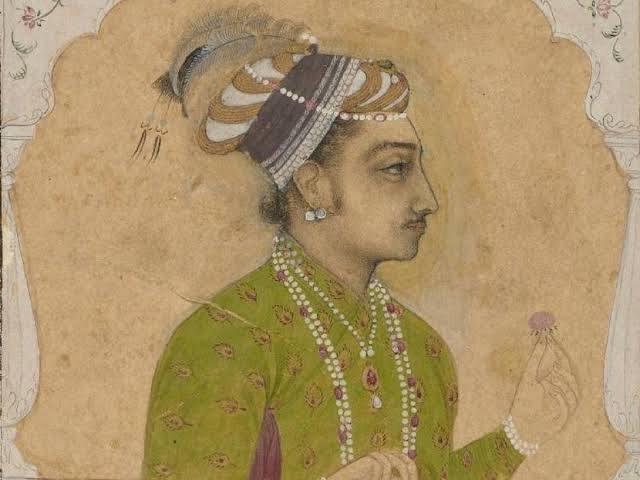
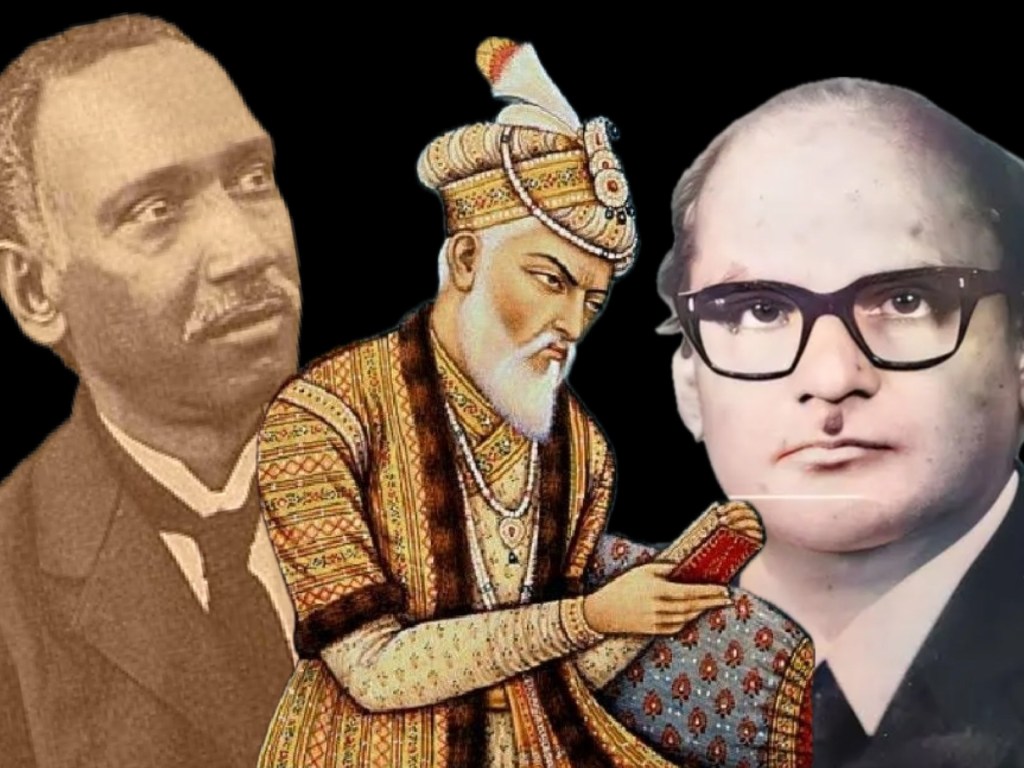
Dara Shukoh occupies a singular and paradoxical position in Mughal history. He has attracted a remarkably diverse historiography, shaped as much by historians’ intellectual predispositions as by the politically mediated nature of Mughal sources. Early colonial and nationalist writers, most notably Sir Jadunath Sarkar, framed Dara through a stark moral opposition with Aurangzeb, portraying him as a tolerant, humanistic, almost proto-secular prince tragically eliminated by religious orthodoxy. This binary, though influential, flattened the political realities of Mughal succession and transformed Dara into a symbolic counter-figure rather than a historically situated actor. A crucial corrective was offered by Kalika Ranjan Qanungo, who rejected romanticisation and insisted on judging Dara as a political figure. Qanungo acknowledged Dara’s intellectual sincerity and cultural brilliance but emphasised his lack of administrative training, military competence, and political tact. For him, Dara’s failure stemmed not from religious heterodoxy but from an inability to convert cultural authority into political power. Later scholarship, especially that of M Athar Ali, shifted attention to the structural logic of Mughal politics—factional alignments, noble interests, command over resources—rather than personal belief. More recent cultural-intellectual studies by Supriya Gandhi have further nuanced this picture by situating Dara within Mughal traditions of knowledge production, translation, spiritual kingship, and elite piety. Taken together, these approaches move us away from moral binaries and toward an understanding of Dara Shukoh as a historically grounded prince whose intellectual ambitions collided with the unforgiving constraints of early modern imperial power.
As the eldest son and acknowledged heir-apparent of Emperor Shahjahan, Dara enjoyed unparalleled paternal favour. Yet this intimacy proved politically debilitating. Though appointed subahdar of Punjab and Allahabad, he governed these provinces largely through deputies and remained mostly at court, thereby missing the sustained provincial and military apprenticeship traditionally expected of Mughal princes. Qanungo was particularly sharp on this point: Dara, shielded from adversity, never acquired the discipline of command or the capacity to negotiate power under pressure. Unlike Aurangzeb, whose long tenures in the Deccan forged military authority and noble alliances, Dara remained dependent on imperial favour rather than personal networks. Temperamentally reflective and intellectually inclined, he was ill-suited to the aggressive calculus of succession politics. Compounding this was an arrogance born of privilege; Dara repeatedly alienated senior nobles such as Mirza Raja Jai Singh, Shaista Khan, and Khalilullah Khan by humiliating them and disregarding courtly norms. For example, he would derogatorily call Jai Singh as “Dakhini Bandar”. In a polity where kingship depended on managing egos and forging consensus among elites, such behaviour proved fatal.
In stark contrast to these political limitations stood the coherence and ambition of Dara’s intellectual and spiritual vision. His intellectual world was anchored in Qadiri Sufism. Introduced by Shah Jahan to the celebrated mystic Miyan Mir, Dara later became a devoted disciple of Mulla Shah Badakhshi. While Sufi devotion was not uncommon in the Mughal household—Jahanara Begum shared similar inclinations—Dara alone sought to systematise and textualise mystical experience. His works, including Safinat-ul-Auliya and Sakinat-ul-Auliya, compiled hagiographical and doctrinal material on Sufi saints and traced chains of spiritual authority; Risala-i Haqqnuma explored metaphysical truth and ethical conduct; and Hasanat-ul-Arifin assembled aphoristic sayings of Sufi masters. These were serious intellectual interventions, not ornamental exercises in piety. Yet, as Qanungo perceptively observed, Dara confused spiritual authority with political legitimacy, assuming that metaphysical depth could compensate for deficiencies in administration and military command.
This intellectual ambition reached its most original expression in Dara’s comparative theological works, above all Majmaʿ-ul-Baḥrain (“The Confluence of the Two Seas”). Far from being a plea for vague tolerance, the text is a sustained metaphysical argument that Sufi notions of divine unity (tawḥīd) and Vedantic concepts of ultimate reality (brahman) converge at a deeper, esoteric level. Dara approached Hinduism not as a collection of popular rituals but as a philosophical tradition whose highest articulation lay in the Upanishads. He consistently distinguished between external religious forms and inner truth, arguing that conflict arose when surface practices were mistaken for ultimate meaning. His engagement with Hinduism was thus elite, text-centred, and philosophical rather than devotional or populist. Importantly, Majmaʿ-ul-Baḥrain did not advocate the fusion of religions; it sought instead to reveal a shared mystical grammar underlying distinct traditions.
This vision culminated in Dara’s Persian translation of the Upanishads, titled Sirr-i Akbar (“The Greatest Secret”). In the introduction, Dara advanced his most daring claim: that the Qur’anic Kitab al-Maknun, the “Hidden Book,” referred to in Islamic scripture, was none other than the Upanishads. To Dara, these texts contained the primordial articulation of monotheism, later reaffirmed and clarified by Islam. The project was explicitly pedagogical and imperial. By translating the Upanishads into Persian, Dara sought to make them accessible to Muslim scholars and integrate Indian metaphysics into the Persianate intellectual world of the Mughal elite. As Supriya Gandhi has shown, translation in the Mughal context functioned as a mode of sovereignty, a way of claiming India’s intellectual past and embedding Mughal authority more deeply in the subcontinent.
Dara’s pluralism must be distinguished carefully from Akbar’s doctrine of ṣulḥ-i kul. Akbar’s ṣulḥ-i kul was primarily political and administrative, a principle of universal peace designed to stabilise empire and secure loyalty across religious communities. Dara’s version, by contrast, was metaphysical and intellectual. It did not emerge from the necessities of governance but from a conviction that all true religions shared a single esoteric core. Where Akbar tolerated difference to rule effectively, Dara sought to interpret difference away at the level of ultimate truth. Further, Akbar’s sulh e kul was a rejection of religion, Dara’s sulh e kul was belief that there is truth in all religions. This distinction is crucial, for it reveals why Dara’s vision, however sophisticated, lacked the institutional mechanisms that made Akbar’s policy durable.
Dara’s conception of sovereignty extended beyond texts into culture, art, and architecture. He was a passionate patron of music, painting, and calligraphy, arts viewed with suspicion by Aurangzeb. The celebrated Dara Shukoh Album, presented to his wife Nadira Banu Begum, reveals him not merely as a patron but as an aesthete of remarkable sophistication; its later defacement and anonymisation after his execution mirror his systematic erasure from official memory.
Architecturally, Dara commissioned the tomb of Nadira Banu in Lahore, the shrine of Miyan Mir, the Dara Shukoh Library in Delhi, the Akhun Mulla Shah Mosque, and the Pari Mahal complex in Srinagar—structures that embody a synthesis of Persianate form, local traditions, and spiritual symbolism, reflecting his belief that architecture could serve as a medium of ethical and metaphysical expression.
Contrary to later assumptions, Dara’s engagement with Hindu, Sufi, and even Jesuit traditions was not exceptional within Mughal practice. Akbar, Jahangir, and Shah Jahan had all patronised non-Islamic scholars and ascetics. Qanungo was emphatic that religion was not the decisive factor in Dara’s downfall; the charge of kufr functioned largely as a post-facto political justification. What doomed Dara was his failure to command armies, build durable noble alliances, and inspire confidence in moments of crisis. Aurangzeb’s subsequent erasure of Dara from chronicles and the uncertainty surrounding his burial site underscore the politics of memory, yet even Aurangzeb complicates the stereotype of sectarian vengeance by arranging marriages between his children and Dara’s descendants and maintaining certain Sufi affiliations himself.
Dara Shukoh thus represents not a martyr to tolerance but a failed experiment in metaphysical kingship. He imagined a Mughal sovereignty grounded in spiritual insight, philosophical synthesis, and cultural refinement. As Qanungo perceptively argued, such ideals could enrich empire but could not sustain it. In a polity where authority rested on military command, revenue extraction, and elite consensus, Dara’s intellectual capital proved insufficient. His enduring significance lies not in what he ruled, but in what he attempted to imagine: an empire in which Islam and Hinduism were not merely accommodated but philosophically reconciled. That this vision failed tells us less about its nobility than about the unforgiving logic of early modern imperial power.
The historical relationship between India and Afghanistan must be approached as a history of shared spaces rather than of bounded territories. Long before the emergence of modern political borders, Afghanistan functioned as India’s principal north-western gateway, linking the subcontinent with Central Asia, Iran, and the Mediterranean world. The Hindu Kush was never an absolute barrier; instead, its passes—Khyber, Bolan, and Gomal—structured movement and exchange. Ancient Indian geographical imagination conceptualised this zone as part of the Uttarāpatha, the northern route of commerce and communication, suggesting a spatial order defined by circulation rather than enclosure.
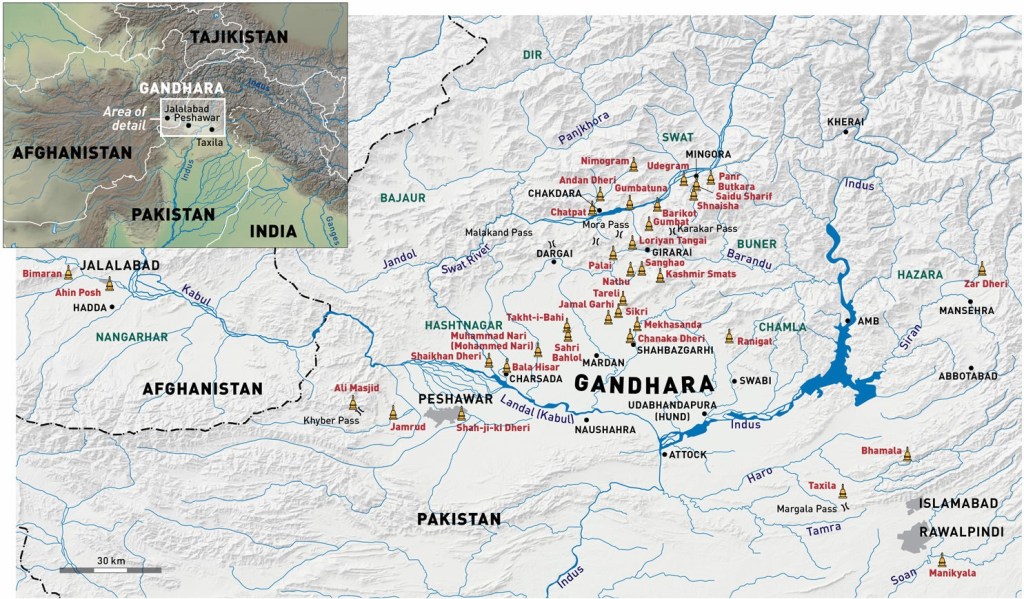
This connectivity was already firmly in place in the ancient period. Regions corresponding to present-day eastern Afghanistan and north-western Pakistan—above all Gandhāra—were deeply embedded in the political and cultural world of early India. Gandhāra, with centres such as Taxila, functioned as a major intellectual and commercial hub, where Vedic, Buddhist, Iranian, and Hellenistic traditions intersected. The incorporation of Afghanistan into the Mauryan Empire in the third century BCE marked a decisive moment in this shared history. Ashokan inscriptions discovered at Kandahar, composed in Greek and Aramaic, reveal both the reach of imperial authority and the cosmopolitan character of the Indo-Afghan region. These inscriptions also indicate that Afghanistan lay at the crossroads of multiple cultural worlds, rather than on the margins of any one of them.
In the centuries following the Mauryas, the Indo-Afghan space became a crucial segment of the trans-Asian trading network conventionally described as the Silk Road. While often imagined as a single route, the Silk Road consisted of multiple, intersecting corridors, many of which passed through Afghanistan, linking India to Bactria, Sogdiana, China, and the Iranian plateau. Afghan cities such as Balkh, Bamiyan, and Kapisa emerged as nodal points where Indian merchants, Central Asian traders, and itinerant monks converged. Through these routes flowed not only silk and spices, but also ideas, artistic forms, technologies, and religious traditions.
The Indo-Greek, Indo-Scythian, and Kushan polities ruled across Afghanistan and north India as a single political and economic continuum, reinforcing these connections. Under the Kushans in particular, Afghanistan occupied a central place in a vast empire that stretched from the Gangetic plains to Central Asia. Buddhist monasteries along the Silk Road—most famously at Bamiyan—were sustained by Indian patronage and merchant wealth, and they played a decisive role in transmitting Buddhism from India into Central Asia and China. As scholars such as Romila Thapar have noted, these developments challenge later civilisational boundaries by revealing an ancient world in which Afghanistan was integral to India’s religious and commercial life.
These ancient patterns of movement and exchange laid the groundwork for the medieval and early modern Indo-Afghan relationship. Dynasties that later ruled India—the Ghaznavids, Ghurids, and Timurids—emerged from Afghan and Trans-Oxanian contexts already shaped by centuries of interaction with the subcontinent. The Indo-Persian political culture that developed from the thirteenth century onwards drew upon this inherited geography of routes, markets, and shared cultural idioms. Historians such as Irfan Habib and Muzaffar Alam have emphasised that the political vocabulary and administrative practices of medieval India cannot be understood without recognising Afghanistan’s role as a connective zone rather than a point of rupture.
This longue durée of integration reached its most structured and explicit form under the Mughal Empire. The Mughal state itself was born out of the Indo-Afghan corridor, and Afghanistan lay at the heart of its political geography. For Babur, Kabul was his watan, a homeland that anchored his claims to legitimacy and sovereignty.
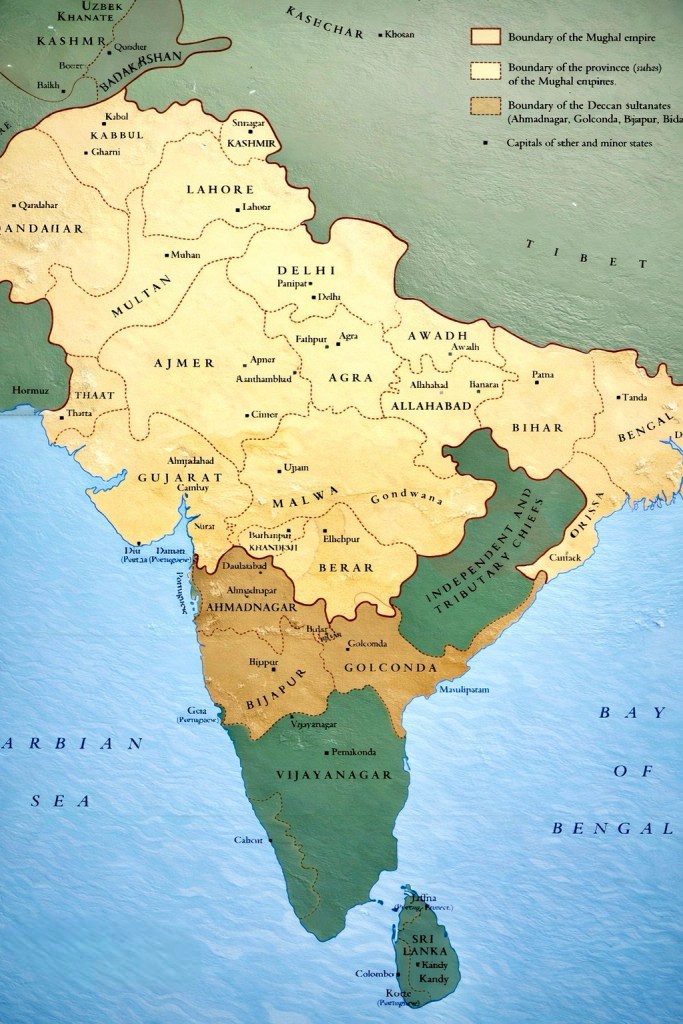
The medieval and early modern periods intensified these connections, culminating in the Mughal era, when Afghanistan assumed a position of extraordinary centrality in the political imagination and administrative structure of the Indian empire. The Mughal state itself was born out of the Indo-Afghan corridor. As pointed out above, Kabul was not a frontier possession but Babur’s watan, imbued with emotional, strategic, and cultural significance. Babur’s repeated oscillation between Kabul and Hindustan, described vividly in the Baburnama, reveals a political geography in which the Hindu Kush did not divide worlds but linked them. Kabul functioned as the hinge between Central Asian Timurid traditions and the Indian environment into which Babur inserted himself after 1526.
The Mughal Empire c. 1600
Under his successor Humayun too, control over Afghanistan, particularly Kabul and Qandahar, was essential to Mughal survival. The Afghan zone provided not only military manpower but also legitimacy rooted in Timurid and Chinggisid traditions. Humayun’s exile in Iran and subsequent return to India via Qandahar and Kabul further reinforced the role of Afghanistan as a political bridge rather than a periphery. Stephen Dale and Ali Anooshahr have convincingly shown that early Mughal sovereignty was transregional in character, resting on the ability to mobilise resources and loyalties across Central Asia, Afghanistan, and northern India.
This pattern continued and stabilised under Akbar. Kabul was incorporated as a suba within the Mughal administrative system, its governors often drawn from the highest ranks of the nobility. Far from being marginal, the province occupied a privileged position in the imperial hierarchy, frequently assigned to princes or trusted grandees. Akbar’s policy towards Afghan tribes was not merely coercive but integrative; Afghan nobles were absorbed into the mansabdari system and deployed across the empire. Iqtidar Alam Khan and M Athar Ali’s works on Mughal nobility demonstrate the extent to which Afghans remained a vital component of the imperial elite well into the seventeenth century.
Under the early Mughal rulers, the transregional sovereignty was institutionalised. Kabul not only became a Mughal suba, but was frequently entrusted to princes or senior nobles, reflecting its privileged status within the imperial order. Control over Kabul and Qandahar was vital not merely for defence but for maintaining access to the wider Central Asian world. The long contest with the Safavids over Qandahar underscores how deeply Mughal India remained embedded in an Indo-Afghan-Iranian geopolitical system. These struggles were accompanied by sustained diplomatic and cultural exchange, reinforcing a shared political culture across the region.
Social and economic ties further bound Mughal India and Afghanistan together. Afghan merchants operated extensively in Indian cities, while Indian traders from Punjab and Multan were active across Afghan markets, continuing commercial patterns that can be traced back to ancient Silk Road exchanges. Afghan soldiers, scholars, and Sufi figures circulated freely within the empire, sustaining what Richard Eaton and Nile Green have described as a mobile Indo-Persian cultural sphere. Afghanistan thus remained integral to the everyday functioning of Mughal India, not merely to its frontier defence.
The strategic importance of Afghanistan lay not only in its manpower but also in its role as the empire’s first line of defence against Central Asian and Iranian powers. The long contest with the Safavids over Qandahar illustrates this clearly. For the Mughals, Qandahar was less a distant fortress than a keystone of imperial security, linking Kabul to the Indus plains. The repeated transfer of Qandahar between the Mughals and Safavids during the seventeenth century underscores how deeply the city was embedded in the geopolitics of both India and Iran. Muzaffar Alam has shown that these conflicts were accompanied by intense diplomatic exchanges and cultural negotiations, further binding the Indo-Afghan-Iranian world.
Economically and socially, Mughal India and Afghanistan were closely intertwined. Afghan merchants operated extensively in Indian cities such as Lahore, Delhi, Agra, and Burhanpur, while Indian traders—particularly from Punjab and Multan—maintained commercial networks in Kabul and beyond. Afghan soldiers, clerics, and Sufis circulated freely across the empire, contributing to what Richard Eaton and Nile Green have described as a shared Indo-Persian cultural sphere. Afghanistan thus remained integral to the everyday functioning of Mughal India, not merely to its high politics.
The later Mughal period did not sever these ties, even as imperial authority weakened. On the contrary, Afghanistan re-emerged as a decisive force in Indian politics in the eighteenth century. The invasion of India by Nadir Shah in 1739, culminating in the sack of Delhi, dramatically exposed the fragility of Mughal power. Yet Nadir Shah’s march into India followed long-established routes through Afghanistan, routes that had historically bound the two regions together. His intervention was not an aberration but a reminder of Afghanistan’s enduring role as the north-western axis of Indian politics.
In the aftermath of Nadir Shah’s death, his Afghan general Ahmad Shah Abdali—also known as Ahmad Shah Durrani—carried this legacy forward. Abdali’s repeated invasions of India, including the decisive Battle of Panipat in 1761, were not merely acts of external aggression but the assertion of a political order that once again spanned Afghanistan and northern India. The Durrani Empire, with its base in Kandahar and Kabul and its reach into Punjab and Delhi, echoed earlier patterns of Indo-Afghan imperial integration. As recent scholarship has noted, Abdali operated within a political culture familiar to Mughal elites, drawing upon shared norms of kingship, military organisation, and revenue extraction.
The Mughal period thus reveals the Indo-Afghan relationship at its most intimate and complex. Afghanistan was simultaneously homeland, province, military reservoir, and strategic buffer for the Mughal Empire. Its cities and passes structured the rhythms of imperial expansion, defence, and collapse. The later colonial transformation of this region into a rigid frontier, culminating in the Durand Line in 1893, represents a sharp rupture from this older history of fluidity and interdependence.
In conclusion, the Mughal experience compels us to rethink India–Afghanistan relations beyond the language of invasion or foreignness. From Babur’s Kabul to Abdali’s Panipat, Afghanistan was not outside Indian history but one of its constitutive spaces. Recovering this shared past allows us to see the Indo-Afghan world as a connected historical zone, fractured only recently by colonial boundary-making and modern geopolitics, and invites a reassessment of South Asia’s place within wider Eurasian historical processes.
Aurangzeb, Shivaji, and the Evolution of Historical Understanding: From Jadunath Sarkar to M Athar Ali
My talk today addresses two related questions. First, how should we understand Sarkar’s own approach to Aurangzeb and Shivaji? Writing under colonial rule and bearing knighthood, was he a “colonial historian”? Was he following a British template—belittling Aurangzeb as a fanatic while elevating Shivaji as a Hindu hero—much as Rushbrook Williams, in another context, contrasted Babur with Rana Sanga? Or was Sarkar simply extracting what he believed the sources compelled him to conclude? Second, what has changed in our assessment of Aurangzeb since Sarkar—what has modern research altered, corrected, or complicated?
There is little doubt that Jadunath Sarkar was among the tallest historians of his age, and one whose scholarly seriousness is beyond dispute. When he undertook Mughal history, he first equipped himself with the language of the sources. He did not rely on translated Persian texts; he built his arguments from what the primary sources revealed. He mastered Persian and the scripts in which Mughal documents circulated—including difficult hands such as khaṭṭ-i shikast. The Irvine Collection housed at the British Library contains materials painstakingly collected, acquired, and copied by Sarkar. He was perhaps among the earliest historians to work systematically with the Akhbārāt-i Dārbar-i Muʿallā, a rich set of Mughal news-reports and official documentation. Many documents acquired or copied by him later came to be housed at Sitamau. His collaboration with two major contemporaries—G. S. Sardesai for Marathi materials and Raghubir Singh of Sitamau—is now well documented, notably in K. C. A. Raghavan’s History of Men: Jadunath Sarkar, G. S. Sardesai, Raghubir Singh and Their Quest for India’s Past (HarperCollins, Noida, 2020), one of the best recent works for understanding Sarkar’s scholarly world.
At the same time, Sarkar’s intellectual formation belonged unmistakably to a particular moment. In one of his writings, Rudrangshu Mukherjee called Sarkar a product of his times, describing him as “the last representative of a long intellectual line that began with (Raja) Rammohan Roy,” a lineage that could hail British rule as a providential end to years of “Muslim tyranny.” Sarkar himself, in the second volume of his History of Bengal (Dacca, 1948), described British rule as “the beginning of a glorious dawn, the like of which the history of the world has not seen anywhere.” He also suggested that European success in India lay not primarily in perfidy or superior weapons, but in scientific temper and organisational ability.
More recently, Dipesh Chakrabarty, in The Calling of History: Sir Jadunath Sarkar and His Empire (University of Chicago Press, 2015), has described Sarkar as “a child of the empire” who embraced its highest abstract ideals and struggled to give Indian history a scientific and academic status, in opposition to what he saw as the shortcomings of popular history.
Sarkar’s productivity was extraordinary. He wrote extensively on the centuries preceding the “glorious dawn” of British rule: four books and 158 essays and addresses in Bengali; 17 books (some multi-volume) and around 260 research papers in English; and more than a hundred essays for newspapers and magazines. He also translated into English a number of Persian (and even French) documents (see Aniruddha Ray, Jadunath Sarkar, Paschim Banga Bangla Akademi, Kolkata, 1999, pp. 70–118). As A. L. Basham observed (“Sir Jadunath Sarkar, C.I.E.,” Journal of the Royal Asiatic Society, vol. 90, 1958, pp. 222–23), Sarkar’s greatness lay especially in bringing to light a vast range of primary Mughal materials.
For the late seventeenth century—and for the political turbulence of that age—it is impossible to bypass Sarkar’s multi-volume History of Aurangzeb or his work on Shivaji Maharaj. In Sarkar’s framing, the reign of Aurangzeb was deeply marked by the emperor’s personal religious views and inflexible beliefs. Aurangzeb, for him, was an orthodox Muslim who pursued discrimination and persecution of Hindus; alienated communities, Sarkar argued, responded with resistance to the Mughal state. Alongside what he described as the “deterioration” in the character of the king and the nobility, Sarkar proposed that there was a discernible “Hindu reaction” visible in the Rathor, Bundela, Maratha, and Sikh revolts.
This emphasis on the individual—on personal character as the engine of historical causation—was in keeping with the historiographical temper of his age and aligns in important ways with what William Irvine had advanced in his work on the Later Mughals. In that framework, history turns on the moral and political qualities of individuals: Akbar builds empire because of tolerance; Aurangzeb presides over decline because of intolerance.
Yet Sarkar, precisely because he was a historian of substance, also acknowledged Aurangzeb’s strengths. He wrote of him:
“[Aurangzeb] was free from vice, stupidity or sloth. His intellectual keenness was proverbial…he took to business of governing with all the ardour which men usually display in the pursuit of a pleasure…His patience and perseverance were as remarkable as his love for discipline and order. In private life he was simple and abstemious like a hermit. He faced the privations of a campaign or a forced march as uncomplainingly as the most reasoned private…Of the wisdom of the ancients, which can be gathered for ethical books, he was a master.”
Alongside Aurangzeb, Sarkar’s Shivaji and His Times (first published in 1919) consolidated his reputation as a leading historian. It was not merely a political biography but also a sustained enquiry into Maratha society and government, with attention to economic and foreign policy. Sarkar also examined why Shivaji failed, in his view, to build a durable state. He highlighted the weakening effects of caste, criticised incessant aggressive warfare, and was sceptical of over-reliance on intrigue and diplomatic manoeuvre.
Sarkar also noted tensions within Maratha society: Shivaji’s experience of humiliation at the hands of Brahmins, despite his own devotion to Brahmanical defence and prosperity; their insistence on treating him as a Shudra; and the role of Balaji Avji, a Kayastha leader, whose own social experience stood at odds with Brahmanical dominance.
He was equally unsparing about economic policy. Sarkar pinpointed Shivaji’s repeated plunder of Surat as a strategy that frightened away wealth and trade, progressively impoverishing the city and drying up a potential source of resources. Revenues such as chauth and sardeshmukhi, he argued, could not serve as stable fiscal foundations.
As with Aurangzeb, Sarkar explored Shivaji’s personal life and ethical posture: free from vice, austere, devoted to religion and holy men, and yet, in Sarkar’s account, notably impartial—respecting Hindu and Muslim holy men alike. He also stressed Shivaji’s charisma as a leader of men. Despite being a devout Hindu, Shivaji had a number of Muslim commanders—Munshi Haider, Siddi Sambal, Siddi Misri, Siddi Halal, Nur Khan, and Daulat Khan—and he gave legal recognition to Muslim qazis within his dominion—details that sit uneasily with modern political caricatures.
If Sarkar’s Aurangzeb unsettled those who wished for an uncomplicated Mughal apology, Sarkar’s Shivaji disappointed many nationalists. As Chakrabarty notes, Sarkar’s readers could be deeply dismayed by his criticism of the Maratha hero; his “dispassionate assessments” refused to conceal darker episodes. He was explicit, for instance, about Shivaji’s acquisition of Javli through the killing of members of the Morey clan.
Was Sarkar, then, essentially writing as a British loyalist? Did he work with a communal template? The evidence is more complicated. Sarkar discomforted apologists on both sides. The more persuasive reading is that he was an empiricist working within the limits—and the habits—of the sources available to him. Raghavan captures this tradition neatly when he describes Sarkar as a judge rather than a lawyer: dispassionately viewing evidence and pronouncing judgement, not simply marshalling facts for a predetermined conclusion. Sarkar hunted down sources, translated them, and extracted embedded evidence; he integrated topography into narrative and analysed outcomes with a craftsman’s discipline. He also often offered counterfactual alternatives—what might have been done differently—most famously in his discussion of possible imperial choices in 1679 during the Rathor crisis.
Sarkar’s method can be illustrated in his use of parallel traditions: he observed that both the Sabhasad Bakhar (1697) and Persian Bijapuri histories used the term mulkgiri to describe raiding into neighbouring territories as a political ideal; Bhimsen, in the Nuskha-i Dilkusha, also used mulkgiri for Maratha raids under Shivaji and Sambhaji. Sarkar argued that Mughal mulkgiri spared co-religionists while Shivaji’s mulkgiri struck across Hindu and Muslim polities alike; he further claimed, on the basis of Sabhasad’s narrative, that Shivaji’s enterprises often amounted to plunder.
Such views—Aurangzeb’s “bigotry,” Shivaji’s “blemishes,” and the explanatory weight placed on personal character—continued to shape historical writing well into the mid-twentieth century. But by the 1950s and 1960s, Indian historiography underwent a notable shift: the centre of gravity moved from individuals to structures, from moral character to socio-economic processes, from rulerly intent to the mechanics of state and class.
In the decade after Independence, changes in method and new sources produced new perspectives. Harbans Mukhia has repeatedly noted that the publication of Irfan Habib’s The Agrarian System of Mughal India (1961) made “the ruler and his personal predilections irrelevant” to historical explanation, shifting focus from the sovereign to a ruling class driven by the imperatives of revenue extraction. Around the same time, Satish Chandra’s Parties and Politics at the Mughal Court, 1707–1740 (1959) offered a new framework to explain decline—emphasising a deepening social crisis and stresses within the jagirdari system rather than the personality of the emperor. Even earlier, in the 1950s, Mohammad Habib’s short treatise on Sultan Mahmud of Ghazni had insisted that economic motivations—temples as repositories of wealth—often mattered more than religious zeal in episodes of plunder.
During the 1970s and 1980s, scholars associated with the Aligarh School advanced this transformation further. Iqtidar Alam Khan traced Akbar’s religious policies to the growth of a cosmopolitan nobility from the early 1560s, encompassing multiple ethnicities, religions, and origins. M. Athar Ali, in The Mughal Nobility under Aurangzeb (1966), extended and reworked arguments linked to Satish Chandra’s emphasis on systemic pressures and explored what he called a cultural and ideological failure linked to the inability to adapt modern science and technology. This was a different explanatory universe from Sarkar’s “Hindu reaction” thesis.
To be fair to Sarkar, such approaches were not available—indeed, scarcely imaginable—when he wrote. “All history is contemporary history”: the historian cannot fully escape the intellectual atmosphere of the age. Sarkar’s writing was, in many ways, true to his time.
History-writing is not static; it is a dynamic process, continually moderated by new questions, new methods, and the discovery of sources previously unknown. No historian can be held responsible for materials not yet found. Since Sarkar, the location of new evidence and the adoption of new interpretive frameworks have enabled historians to revise important aspects of Aurangzeb’s reign. Let me offer a few examples.
Sarkar used two farmāns issued by Aurangzeb—one to Rasikdas and another to Muhammad Hashim—relating to revenue collection, with the latter couched in the idiom of shari‘a and invoking categories such as khums and zakat, taxes not levied in India. Subsequent research showed that the “Rasikdas” farmān was, in effect, a standardised order sent to different provinces for different diwans. Later, Irfan Habib and Shireen Moosvi argued that these documents were not evidence of religious taxation but instructions on managing a crisis of revenue collection—better understood against the backdrop of agrarian distress, including themes discussed in Francois Bernier on peasant flight. Moosvi, in particular, read the Rasikdas farmān as a practical manual for revenue officials navigating multiple obstacles to collection.
Similarly, using sources not accessible to Sarkar, Irfan Habib argued that the outbreaks associated with Nanakpanthis (1665), Jats (1669), and Satnamis (1672) were not “Hindu revolts” but uprisings rooted in agrarian pressure and heavy taxation rather than religious discrimination. The Satnamis were indeed a religious sect—known popularly as mundiyas—but they were also agriculturists and petty traders; so too were the Jats of Mathura and the Nanakpanthis of Kashmir and Punjab. Their resistance, in this reading, was driven by the economic extraction of a regressive system. M. Athar Ali interpreted these upheavals as zamindari revolts shaped by jagir transfers that intensified exploitation: jagirdars pressed zamindars, and both together squeezed the peasantry—leading to rebellion involving superior right-holders and cultivators alike. This was a major departure from Sarkar’s framing, which—given the limits of his sources—had tended to translate conflict into a Hindu–Muslim axis.
The same pattern appears in the case of the Rathor rebellion of 1679. For Sarkar, it flowed primarily from Aurangzeb’s anti-Hindu and anti-Rajput posture. Let us examine the issue first through Sarkar’s account, and then through later evidence used by Athar Ali.
In December 1678, Maharaja Jaswant Singh died at Jamrup in Afghanistan. He left no surviving son: Prithvi Singh had died in 1675. Reports reached Aurangzeb that two ranis were expectant. Jaswant Singh was also indebted to the state; Aurangzeb ordered efforts to recover dues from the deceased raja’s property, as customary practice required. At the same time, pending a final decision about the succession, Aurangzeb waited for the birth of the child. Under the Mughals, the conferring of tika carried political-administrative meaning: it was the emperor’s recognition of a particular claimant as ruler of a territory.
After Jaswant Singh’s death, Rani Hadi, the chief queen, pressed for the tika to be conferred on her. But by Mughal succession practice, a widow could not receive it; and Hindu law, too, gave the widow no such standing. The Rathors thus lacked a candidate. When a son—Ajit Singh—was born, the situation changed: now there was an heir to the gaddi. Initially, Aurangzeb did not doubt Ajit’s legitimacy, as seen in the cancellation of the assignment of Pokhran to Askaran once news arrived that a son had been born. But the administrative difficulty remained: the tika could not be conferred on an infant. Aurangzeb therefore ordered Jodhpur to be included in the khalisa.
The Rathors resented this. Durgadas, son of Askaran Rathore, fled with Ajit Singh to Jodhpur. Rani Hadi protested that no bhumiya (zamindar) had ever been dispossessed from their watan. Why should Rathors—who had served the empire so loyally—be asked to leave Jodhpur at the moment the late raja’s ceremonies were still underway? Durgadas and Sona Bhati demanded the revocation of khalisa incorporation and asked that the tika be conferred on Ajit Singh. Their resentment was genuine, but the Mughal technical problem was also real.
Sarkar, while conceding the technical hitch—no tika for widow or infant—argued that Aurangzeb could have conferred the tika on Inder Singh, grandson of Amar Singh (Jaswant’s elder brother), a near blood relation, a seasoned commander in the Deccan with a mansab of 1500/1000. Aurangzeb, Sarkar suggested, did not do so because he wanted to deprive Hindus of a powerful centre that might resist his anti-Hindu policy. When protests intensified, Aurangzeb, Sarkar said, began doubting Ajit’s legitimacy, claiming he might be the son of a milk-woman or maidservant.
Later evidence complicates this story. Fortunately, the dispatches of the waqi‘a-nigar of Ajmer sent to the emperor survive in a two-volume manuscript in the Asafiya Library, Hyderabad; a transcript exists in our own library. These reports are written for the emperor’s eyes and provide near-contemporary, first-hand information about events in 1679–80. They were not discovered in Sarkar’s time. M. Athar Ali used these dispatches in his PIHC paper (Delhi, 1961) on the causes of the Rathor rebellion.
According to this evidence, Aurangzeb—taking account of Rathor reaction—cancelled the order of khalisa incorporation and conferred the tika on Inder Singh, reportedly for a consideration of 36 lakhs of rupees. Another claimant, Karan Singh, offered 45 lakhs but was rejected—suggesting that money alone cannot explain the decision. After Inder Singh’s appointment, Rathor resistance sharpened dramatically. Rani Hadi even petitioned Aurangzeb that if he wished temples destroyed, the Rathors would comply, but the appointment of Inder Singh must be revoked; she preferred khalisa incorporation to Inder Singh’s rule. Aurangzeb rejected this petition. She then took the extreme step of seeking clarification through the court of Qazi Hamid, who boycotted the petition.
Two questions arise: why was Inder Singh so unacceptable? Because Inder Singh belonged to the line of Amar Singh, whom Jaswant Singh’s family had earlier deprived and humiliated. Durgadas, other Rathor leaders, and the widows feared revenge and retribution if Inder Singh entered Jodhpur. These internal tensions were known to Aurangzeb, while Sarkar seems either unaware of them or does not foreground them. When Aurangzeb refused to withdraw the appointment, the Rathors declared they would not allow Inder Singh to enter. In short, the rebellion’s core issue was Inder Singh’s appointment, not khalisa incorporation per se.
This also exposes a weakness in Sarkar’s interpretation. If Aurangzeb truly wanted to weaken a “Hindu centre,” he could have named Ajit Singh—however doubtful in legitimacy—as raja, with an imperial administrator governing until the child matured. That would have pacified Rathor sentiment while ensuring Jodhpur remained politically dependent. Aurangzeb did not do so, arguably because he wanted Jodhpur to function effectively: the Rathors supplied excellent soldiers, and Jodhpur’s location on the Agra–Gujarat trade route made stable law-and-order strategically important. Sarkar thus misidentified the immediate cause: the bitterness of Durgadas, Sona Bhati, and Rani Hadi was directed primarily against Inder Singh. When the emperor held firm, the Rathors told the qila‘dar of Jodhpur, Iftekhar Khan, to depart—they were beginning rebellion.
All this brings us back to the larger question: was Aurangzeb as bigoted as Sarkar portrayed him? Modern research—from M. Athar Ali and M. L. Bhatia to Audrey Truschke—has often moderated the earlier picture and argued for a more nuanced emperor. Many scholars, from Sarkar and S. R. Sharma to Athar Ali, Bhatia, and Truschke, have approached this theme; some—Shibli Nomani, Sharma, and Sarkar—presented Aurangzeb as a bigot, while others offered more complex readings.
Importantly, Aurangzeb was not perceived by his contemporaries as a hard-core zealot in the manner later projected. Several contemporaneous historians—including Hindu writers such as Bhimsen (Nuskha-i Dilkusha) and Isardas Nagar (Futuhat-i Alamgiri)—do not construct him in that idiom. The “bigot” image hardens later, particularly from the late eighteenth century onward, and gains firmer footing in colonial and nationalist historiography.
The War of Succession, as we now recognise, was not fought on communal grounds or as a clash between Dara Shukoh’s tolerance and Aurangzeb’s supposed anti-Hindu ideology. Aurangzeb did not claim to be defending Islam in 1658, nor did he treat Islam as being threatened by Shahjahan or Dara. In the early years after accession, we do not see blanket discrimination against Hindus or Rajputs. Aurangzeb appointed Raja Raghunath Singh (a Khatri) as diwan of the empire—an appointment without close precedent since Todarmal’s death. He also appointed two non-Muslim subahdars to key provinces: Maharaja Jaswant Singh in Gujarat—despite his earlier opposition in the succession war—and Mirza Raja Jai Singh as viceroy of the Deccan, an office often reserved for princes of royal blood. If one insists on the language of discrimination, one must admit that in these years it often operated in favour of Rajputs, not against them. Promotions to Rajputs were not inferior to those given to other segments of the nobility.
A further restraint shaped Aurangzeb’s early policy: as long as Shahjahan lived, Aurangzeb could not afford to alienate powerful factions, because an alternative claimant remained available. The institution of monarchy had been compromised by the very manner of Aurangzeb’s accession; he therefore moved cautiously, aware that the precedent of imprisoning the emperor could legitimate future rebellions. He also had to fulfil commitments made during the war of succession and deliver on the expansionist promise that supported noble fortunes. Hence the early expeditions in multiple directions—many of which ended badly: Mir Jumla’s death in Assam, Shaista Khan’s humiliation in the Deccan, Jai Singh’s diplomatic success at Purandhar in 1665 followed by the loss of its fruits after Shivaji’s escape from Agra.
Military disappointments set off a chain reaction: the Yusufzai revolt (1667), Afridi revolt (1674), the Jat rebellion (1669), the Satnami uprising (1672), and Shivaji’s coronation. Aurangzeb’s political record, at best, was mixed. The weakening of monarchy demanded compensation from another source, and it is here that Aurangzeb’s emphasis on shari‘a idioms and clerical support must be located. He deployed it with such finesse that not only contemporaries but later historians could be misled. The failure of Prince Akbar’s rebellion—ending in flight—illustrates how far Aurangzeb succeeded, at least temporarily, in consolidating sections of the Muslim aristocracy behind the throne. It is in this context that measures like the imposition of jizya in 1679 acquire a political logic: why was it not imposed from 1658 onward, if the aim was purely theological?
Debating Aurangzeb’s leanings—religious orthodoxy or political pragmatism—one must ask whether he truly intended, as Sarkar suggested, the establishment of dār al-Islām in India, mass conversion, and annihilation of dissent, or whether, as Ishtiyaq Husain Qureshi, Shri Ram Sharma, and others proposed, he aimed at rigid adherence to shari‘a and the undoing of Akbar’s damage. Such portrayals struggle to explain empirical features of his reign—such as the increasing proportion of Rajput mansabdars and the prominence of figures like Raghunath Ray Kayastha as diwan-i kul, honoured by Aurangzeb and praised in the Ruqa‘at-i Alamgiri.
Aurangzeb did increase the visibility of the ʿulamāʾ and promulgate measures overtly aligned with sharīʿah norms; Khafi Khan remarks that he gave qazis extensive powers in civil administration, provoking jealousy among leading nobles. Prohibitions on intoxicants, restrictions on certain pilgrimages, discouragement of music and dancing, withdrawal of patronage from astrologers, and attempts to regulate taxation in sharīʿah terms all strengthened later claims that Aurangzeb was an orthodox champion—some even seeing in him the triumph of Sirhindi’s reforms. But the record also indicates the limits of such a reading: the ʿulamāʾ were state employees, the system was riddled with rivalries and corruption, enforcement was uneven, and Aurangzeb repeatedly subordinated clerical opinions to imperial authority—dismissing qazis and shaikh ul-Islams who resisted his political aims.
Even emblematic achievements such as the commissioning of the Fatawa-e Alamgiri can be read less as a radical break than as codification for guidance, while actual judicial practice still depended on individual qazi interpretations and the interplay of imperial edict and custom. In many respects, Aurangzeb’s policies continued Mughal precedent: clerics could be patronised, but they could not dictate the state.
The same caution applies to “early measures” often labelled religious: stopping tuladan and jharokha darshan, prohibiting wine, discouraging chahar taslim, banning astrology, restricting coloured garments, and banning music. Some historians, like R. P. Tripathi, even interpret certain actions—such as the music ban—as tied to austerity in a period of financial strain, especially when allowances of princes and princesses were curtailed.
At the rural level, policies around madad-i ma‘ash grants—mostly to Muslims—also intersected with political stresses. In the 1670s and 1680s Aurangzeb faced multiple zamindari crises; most zamindars were Hindus and many jagirdars were Muslims. To counter rural power, he could seek to strengthen Muslim landed presence and stabilise certain grants, making some permanent and hereditary—creating local counterweights to entrenched zamindari authority. Abul Fazl Ma’muri’s Tarikh-i Aurangzeb speaks of a jagirdari crisis—hama ālam bējāgīr mand—and of caution in promotions, with saved resources redistributed to consolidate support.
Jizya and temple destruction remain among the hardest issues. Jizya was discriminatory and humiliating; yet exemptions existed—Rajputs, Brahmins, and those in Mughal service among them—and it was graded by income. Some historians argue that its fiscal yield barely exceeded collection costs and that much was lost to corruption, while its symbolism mattered more than revenue. Temple destruction, too, is documented: orders in 1669 and again in 1679–80, including attacks on major shrines. At the same time, there is also extensive evidence of grants to Hindu religious institutions—temples, maths, Brahmins, pujaris—renewed land grants, donations such as ghee for temple lamps, gifts to Sikh institutions, and continued madad-i ma‘ash grants even to Nathpanthi yogis in places like Didwana and Nagor.
How do we reconcile destruction and patronage? One explanation advanced in modern scholarship is reprisal and politics rather than blanket iconoclasm—attacks linked to rebellion, local disloyalty, or political misconduct, while loyal and widely venerated institutions could be spared. In this reading, the destruction of Kashi Vishwanath, Keshav Dev at Mathura, and several Rajasthan temples is placed within local contexts of revolt, suspected collaboration, and shifting alliances. Jizya and selective temple destruction were discriminatory; yet the coexistence of grants and exemptions complicates any single-axis narrative.
Contemporary evidence is instructive here. Bhimsen, an eyewitness to the Deccan campaigns and a sharp critic of Aurangzeb’s strategy—especially the focus on fort-taking while Marathas controlled the countryside—does not build his critique primarily on religious grounds. He mentions jizya without rancour. Hindu writers such as Bhimsen, Isardas Nagar, and Sujan Rai Bhandari do not foreground religious persecution in the manner later historiographies do. This silence does not “prove” innocence, but it does suggest that the explanatory weight placed on religious policy in later communalised narratives may not align with the emphases of seventeenth-century observers.
Athar Ali’s broader caution is valuable: to judge the effects of Aurangzeb’s religious policy, one should not project the India of the nineteenth century—shaped by modern national and religious consciousness—onto the seventeenth. Loyalties to caste, clan, region, and master often overrode confessional identity. Moreover, policy prescriptions on paper could not always be implemented rigorously on the ground; temple destruction, in particular, could be negotiated, resisted, or locally adjusted, as official news-reports suggest. In the short term, the effects of religious measures may have been limited compared to deeper structural problems—fiscal pressure on peasantry, jagirdari stresses, and the strategic failures of the Deccan.
I have highlighted only some themes to show how Aurangzeb is assessed differently after Sarkar, and how our understanding of his reign has undergone a sea-change in recent decades. Does this mean Sarkar’s formulations stand diminished? Does it mean he wrote a communal history? Perhaps not. Sarkar was a historian working within the boundaries of the sources then known and the questions then considered central. As new sources were located and new perspectives developed, conclusions shifted—as they must. History can never be definitive or perfect; it reveals only what we ask of it, and depends upon where, and how, we seek our answers.
“Do not show the face of Islam to others; instead, show your face as the follower of true Islam.”
— Sir Syed Ahmad Khan
Born on 17 October 1817 in Delhi, Sir Syed Ahmad Khan emerged as one of the most remarkable figures of 19th-century India — a philosopher, social reformer, historian, and educator whose vision shaped modern Indian Muslim identity. Deeply devoted to the cause of education, he believed that only widespread, modern learning could enlighten and empower the masses.
A devout Muslim, yet deeply troubled by orthodoxy, Sir Syed’s reformist zeal found expression in his modernist commentary on the Qur’an and a sympathetic interpretation of the Bible, both seeking harmony between revelation and reason. His intellectual temperament was rational and inclusive, shaped by both Islamic theology and Enlightenment humanism.
He established schools at Moradabad (1858) and Ghazipur (1863), founded the Scientific Society (Aligarh, 1864) to translate Western works into Indian languages, and launched the periodical Tehzīb-ul-Akhlāq (1870) to reform social and moral attitudes. The culmination of his lifelong mission was the foundation of the Muhammadan Anglo-Oriental College (MAO College) on 7 January 1877, patterned after Oxford and Cambridge which would eventually evolve into Aligarh Muslim University.
Sir Syed and the Colonial Moment
Sir Syed’s long association with the East India Company placed him in a complex position during the Revolt of 1857. Witnessing the devastation of Delhi and the collapse of Mughal institutions, he sought to diagnose the roots of the tragedy. In his path-breaking work Asbāb-i Baghāwat-i Hind (The Causes of the Indian Revolt, 1859), he held the British government itself responsible, citing its aggressive expansionism, racial arrogance, and ignorance of Indian traditions.
He followed it with Tārīkh-i Sarkashī-i Bijnor, a detailed local account of the revolt. These works marked Sir Syed as an early historian of modern India, who analyzed events through empirical observation and social reasoning, not blind loyalty.
Though often called a British loyalist, and later associated with the formation of the Muslim League to safeguard community interests, he was doubly misunderstood.
The orthodox clergy denounced him as a “Natury Jogi,” a follower of Darwin and a denier of the Qur’an. The British establishment distrusted him as a critic who exposed their administrative failures.
Yet, beyond these misreadings stood a man envisioning a revived Indian Muslim community, equipped with both the ethical strength of Islam and the scientific temper of the West.
The Historian and Archaeologist
Few realize that Sir Syed Ahmad Khan was not only a reformer but also one of India’s first historical archaeologists. His monumental work Āthār-ul-Ṣanādīd (1847; revised 1854), literally “Monuments of the Nobles”, was the earliest survey of Delhi’s monuments written in Urdu and Persian.
In this text, he meticulously documented mosques, tombs, gardens, and madrasas, recording measurements, architectural details, and inscriptions with the precision of a modern archaeologist. It remains, even today, an indispensable primary source for the study of Delhi’s medieval architecture.
In 1847, the Delhi Archaeological Society was established, and Sir Syed became an active member. In its journal, he published a path-breaking article on the ancient bricks of Hastinapur, identifying strata and typologies that prefigured later archaeological methods. The only comparable study came decades later from Sir John Marshall, Director-General of the Archaeological Survey of India.
Sir Syed’s approach was holistic. He copied inscriptions in languages he did not know, including Prakrit, out of sheer respect for historical record. His attention to epigraphy, architecture, and urban morphology marks him as a genuine pioneer of historical archaeology in India.
The Aligarh Legacy and Archaeological Tradition
Sir Syed’s intellectual curiosity extended into his institutional creation at Aligarh. During his residence there, he collected antiquities, sculptures, and architectural fragments from neighboring regions, which were displayed in the Department of History and later preserved in the Central University Museum.
This collection catalogued by Professor R. C. Gaur, includes stone sculptures, door jambs, and ornamental fragments, embodying the founder’s passion for preserving the material past.
The Department of History, following his tradition, developed a robust Archaeology Section, which became one of the premier centers of field archaeology in India. Its excavations at Atranji Khera, Jhakera, Lal Qila, Fathpur Sikri, and along Mughal highways stand as enduring tributes to the legacy of Sir Syed whose integration of history, archaeology, and education gave Aligarh its distinct identity as both a seat of learning and a guardian of heritage.
Connoisseur of Composite Culture
Sir Syed’s appreciation of heritage went beyond monuments and manuscripts. He was, above all, a connoisseur of India’s composite culture, its interwoven Hindu-Muslim traditions, its shared languages, and its syncretic arts. His friendships with Hindu scholars such as Raja Jai Kishan Das, his use of Urdu as a cultural bridge, and his assertion that “Hindus and Muslims are the two eyes of the same beautiful bride of India” reflect his belief in the essential unity of the subcontinent.
The British decision in 1842 to replace Persian with English in administration had deeply alarmed Indian Muslims, but Sir Syed’s response was constructive, not reactionary. He urged the community to master English and Western sciences so as to remain socially and politically relevant. His educational reforms thus became acts of cultural preservation through adaptation and a renewal of heritage, not its abandonment.
The Context of His Nationalism
It is important to remember that Sir Syed lived in an age before the modern concept of “nationhood.” Terms like watan and qaum were fluid and contextual, denoting a people, region, or community. Sir Syed’s vision of a qaum was civilizational rather than territorial.
He was no Jamaluddin Afghani, nor a pan-Islamist agitator. His reforms were firmly rooted south of the Himalayas in the soil of India. His dream was of an enlightened Indian Muslim community, loyal to its faith yet integrated with the progress of its homeland.
Sir Syed Ahmad Khan stands today as one of the earliest interpreters of India’s national heritage, a man who combined the scholar’s precision, the reformer’s courage, and the patriot’s faith in the civilizational unity of India.
His Āthār-ul-Ṣanādīd illuminated the architectural past; his Asbāb-i Baghāwat-i Hind explained the political crises of his present; his Scientific Society, Tehzīb-ul-Akhlāq, and MAO College prepared the ground for an enlightened future.
In celebrating him, we celebrate the enduring belief that education and heritage are twin pillars of national regeneration. To walk through the gates of Aligarh today past the Victoria Gate, Strachey Hall, and the Sir Syed University Museum (now known as Musa Dakri Museum) is to retrace the vision of a man who sought to unite the reason of the modern age with the wisdom of our collective past.
Sir Syed Ahmad Khan was, and remains, a true connoisseur of our national heritage.
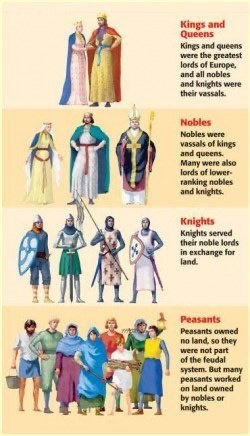
The first assimilation of ‘feudalism’ in the Indian context occurred at the hands of Col. James Tod, the celebrated compiler of the annals of Rajasthan’s history in the early part of the nineteenth century, For Tod, as for most European historians of his time in Europe, lord-vassal relationship constituted the core of feudalism. The lord in medieval Europe looked after the security and subsistence of his vassals and they its Continuities in turn rendered military and other services to the lord. A sense of loyalty also tied the vassal to the lord in perpetuity. Tod found the institution and the pattern replicated in the Rajasthan of his day in good measure.
The term feudalism continued to be viewed, off and on, in works of history in India, often with rather vague meanings attached to it. It was with the growing Marxist influence on Indian history writings between the mid-1950s and the mid-60s that the term came to be disassociated from its moorings in lord-vassal relationship and acquired an economic meaning, or rather a meaning in the context of the evolution of Indian class structure. One of the major imperatives of the formulation of an Indian feudalism was, paradoxically, the dissatisfaction of Marxist historians with Marx’s own placement of pre-colonial Indian history in the category of the Asiatic Mode of Production. Even though Marx had created this category himself, much of the substance that had gone into its making was commonplace among Western thinkers of the eighteenth and the nineteenth centuries.
Marx had perceived the Asiatic Mode of Production as an ‘exception’ to the general dynamic of history through the medium of class struggle. In Asia, he, along with numerous other thinkers, assumed there were no classes because all property belonged either to the king or to the community; hence there was no class struggle and no change over time. He shared this notion of the changeless Orient with such eminent thinkers as Baron de Montesquieu, James Mill, Friedrich Hegel and others. Real dynamism, according to them, came only with the establishment of colonial regimes which brought concepts and ideas of change from Europe to the Orient. Indian Marxist historians of the 1950s and 60s were unwilling to accept that such a large chunk of humanity as India, or indeed the whole ofAsia, should remain changeless over such large segments of time. They expressed their dissatisfaction with the notion of the Asiatic Mode of Production early on. In its place some of them adopted the concept of feudalism and applied it to India. Irfan Habib, the leading Marxist historian of the period, however, put on record his distance from ‘Indian feudalism’ even as he vehemently criticised the Asiatic Mode of Production.
D. D. Kosambi gave feudalism a significant place in the context of socio-economic history. He conceptualised the growth of feudalism in Indian history as a two-way process: from above and from below in his landmark book, An Introduction to the Study of Indian History, first published in 1956. From above the feudal structure was created by the state granting land and rights to officials and Brahmins; from below many individuals and small groups rose from the village levels of power to become landlords and vassals of the kings.
Kosambi, in his characteristic mode, formulated the notion of feudalism in the shape of a formula rather than in a detailed empirical study. This major task was taken up by Professor R. S. Sharma in his Indian Feudalism, 1965. However, R. S. Sharma did not follow the Kosambian formula of feudalism from below and from above; instead, he envisioned the rise of feudalism in Indian history entirely as ‘the consequence of state action, i.e. from above. It was only later that he turned his attention to the other phenomenon.
R. S. Sharma essentially emulated the model of the rise and decline of feudalism in Europe formulated in great detail by the Belgian historian of the 1920s and 3Os, Henri Pirenne. Pirenne had displaced the dominant stereotype of European feudalism as lord-vassal relationship and substituted in its place one that had much wider and deeper range of consequences for society. He postulated that ‘grand trade’, i.e long distance trade in Europe across the Mediterranean, had allowed European economy, society and civilisation to flourish in Antiquity until its disruption by the Arab invasions of Europe in the seventh century. Disruption of trade led to the economy’s ‘ruralisation’, which made it inward, rather than outward looking. It also resulted in what Pirenne called ‘the closed estate economy’. The closed estate signified the unit of land held as estate by the lord [10,000 acres on an average] and cultivated by the peasant, where trade was minimal and almost everything the inhabitants of the estate required was produced within. These estates, in other words, were economically ‘self-sufficient’ units. The picture changed again from the eleventh century when the Crusades threw the Arabs back to the Near East; this led to the revival of trade and cities and the decline of feudalism. Pirenne thus posited an irreconcilable opposition between trade and urbanisation on one hand and feudalism on the other.
R S Sharma copied this model in almost every detail, often including its terminology, on to the Indian historical landscape. He visualised the decline of India’s long distance trade with various parts of the world after the fall of the Guptas; urbanisation also suffered in consequence, resulting in the economy’s ruralisation. A scenario thus arose in which economic resources were not scarce but currency was. Since coins were not available, the state started handing out land in payment to its employees and grantees like the Brahmins. Along with land; the state also gave away more and more rights over the cultivating peasants to this new class of ‘intermediaries’. The increasing subjection of the peasants to the intermediaries reduced them to the level of serfs, their counterparts in medieval Europe. The rise of the class of intermediaries through the state action of giving grants to them is the crucial element in R S Sharma’s construction of Indian feudalism. Later on in his writings, he built other edifices too upon this structure, like the growth of the class of scribes, to be consolidated into the caste of Kayasthas, because state grants needed to be recorded. The crucial process of land grants to intermediaries lasted until about the eleventh century when the revival of trade reopened the process of urbanisation. The decline of feudalism is suggested in this revival, although R S Sharma does not go into this aspect in as much detail. The one element that was missing in this picture was the Indian counterpart of the Arab invasion of Europe; however, Professor B N S Yadava, another eminent proponent of the Indian feudalism thesis, drew attention to the Hun invasions of India which almost coincided with the beginning of the rise of feudalism here. The oppressive feudal system in Europe had resulted in massive rebellions of the peasantry in Europe; in India R S Sharma looked for evidence of similar uprising but found only one example of Kaivartas – who were essentially boatmen in eastern Bengal but also engaged part time in cultivation – having revolted in the eleventh century.
The thesis propounded in its fully-fledged form in 1965 has had a great deal of influence on subsequent history writing on the period in India. Other scholars supported the thesis with some more details on one point or another, although practically no one explored any other aspect of the theme of feudalism, such as social or cultural aspect for long afterwards. B N S Yadava and D N Jha stood firmly by the feudalism thesis. The theme found echoes in south Indian historiography too, with highly acclaimed historians like MGS Narayanan and Noburu Karashima abiding by it. There was criticism too in some extremely learned quarters; the most eminent among critics was D C Sircar. There was too a fairly clear ideological divide which characterised history writing in India in the 1960s and 70s: D D Kosarnbi, R S Sharma, B N S Yadava and D N Jha were firmly committed Marxists; D C Sircat stood on the other side of the Marxist fence. However, neither support nor opposition to the notion of feudalism opened up the notion’s basic structure to further exploration until the end of the 1970s. The opening up came from within the Marxist historiographical school. We shall return to it in a little while.
In 1946 one of the most renowned Marxist economists of Cambridge university, UK, Maurice Dobb, published his book, Studies in the Development of Capitalism in which he first seriously questioned the Pirennean opposition between trade and feudalism and following Engels’ insights drew attention to the fact that the revival of trade in Eastern Europe had brought about the ‘second serfdom’, i.e., feudalism. He thus posited the view that feudalism did not decline even in Weskrn Europe due to the revival of trade but due to the flight of the peasants to cities from excessive and increasing exploitation by the lords in the countryside. This thesis led to an international debate in the early 1950s among Marxist economists and historians. The debate was still chiefly confined to the question whether feudalism and trade were mutually incompatible. Simultaneously, in other regions of the intellectual landscape, especially in France, where an alternative paradigm of history writing, known as the Annales paradigm, was evolving, newer questions were being asked and newer dimensions of the problem being explored. Some of these questions had travelled to India as well.
WAS THERE FEUDALISM IN INDIA?
It was thus that in 1979 a Presidential Address to the Medieval India Section of the Indian History Congress’s fortieth session was entitled ‘Was There Feudalism in Indian History?‘ Harbans Mukhia, its author, a committed practitioner of Marxist history writing, questioned the Indian feudalism thesis at the theoretical plane and then at the empirical level by comparing the medieval Indian scenario with medieval Europe.
The theoretical problem was concerned with the issue whether feudalism could at all be conceived of as a universal system. If the driving force of profit maximisation had led capitalism on to ever rising scale of production and ever expanding market until it encompassed the whole world under its dominance, something we are witnessing right before our eyes, and if this was a characteristic of capitalism to thus establish a world system under the hegemony of a single system of production, logically it would be beyond the reach of any precapitalist system to expand itself to a world scale, i.e. to turn into a world system. For, the force of consumption rather than profit maximiation drove precapitalist economic systems, and this limited their capacity for expansion beyond the local or the regional level. Feudalism thus could only be a regional system rather than a world system. The problem is hard to resolve by positing different variations of feudalism: the European, the Chinese, the Japanese and the Indian, etc., although this has often been attempted by historians. For, then either the definition of feudalism turns so loose as to become synonymous with every pre-capitalist system and therefore fails to demarcate feudalism from the others and-is thus rendered useless; or, if the definition is precise, as it should be to remain functional, the ‘variations’ become so wide as to render it useless. Indeed, evenwithin the same region, the variations are so numerous that some of the most respected historians of medieval Europe in recent years, such as Georges Duby and Jacques Le Goff, tend to avoid the use of the term feudalism altogether; so sceptical they have become of almost any definition of feudalism.
The empirical basis of the questioning of Indian feudalism in the 1979 Presidential Address lay in a comparison between the histories of medieval Western Europe and medieval India, pursued at three levels: the ecological conditions, the technology available and the social organisation of forms of labour use in agriculture in the two regions. With this intervention, the debate was no longer confined to feudalism/ trade dichotomy which in any case had been demonstrated to be questionable In its own homeland.
The empirical argument followed the perspective that the ecology of Western Europe gave it four months of sunshine in a year; all agricultural operations, from tilling the field to sowing, tending the crop, harvesting and storing therefore must be completed within this period. Besides, the technology that was used was extremely: labour intensive and productivity of both land and labour was pegged at the dismal seed-yield ratio of 1 :2.5 at the most. Consequently the demand for labour during the four months was intense. Even a day’s labour lost would cut into production. The solution was found in tying of labour to the land, or serfdom. This generated enormous tension between the lord and the serf in the very process of p-reduction; the lord would seek to control the peasant labour more intensively; the peasant would, even while appearing to be very docile, try to steal the lord’s time to cultivate his own land. The struggle, which was quiet but intense, led to technological improvement, rise in productivity to 1 :4 by the twelfth century, substantial rise in population and therefore untying of labour from land, expansion of agriculture and a spurt to trade and urbanisation. The process was, however, upset by the Black Death in 1348-51 which wiped out a quarter of the population leading to labour scarcity again. The lords sought to retud to the old structures of tied labour; the peasants, however, who had tasted better days in the 11th and 12th centuries, flew into rebellions all over Europe especially during the 14th century. These rebellions were the work of the prosperous, rather than the poor peasants. By the end of the century, feudalism had been reduced to a debris.
Indian ecology, on the other hand, was marked by almost ten months of sunshine where agricultural processes could be spread out. Because of the intense heat, followed by rainfall, the upper crust of the soil was the bed of fertility; it therefore did not require deep, labour intensive digging. The hump on the Indian bull allowed the Indian peasant tp use the bull’s drought power to the maximum, for it allowed the plough to be placed on the bull’s shoulder; the plain back on his European counterpart would let the plough slip as he pulled it. It took centuries of technological improvement to facilitate full use of the bull’s drawing power on medieval European fields. The productivity of land was also much higher in medieval India, pegged at 1 : 16. Besides, most Indian lands yielded two crops a year, something unheard of in Europe until the ninteenth century. The fundamental difference in conditions in India compared to Europc also made it imperative that the forms of labour use in agriculture should follow a different pattern. Begar, or tied labour, paid or unpaid, was seldom part of the process of production here; it was more used for non-productive purposes such as carrying the zamindar ‘s loads by the peasants on their fields or supplying milk or oil, etc. to the zamindars and jagirdars on specified occasions. In other words tension between the peasant and the zamindar or the jagirdar was played out outside the process of production on the question of the quantum of revenue.
We do not therefore witness the same levels of technolagical breakthroughs and transformation of the production processes in medieval India as we see in medieval Europe, although it must be emphasised that neither technology nor the process of agricultural production was static or unchanging in India.
The 1979 Address had characterised the medieval Indian system as one marked its Continuities by he peasant economy. Free peasant was understood as distinct from the medieval European serf. Whereas the serf’s labour for the purposes of agricultural production was set under the control of the lord, the labour of his Indian counterpart was under his own control; what was subject to the state’s control was the amount of produce of the land in the form of revenue. A crucial difference here was that the resolution of tension over the control of labour resulted in transformation of the production system from feudal to capitalist in European agriculture from the twelfih century onwards; in India tension over revenue did not affect the production system as such and its transfornation began to seep in only in the twentieth century under a different set of circumstances.
‘Was There Feudalism in Indian History?’ was reprinted in the pages of a British publication, The Journal of Peasant Studies in 198 1. Within the next few years it had created so much interest in-international circles that in 1985 a special double issue of the journal, centred on this paper, comprising eight articles from around the world and the original author’s response to the eight, was published under the title Feudalism and Non-European Societies, jointly edited by T. J. Byres of the School of Oriental and African Studies, London University, editor of the journal, and the article’s author. It was also simultaneously published as a book. The title was adopted keeping in view that the debate had spilled over the boundaries of Europe and India and had spread into China, Turkey, Arabia and Persia. The publication of the special issue, however, did not terminate the discussion; three other papers were subsequently published in the journal, the last in 1993. The discussion often came to be referred to as the ‘Feudalism Debate‘. A collection of concerned essays was published in New Delhi in 1999 under the title The Feudalism Debate.
FEUDALISM RECONSIDERED
While the debate critically examined the theoretical proposition of the universality of the concept of feudalism or otherwise – with each historian taking his own independent position – on the question of Indian historical evidence, R S Sharma, who was chiefly under attack, reconsidered some of his earlier positions and greatly refined his thhsis of Indian feudalism, even as he defended it vigorously and elegantly in a paper, ‘How Feudal was Indian Feudalism?‘ He had been criticised for looking at the rise of feudalism in India entirely as a consequence of state action in transferring land to the intermediaries; he modified it and expanded its scope to look at feudalism as an economic formation which evolved out of economic and social crises in society, signifying in the minds of the people the beginning of the Kaliyuga, rather than entirely as the consequence of state action. B N S Yadava also joined in with a detailed study of the notion of Kaliyuga in early medieval Indian literature and suggested that this notion had the characteristics of a crisis -the context for the transition of a society from one stage to another. All this considerably enriched the argument on behalf of Indian feudalism. R.S. Sharma was also able to trace several other instances of peasant resistance than the one he had unearthed in his 1965 book. This too has lent strength to the thesis. R S Sharma has lately turned his attention to the ideological and cultural aspects of the feudal society; in his latest collection of essays, published under the title Early Medieval Indian Society: A Study in Feudalisation in 2001 in New Delhi, he has revised several of his old arguments and included some new themes such as ‘The Feudal Mind’, where he explores such problems as the reflection of feudal hierarchies in art and architecture, the ideas of gratitude and loyalty as ideological props of feudal society, etc
This venture of extension into the cultural sphere has been undertaken by several other historians as well who abide by the notion of feudalism. In a collection of sixteen essays, The Feudal Order: State, Society and Ideology in Early Medieval India, 1987 and 2000, its editor D.N.Jha has taken care to include papers exploring the cultural and ideological dimensions of what he calls the feudal order, itself a comprehensive term. One of the major dimensions so explored is that of religion, especially popular religion or Bhakti, both in north and south India and the growth of India’s regional cultures and languages. Even as most scholars have seen the rise of the Bhakti cults as a popular protest against the domination of Brahmanical orthodoxy, the proponents of feudalism see these as buttresses of Brahmanical domination by virtue of the ideology of total surrender, subjection and loyalty to a deity. This surrender and loyalty could easily be transferred on to the feudal lord and master.
There have been certain differences of opinion among the historians of the Indian feudalism school too, D N Jha for example had found inconsistency between the locale of the evidence of the notion of Kaliyuga and site of the ‘crisis’ which the kaliyuga indicated: the evidence came from peninsular India, but the crisis was expected in Brahmanical north. B P Sahu too had cast doubt on the validity of the evidence of a kuliyuga as indicator of a crisis; instead, he had perceived it more as a redefinition of kingship and therefore a reassertion of Brahmanical ideology rather than a crisis within it.
Taking the cue from D.D. Kosambi’s formulations and inspired by Marc Bloch’s view that feudal social formations took place in non-European contexts, DN Jha followed the footsteps of R.S. Sharma, his mentor. He argued for a social formation marked by decentralised polity, preponderance of feudal lords (samantas), de-urbanisation, impoverishment of the peasantry and mounting influence of Brahmanical varna–jati norms at the cost of the lower social order, especially what is now called the a-varna group.
From the 1960s till the late 1990s, this was the most important historiographical debate among the specialists on early India, as Hermann Kulke and B.P. Sahu (History of Precolonial India: Issues and Debates, 2019) demonstrate. Afew things need to be noted here.
First, by arguing for a feudal formation in India, the thoroughbred Marxist historians – D.N. Jha included – moved away from Marx’s formulation of the Asiatic Mode of Production that perceived the pre-colonial Indian society as unchanging and immutable.
The proponents of Indian feudalism established the capacity of the Indian society to change and change outside dynastic shifts. This was the most significant impact of their studies and led to the coinage of a new period, the early medieval in Indian history. Ranging from roughly AD 400 to 1300, this period now figures as a phase of transitions from the ancient to the medieval.
The third point of note is their profuse use of inscriptional data, mainly gleaned from copper plates recording grants of revenue-free landed properties in favour of brahmanas and other religious grantees. These documents are descriptive sources, no less significant than the prescriptive Brahmanical sources in the Sruti-Smriti tradition. Raging debates ensued for and against feudal formations in India of the pre-1300 days.
A striking point is that major critiques to R.S. Sharma, D.N. Jha, B.N.S. Yadava and K.M. Shrimali came from several Marxist historians themselves, notably Harbans Mukhia. Using the same genre of inscriptional data, scholars like B.D. Chattopadhyaya, Noboru Karashima, Hermann Kulke and B.N. Mukherjee presented images to the contrary and portrayed the consolidation of the monarchical state-society, vibrant trade, new forms of urban growth and most importantly, the significance of socio-political formations at local levels. The search for centralisation and decentralisation of the state machinery was not given centrality in the counter-arguments to the proponents to Indian feudalism.
Excerpts from Sir Syed Ahmad Khan’s Speech delivered in January 1883 at Patna:
“….Friends, in India there live two prominent nations which are distinguished by the names of Hindus and Mussulmans. Just as a man has some principal organs, similarly these two nations are like the principal limbs of India.
To be a Hindu or a Muslim is a matter of internal faith which has nothing to do with mutual relationship and external conditions. How good is the saying, whoever may be its author, that a human being is composed of two elements—his faith which he owes to God and his moral sympathy which he owes to his fellow-being. Hence leave God’s share to God and concern yourself with the share that is yours.
Gentlemen, just as many reputed people professing Hindu faith came to this country, so we also came here. The Hindus forgot the country from which they had come; they could not remember their migration from one land to another and came to consider India as their homeland, believing that their country lies between the Himalayas and the Vindhiyachal.
Hundreds of years have lapsed since we, in our turn, left the lands of our origin. We remember neither the climate nor the natural beauty of those lands, neither the freshness of the harvests nor the deliciousness of the fruits, nor even do we remem-ber the blessings of the holy deserts. We also came to consider India as our homeland and we settled down here like the earlier immigrants.
Thus India is the home of both of us. We both breathe the air of India and take the water ofthe holy Ganges and the Jamuna. We both consume the products of the Indian soil. We are living and dying together. By living so long in India, the blood of both have changed. The colour of both have become similar. The faces of both, having changed, have become similar. The Muslims have acquired hundreds Of customs from the Hindus and the Hindus have also learned hundreds of things from the Mussulmans. We mixed with each other so much that we produced a new language— Urdu, which was neither our language nor theirs.
Thus if we ignore that aspect of ours which we owe to God, both of us, on the basis of being common inhabitants of India, actually constitute one nation; and the progress ofthis country and that of both of us is possible through mutual cooperation, sympathy and love. We shall only destroy ourselves by mutual disunity and animosity and ill-will to each other. It is pitiable to see those who do not understand this point and create feeling of disunity among these two nations and fail to see that they themselves will be the victims of such a situation, and inflict injury to themselves.
My friends, I have repeatedly said and say it again that India is like a bride which has got two beautiful and lustrous eyes—Hindus and Mussulmans. If they quarrel against each other, undoubtedly, that beautiful bride will become ugly and if one destroys the other, she will lose one eye. Therefore, people ofHindustan! You have now the right to make this bride either squint-eyed or one-eyed What to say of Hindus and Mussulmans, a quarrel among human beings is a natural phenomenon. Within the ranks of the Hindus or Mussulmans themselves, or even between brothers as also between fathers and sons, mothers and daughters there are dissensions. But to make it perennial is a symptom of decay of the family, the country, and of the nation. How blessed are those who repent, and step forward to untie the knot which has by chance, marred their mutual relations and do not allow it to get disrupted. O! God, let the people of India change to this way of thinking.”
Source: Makers of Modern India, edited & Introduced by Ramachandra Guha; translated by Dr. Shan Muhammad, 2010, p.68-70. (Excerpts from Sir Syed’s speech).